

How does a smoke detector help prevent fire deaths?
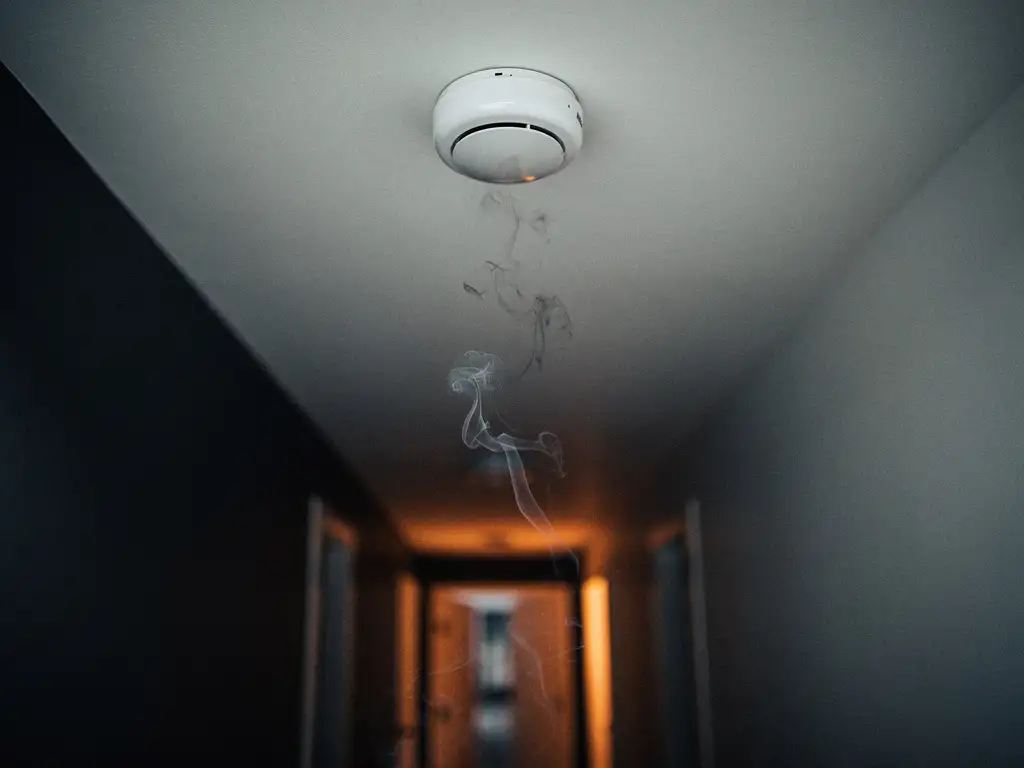
Smoke detectors save lives by giving people the earliest possible warning that a fire has started, creating precious time to escape before flames, heat, and toxic smoke become life-threatening. Research consistently shows that working smoke alarms significantly reduce the risk of dying in a home or workplace fire. The sections below unpack exactly how that protection works and where it can fall short.
How much warning time does a smoke detector actually give you?
A smoke detector typically gives between one and five minutes of warning time before conditions in a room become unsurvivable, though this window can extend to ten minutes or more depending on how early the alarm activates. The earlier the detector responds to smoke particles, the more time occupants have to evacuate safely before toxic gases and heat reach dangerous levels.
The actual warning time depends on several factors: the type of fire (slow, smouldering fires produce smoke long before open flames appear, while fast-flaming fires can generate lethal heat very quickly), the location of the detector relative to the fire source, and the sensitivity of the alarm technology. A smoke alarm installed close to the origin of a fire will always activate faster than one positioned at the far end of a building.
In practical terms, fire safety experts emphasize that even two to three minutes of advance warning can be the difference between a safe evacuation and a fatal outcome. This is why early detection is considered the single most important factor in reducing fire deaths, and why placement and detector type matter so much.
What types of smoke detectors are most effective at saving lives?
The two primary types of smoke detectors are ionization alarms and photoelectric alarms, and each excels in different fire scenarios. Ionization detectors respond faster to fast-flaming fires, while photoelectric detectors are more effective at detecting slow, smouldering fires that produce large smoke particles before flames develop. Dual-sensor alarms combine both technologies for the broadest protection.
Smouldering fires are particularly dangerous because they can develop for hours during the night, filling a space with toxic carbon monoxide and smoke before any visible flame appears. Photoelectric alarms are consistently better at detecting this type of fire early, which is why fire safety organizations in many countries now recommend them as the default choice for bedrooms and sleeping areas.
Aspirating smoke detection systems represent an even more sensitive tier of technology. These systems actively draw air samples through a network of pipes and analyse them for microscopic smoke particles, detecting fire at an earlier stage than conventional point detectors. They are particularly valuable in environments where the cost of a delayed response is extremely high, such as server rooms, electrical cabinets, or industrial control environments.
For environments where carbon monoxide is also a risk, a combined smoke and carbon monoxide detector adds an important layer of protection. Carbon monoxide is odourless and colourless, making it undetectable without a dedicated sensor, and it is responsible for a significant proportion of fire-related deaths each year.
Where should smoke detectors be placed to be most effective?
Smoke detectors should be installed on every level of a building, inside each bedroom, and in hallways outside sleeping areas. In commercial and industrial environments, detectors should be positioned close to the equipment most likely to generate smoke first, particularly enclosed electrical systems, server racks, and switchgear cabinets where fires typically originate inside the enclosure before spreading outward.
Key placement principles include:
- Mount detectors on the ceiling or high on walls, since smoke rises and accumulates near the ceiling first
- Avoid placing detectors near kitchens or bathrooms where steam and cooking fumes cause nuisance alarms, which leads people to disable them
- Position detectors close to the fire risk source in industrial settings rather than relying solely on room-level coverage
- Ensure coverage in concealed spaces such as roof voids and under-floor areas where fires can develop unseen
- Do not place detectors in dead air spaces such as corners or peaks of angled ceilings, where smoke may not reach the sensor quickly
In mission-critical environments, placing detection directly inside or adjacent to the equipment enclosure dramatically reduces response time compared to relying on a room-level detector to sense smoke that has escaped from a cabinet.
Why do smoke detectors fail to prevent fire deaths in some cases?
Smoke detectors fail to prevent fire deaths most commonly because they are not working at the time of the fire. The most frequent reasons are dead or missing batteries, alarms that have been deliberately disabled after nuisance activations, and detectors that have exceeded their operational lifespan and are no longer sensitive enough to respond reliably.
Other contributing factors include:
- Inadequate coverage: a detector in one part of a building may not activate in time to warn occupants in another area
- No fire escape plan: even when an alarm sounds, people without a practised fire escape plan lose critical seconds deciding what to do
- Alarm fatigue: frequent false alarms cause occupants to ignore or disconnect detectors, removing the protection entirely
- Detection without suppression: a smoke alarm warns people but does nothing to slow or stop the fire itself, so if evacuation is not possible, the alarm alone cannot prevent a fatality
- Detector placement failures: alarms positioned too far from the fire source, or in locations where smoke does not travel quickly, may activate too late
This is why fire safety professionals consistently emphasise that smoke detection must be paired with a broader fire safety strategy, including regular testing, a practised fire escape plan, and suppression systems where appropriate.
How does early smoke detection work alongside fire suppression systems?
Early smoke detection and fire suppression systems work together as a two-stage defence: the detector identifies smoke at the earliest possible stage, and the suppression system responds immediately to contain or extinguish the fire before it spreads. When integrated, these two functions eliminate the gap between detecting a fire and acting on it, which is the window in which the most damage occurs.
In a detection-only setup, an alarm alerts people who must then manually respond, call emergency services, or activate a suppression system. Every step in that chain takes time. An integrated system removes the human response requirement for the initial suppression action, which is critical in unmanned environments or during the night when no one is present to respond.
This combined approach is especially important for enclosed equipment like electrical cabinets, battery energy storage systems, and server racks, where a fire that starts inside an enclosure can destroy critical hardware within minutes. Detecting smoke inside the enclosure and suppressing it immediately at the source is far more effective than waiting for smoke to escape into the room and trigger a room-level alarm.
How often should smoke detectors be tested and replaced?
Smoke detectors should be tested monthly by pressing the test button and replaced entirely every ten years. Batteries in non-sealed units should be replaced at least once a year, though sealed long-life battery models are designed to last the full operational lifetime of the detector. Regular testing is the single most effective maintenance action to ensure a smoke alarm will work when it is needed.
A practical maintenance schedule looks like this:
- Monthly: Press and hold the test button on each detector until the alarm sounds to confirm the siren and sensor circuit are functional
- Annually: Replace batteries in standard battery-powered units and vacuum dust from detector vents, since dust accumulation can reduce sensitivity
- Every ten years: Replace the entire detector unit, as the sensing chamber degrades over time and may no longer meet its original performance specification
In commercial and industrial environments, fire safety regulations typically require documented inspection and testing records. Detectors installed inside equipment enclosures or as part of integrated suppression systems should be tested according to the manufacturer’s maintenance schedule, which may differ from standard residential guidance.
One sign that a detector needs immediate replacement is frequent chirping without a fire event, which typically indicates a low battery or a failing sensor. Any detector that has been exposed to a fire event, even a minor one, should be replaced immediately rather than returned to service.
How ExxFire integrates smoke detection with suppression
ExxFire’s combined fire detection and suppression systems are purpose-built to address the gap between detecting smoke and acting on it, particularly in mission-critical enclosed environments where response time is everything. The systems combine aspirating smoke detection with non-pressurized nitrogen gas suppression delivered through ExxFire’s patented Cool Gas Generator technology, creating a fully integrated solution for protecting high-value equipment.
Key features of ExxFire’s integrated approach include:
- Aspirating smoke detection that actively draws air samples from inside the enclosure, identifying fire at the earliest possible stage before it can cause hardware damage
- Immediate nitrogen suppression that activates automatically at the source, eliminating the need for human intervention in unmanned or out-of-hours environments
- PFAS-free, residue-free nitrogen gas that extinguishes fire without damaging sensitive electronics, servers, switchgear, or battery systems
- Pre-engineered design for easy self-installation inside enclosures up to 4.5 m³, with multiple units interconnectable for larger volumes
- Built-in relays that report system status to an existing fire detection system, ensuring seamless integration with broader fire safety infrastructure
ExxFire’s systems are tested and certified by CNPP in France and validated by DMT, part of TÜV Nord in Germany, providing the rigorous third-party verification that compliance-driven organisations require. If you are responsible for protecting critical equipment and want to move beyond detection-only fire safety, contact ExxFire to find out how an integrated detection and suppression system can safeguard your assets.