

How do you prevent fires in a multi-story building?
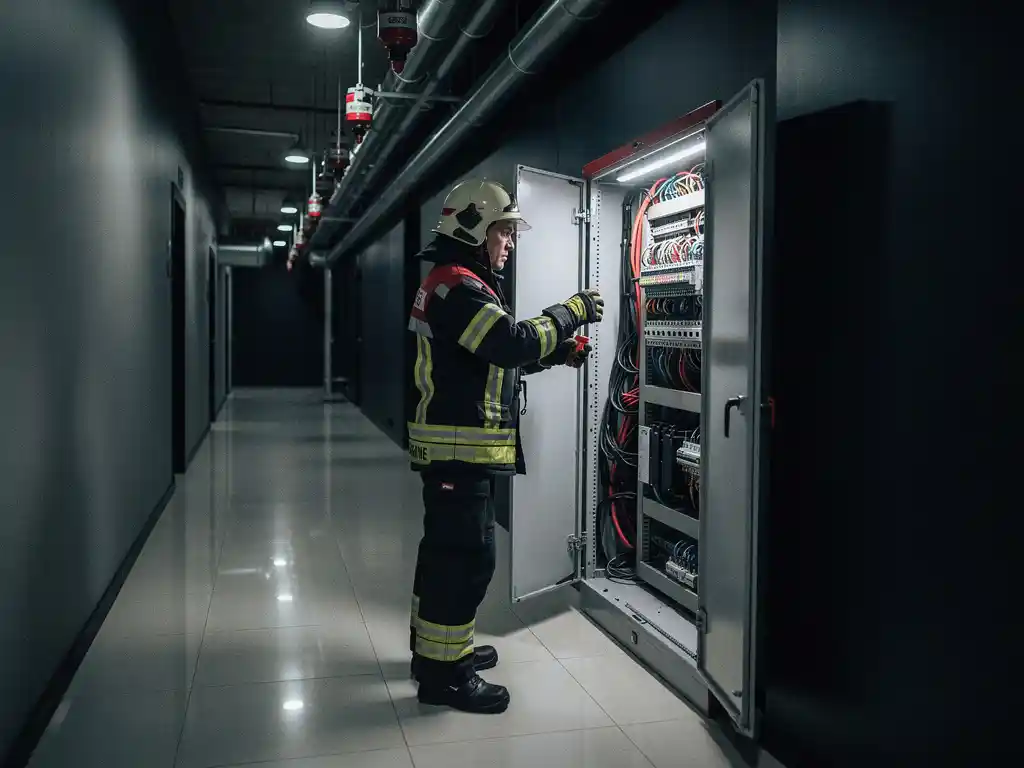
Preventing fires in a multi-story building starts with combining early detection, reliable suppression systems, and strict adherence to fire safety regulations. The height and interconnected nature of these buildings make fire risk management more complex than in single-story structures, where fire and smoke have fewer pathways to spread. This article covers the most important questions around fire prevention in multi-story buildings, from common ignition causes to protecting sensitive electrical equipment.
What are the most common causes of fires in multi-story buildings?
The most common causes of fires in multi-story buildings are electrical faults, human error, heating equipment, and arson. Electrical failures, including overloaded circuits, faulty wiring, and malfunctioning equipment, are consistently among the leading causes across commercial and residential buildings alike.
In commercial multi-story buildings specifically, the risk profile shifts toward technical infrastructure. Electrical distribution panels, server rooms, battery energy storage systems, and HVAC equipment all represent concentrated sources of heat and ignition risk. A short circuit in a switchgear cabinet on the third floor, for example, can ignite surrounding materials before any occupant notices smoke.
Other frequently identified causes include:
- Cooking equipment in residential or hospitality settings
- Improper storage of flammable materials in maintenance rooms or loading areas
- Smoking in unauthorized areas
- Overheating lithium-ion batteries, increasingly relevant in buildings with electric vehicle charging stations or backup power systems
- Construction work, particularly hot work such as welding or cutting
Understanding these ignition sources is the first step toward building fire prevention that is both targeted and effective.
How does fire spread differently in multi-story buildings?
Fire spreads differently in multi-story buildings because vertical pathways, such as stairwells, elevator shafts, and utility ducts, act as chimneys that accelerate smoke and heat upward far faster than horizontal spread. This stack effect makes upper floors vulnerable even when the fire originates at ground level.
In a single-story building, fire and smoke spread primarily outward. In a multi-story structure, rising hot air and combustion gases travel through every vertical opening available. Smoke can reach upper floors within minutes, well before flames arrive, making early detection on every floor critical.
Compartmentalization is the primary architectural defense against this vertical spread. Fire-rated walls, floors, and doors are designed to contain fire and smoke within defined zones, slowing propagation and giving occupants more time to evacuate. However, penetrations through these barriers, such as cable runs or pipe chases that are not properly fire-sealed, can undermine compartmentalization entirely.
Facade fires present a separate challenge. External cladding materials, if combustible, can allow fire to travel up the outside of a building rapidly. This has been a significant focus of fire safety regulation updates in many countries following high-profile building fires in recent years.
What fire detection systems work best in multi-story buildings?
The fire detection systems that work best in multi-story buildings combine addressable smoke detectors, heat detectors, and aspirating smoke detection for high-risk areas. Addressable systems are preferred because they identify the precise location of an alarm, which is essential when managing multiple floors from a central fire panel.
Standard point detectors, mounted on ceilings throughout each floor, form the backbone of most multi-story detection systems. These respond to smoke particles or heat that reach the detector, triggering an alarm and reporting the exact zone to the control panel.
For spaces with sensitive equipment or high ceilings, aspirating smoke detection (ASD) offers a significant advantage. These systems actively draw air samples through a pipe network and analyze them for smoke particles, detecting fire at an extremely early stage, often before visible smoke is present. This is particularly valuable in electrical rooms, data halls, and other areas where a slow, smoldering fire in enclosed equipment could go undetected by standard detectors until significant damage has occurred.
A well-designed fire detection setup for a multi-story building also integrates with building management systems, enabling automated responses such as elevator recall, HVAC shutdown, and door release upon alarm activation.
What fire suppression options are available for multi-story buildings?
Fire suppression options for multi-story buildings include wet pipe sprinkler systems, dry pipe sprinklers, gaseous suppression systems, and localized suppression units for specific equipment. The right choice depends on the building type, occupancy, and the nature of the assets being protected.
Sprinkler systems
Wet pipe sprinkler systems are the most widely used suppression method in multi-story buildings. Water is held under pressure in the pipes and releases immediately when a sprinkler head activates due to heat. They are reliable, cost-effective at scale, and well-suited to general office, retail, and residential floors. Dry pipe systems, where pipes contain pressurized air rather than water, are used in areas at risk of freezing.
Gaseous and localized suppression
In areas where water would cause unacceptable damage to equipment, such as server rooms, electrical switchgear rooms, or archive storage, gaseous suppression systems are the preferred alternative. These systems flood a protected zone with an inert gas or clean agent that reduces oxygen levels or interrupts the combustion process without leaving residue. Localized suppression units, installed directly inside or adjacent to specific enclosures, offer targeted protection for high-value assets without requiring a dedicated suppression room or pressurized cylinder network.
How do you protect electrical and ICT equipment from fire in a multi-story building?
Protecting electrical and ICT equipment from fire in a multi-story building requires early smoke detection combined with suppression that acts directly at the source, inside or adjacent to the enclosure. Standard ceiling-mounted detectors are often too far from the ignition point to trigger a fast enough response when a fire starts inside a closed cabinet.
The most effective approach addresses the equipment itself as a protected zone. This means installing detection that monitors air quality inside or immediately around the enclosure, and pairing it with a suppression method that can deliver an extinguishing agent directly to the fire before it spreads to surrounding infrastructure.
Key considerations for protecting electrical and ICT assets include:
- Using a suppression agent that does not damage sensitive electronics, ruling out water-based solutions
- Ensuring the suppression agent leaves no chemical residue that would require costly cleanup or component replacement
- Selecting systems that are compatible with existing fire panels through relay outputs
- Avoiding pressurized systems in environments where accidental discharge could cause physical damage or safety risks
- Choosing solutions free from PFAS compounds, which face increasing regulatory restrictions across Europe and beyond
Maintaining clean power distribution, regularly inspecting cable management, and keeping enclosures free of dust buildup are equally important preventive measures that reduce ignition risk before detection or suppression is ever needed.
What fire safety regulations apply to multi-story buildings?
Fire safety regulations for multi-story buildings vary by country but generally require fire-rated construction, approved detection and suppression systems, clear evacuation routes, and regular inspections. In most jurisdictions, buildings above a certain height are subject to stricter requirements than low-rise structures.
In the European Union, fire safety requirements are embedded in national building codes that implement the EU Construction Products Regulation, with additional sector-specific standards applying to data centers, industrial facilities, and healthcare environments. In the United Kingdom, the Building Safety Act 2022 introduced significant changes for higher-risk residential buildings, including mandatory fire safety case reports and stricter accountability for building owners.
Internationally, standards from organizations such as NFPA (National Fire Protection Association) in the United States and EN standards in Europe provide technical benchmarks for detection, suppression, and evacuation system design. For businesses operating across multiple countries, ensuring that installed systems carry recognized third-party certifications, such as those issued by TÜV Nord or CNPP, is a practical way to demonstrate compliance across jurisdictions.
Regulations also address maintenance obligations. Detection and suppression systems must be regularly tested and serviced, with records kept and made available to authorities on request. Failure to maintain compliant systems can result in enforcement action and, more critically, leaves buildings and occupants exposed to preventable risk.
How ExxFire helps protect multi-story buildings from fire
ExxFire’s integrated fire detection and suppression systems are purpose-built for the challenge of protecting electrical and ICT equipment inside multi-story buildings. Where standard building-level systems cannot respond quickly enough to a fire starting inside a closed enclosure, ExxFire’s approach brings detection and suppression directly to the source.
The systems combine aspirating smoke detection with non-pressurized nitrogen gas suppression, delivered through ExxFire’s patented Cool Gas Generator technology. Key features include:
- Early smoke detection that identifies fire at the pre-combustion stage, before visible smoke or heat reaches ceiling-mounted detectors
- Nitrogen-based suppression that extinguishes fire without leaving chemical residue, protecting sensitive electronics and avoiding secondary damage
- PFAS-free technology, meeting the growing regulatory and sustainability requirements that affect fire suppression systems across Europe and globally
- Non-pressurized storage, eliminating the risks associated with pressurized gas cylinders in occupied or equipment-dense environments
- Built-in relay outputs for seamless integration with existing fire panels in multi-story building management infrastructure
- Easy self-installation without specialist certification requirements, reducing deployment time and total cost of ownership
- Testing and certification by CNPP France and DMT, part of TÜV Nord, providing documented compliance for regulatory and procurement requirements
ExxFire systems are designed for server racks, switchgear cabinets, ICT enclosures, and battery energy storage systems, exactly the assets that carry the highest consequences of fire damage in a modern multi-story building. To find out how ExxFire can protect your critical equipment, contact the ExxFire team for a consultation.
Related Articles
- How does fire management protect ecosystems?
- How do you maintain compliance with fire safety standards over time?
- What fire suppression agents have the lowest environmental impact?
- How does fire suppression agent choice affect ESG reporting?
- What are the alternatives to PFAS-containing fire suppression foam?