
Why is fire safety certification important for industrial equipment?
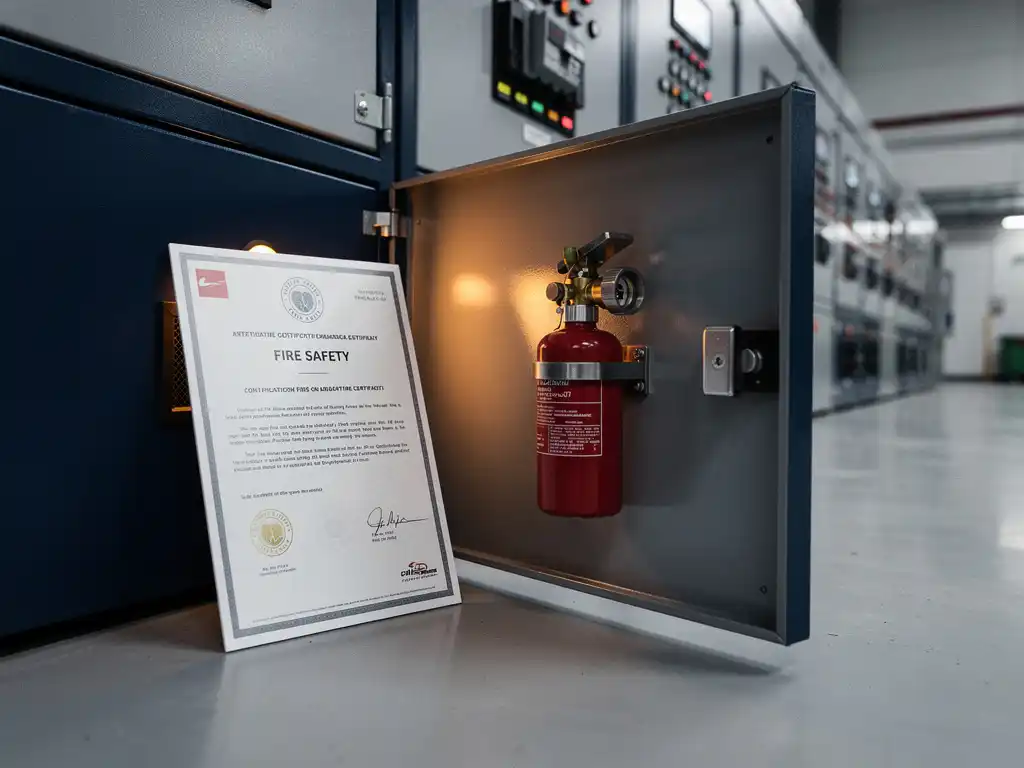
Fire safety certification is important for industrial equipment because it provides verified, independent proof that a product meets established safety standards for detecting and suppressing fire in hazardous or high-stakes environments. Without certification, equipment cannot be legally deployed in many regulated industries, and its performance under real fire conditions remains unverified. The sections below address the most common questions safety managers ask when specifying certified fire protection for industrial facilities.
What types of fire safety certifications apply to industrial equipment?
Several distinct certification frameworks apply to industrial equipment, each covering different aspects of fire safety performance, environmental suitability, and product testing. The most relevant for industrial fire protection include ATEX certification, NFPA compliance standards, FM Global approvals, and third-party laboratory certifications such as those issued by TÜV Nord, UL, or CNPP.
ATEX certification is a European Union requirement for equipment intended for use in potentially explosive atmospheres, such as those found in oil refineries, chemical plants, and grain processing facilities. It governs both the design of the equipment and the conditions under which it can safely operate. Equipment carrying ATEX marking has been independently assessed to ensure it will not become an ignition source in Zone-classified environments.
NFPA standards, published by the National Fire Protection Association, define performance and installation requirements for fire detection and suppression systems across a wide range of applications. NFPA 72 covers fire alarm and detection systems, while NFPA 2001 applies to clean agent fire suppression systems. Compliance with NFPA standards is often mandated by insurance underwriters, local building codes, and corporate risk management frameworks, particularly for facilities operating in or exporting to North American markets.
FM Global approvals are particularly significant for facilities insured by FM Global, as the insurer requires that specified equipment meets its own rigorous testing protocols. FM-approved products have been tested under real-world conditions, not just theoretical models, which gives insurers and risk managers greater confidence in their protective performance.
Third-party laboratory certifications, such as those issued by CNPP in France or DMT in Germany (part of TÜV Nord), validate that a specific product performs as the manufacturer claims under controlled test conditions. These certifications are often required in procurement specifications and provide an objective basis for product comparison.
What happens if industrial equipment lacks fire safety certification?
Industrial equipment without proper fire safety certification exposes facilities to legal liability, insurance invalidation, regulatory penalties, and unverified risk. In many jurisdictions, uncertified fire protection equipment cannot legally be installed in regulated environments, and doing so can invalidate site operating licenses.
From an insurance perspective, deploying uncertified equipment is a significant liability. If a fire occurs and the installed suppression or detection system was not certified to the required standard, insurers may refuse to pay out claims. This can result in catastrophic financial losses that far exceed the cost of sourcing certified equipment in the first place.
Regulatory consequences are equally serious. Facilities in sectors such as oil and gas, pharmaceuticals, and energy storage are subject to inspection by national safety authorities. Non-compliant equipment can trigger enforcement action, mandatory shutdowns, and fines. In some cases, responsible safety managers may face personal liability if they knowingly specified non-compliant products.
Beyond legal and financial consequences, uncertified equipment provides no independent assurance of performance. A fire detection or suppression system that has not been tested to a recognized standard may fail at the critical moment it is needed, leaving high-value assets and personnel unprotected.
How does fire safety certification protect high-value industrial assets?
Fire safety certification protects high-value industrial assets by ensuring that detection and suppression systems have been independently verified to respond correctly, quickly, and without causing secondary damage to the equipment they protect. Certification confirms that a system will activate at the right threshold, suppress effectively, and leave sensitive components undamaged.
For assets such as electrical switchgear, ICT infrastructure, battery energy storage systems, and high-voltage cabinets, the suppression agent itself matters as much as the detection speed. Certified systems are tested to confirm that the suppression medium, whether a clean agent, inert gas, or other substance, does not corrode, contaminate, or physically damage the equipment it contacts. This is critical for electronics and precision components where even minor chemical residue can cause long-term degradation or immediate failure.
Certification also addresses system behavior under fault conditions. A certified fire suppression system must demonstrate that it will not activate inadvertently, will not fail silently, and will report its status accurately to connected fire panels or building management systems. These behavioral guarantees are what give asset owners and insurers confidence that certified systems will perform when it counts.
From a business continuity perspective, certified systems that suppress fires at their source, before they spread, minimize downtime and hardware replacement costs. Early-stage suppression within a closed enclosure is far less disruptive than a facility-wide fire response, and certification frameworks specifically test for this localized, targeted performance.
Which industrial environments require the strictest fire safety certifications?
The strictest fire safety certification requirements apply to environments where fire or explosion risk is highest and where the consequences of failure are most severe. These include oil and gas facilities, chemical processing plants, offshore platforms, mining operations, and high-voltage electrical infrastructure.
Explosive atmosphere environments
Facilities classified under ATEX Zone 0, Zone 1, or Zone 2 (or their IECEx equivalents outside Europe) require the most stringent equipment certification. In these environments, the presence of flammable gases, vapors, or combustible dust means that any electrical or mechanical equipment, including fire detection sensors, must be certified to prevent it from becoming an ignition source. ATEX-certified fire detectors and suppression control panels are mandatory in these zones, and substituting non-certified alternatives is both illegal and dangerous.
Critical infrastructure and energy storage
Data centers, battery energy storage systems (BESS), and electrical substations represent another category where certification requirements are particularly demanding. These environments combine high asset value, continuous operational requirements, and fire risks that are difficult to suppress using conventional water-based systems. Certification frameworks for these environments typically require clean or inert agent suppression, fast detection response times, and compatibility with existing building fire alarm infrastructure. As BESS installations scale globally in 2026, the certification requirements for fire protection in these facilities are becoming more detailed and more strictly enforced by insurers and national regulators alike.
How do PFAS-free suppression systems fit into current certification frameworks?
PFAS-free suppression systems fit within current certification frameworks by meeting the same performance standards as legacy agents while eliminating the environmental and regulatory liabilities associated with per- and polyfluoroalkyl substances. Certification bodies test suppression systems for their fire-extinguishing effectiveness, safety profile, and equipment compatibility, not whether they contain PFAS, so PFAS-free systems can achieve full certification when they meet those performance criteria.
The shift away from PFAS-containing agents, including many traditional clean agents and aqueous film-forming foams, has accelerated significantly as European and North American regulators restrict or ban these substances. NFPA 2001 and equivalent European standards do not require PFAS-based agents; they require that the chosen agent suppresses fire effectively without causing harm to personnel or equipment. Inert gas systems, including those based on nitrogen, meet these criteria and are fully certifiable under existing frameworks.
For safety managers specifying fire suppression systems in 2026, the practical implication is that choosing a PFAS-free system does not mean compromising on certification status. It means selecting a system that is both compliant today and protected against future regulatory changes that may phase out PFAS-containing alternatives entirely. Facilities that proactively transition to certified PFAS-free systems avoid the cost and disruption of retrofitting when regulatory deadlines arrive.
What should safety managers verify when specifying certified fire suppression equipment?
When specifying certified fire suppression equipment, safety managers should verify the scope of the certification, the identity of the certifying body, the specific test conditions under which the system was certified, and whether the certification remains valid for the intended application and environment.
Key verification steps include:
- Confirm the certifying body’s accreditation: Certifications issued by recognized bodies such as CNPP, TÜV Nord, UL, or FM Global carry weight with insurers and regulators. Self-declared compliance without independent testing does not.
- Check that the certification covers the specific application: A system certified for server room protection may not be certified for use in an ATEX-classified zone. Verify that the certification scope matches the intended deployment environment.
- Review the suppression agent’s compatibility with protected assets: Confirm that the certified agent will not damage sensitive electronics, create toxic byproducts, or leave residues that impair equipment function after discharge.
- Assess installation and maintenance requirements: Some certified systems require specialist installation or periodic maintenance by accredited engineers. Systems that are pre-engineered for straightforward self-installation can reduce total cost of ownership without sacrificing certification status.
- Verify integration with existing fire alarm infrastructure: Certified suppression systems should be able to report status to a central fire panel via standard relay outputs, ensuring the entire site fire safety system remains coherent and auditable.
- Check for PFAS-free compliance: Given tightening regulations, verify that the suppression agent is free of PFAS substances and that the certification documentation reflects this.
Documentation is equally important. Safety managers should retain copies of all certification certificates, test reports, and installation records. These documents are essential during regulatory inspections, insurance audits, and incident investigations.
How ExxFire supports fire safety certification requirements for industrial equipment
ExxFire’s integrated fire detection and suppression systems are purpose-built to meet the certification and compliance requirements that industrial safety managers must satisfy. Every system is independently tested and certified by CNPP in France, providing the third-party validation that insurers, regulators, and procurement teams require. Key features that directly support certification compliance include:
- CNPP-certified performance: Systems are tested and certified by an accredited independent laboratory, providing documented proof of fire detection and suppression effectiveness.
- PFAS-free nitrogen suppression: ExxFire’s Cool Gas Generator technology uses non-pressurized inert nitrogen, eliminating PFAS liabilities and ensuring compliance with current and emerging environmental regulations.
- No chemical residues: Nitrogen leaves no residue on sensitive electronics, meaning certified suppression does not create secondary damage to the assets it protects.
- Fire panel integration: Built-in relays allow systems to report status to existing fire alarm panels, keeping the broader site fire safety infrastructure compliant and auditable.
- Pre-engineered for self-installation: Systems are designed for straightforward installation without requiring specialist certification, reducing deployment cost while maintaining full certification status.
For safety managers specifying fire protection for critical equipment, ExxFire provides a certified, sustainable, and operationally practical solution. Contact ExxFire to discuss your specific certification requirements and find out which system configuration is right for your facility.
Related Articles
- What is the role of remote sensing in fire management?
- What fire risks are specific to E-cabinets in industrial settings?
- How do you choose a compliant fire suppression system in 2026?
- How do you prevent fires when storing gasoline at home?
- How does nitrogen-based fire suppression protect the environment?