

What makes wooden buildings more vulnerable to fire?
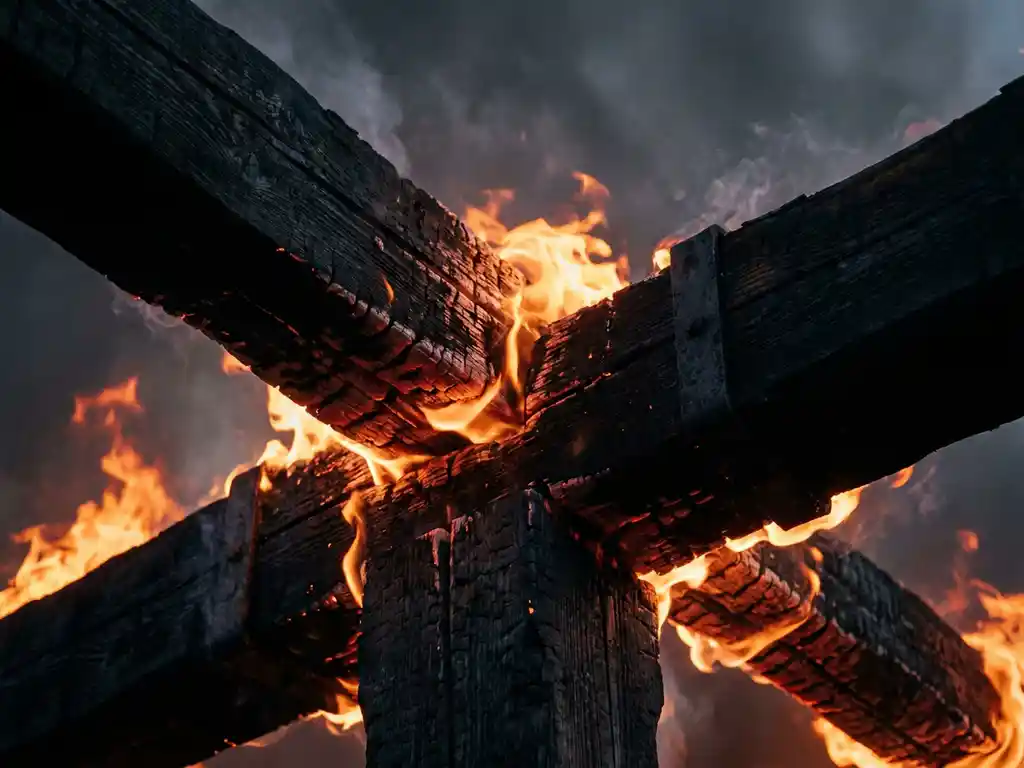
Wooden buildings carry a significantly higher fire risk than structures built from concrete, steel, or masonry. Wood is a combustible material that ignites at relatively low temperatures, sustains flames readily, and can allow fire to travel through a structure with alarming speed. This vulnerability applies to both historic timber buildings and modern mass timber construction, though the specific risks differ between them. The sections below unpack the key questions around wooden building fire risk, from ignition and spread to structural failure and modern mitigation strategies.
Why does wood ignite more easily than other building materials?
Wood ignites more easily than concrete or steel because it is an organic, combustible material that begins to pyrolyze — releasing flammable gases — at temperatures as low as 250 to 300 degrees Celsius. Once those gases reach ignition temperature, the wood itself catches fire. Concrete and steel are non-combustible and do not release flammable gases under heat, making them far more resistant to direct ignition.
The moisture content of timber plays a significant role in how quickly ignition occurs. Dry, seasoned wood with low moisture content ignites faster and burns more intensely than green or treated timber. In older buildings, wood that has dried out over decades can be particularly susceptible. Surface area also matters: thin timber elements such as battens, exposed beams, and wooden paneling ignite far more quickly than large, dense timber sections because heat penetrates them faster relative to their mass.
Beyond the material itself, wood in buildings is often surrounded by other combustible materials — insulation, adhesives, finishes, and furnishings — that can lower the effective ignition threshold of the overall environment. This combination of factors makes timber construction fire safety a discipline that extends well beyond the wood alone.
How does fire spread faster through timber-framed structures?
Fire spreads faster through timber-framed structures because the structural cavities, voids, and interconnected wooden elements act as pathways that channel heat, smoke, and flames through walls, floors, and ceilings. In a timber frame building, fire can travel horizontally and vertically through hidden voids before it becomes visible, making early detection and suppression critical.
Traditional balloon-frame construction, common in buildings erected before the mid-20th century, is particularly prone to rapid vertical fire spread. In this framing style, wall studs run continuously from the foundation to the roof without fire-blocking at each floor level. This creates a chimney effect where flames and hot gases travel upward through the full height of the wall cavity unobstructed.
Even in modern platform-frame construction, where each floor acts as a fire break, the presence of combustible structural members means that once fire breaches a floor assembly, it finds fresh fuel at every level. Roof spaces filled with timber trusses are especially dangerous: a fire that reaches the roof void can engulf the entire roof structure in minutes. The combination of structural combustibility and hidden void pathways makes fire spread in timber buildings fundamentally different from what occurs in non-combustible structures.
What structural risks does fire pose to wooden buildings?
Fire poses a severe structural risk to wooden buildings because burning timber progressively loses load-bearing capacity as it chars. Unlike steel, which retains strength until it reaches very high temperatures and then fails suddenly, wood undergoes a predictable but ultimately catastrophic loss of cross-section as the char layer deepens. When enough structural timber has been consumed, the building can collapse.
The rate of charring in large timber sections — typically around 0.5 to 0.8 millimeters per minute depending on species and density — is actually one reason mass timber construction is considered to have predictable fire behavior. Engineers can calculate residual load-bearing capacity during a fire by accounting for the char depth over time. However, this predictability only holds for exposed, solid timber members. Engineered wood products such as cross-laminated timber (CLT) can behave differently if their adhesive layers are compromised by heat, potentially causing delamination and accelerated structural failure.
Connections between timber elements — joints, fasteners, and brackets — are often the weakest point under fire conditions. Metal fasteners conduct heat into the timber and can fail before the surrounding wood, leading to sudden loss of connection integrity. In a fire event, structural collapse in wooden buildings can occur faster than occupants and emergency responders expect, which is why passive fire protection measures and early detection systems are not optional safeguards but essential design requirements.
What fire hazards are unique to older wooden buildings?
Older wooden buildings present fire hazards that modern timber construction does not, primarily because they were built before contemporary fire codes existed. Dry, aged timber, the absence of fire-resistant treatments, unprotected void spaces, and the accumulation of combustible materials over decades all combine to make historic and older wooden structures particularly vulnerable to rapid fire escalation.
In many buildings constructed before the 1970s, fire-stopping between floor and wall cavities was either minimal or entirely absent. This means that a fire starting in one room can silently migrate through wall and ceiling voids and emerge in a completely different part of the building. The lack of compartmentalization that modern building codes now mandate was simply not a design requirement at the time.
Electrical systems in older wooden buildings represent a specific and serious hazard. Aging wiring, outdated fuse boxes, and electrical cabinets that were never designed to accommodate modern power loads are common sources of ignition in historic timber structures. Overloaded circuits and deteriorating insulation in switchgear or distribution panels can generate heat and sparks that find ready fuel in the surrounding dry timber. Protecting these electrical installations with early smoke detection and suppression is one of the most effective ways to reduce fire risk in older wooden buildings, since the ignition source and the fuel are often in close proximity.
How does fire protection work in modern timber construction?
Fire protection in modern timber construction combines passive and active measures to slow ignition, limit fire spread, and give occupants time to evacuate safely. Passive measures include fire-resistant cladding, intumescent coatings, fire-stopping in cavities, and the structural mass of large timber sections. Active measures include sprinkler systems, smoke detection, and suppression systems designed to respond before a fire escalates.
Mass timber construction — using products such as CLT, glulam, and laminated veneer lumber — has driven renewed interest in timber as a structural material for multi-story buildings. Regulators and engineers have developed fire engineering approaches that treat the predictable charring behavior of large timber sections as part of the structural fire design. In many jurisdictions, mass timber buildings above a certain height are now permitted provided they meet stringent fire compartmentalization and suppression requirements.
Intumescent coatings are widely used on exposed timber surfaces. These coatings expand when exposed to heat, forming an insulating char layer that slows the penetration of heat into the underlying wood. Combined with cavity fire-stopping and automatic suppression, they give modern timber buildings a level of fire resistance that older structures simply cannot match without significant retrofitting.
One area where modern timber construction still requires careful attention is the protection of electrical and mechanical enclosures within the building. Switchgear cabinets, server rooms, and power distribution units housed in timber structures sit at the intersection of two fire risks: the electrical ignition hazard within the cabinet and the combustible building fabric surrounding it. Object-level fire protection for these enclosures is an important layer of defense that complements the building-wide fire strategy.
What should facility managers prioritize in wooden building fire safety?
Facility managers responsible for wooden buildings should prioritize early detection, compartmentalization integrity, and the protection of high-risk ignition sources such as electrical cabinets and switchgear. These three priorities address the most common pathways through which fires start, spread, and cause catastrophic damage in timber structures before emergency services can respond.
Early smoke detection is the single most important active measure in any wooden building. Because fire spreads quickly through timber structures and hidden voids, the window between a small, containable fire and a structural emergency can be very short. Aspirating smoke detection systems, which actively sample air from within enclosures and cavities, can identify smoke at concentrations far below what conventional point detectors register, providing critical extra minutes for response.
Compartmentalization should be audited regularly. Fire-stopping around cable penetrations, pipe runs, and structural openings deteriorates over time and is often compromised during building modifications. Facility managers should ensure that any work carried out in the building preserves the integrity of fire barriers and cavity barriers, particularly in older timber structures where retrofitting these elements is already a challenge.
Electrical installations deserve specific attention. In wooden buildings, an electrical fire that is not contained at the source can transition from a cabinet-level incident to a structural fire rapidly. Regular inspection of switchgear, distribution boards, and ICT cabinets, combined with object-level fire suppression inside those enclosures, significantly reduces the probability of an uncontrolled fire event.
How ExxFire helps protect wooden buildings from fire
ExxFire’s integrated fire detection and suppression systems address one of the most critical fire risks in wooden buildings: unprotected electrical enclosures that can ignite and spread fire before conventional systems respond. ExxFire’s approach combines aspirating smoke detection with non-pressurized nitrogen suppression, delivering protection directly at the source of potential ignition.
- Early smoke detection: Aspirating detection identifies smoke inside cabinets and enclosures at the earliest possible stage, well before flames develop.
- Clean nitrogen suppression: The patented Cool Gas Generator releases nitrogen gas that reduces oxygen levels and extinguishes fire without leaving chemical residues, protecting sensitive electronics and avoiding secondary damage.
- No pressurized cylinders: The non-pressurized design eliminates the safety risks associated with storing high-pressure gases inside or adjacent to a wooden structure.
- Easy installation and low maintenance: Systems can be installed without special certification and require no ongoing maintenance checks, making them practical for facility managers overseeing complex buildings.
- Fire panel integration: Built-in relays report system status to an existing fire panel, ensuring the object-level protection integrates seamlessly with the building-wide fire safety strategy.
For facility managers responsible for wooden buildings where electrical cabinets, server racks, or switchgear present a serious ignition risk, ExxFire provides a targeted, certified, and environmentally responsible solution. Explore ExxFire’s fire protection systems to find the right configuration for your building.
Related Articles
- How does off-gas detection reduce the risk of thermal runaway in battery cabinets?
- What are the IEC standards for fire detection in electrical enclosures?
- How does a smoke detector help prevent fire deaths?
- What are the most effective fire prevention habits for families?
- How does nitrogen-based fire suppression protect the environment?