

How do you balance fire management with conservation goals?
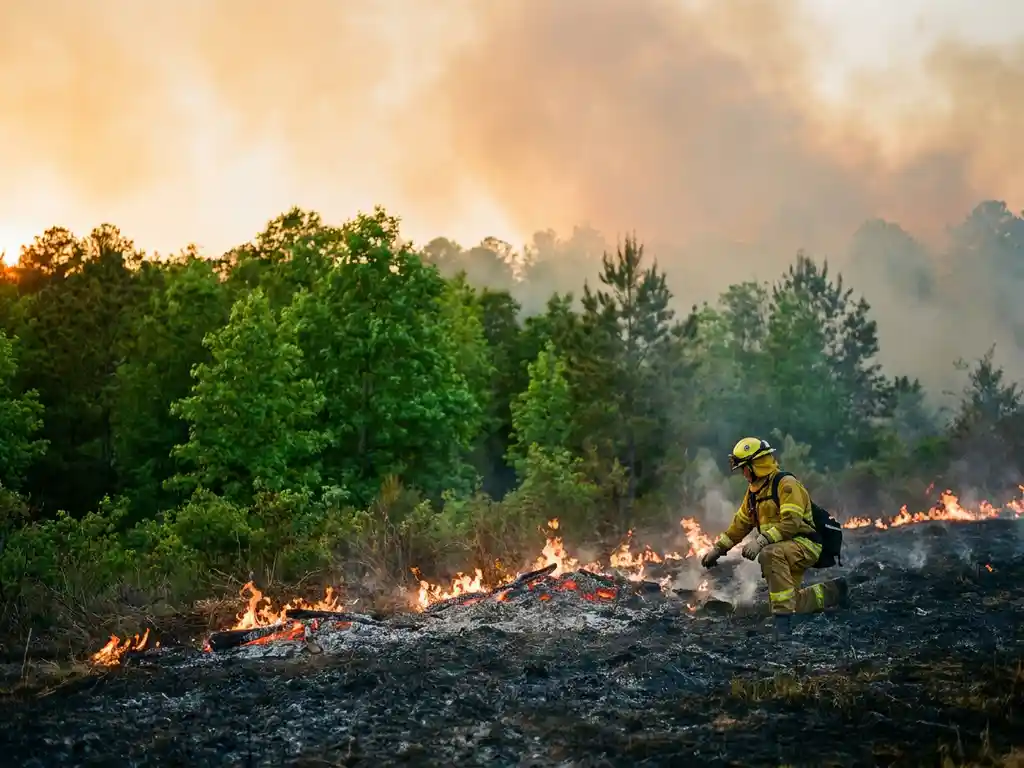
Balancing fire management with conservation goals requires using fire as a deliberate tool rather than treating all fire as a threat. Land managers, ecologists, and fire safety professionals increasingly recognize that fire exclusion can damage ecosystems just as much as uncontrolled wildfire. The sections below address the most common questions about fire ecology, prescribed burns, and how different industries navigate fire risk within environmentally sensitive contexts.
What are the main conflicts between fire management and conservation goals?
The central conflict between fire management and conservation is that suppressing fire protects human infrastructure and assets in the short term, but removing fire from fire-adapted ecosystems can degrade habitat quality, reduce biodiversity, and increase the risk of catastrophic wildfire over time. These two priorities pull in opposite directions unless managed carefully.
Traditional fire management focused almost exclusively on suppression — putting fires out as quickly as possible to protect property and human life. Conservation science has since demonstrated that many ecosystems, from savanna grasslands to boreal forests, evolved with regular fire cycles. When those cycles are interrupted, fuel loads accumulate, invasive species fill the gaps, and fire-dependent species lose the habitat conditions they require for reproduction.
The conflict also plays out in specific practical tensions:
- Smoke and air quality: Prescribed burns produce smoke that affects nearby communities, creating public health concerns that can delay or cancel ecologically beneficial burns.
- Liability and risk: Controlled burns can escape their intended boundaries, making land managers cautious about using fire even when ecology supports it.
- Fragmented landscapes: Development and infrastructure fragment habitats, making it difficult to apply fire at the scale ecosystems require without threatening buildings or utilities.
- Regulatory complexity: Permits, air quality regulations, and land ownership boundaries can make coordinated burning across large areas logistically difficult.
Resolving these conflicts requires integrated planning that treats fire as a land management tool rather than purely a hazard, while still protecting people and assets through targeted fire prevention and suppression where appropriate.
How does fire actually benefit ecosystems?
Fire benefits ecosystems by clearing accumulated dead vegetation, releasing nutrients back into the soil, opening the forest canopy to allow light to reach the ground, and creating the mosaic of habitat types that many species depend on. In fire-adapted ecosystems, the absence of fire is often more damaging than fire itself.
Many plant species have evolved direct relationships with fire. Some seeds require the heat or smoke of fire to germinate. Others are adapted to resprout rapidly from root systems after a burn, giving them a competitive advantage over species that have not evolved with fire. Grasslands, for example, depend on periodic burning to prevent woody shrubs from encroaching and converting open habitat into closed woodland.
Fire also plays a critical role in nutrient cycling. When organic matter burns, nutrients locked in dead wood and leaf litter are released into the soil in forms that plants can absorb quickly. This flush of nutrients supports rapid post-fire plant growth, which in turn supports the insects, birds, and mammals that depend on early successional habitat.
From a wildlife perspective, the patchwork of burned and unburned areas that results from natural or managed fire creates structural diversity. Different species use different successional stages, so a landscape with varied fire history supports more biodiversity than one that has been uniformly fire-suppressed for decades.
What is the difference between prescribed burns and wildfire suppression?
Prescribed burns are intentionally ignited fires managed under specific conditions to achieve defined ecological or land management objectives. Wildfire suppression is the active effort to extinguish unplanned fires. The key difference is intent and control: prescribed burns are planned tools, while suppression treats fire as an emergency to be eliminated.
A prescribed burn, sometimes called a controlled burn, is conducted when weather, fuel moisture, wind speed, and humidity fall within a pre-approved prescription window. Land managers design the burn to achieve specific goals, such as reducing fuel loads, restoring native grassland, or improving habitat for a particular species. The fire is monitored throughout and contained within predetermined boundaries using firebreaks, water resources, and personnel.
Wildfire suppression, by contrast, responds to fires that ignite without planning. Suppression efforts prioritize protecting lives, property, and infrastructure. In many regions, decades of aggressive suppression have created landscapes with dangerously high fuel loads, meaning that when fires do ignite, they burn far more intensely than they would have in a landscape managed with regular low-intensity fire.
The relationship between the two is increasingly recognized as interconnected. Effective use of prescribed burns reduces the fuel conditions that make wildfires catastrophic, meaning that investment in ecological burning can reduce the scale and cost of emergency suppression operations over time.
How do land managers decide when and where to use controlled burns?
Land managers decide when and where to use controlled burns by assessing fuel loads, ecological objectives, weather forecasts, and regulatory requirements. A formal burn plan documents the prescription window, safety protocols, resource requirements, and desired outcomes before any ignition takes place.
The decision-making process typically involves several key factors:
- Ecological assessment: Managers evaluate the fire history of the area, current vegetation structure, and which species or habitat types would benefit from burning. Fire ecology data informs how frequently and at what intensity an area should burn.
- Fuel load analysis: Areas with excessive accumulated fuel are prioritized because they present both ecological need and wildfire risk reduction potential.
- Weather window: Burning only occurs when temperature, relative humidity, wind speed, and atmospheric stability fall within the approved prescription. These conditions ensure the fire behaves predictably and smoke disperses safely.
- Permit and regulatory compliance: In most jurisdictions, prescribed burns require advance notification or permits from air quality management agencies. Coordination with neighboring land managers and emergency services is standard practice.
- Resource availability: Sufficient trained personnel, equipment, and water resources must be on site before ignition begins.
Geographic information systems and fire behavior modeling tools have significantly improved the precision of burn planning, allowing managers to simulate how a fire will move through a landscape under different weather scenarios before committing to ignition.
What role does fire suppression technology play in conservation areas?
Fire suppression technology plays a targeted role in conservation areas by protecting specific high-value infrastructure, monitoring stations, and sensitive equipment from fire damage without disrupting the broader ecological fire regime. The goal is precise, localized protection rather than landscape-wide fire exclusion.
Conservation areas increasingly rely on remote sensing stations, weather monitoring equipment, communication infrastructure, and research facilities. These assets need fire protection, but applying broad suppression methods across an entire conservation landscape would undermine the ecological fire management goals the area is designed to support.
Modern object-level fire suppression systems address this challenge by protecting individual enclosures and equipment rather than entire buildings or landscapes. Systems that use clean, inert suppression agents are particularly well suited to conservation contexts because they leave no chemical residues and have no negative impact on the surrounding environment. This is especially relevant as the fire safety industry moves away from PFAS-containing agents, which carry documented environmental persistence risks.
Early smoke detection is another critical component in conservation settings. Detecting a fire at the smoldering stage, before it develops into open flame, allows for intervention that protects equipment while minimizing the suppression footprint. In remote locations where human response time is long, automated detection and suppression systems provide continuous protection without requiring on-site personnel.
Which industries must balance fire risk with environmental protection?
Several industries face the direct challenge of managing fire risk within or adjacent to environmentally sensitive areas. These include renewable energy, telecommunications, water utilities, forestry, agriculture, and conservation organizations themselves. Each sector operates infrastructure that must be protected from fire while minimizing environmental impact.
The renewable energy sector provides a clear example. Solar farms and battery energy storage systems are frequently located in rural or semi-rural areas where vegetation management and fire risk intersect. Battery energy storage systems in particular carry thermal runaway risk, and protecting them requires suppression technology that will not introduce harmful chemicals into the surrounding soil or water.
Telecommunications infrastructure, including remote relay stations and antenna installations, is often located in fire-prone landscapes. These assets are critical for emergency communications during wildfire events, making their protection especially important while requiring suppression approaches that do not conflict with habitat management.
Water utilities operating pump stations and monitoring equipment in catchment areas face similar constraints. Catchment protection is both a fire management and conservation priority, and any fire suppression technology used within those areas must meet strict environmental standards.
Forestry and land management organizations operate machinery, fuel storage, and control infrastructure within fire-adapted ecosystems. Protecting this equipment without compromising the ecological fire management program requires localized, clean suppression solutions rather than broad chemical application.
How ExxFire supports fire protection in environmentally sensitive settings
ExxFire provides object-level fire detection and suppression systems designed for exactly the kind of precise, clean, and low-impact protection that conservation-adjacent industries require. Key features include:
- PFAS-free nitrogen suppression: ExxFire’s patented Cool Gas Generator uses non-pressurized nitrogen, an inert gas that leaves no chemical residues and poses no environmental risk to soil, water, or surrounding habitat.
- Early smoke detection: Aspirating smoke detection identifies fire at the smoldering stage, enabling rapid response before open flame develops and minimizing the suppression event.
- Object-level protection: Systems protect individual enclosures such as server racks, switchgear cabinets, and battery energy storage systems up to 4.5 m³, keeping suppression localized and targeted.
- Easy installation and maintenance-free operation: Once installed, ExxFire systems require no ongoing maintenance or check-ups, making them ideal for remote or hard-to-access locations.
- Tested and certified: Systems are certified by CNPP France and tested by DMT, part of TÜV Nord, ensuring compliance with rigorous fire safety standards.
For industries that need to protect mission-critical equipment without compromising their environmental commitments, ExxFire offers a proven, sustainable alternative to conventional suppression methods. Contact ExxFire to discuss the right protection solution for your application.