

How do you store flammable materials safely at home?
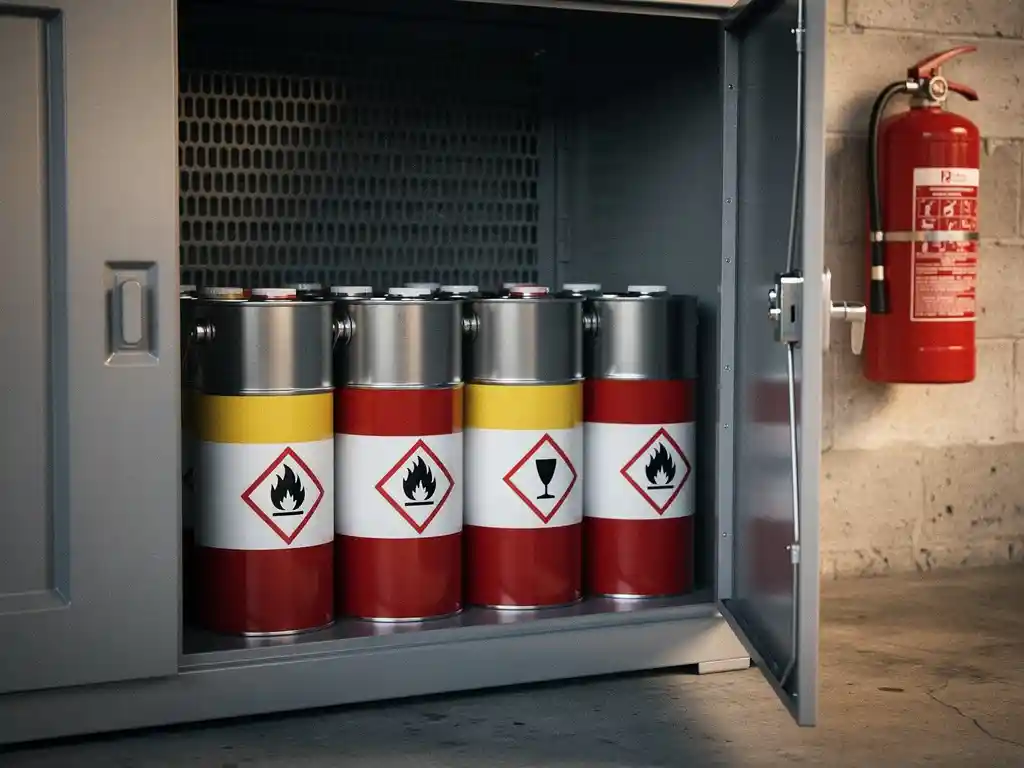
To store flammable materials safely at home, keep them in their original or approved containers, away from heat sources and ignition risks, in a cool, ventilated space — ideally a dedicated outdoor storage unit or a detached garage. The key principle is separation: flammable materials must be kept away from living areas, electrical equipment, and anything that could produce a spark or flame. The sections below answer the most common questions about safe flammable storage at home, from what qualifies as a hazard to what to do if a fire breaks out.
What counts as a flammable material in the home?
A flammable material is any substance that ignites easily and burns rapidly when exposed to an ignition source such as a spark, open flame, or excessive heat. At home, this category is broader than most people realize and includes liquids, gases, and some solids that are part of everyday life.
Common household flammable materials include:
- Fuels: petrol, diesel, kerosene, and lighter fluid
- Solvents and thinners: paint thinner, acetone, turpentine, and white spirit
- Aerosols: spray paints, hairspray, and insecticide cans
- Cleaning products: certain alcohol-based cleaners and degreasers
- Gases: propane and butane cylinders used for barbecues or camping stoves
- Adhesives: contact cement and some wood glues
Many of these products carry a flame symbol on their label. If you see that symbol, treat the product as a fire hazard regardless of how familiar or routine it feels to use. Even small quantities of flammable liquids like petrol can produce vapors that ignite well before the liquid itself reaches a flame.
Where should you store flammable materials at home?
Flammable materials should be stored in a cool, dry, well-ventilated area away from the main living space, heat sources, and electrical equipment. A detached garage, garden shed, or purpose-built outdoor storage locker are the safest options. Never store flammable liquids inside the home, in a basement, or near a boiler, water heater, or electrical panel.
Ventilation is critical because many flammable liquids release vapors at room temperature. Those vapors are often heavier than air and will settle at floor level, where a spark from a motor or electrical socket can ignite them. A well-ventilated space prevents vapor buildup from reaching dangerous concentrations.
Additional location guidelines to follow:
- Store flammables at least three meters away from any ignition source
- Keep storage areas locked and out of reach of children
- Do not store flammables near exits or escape routes
- Avoid direct sunlight, which can raise temperatures and increase vapor pressure inside containers
- Never store flammable materials in a vehicle for extended periods
What containers are safe for storing flammable liquids?
Flammable liquids should be stored in their original manufacturer containers or in approved safety containers specifically designed for flammable liquid storage. Approved containers are typically made from metal or high-density polyethylene (HDPE) and are fitted with self-closing lids and flame arrestors to prevent ignition from vapor buildup.
Using the wrong container is one of the most common and dangerous mistakes in home flammable storage. Glass jars, unmarked plastic bottles, and food containers are never appropriate for storing flammable liquids. They can crack, leak, or fail to contain vapors, and they provide no indication of the contents to others in the household.
When selecting a container, look for:
- A label clearly identifying the contents and hazard level
- A secure, leak-proof cap or lid
- A container rated for the specific type of liquid you are storing — petrol containers are not always suitable for solvents
- Compliance markings that indicate the container meets relevant safety standards in your country
Always keep containers tightly sealed when not in use. Even brief exposure to air allows vapors to escape and accumulate in the surrounding space.
How much flammable material is safe to keep at home?
For most households, keeping the smallest quantity necessary for immediate use is the safest approach. As a general guideline, no more than 50 liters of flammable liquids should be stored in a domestic setting, and ideally far less. Many fire safety authorities recommend limiting petrol storage to no more than 10 liters in a single approved container.
The risk increases not just with volume but with the number of different flammable substances stored together. Mixing incompatible chemicals, even in small amounts, can create unexpected hazards. Store different types of flammable materials separately and never combine containers to save space.
Practical habits to limit risk include:
- Buying only what you need for the immediate task
- Disposing of old or unused flammable products through your local hazardous waste collection service
- Checking expiry dates — some flammable products degrade over time and become less stable
- Reviewing your storage regularly to remove anything you no longer need
What are the most common mistakes people make storing flammables?
The most common mistakes in flammable material storage at home include storing products indoors near heat sources, using unapproved containers, keeping far more than is needed, and failing to label containers clearly. These errors significantly increase the risk of accidental ignition and make it harder for emergency responders to assess the hazard in the event of a fire.
Other frequent errors include:
- Storing in the kitchen or utility room: These spaces contain appliances that cycle on and off and can produce sparks or heat, making them high-risk environments for flammable vapors
- Leaving containers open or loosely closed: Even a briefly unsealed container allows vapors to escape and concentrate
- Ignoring temperature: Storing flammables in a hot car boot or greenhouse can raise internal pressure and increase the risk of leaks
- Mixing storage with other hazardous materials: Oxidizers and flammables stored together can accelerate a fire dramatically
- No fire extinguisher nearby: A dry powder or CO2 extinguisher should be accessible in any area where flammables are stored
Awareness of these mistakes is the first step toward better fire hazard prevention at home. Review your current storage setup against this list and correct any issues before they become emergencies.
What should you do if a fire starts near stored flammable materials?
If a fire starts near stored flammable materials, evacuate immediately, call the emergency services, and do not attempt to move the containers or fight the fire yourself. Flammable liquids can cause a fire to escalate rapidly, and containers can rupture or explode when exposed to heat. Your priority is to get everyone out of the building and stay out.
When calling emergency services, inform them that flammable materials are stored on the premises and give their approximate location if you can do so safely. This information helps firefighters plan their approach and avoid unnecessary risk.
Steps to take before a fire ever starts:
- Install a smoke detector in or near the area where flammables are stored
- Keep a fire extinguisher rated for flammable liquid fires (Class B) within reach but outside the storage area itself
- Make sure all household members know where flammables are stored and what not to do near them
- Establish and practice a home evacuation plan that accounts for the location of stored hazardous materials
Early detection is the single most important factor in limiting damage from a fire involving flammable materials. The faster a fire is detected, the more time there is to evacuate and the less opportunity the fire has to reach stored hazards.
How ExxFire helps protect against fire risks in high-value environments
While the guidance above focuses on domestic flammable storage, the same core principles — early detection, rapid suppression, and protecting critical assets — apply at a professional scale in commercial and industrial settings. ExxFire’s integrated fire detection and suppression systems are built specifically for these environments.
ExxFire’s systems combine aspirating smoke detection with non-pressurized nitrogen gas suppression, delivered through its patented Cool Gas Generator technology. Designed for closed enclosures such as server racks, electrical cabinets, and switchgear, they offer:
- Early smoke detection that identifies a developing fire before it escalates
- Clean nitrogen suppression that leaves no chemical residue and causes no damage to sensitive electronics or components
- PFAS-free operation as a sustainable alternative to legacy gas suppression systems
- Easy self-installation without requiring specialist certification, keeping total cost of ownership low
- Seamless integration with existing fire panels via built-in relays
If your organization operates mission-critical equipment that cannot afford downtime or fire-related damage, contact ExxFire to find out how its certified, TÜV Nord and CNPP-validated systems can protect your assets.