

How does vegetation affect fire management?
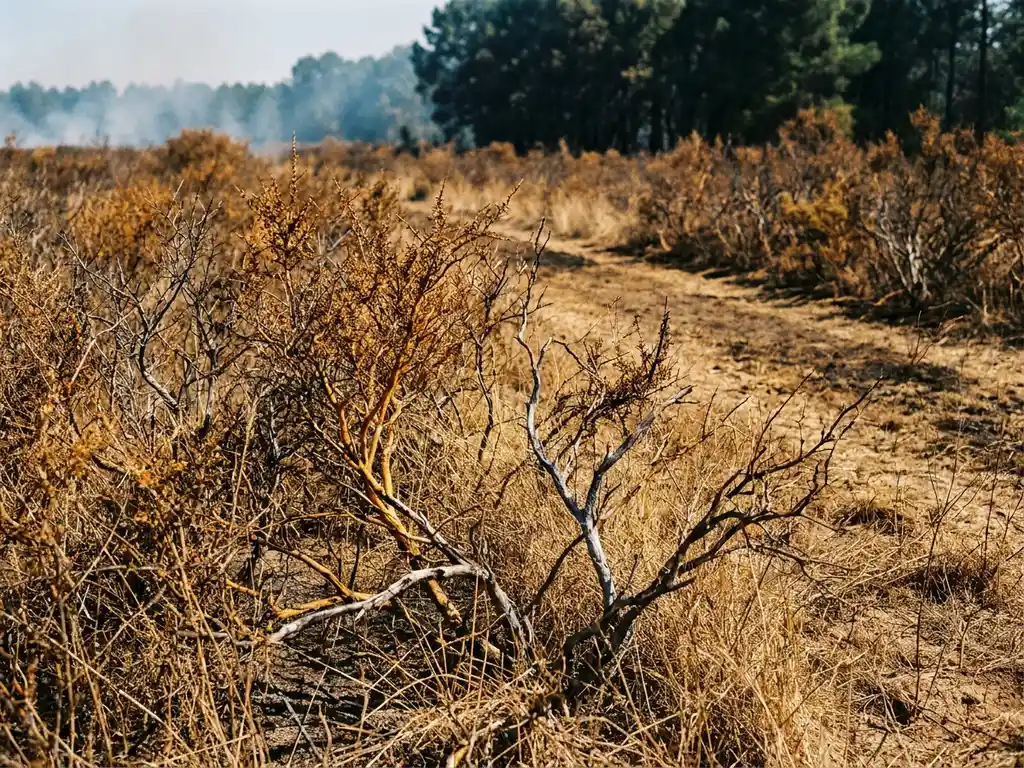
Vegetation is one of the most significant factors in fire management because it serves as the primary fuel source for wildfires. The type, density, moisture content, and arrangement of plants directly determine how quickly a fire starts, how fast it spreads, and how difficult it becomes to control. Understanding the relationship between vegetation and fire behavior is essential for land managers, safety professionals, and anyone responsible for protecting property in fire-prone environments. The sections below address the most important questions about how vegetation shapes fire risk, fire spread, and suppression efforts.
What types of vegetation pose the highest fire risk?
Dry, fine-textured vegetation poses the highest fire risk because it ignites easily and burns rapidly. Grasses, shrubs, and dead plant material are the most dangerous fuel types. Conifer forests with resinous needles and bark also carry a high risk. In contrast, broadleaf deciduous trees with high moisture content are generally less flammable, though they still contribute to fire spread under drought conditions.
The key factor is not just species type but the physical characteristics of the vegetation. Fine fuels such as dry grass and leaf litter have a large surface area relative to their volume, which means they lose moisture quickly and ignite at low temperatures. Shrubs like chaparral, gorse, and heathland species contain volatile oils that make them burn intensely even when partially green. Dead standing timber and accumulated woody debris create what fire scientists call ladder fuels, which allow ground-level fires to climb into the forest canopy and become far more destructive crown fires.
In urban-wildland interface zones, ornamental plants and garden vegetation can also contribute significantly to fire risk when they are dry, densely planted, or positioned close to structures.
How does vegetation density influence how fires spread?
Vegetation density directly controls the rate at which fire spreads by determining how much fuel is available and how continuously that fuel is arranged. Dense, unbroken vegetation provides a continuous pathway for flames to travel, while gaps in vegetation act as natural firebreaks that slow or stop fire spread. Higher fuel loads mean more intense fires that are harder to suppress.
Fire scientists use the term fuel continuity to describe how connected vegetation is across a landscape. When plants grow close together with little bare ground between them, fire moves rapidly from one plant to the next without interruption. In dense shrublands or thick grasslands, this continuity can allow fires to travel at speeds that outpace suppression efforts entirely.
Vertical density matters just as much as horizontal density. When vegetation forms continuous layers from ground level to the canopy, fire can escalate from a low-intensity surface fire into a high-intensity crown fire. This vertical fuel arrangement is particularly dangerous in conifer forests where low branches, shrubs, and accumulated needle litter create an unbroken column of combustible material.
How does seasonal vegetation change affect fire danger?
Fire danger from vegetation fluctuates significantly with the seasons because plant moisture content changes throughout the year. During dry seasons or prolonged drought, vegetation loses moisture and becomes far more combustible. Conversely, during wet seasons when plants are actively growing and retaining water, the same vegetation is much harder to ignite and burns less intensely.
The concept of live fuel moisture is central to seasonal fire risk assessment. When live fuel moisture drops below a critical threshold, typically during summer or autumn depending on the climate zone, even green-looking vegetation can ignite and sustain combustion. Dead fuel moisture responds even more rapidly to weather conditions, sometimes reaching dangerously low levels within days of dry, windy weather.
Seasonal timing also affects the accumulation of dead plant material. Autumn leaf fall in deciduous forests creates large volumes of fine dry fuel on the forest floor. Annual grasses that green up in spring become highly flammable by midsummer as they dry out and die. In 2026, many regions are experiencing extended dry seasons linked to shifting climate patterns, which is compressing the window of lower fire risk and extending peak fire danger periods well beyond historical norms.
What vegetation management techniques reduce wildfire risk?
Vegetation management reduces wildfire risk by reducing fuel loads, breaking fuel continuity, and creating defensible space around structures and communities. The most effective techniques include prescribed burning, mechanical clearing, strategic grazing, and the creation of fuel breaks. Applied consistently, these methods reduce fire intensity and slow spread, giving firefighters more opportunity to control fires before they become catastrophic.
Prescribed burning
Prescribed burning, also called controlled burning, involves deliberately setting low-intensity fires under carefully managed conditions. This technique removes accumulated dead vegetation and reduces the density of shrubs and ground cover that would otherwise fuel a wildfire. Indigenous land management traditions in many parts of the world relied on regular low-intensity burning for thousands of years to maintain healthy, lower-risk landscapes. Modern land managers increasingly recognize prescribed fire as one of the most cost-effective tools available for long-term fuel reduction.
Mechanical and manual clearing
Mechanical clearing uses machinery to remove or thin vegetation, while manual techniques involve hand tools and labor. Both approaches are used to create fuel breaks, clear vegetation from around structures, and reduce ladder fuels in forests. Mechanical clearing is particularly effective in areas where prescribed burning is not practical due to proximity to buildings, air quality restrictions, or terrain. The cleared material must be removed or chipped rather than left in place, as piled dead vegetation can become an even greater fire hazard.
How does vegetation affect firefighting and suppression efforts?
Vegetation affects firefighting and suppression efforts by determining fire intensity, rate of spread, and the accessibility of fire lines. Dense or tall vegetation makes it physically difficult for crews to approach a fire safely, while high-intensity fires driven by heavy fuel loads overwhelm the capacity of aerial and ground resources. The type of vegetation burning also influences which suppression methods are most effective.
In grassland fires, rapid spread is the primary challenge. Fires can move faster than vehicles in some conditions, making containment lines difficult to establish. In shrubland and forest environments, the problem shifts to intensity. Fires burning through chaparral or conifer forests generate enough radiant heat to ignite structures and vegetation well ahead of the flame front, a process called spotting, which can jump suppression lines entirely.
Vegetation also affects the effectiveness of water and retardant drops from aircraft. Dense forest canopies can intercept aerial retardant before it reaches ground-level fuels, reducing its effectiveness. Ground crews working in thick vegetation face increased physical danger from falling trees, reduced visibility, and limited escape routes. For these reasons, pre-fire vegetation management is considered far more effective than reactive suppression alone.
What is the role of vegetation in post-fire recovery and future risk?
Vegetation plays a dual role in post-fire recovery: it stabilizes soil and restores ecosystem function, but it also rebuilds the fuel load that will drive future fires. The species that recolonize a burned area, and how quickly they do so, directly shapes the fire risk of that landscape in subsequent years. In many fire-adapted ecosystems, early post-fire regrowth is particularly flammable, creating elevated risk within just a few years of a major fire.
Some plant species are specifically adapted to fire and regenerate rapidly after burning. Certain shrubs resprout from their root systems within weeks of a fire, and some conifer species release seeds that only germinate after exposure to heat. While this ecological resilience is valuable, it also means that fire-prone landscapes can return to dangerous fuel levels faster than management resources can address.
Post-fire landscapes also face the risk of invasive plant species colonizing burned areas. Invasive annual grasses in particular are a well-documented problem because they establish quickly, produce large volumes of fine dry fuel, and create conditions that increase the frequency of future fires. This dynamic, known as the grass-fire cycle, can fundamentally alter the fire regime of a landscape over time, making ongoing vegetation monitoring and management essential after any significant fire event.
How ExxFire helps protect assets in fire-prone environments
While vegetation management addresses fire risk at the landscape scale, protecting the critical equipment and infrastructure within those environments requires a different layer of defense. ExxFire’s integrated fire detection and suppression systems provide object-level protection for high-value assets that cannot afford damage from fire, smoke, or suppression agents, regardless of what is burning outside.
- Early smoke detection: Aspirating smoke detection identifies fire at the earliest possible stage, before flames develop and spread.
- Non-pressurized nitrogen suppression: ExxFire’s patented Cool Gas Generator suppresses fire using clean nitrogen gas that leaves no chemical residue, protecting sensitive electronics and components from secondary damage.
- PFAS-free and environmentally responsible: The system is a direct alternative to PFAS-containing suppression agents, aligning with sustainability and compliance requirements.
- Easy installation and low maintenance: Systems are pre-engineered for straightforward self-installation with no ongoing maintenance checks required after commissioning.
- Scalable protection: Units protect enclosures up to 4.5 m³ and can be interconnected to cover larger volumes, making them suitable for server racks, switchgear, BESS installations, and electrical cabinets.
For organizations operating in regions where wildfire risk is a growing concern, ensuring that mission-critical equipment has its own layer of protection is a practical and cost-effective step. Contact ExxFire to discuss how its fire detection and suppression systems can be integrated into your facility’s fire safety strategy.