

What is the role of heat detection in early fire prevention?
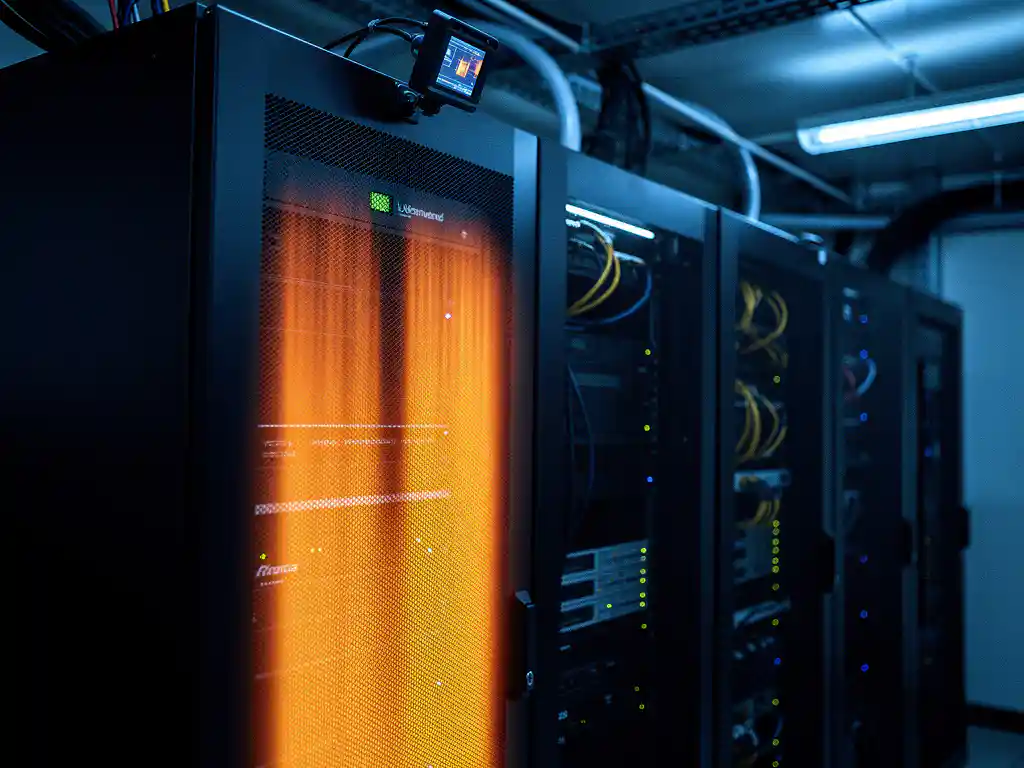
Heat detection plays a direct role in early fire prevention by identifying dangerous temperature rises before flames fully develop, triggering suppression systems or alarms that stop a fire from spreading. In industrial environments, where smoke-based detection may be unreliable due to dust, fumes, or airborne particles, heat detectors provide a robust and accurate first line of defense. The sections below address the most important questions about how heat detection works, where it fits best, and what its limitations are.
How does heat detection actually trigger fire suppression?
Heat detection triggers fire suppression by monitoring ambient temperature within a protected space and activating a suppression response when that temperature crosses a defined threshold or rises at an abnormal rate. The detector sends an electrical or mechanical signal to a control unit, which then releases the suppression agent – whether gas, water mist, or another medium – directly into the protected zone.
In practice, this process works in two stages. First, the heat detector continuously measures temperature conditions inside an enclosure or area. Second, once the trigger condition is met, the control unit initiates suppression without requiring human intervention. This automation is critical in industrial settings where a fire can escalate within seconds and where personnel may not be present at all times.
The speed of this response depends heavily on the type of heat detector used and how it is calibrated. A fixed-temperature detector will only activate once a set temperature is reached, which means a slow-building fire may cause damage before the threshold is crossed. A rate-of-rise detector, by contrast, responds to rapid temperature increases even if the absolute temperature remains below the fixed trigger point, giving it a meaningful advantage in early detection scenarios.
What are the different types of heat detectors used in industrial settings?
The main types of heat detectors used in industrial fire detection systems are fixed-temperature detectors, rate-of-rise detectors, and combination detectors that integrate both functions. Each type is suited to different risk profiles and environmental conditions.
- Fixed-temperature detectors activate when the surrounding air temperature reaches a predetermined level, typically between 57°C and 90°C depending on the application. They are reliable and straightforward but may respond too slowly in fast-developing fires.
- Rate-of-rise detectors measure how quickly temperature is increasing rather than waiting for a fixed ceiling to be reached. They are more sensitive to sudden fire events and are well suited to spaces where temperature can change rapidly.
- Combination detectors incorporate both fixed-temperature and rate-of-rise sensing, offering broader coverage. If the rate of rise is gradual but the temperature eventually reaches the fixed threshold, the detector still activates.
- Linear heat detection cables run along the length of a cable tray, conveyor, or pipe run, detecting heat at any point along their entire length. These are commonly used in tunnels, warehouses, and cable management systems in industrial facilities.
- Infrared and thermal imaging detectors use non-contact sensing to identify heat signatures across a wide area, making them suitable for large open industrial spaces or outdoor installations.
Selecting the right type depends on the specific hazard profile of the space, the expected fire behavior, and the environmental conditions such as ambient temperature ranges and the presence of corrosive atmospheres.
What is the difference between heat detection and smoke detection?
The core difference between heat detection and smoke detection is what each technology senses and at what stage of a fire it responds. Smoke detectors identify combustion byproducts – particles and gases – that are produced in the very early stages of a fire, often before visible flames appear. Heat detectors respond to the thermal energy produced as a fire develops further, meaning they typically activate at a later stage.
This distinction has practical consequences. Smoke detection generally provides an earlier warning, which is why it is the preferred technology in environments where early intervention is critical and where false alarms from smoke-like contaminants are not a concern. In clean office environments, server rooms, and residential buildings, smoke detection is the standard choice.
Heat detection, by contrast, is more tolerant of environments that would cause a smoke detector to false alarm. Dusty manufacturing floors, welding areas, kitchens, and engine rooms all generate airborne particles that can trigger smoke detectors without any actual fire being present. In these conditions, heat detection offers a more reliable signal because it only responds to genuine thermal events.
The two technologies are also calibrated differently. Smoke detectors measure particle density or light scattering in the air. Heat detectors measure temperature directly, using thermistors, bimetallic strips, or thermocouple-based sensors. This makes heat detection more straightforward to calibrate for specific industrial conditions but less capable of catching a smoldering fire in its earliest phase.
When should heat detection be used instead of smoke detection?
Heat detection should be used instead of smoke detection in environments where airborne contaminants, extreme temperatures, or high humidity would cause smoke detectors to generate frequent false alarms, or where the nature of the fire hazard produces significant heat before visible smoke. Industrial settings such as foundries, chemical plants, and engine rooms are typical examples.
The following conditions specifically favor heat detection over smoke detection:
- Dusty or dirty environments where particles in the air would continuously trigger optical or ionization smoke detectors
- High-humidity spaces such as boiler rooms or food processing facilities where condensation can interfere with smoke sensor accuracy
- Areas with normal combustion processes such as welding bays or areas with open flames, where smoke is produced as part of regular operations
- Spaces with very high ambient temperatures where standard smoke detectors are not rated to operate reliably
- Locations where rapid flaming fires are the primary risk rather than slow smoldering fires, since heat detection responds well to fast-developing thermal events
In many industrial facilities, the most effective approach combines both technologies: aspirating smoke detection for early warning in sensitive enclosed equipment, and heat detection as a secondary or complementary layer in the surrounding environment. This layered strategy reduces false alarms while maintaining early detection capability.
How does heat detection support fire safety compliance in industrial facilities?
Heat detection supports fire safety compliance in industrial facilities by providing a verified, standards-aligned method of fire sensing that satisfies the requirements of major regulatory frameworks including EN 54, NFPA 72, and FM Global standards. Compliance managers can specify heat detectors that carry third-party certification and document their installation as part of a formal fire risk assessment.
In ATEX-classified zones – areas where explosive atmospheres may be present – heat detectors must carry the appropriate ATEX certification to be legally installed. Using certified equipment is not optional; it is a regulatory requirement that directly affects both facility licensing and insurance coverage. Selecting detectors that are independently tested and certified removes ambiguity from the compliance process and provides a defensible record during audits.
Beyond equipment certification, heat detection also supports compliance through its integration with broader fire suppression systems and alarm panels. When a heat detector is linked to a suppression system and a central fire panel, the facility can demonstrate a complete and documented response chain from detection to suppression to alarm notification. This end-to-end documentation is increasingly required by insurers and regulatory bodies as evidence of a managed fire risk strategy.
What limits the effectiveness of heat detection in preventing fire damage?
The primary limitation of heat detection in early fire prevention is response latency. Because heat detectors activate based on temperature conditions that develop after combustion has already begun, they respond later in the fire timeline than smoke detection systems. By the time a heat detector triggers, a fire may have already caused significant damage to nearby equipment or materials.
Several additional factors constrain the effectiveness of heat detection:
- Fixed-temperature thresholds may be set too high for the assets being protected, meaning a fire can cause considerable damage before the trigger point is reached
- Poor placement of detectors in large or poorly ventilated spaces can mean heat dissipates before reaching the sensor, delaying activation
- Inability to detect smoldering fires that produce smoke and toxic gases long before generating significant heat, which is a known risk in electrical enclosures and cable systems
- No early warning for occupants in some configurations, particularly when heat detection is used solely to trigger suppression without also activating an audible alarm
- Environmental interference such as nearby heat sources, HVAC airflow, or direct sunlight can affect sensor accuracy and calibration
These limitations explain why heat detection alone is rarely sufficient for protecting high-value or mission-critical equipment. In enclosed assets such as electrical cabinets and server racks, combining heat sensing with early-stage smoke detection provides a more complete and responsive fire safety strategy.
How ExxFire addresses heat detection and early fire prevention
ExxFire’s integrated fire detection and suppression systems are designed specifically to overcome the limitations of relying on heat detection alone. By combining aspirating smoke detection with non-pressurized nitrogen gas suppression, ExxFire provides a faster, cleaner, and more complete response for high-value enclosed equipment. Key features of the system include:
- Aspirating smoke detection that identifies combustion particles at the earliest possible stage, before heat levels become dangerous
- Non-pressurized nitrogen gas suppression using the patented Cool Gas Generator technology, which leaves no chemical residue and causes no secondary damage to sensitive electronics
- Pre-engineered design for self-installation in closed enclosures up to 4.5 m³, with multiple units interconnectable for larger volumes
- Built-in relay outputs that integrate with existing fire panels, ensuring the system fits within a facility’s current compliance infrastructure
- CNPP-certified performance, providing documented third-party validation for compliance and insurance purposes
- PFAS-free suppression agent, making ExxFire the environmentally responsible alternative to legacy gas suppression systems
For industrial safety and compliance managers who need to protect switchgear, ICT cabinets, battery energy storage systems, and high-voltage equipment, ExxFire delivers early detection and fast suppression in a single, certified, low-maintenance solution. Contact ExxFire to discuss how the system can be specified for your facility’s specific risk profile.
Related Articles
- What are the fire risks associated with lithium-ion batteries?
- How do you maintain compliance with fire safety standards over time?
- What are the fire prevention standards for commercial buildings in 2026?
- How do you prevent fires when storing gasoline at home?
- Why are PFAS-containing fire suppression agents being banned?