

Can fire suppression systems contribute to carbon reduction goals?
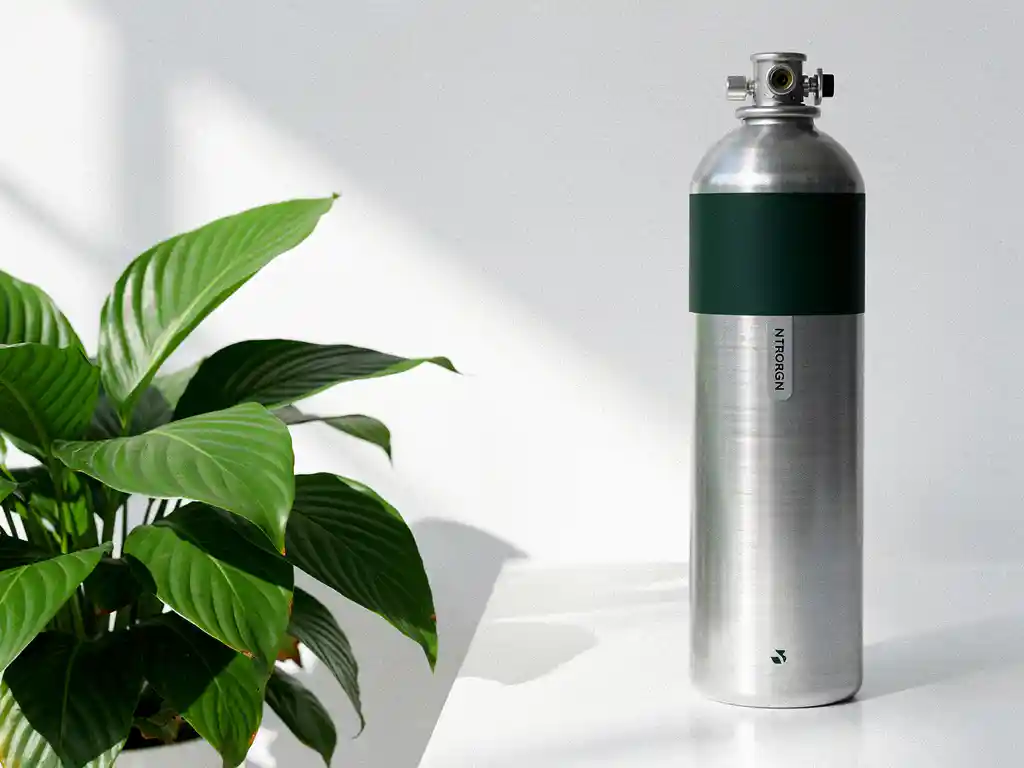
Yes, fire suppression systems can contribute meaningfully to carbon reduction goals — but only when the right suppression agent and technology are chosen. Systems based on inert gases like nitrogen produce no greenhouse gas emissions, leave no chemical residues, and avoid the persistent environmental damage caused by PFAS-containing agents. For organizations with active sustainability commitments, the choice of suppression system is no longer a purely technical decision — it is an environmental one.
The sections below address the most important questions organizations ask when evaluating eco-friendly fire suppression against their sustainability and carbon reduction objectives.
What makes a fire suppression system environmentally friendly?
A fire suppression system is environmentally friendly when its suppression agent causes no lasting harm to the atmosphere, leaves no toxic residues, and does not contribute to greenhouse gas emissions or chemical pollution. The three primary criteria are: zero global warming potential (GWP), zero ozone depletion potential (ODP), and the absence of persistent chemical compounds such as PFAS.
Beyond the agent itself, environmental credentials also depend on how the system is stored and deployed. Systems that use pressurized cylinders require periodic replacement and disposal, which carries its own environmental cost. Non-pressurized systems eliminate this cycle entirely. Maintenance frequency, installation complexity, and end-of-life disposal all factor into a system’s true environmental footprint.
Inert gas systems — particularly those using nitrogen — score well across all these dimensions. Nitrogen is a naturally occurring component of the atmosphere, meaning its release during a suppression event has no measurable atmospheric impact. That makes nitrogen suppression one of the most credible options for organizations pursuing sustainable fire safety alongside broader carbon and ESG goals.
How do PFAS-containing suppression agents affect carbon and sustainability goals?
PFAS-containing suppression agents directly undermine sustainability goals by introducing persistent, bioaccumulative chemicals into the environment that do not break down over time. Known as “forever chemicals,” PFAS compounds contaminate soil and groundwater long after a suppression event, creating liability that extends well beyond the incident itself.
From a carbon and ESG reporting perspective, PFAS use creates several problems. Many PFAS-based agents also carry high global warming potentials, meaning their atmospheric release contributes directly to greenhouse gas emissions. Regulatory pressure is intensifying across Europe and North America, with restrictions on PFAS in firefighting agents tightening significantly in 2025 and 2026. Organizations still relying on these agents face growing compliance risk alongside their environmental exposure.
For sustainability-conscious procurement teams and health and safety officers, transitioning to PFAS-free fire suppression is increasingly a prerequisite rather than a preference. Choosing a system that avoids these compounds entirely removes a meaningful source of environmental liability and aligns suppression infrastructure with the direction of both regulation and corporate sustainability commitments.
What role does inert gas suppression play in reducing environmental impact?
Inert gas suppression reduces environmental impact by replacing chemically active or greenhouse-gas-intensive agents with naturally occurring gases that leave no atmospheric or chemical trace. Nitrogen, the most widely used inert suppression gas, makes up approximately 78% of the Earth’s atmosphere, so its controlled release during a fire event has no measurable effect on air quality, climate, or chemical contamination.
The environmental advantages of inert gas suppression extend beyond the suppression event itself. Because inert gases are non-toxic and chemically inert, they cause no damage to the protected equipment, eliminating the need for costly hardware replacement and the associated manufacturing and disposal emissions. This directly supports carbon footprint fire safety goals by reducing the downstream emissions that follow a fire incident.
Inert gas systems also tend to have longer operational lifespans and lower maintenance requirements than chemical agent systems, which means fewer replacement cycles and less material waste over time. For organizations measuring environmental impact across the full lifecycle of their infrastructure, this operational efficiency is a meaningful contribution to total carbon reduction.
Can fire suppression system choices count toward ESG or green building certifications?
Yes, fire suppression system choices can support ESG reporting and green building certifications, particularly when the system avoids high-GWP agents, eliminates PFAS compounds, and demonstrates low lifecycle environmental impact. Certification frameworks such as LEED and BREEAM include criteria related to chemical use, indoor air quality, and environmental responsibility that suppression agent selection can directly influence.
For ESG reporting, the relevant considerations typically fall under environmental governance and supply chain responsibility. Replacing a PFAS-containing or high-GWP suppression system with a nitrogen-based alternative provides a documented, auditable improvement that can be reported under emissions reduction and chemical management categories. This is particularly relevant for organizations subject to EU Taxonomy requirements or those aligning with frameworks such as GRI or TCFD.
It is worth noting that certification credit is not automatic — documentation, testing records, and certification evidence from recognized bodies are typically required. Systems tested and certified by independent organizations provide the kind of verifiable evidence that ESG auditors and green building assessors expect.
What’s the difference between nitrogen suppression and CO₂ suppression for carbon goals?
The key difference is that nitrogen suppression has no direct carbon impact, while CO₂ suppression releases a greenhouse gas directly into the atmosphere during a suppression event. For organizations with carbon reduction targets, this distinction is material — a CO₂ system discharge contributes measurably to an organization’s Scope 1 emissions, while a nitrogen discharge does not.
CO₂ suppression systems are effective at extinguishing fires, but they carry additional concerns beyond carbon emissions. CO₂ is hazardous to human life at the concentrations required for suppression, meaning these systems require strict safety protocols, evacuation procedures, and access controls. This adds operational complexity and risk that nitrogen systems avoid entirely.
Nitrogen suppression, by contrast, works by reducing oxygen concentration to a level that prevents combustion while remaining safe for brief human exposure at the concentrations typically used in enclosed equipment suppression. For protecting server racks, switchgear, and electrical cabinets — environments where personnel may be present — nitrogen is both the safer and the more environmentally responsible choice. When evaluating nitrogen fire suppression environmental impact against CO₂, the comparison consistently favors nitrogen across safety, sustainability, and carbon accounting dimensions.
How should organizations evaluate suppression systems against sustainability criteria?
Organizations should evaluate fire suppression systems against sustainability criteria using a structured set of questions that cover the suppression agent, system lifecycle, regulatory compliance, and alignment with internal ESG commitments. A system that scores well on suppression performance but poorly on environmental criteria is increasingly difficult to justify — both to regulators and to stakeholders.
Key evaluation criteria include:
- Suppression agent composition: Does the agent contain PFAS, halocarbons, or other persistent chemicals? Is it PFAS-free and free of high-GWP compounds?
- Global warming potential: What is the GWP of the agent, and does its release contribute to Scope 1 emissions?
- Ozone depletion potential: Does the agent pose any risk to stratospheric ozone?
- Lifecycle impact: How often does the system require maintenance, agent replacement, or component disposal?
- Regulatory trajectory: Is the agent subject to current or upcoming restrictions under REACH, F-Gas regulations, or national PFAS bans?
- Third-party certification: Has the system been independently tested and certified by a recognized body?
- Residue and cleanup: Does the system leave chemical residues that require hazardous waste disposal after activation?
Organizations should also consider total cost of ownership as part of sustainability evaluation. Systems with lower maintenance demands, longer service intervals, and no hazardous agent disposal requirements reduce both operational costs and environmental impact over time. The intersection of cost efficiency and environmental responsibility is where the strongest business case for green fire suppression systems is built.
How ExxFire supports carbon reduction goals through fire suppression
ExxFire’s combined fire detection and suppression systems are purpose-built to meet the sustainability criteria outlined above. By using non-pressurized nitrogen gas stored in a solid state through its patented Cool Gas Generator technology, ExxFire delivers a suppression solution with zero global warming potential, no PFAS content, and no chemical residues — making it one of the most credible eco-friendly fire suppression options available for protecting enclosed equipment.
The systems are designed specifically for mission-critical enclosures such as server racks, switchgear cabinets, ICT enclosures, and Battery Energy Storage Systems. Key sustainability and operational advantages include:
- PFAS-free nitrogen suppression with no atmospheric or chemical contamination
- No pressurized cylinders, eliminating periodic replacement and disposal cycles
- Aspirating smoke detection for early intervention, reducing the scale of damage and associated downstream emissions
- Easy self-installation without special certification, reducing installation-related resource use
- Low maintenance requirements that support a low Total Cost of Ownership and minimal lifecycle environmental impact
- Independent testing and certification by CNPP France and DMT (TÜV Nord), providing the documented evidence ESG auditors and green building assessors require
For organizations looking to align their fire safety infrastructure with carbon reduction targets and ESG commitments, ExxFire offers a technically proven and environmentally responsible path forward. Contact ExxFire to discuss how its nitrogen suppression systems can support your sustainability goals.