

How does nitrogen fire suppression compare to traditional sprinkler systems?
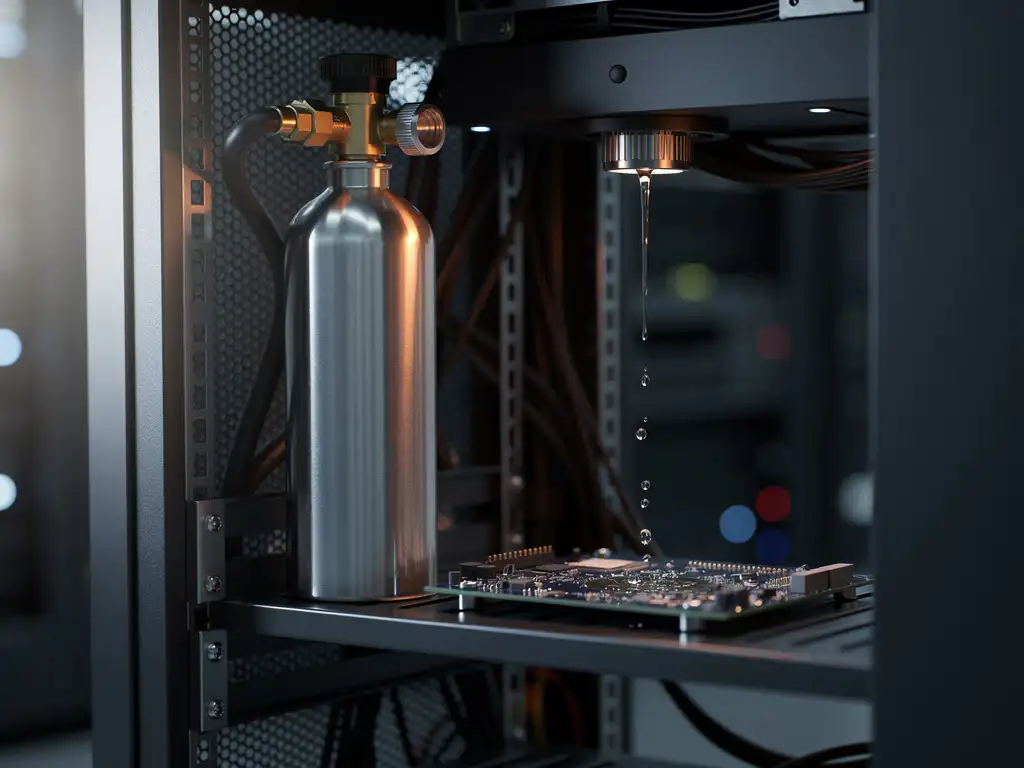
Nitrogen fire suppression is significantly safer for sensitive equipment than traditional sprinkler systems. While sprinklers extinguish fires with water, nitrogen suppression systems displace oxygen inside a closed enclosure using inert gas, eliminating the fire without introducing any substance that could damage electronics, hardware, or stored data. The sections below break down the key differences across protection quality, environmental impact, and total cost.
What are the main disadvantages of sprinkler systems for sensitive equipment?
Sprinkler systems pose serious risks to sensitive equipment because they extinguish fires using water, which causes immediate and often irreversible damage to electronics, electrical components, and stored data. For environments like server rooms, ICT cabinets, or switchgear enclosures, water damage from a sprinkler activation can be as destructive as the fire itself.
The core problem with water-based fire suppression in technical environments comes down to several compounding risks:
- Collateral damage: Water conducts electricity and corrodes metal contacts, circuit boards, and connectors. Even a brief activation can destroy equipment that the fire never touched.
- Delayed detection: Traditional sprinkler systems are typically triggered by heat, meaning a fire must already be well-developed before suppression begins. By then, hardware damage is extensive.
- Indiscriminate coverage: Sprinklers protect a room or zone, not the specific object at risk. Every piece of equipment in the activated zone gets wet, regardless of proximity to the fire source.
- Extended downtime: After a sprinkler activation, drying, cleaning, and replacing equipment can take days or weeks, causing significant operational disruption.
For organizations where uptime and hardware integrity are business-critical, these disadvantages make water-based suppression an inadequate solution for protecting high-value assets at the object level.
How does nitrogen fire suppression actually work?
Nitrogen fire suppression works by flooding a closed enclosure with inert nitrogen gas, which reduces the oxygen concentration inside the protected space below the threshold needed to sustain combustion. Because fire requires oxygen to burn, removing available oxygen extinguishes the fire without any water, foam, or chemical agent.
In modern object-level systems, the nitrogen is stored in a solid, non-pressurized state inside a gas generator. When a fire or smoke signal is detected, the generator releases nitrogen gas directly into the protected enclosure, such as a server rack or electrical cabinet. Suppression happens at the source, before the fire can spread to surrounding equipment or the wider facility.
A key distinction from room-flooding gas systems is that object-level nitrogen suppression targets only the enclosure at risk. The rest of the room remains unaffected, personnel are not endangered, and no evacuation is required before activation. Early smoke detection, often through aspirating smoke detection technology, triggers suppression at the earliest possible stage, well before flames develop and hardware damage becomes severe.
Does nitrogen fire suppression cause damage to electronics or hardware?
No. Nitrogen fire suppression does not cause damage to electronics or hardware. Nitrogen is a chemically inert gas that leaves no residue, no moisture, and no corrosive byproducts. After suppression, equipment inside the protected enclosure can typically be inspected and returned to service without cleaning or replacement caused by the suppression agent itself.
This is a fundamental advantage over both water-based and chemical suppression systems. Some chemical agents, particularly older halon alternatives or PFAS-containing gases, can leave residues that contaminate sensitive components or require specialist cleaning before equipment can be safely restarted. Nitrogen eliminates this concern entirely.
Because nitrogen makes up approximately 78% of the air we breathe, it is non-toxic, non-reactive, and safe for use around electronic components at any stage of their lifecycle. The suppression event itself is clean, and the only post-incident action required is recharging or replacing the gas generator unit before the next potential event.
Which fire suppression system is better for data centers and ICT cabinets?
For data centers and ICT cabinets, nitrogen-based inert gas fire suppression is the better choice. It protects at the object level, activates early through smoke detection, causes no damage to hardware or stored data, and does not require room evacuation or facility-wide shutdown during activation. Water-based systems cannot match this combination of precision and safety for electronics-dense environments.
Data centers and ICT environments have specific requirements that make object-level nitrogen suppression particularly well-suited:
- Precision protection: Individual server racks or cabinets can be protected independently, meaning a suppression event in one unit does not affect adjacent equipment.
- Early activation: Aspirating smoke detection identifies combustion particles at trace levels, triggering suppression before open flames develop.
- No downtime from suppression: Because nitrogen leaves no residue and causes no physical damage, the suppression event itself does not force an extended shutdown.
- Compatibility with existing infrastructure: Systems can be integrated with existing fire panels via relay outputs, fitting into established safety protocols without a full infrastructure overhaul.
Room-level gas suppression systems, while an improvement over sprinklers for electronics environments, still require full room evacuation and can be costly to maintain. Object-level nitrogen suppression addresses the risk at its source, which is the most efficient and least disruptive approach for mission-critical ICT infrastructure.
Are nitrogen fire suppression systems environmentally friendly compared to sprinklers?
Nitrogen fire suppression systems are more environmentally friendly than most traditional fire suppression alternatives, including many chemical gas systems. Nitrogen is a naturally occurring, non-toxic gas with zero global warming potential and zero ozone depletion potential. It contains no PFAS compounds, no hydrofluorocarbons, and no synthetic chemicals that persist in the environment after release.
This distinction matters increasingly in 2026, as regulatory pressure on PFAS-containing fire suppression agents continues to tighten across Europe and other major markets. Many legacy chemical suppression systems rely on substances that are now under active restriction or being phased out due to their environmental persistence and toxicity. Nitrogen carries none of these concerns.
Compared to sprinkler systems specifically, nitrogen suppression also avoids the water waste associated with a suppression activation and eliminates the risk of water contamination in environments where sensitive materials or chemicals are stored nearby. The overall environmental footprint, from production through to end-of-life disposal, is substantially lower for nitrogen-based systems than for chemical alternatives or large-scale water suppression infrastructure.
What is the total cost of ownership for nitrogen versus sprinkler systems?
The total cost of ownership for nitrogen fire suppression systems is typically lower than for sprinkler systems when protecting sensitive equipment, primarily because nitrogen suppression prevents the hardware replacement and downtime costs that a water-based activation causes. While the upfront investment in a nitrogen system may be higher per protected unit, the downstream cost avoidance is substantial.
A full TCO comparison should account for several factors beyond installation cost:
- Hardware replacement after activation: A single sprinkler activation in a server room or switchgear cabinet can result in hardware losses worth many times the cost of a suppression system. Nitrogen suppression eliminates this risk.
- Maintenance costs: Object-level nitrogen systems are designed for low maintenance. There are no pressurized cylinders requiring annual inspection, no complex pipe networks to service, and no specialist certification required for installation in many configurations.
- Downtime costs: Operational downtime following a water-based suppression event can last days. Nitrogen suppression limits damage to the fire source, keeping the rest of the operation running.
- Regulatory compliance costs: As PFAS regulations tighten, organizations using chemical suppression systems face replacement costs. Nitrogen systems are already fully compliant with current and anticipated environmental regulations.
When the cost of a single avoided incident is factored in, nitrogen fire suppression consistently delivers a lower TCO for environments where hardware value and uptime are high.
How ExxFire protects sensitive equipment with nitrogen fire suppression
ExxFire’s integrated fire detection and suppression systems are purpose-built for exactly the environments described throughout this article. Each system combines aspirating smoke detection with non-pressurized nitrogen gas suppression, delivered through ExxFire’s patented Cool Gas Generator technology. The result is early detection, fast suppression, and zero damage to the equipment being protected.
Key features of ExxFire’s approach include:
- Object-level protection for closed enclosures up to 4.5 m³, with units interconnectable for larger volumes
- Pre-engineered design that allows self-installation without specialist certification
- PFAS-free, chemically inert nitrogen suppression that leaves no residue and causes no hardware damage
- Built-in relay outputs for seamless integration with existing fire panels
- Testing and certification by CNPP France and DMT, part of TÜV Nord, ensuring verified performance
Whether you are protecting a single ICT cabinet, a battery energy storage system, or a network of switchgear enclosures, ExxFire’s fire suppression systems provide a certified, sustainable, and cost-effective alternative to water-based or chemical suppression. Contact ExxFire to discuss the right configuration for your specific environment and assets.
Related Articles
- Can fire management help restore degraded landscapes?
- How do you test a fire suppression system for regulatory compliance?
- How do you prevent fires in a multi-story building?
- What is passive fire protection and how does it work?
- Can existing fire suppression systems be upgraded to reduce environmental impact?