

How do children accidentally cause fires and how can parents prevent them?
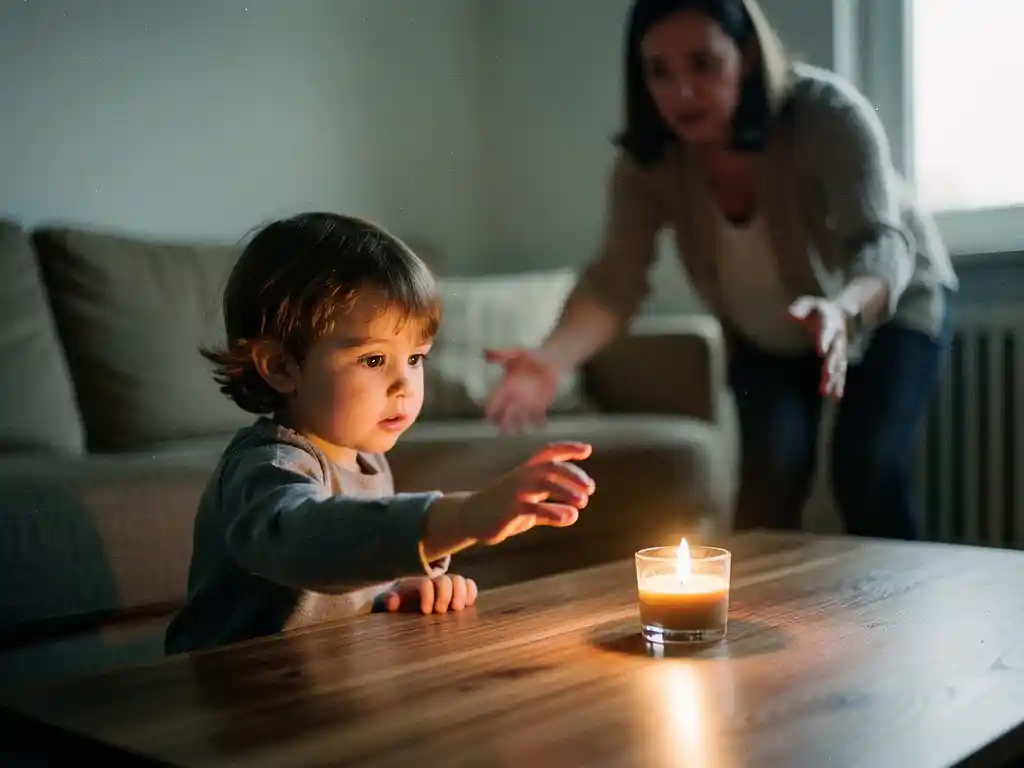
Children accidentally cause fires most often by playing with lighters, matches, or candles left within reach, or by misusing kitchen appliances and heating equipment. Curiosity is the driving force – young children do not yet understand the danger of fire, while older children may experiment deliberately without grasping the consequences. The questions below cover the most important aspects of child fire safety, from recognising hazards to teaching prevention at home.
What are the most common ways children accidentally start fires?
Children most commonly start fires by playing with lighters or matches, leaving items too close to heat sources, misusing candles, and interfering with kitchen appliances. Unsupervised cooking is one of the leading causes of child-related house fires, particularly among older children who attempt to prepare food without adult guidance.
Young children are drawn to flames out of pure curiosity. A lighter left on a coffee table or a box of matches in a kitchen drawer is an irresistible object for a toddler or primary school-age child who has no concept of the danger involved. Research and fire service data consistently identify playing with fire as a primary cause of child-related residential fires.
Beyond open flames, children also cause fires by placing toys, clothing, or paper near radiators, space heaters, or electric blankets. Electrical sockets and appliance cords are another risk area, particularly for toddlers who may insert objects into sockets or pull appliances off counters by their cords.
At what age are children most likely to cause accidental fires?
Children between the ages of two and nine are statistically the most likely to cause accidental fires at home, with the peak risk occurring between ages three and six. At this stage, children are mobile and inquisitive but lack the cognitive development to connect their actions with dangerous outcomes.
Toddlers and preschool-age children are drawn to shiny, interesting objects like lighters and candles without any understanding of risk. As children move into the early school years, they may begin experimenting more deliberately, testing what happens when paper meets a flame or how a lighter works. This combination of curiosity and limited risk comprehension makes the early childhood years the most critical period for fire safety education and home hazard management.
Teenagers can also cause fires, though more often through negligence than curiosity, such as leaving cooking unattended, falling asleep with a candle burning, or overloading electrical sockets. The motivations differ by age, which means fire safety conversations need to be adapted to the child’s developmental stage.
What household items pose the greatest fire risk around children?
The household items that pose the greatest fire risk around children are lighters, matches, candles, cooking appliances, space heaters, and electrical sockets. These items are common in most homes, often left accessible, and capable of starting a fire within seconds if a child interacts with them unsupervised.
- Lighters and matches: Small, portable, and easy for children to find, these are the most frequent starting point for child-caused fires.
- Candles: Decorative candles are often placed at child height and left burning unattended, making them a significant hazard.
- Cooking appliances: Hobs, ovens, and toasters are involved in a large proportion of kitchen fires, especially when children attempt to cook unsupervised.
- Space heaters and radiators: Clothing, toys, and bedding placed too close to these items can ignite quickly.
- Electrical sockets and extension leads: Toddlers may insert objects into sockets, and overloaded extension leads can overheat and spark.
- Fireplaces and wood-burning stoves: Open or poorly guarded fireplaces present both burn and fire-spread risks.
How can parents childproof their home against fire hazards?
Parents can childproof their home against fire hazards by storing ignition sources out of reach, installing safety covers on electrical sockets, using fireguards, never leaving cooking unattended, and ensuring smoke alarms are fitted on every floor. A combination of physical barriers and consistent supervision is the most effective approach.
Start with ignition sources. Lighters and matches should be stored in a locked drawer or high cabinet, completely out of sight and reach. Child-resistant lighters add a layer of protection, but no lighter should be treated as childproof. Candles should never be left burning in a room without adult supervision, and should be placed on stable, elevated surfaces away from curtains, paper, or fabric.
In the kitchen, use hob guards to prevent children from reaching pots and pans, and establish a clear rule that children stay out of the kitchen when cooking is in progress. Turn pot handles inward so they cannot be grabbed. For electrical safety, fit socket covers throughout the home and keep extension leads tidy and away from high-traffic areas.
Fit a fireguard in front of any open fireplace, wood-burning stove, or gas fire. Ensure the guard is secured to the wall so it cannot be pulled over. Finally, test smoke alarms monthly and replace batteries at least once a year to ensure early warning systems are always functional.
What should parents teach children about fire safety?
Parents should teach children that fire is a tool for adults only, not a toy; that they should never touch lighters, matches, or candles; and that if they see a fire, they should leave immediately and tell an adult. Age-appropriate fire safety education significantly reduces the risk of child-caused fires.
For younger children, keep the message simple and consistent: fire is hot, fire hurts, and fire is only for grown-ups. Use calm, clear language rather than frightening imagery, which can cause anxiety without improving understanding. Practice a home fire escape plan together, so children know exactly what to do and where to go if an alarm sounds.
As children grow older, expand the conversation. Teach them how to call emergency services, what to do if their clothing catches fire (stop, drop, and roll), and why they should never go back into a burning building. Explain the importance of staying low in smoke and closing doors to slow the spread of fire.
Reinforce these lessons regularly rather than as a single conversation. Children retain information better through repetition, practice, and demonstration. Running a fire drill at home once or twice a year makes the correct response automatic rather than something a frightened child has to think through under pressure.
What early detection tools help protect families from accidental fires at home?
The most effective early detection tools for home fire safety are smoke alarms, heat detectors, and carbon monoxide detectors. Smoke alarms in particular are the single most important device a household can have, providing the earliest possible warning when a fire starts and giving families time to escape safely.
Smoke alarms should be installed on every floor of the home, inside each bedroom, and in hallways. Interconnected alarms, where one alarm triggers all others simultaneously, are especially valuable in larger homes or homes with multiple floors. Test alarms monthly and replace units that are more than ten years old, as sensor sensitivity degrades over time.
Heat detectors are a useful complement to smoke alarms in kitchens, where cooking fumes can trigger false alarms from standard smoke detectors. Carbon monoxide detectors are essential in any home with gas appliances, boilers, or open fires, as carbon monoxide is invisible and odourless but life-threatening.
For families who want a more advanced layer of protection, smart smoke detectors now offer app-based alerts that notify parents when an alarm triggers, even if they are in another part of the house or away from home. This is particularly relevant for households with young children who may be in a different room or napping during the day.
How ExxFire supports fire safety in environments where it matters most
While home fire safety relies on alarms, education, and vigilance, there are environments where the stakes of a fire are even higher and where passive detection alone is not enough. ExxFire specialises in combined fire detection and suppression systems designed to protect mission-critical equipment and high-value assets in professional and industrial settings.
ExxFire’s integrated systems combine aspirating smoke detection with nitrogen-based suppression delivered through its patented Cool Gas Generator technology. The systems are built for closed enclosures such as server racks, switchgear cabinets, and battery energy storage systems, and are engineered to act at the earliest sign of smoke before a fire can develop and spread.
- Early smoke detection: Aspirating smoke detection identifies fire at the pre-combustion stage, far earlier than conventional detectors.
- Clean nitrogen suppression: Non-pressurized nitrogen gas extinguishes fire without chemical residue, leaving sensitive electronics undamaged.
- PFAS-free and environmentally friendly: ExxFire’s technology is a certified alternative to PFAS-containing suppression systems.
- Easy installation: Systems are pre-engineered for self-installation without specialist certification, reducing total cost of ownership.
- Certified and tested: All systems are validated by CNPP France and DMT, part of TÜV Nord, ensuring compliance with rigorous safety standards.
If you manage facilities, critical infrastructure, or high-value equipment that cannot afford fire damage or downtime, contact ExxFire to find out how its detection and suppression systems can protect what matters most.