

Can a single suppression system meet both EN54 and NFPA standards?
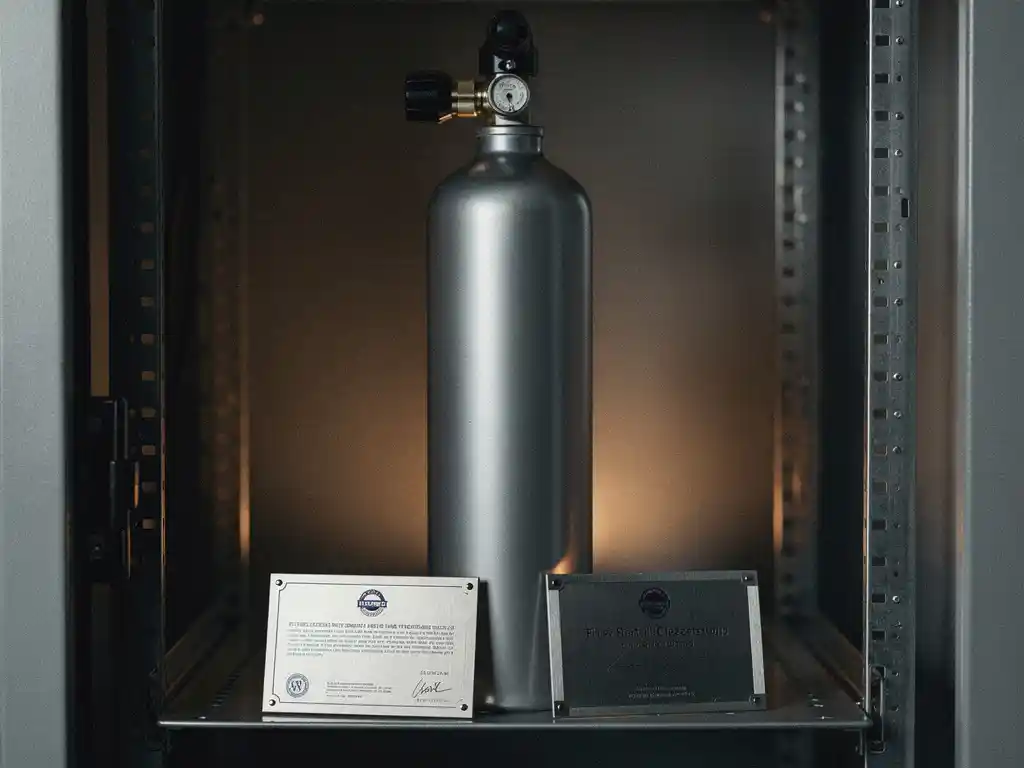
A single suppression system can meet both EN54 and NFPA standards, but doing so requires deliberate engineering choices, careful product selection, and rigorous third-party certification against both frameworks. The two standards share common ground in detection sensitivity and suppression effectiveness, yet differ enough in testing methodology and documentation requirements that dual compliance is not automatic. The sections below unpack the key differences, overlaps, technical challenges, and practical steps for evaluating a system that claims to satisfy both.
What are the key differences between EN54 and NFPA fire safety standards?
EN54 is a European harmonized standard covering fire detection and fire alarm systems, developed by the European Committee for Standardization (CEN). NFPA standards, primarily NFPA 72 (fire alarm) and NFPA 2001 (clean agent suppression), are published by the National Fire Protection Association and govern fire safety practice across North America and many other markets. The core difference is regulatory origin: EN54 is tied to CE marking and EU market access, while NFPA compliance is typically enforced through local adoption by US states, municipalities, and insurance bodies such as FM Global.
Beyond jurisdiction, the two frameworks diverge in several practical ways:
- Testing methodology: EN54 specifies standardized fire test classes (TF1 through TF8) conducted under controlled laboratory conditions. NFPA relies on UL listings and FM approvals, which use different fire scenarios and acceptance criteria.
- Documentation and traceability: EN54 requires a Declaration of Performance and CE marking under the Construction Products Regulation. NFPA compliance is demonstrated through listing certificates from recognized laboratories such as UL or FM.
- System design rules: NFPA 2001 sets specific flooding factor calculations and minimum design concentrations for suppression agents. EN54 Part 14 and related standards focus more on installation and commissioning procedures.
- Maintenance intervals: NFPA standards often specify more prescriptive inspection and testing schedules than their EN54 counterparts.
For industrial facility managers operating across multiple regions, understanding these distinctions is the first step toward specifying a system that satisfies both frameworks without requiring parallel installations.
Where do EN54 and NFPA requirements overlap?
EN54 and NFPA standards share significant common ground in detection sensitivity, alarm integrity, and suppression performance objectives. Both frameworks require early and reliable smoke detection, redundancy in alarm signaling, and suppression systems capable of extinguishing a defined fire load within the protected enclosure. This shared performance intent is what makes dual compliance achievable in principle.
Key areas of overlap include:
- Aspirating smoke detection (ASD): High-sensitivity aspirating detectors are recognized and tested under both EN54-20 and NFPA 72, making them strong candidates for dual-compliant installations.
- Agent effectiveness: Both frameworks accept inert gas suppression agents, provided the agent achieves the required design concentration within the specified discharge time.
- Alarm and fault signaling: Both require that detection systems report to a central fire panel or monitoring system, with clear differentiation between alarm, fault, and supervisory signals.
- Enclosure integrity: For suppression systems, both EN54-related suppression standards and NFPA 2001 emphasize that the protected space must retain the agent long enough to ensure extinguishment.
These overlaps mean that a well-engineered system does not need to be rebuilt from scratch for each market. The challenge lies in satisfying the specific testing and documentation requirements of each standard simultaneously, rather than sequentially or independently.
What makes dual-standard certification technically challenging?
Dual-standard certification is technically challenging primarily because EN54 and NFPA use different test laboratories, fire scenarios, and acceptance criteria, meaning a product must pass two independent and non-equivalent test regimes. A component certified under EN54 is not automatically recognized under NFPA, and vice versa. Manufacturers must fund, coordinate, and maintain certifications with separate bodies, which adds cost and complexity to the product development cycle.
Several specific technical hurdles arise in practice:
- Agent concentration calculations: NFPA 2001 requires specific minimum design concentrations for inert gases, calculated using standardized cup-burner values. EN54 and related European suppression standards may apply different calculation methodologies, requiring the system to be engineered to the more demanding of the two.
- Detector placement and spacing rules: EN54 Part 7 and NFPA 72 specify different maximum detector spacing and height limitations, which can create conflicts in certain enclosure geometries.
- Component-level versus system-level certification: EN54 certifies individual components (detectors, control panels, sounders). NFPA compliance is often evaluated at the system level through UL listings, meaning the entire installed configuration must match the listed arrangement.
- Documentation language and format: CE marking under EN54 requires a Declaration of Performance in a specific EU format. NFPA compliance documentation follows US listing certificate conventions, and the two are not interchangeable for regulatory submissions.
For facility managers, these challenges translate into a practical requirement: always ask a supplier for separate, original certification documents from both frameworks, not a single document claiming equivalence.
Which fire suppression technologies are best positioned for dual compliance?
Inert gas suppression systems, particularly those using nitrogen, are among the best-positioned technologies for dual EN54 and NFPA compliance. Nitrogen is recognized as an acceptable suppression agent under both frameworks, it leaves no residue, and it poses no environmental or toxicity concerns that would trigger additional regulatory scrutiny under either standard. This makes the path to dual certification more straightforward compared to chemical agents, which face additional restrictions under EU REACH regulations and evolving PFAS rules.
Aspirating smoke detection is similarly well-positioned. EN54-20 provides a clear certification pathway for aspirating detectors in Europe, and NFPA 72 includes provisions for air-sampling smoke detection. Systems that pair aspirating detection with inert gas suppression therefore have a logical route to satisfying both frameworks with a single integrated design.
Technologies that face more difficulty achieving dual compliance include:
- Halon alternatives containing PFAS compounds: These face increasing regulatory restrictions in Europe that have no direct NFPA equivalent, creating asymmetric compliance burdens.
- Proprietary chemical agents: Agents listed under a single standard’s test regime may not have equivalent test data available for the other framework.
- Pressurized cylinder systems: While widely used, pressurized systems introduce additional pressure vessel regulations (PED in Europe, DOT in the US) that add a third compliance layer on top of the fire safety standards themselves.
Non-pressurized nitrogen systems sidestep the pressure vessel complication entirely, reducing the total number of regulatory frameworks a facility manager must satisfy simultaneously.
How should a facility manager evaluate a system claiming dual EN54 and NFPA compliance?
A facility manager evaluating a dual EN54 and NFPA compliance claim should request original certification documents from recognized test bodies for each standard separately, verify that the specific product configuration installed matches the certified configuration exactly, and confirm that certifications are current and not expired or suspended. A claim of dual compliance is only meaningful if both certifications cover the same product in the same configuration.
A practical evaluation checklist includes:
- Request EN54 certificates: Ask for the EN54 component certificates (e.g., EN54-20 for aspirating detectors) issued by a notified body, along with the Declaration of Performance.
- Request NFPA-related listings: Ask for UL or FM listing certificates that reference NFPA 72 or NFPA 2001 compliance for the suppression agent and detection components.
- Verify configuration match: Confirm that the listed or certified configuration matches the system as it will be installed in your facility, including pipe lengths, nozzle counts, and enclosure volume.
- Check certification dates: Both EN54 and NFPA-related certifications have validity periods and may require periodic renewal or surveillance audits.
- Assess installer qualifications: Some NFPA standards require installation by certified contractors. Verify that the installer holds the appropriate qualifications for both frameworks.
- Review maintenance requirements: Confirm that the maintenance schedule satisfies the more demanding of the two standards, and that local service capability exists to fulfill it.
Engaging an independent fire safety consultant to review the documentation before procurement is a worthwhile investment for high-value or mission-critical applications.
When is dual-standard compliance actually required?
Dual EN54 and NFPA compliance is required when a facility operates under the regulatory jurisdiction of both frameworks simultaneously, or when a project specification explicitly mandates both. The most common scenarios are multinational organizations standardizing fire protection across European and North American sites, projects funded or insured by bodies that require NFPA compliance globally regardless of local law, and export contracts where the end-user country adopts NFPA standards but the equipment is manufactured and CE-marked in Europe.
In practice, dual compliance is not always a legal requirement. Many European facilities need only EN54 compliance, and many North American facilities need only NFPA compliance. However, specifying a system that meets both frameworks voluntarily offers several advantages: it simplifies procurement for organizations with global operations, it provides a stronger evidence base for insurance negotiations, and it future-proofs the installation against potential regulatory changes in either jurisdiction.
For industrial sectors such as oil and gas, mining, and large-scale manufacturing, insurance requirements from FM Global or similar bodies may effectively mandate NFPA-aligned performance standards even in markets where local law requires only EN54 compliance. In these cases, dual compliance becomes a practical commercial necessity rather than a strict legal one.
How ExxFire supports dual-standard fire safety compliance
ExxFire’s integrated fire detection and suppression systems are designed to address the core technical requirements that make dual EN54 and NFPA compliance achievable. The systems combine aspirating smoke detection with non-pressurized nitrogen gas suppression, the two technology categories best positioned for recognition under both frameworks. Key features that support compliance include:
- CNPP-certified performance: ExxFire systems are tested and certified by CNPP in France, providing documented suppression performance data that can support compliance submissions in both European and international contexts.
- Nitrogen-based suppression: The Cool Gas Generator technology uses inert nitrogen, which is accepted under both EN54-related suppression standards and NFPA 2001, and avoids the PFAS restrictions that complicate dual compliance for chemical agent systems.
- Non-pressurized design: By storing nitrogen in a non-pressurized solid state, ExxFire eliminates the pressure vessel regulations that add a third compliance layer for cylinder-based systems.
- Built-in relay outputs: The integrated system reports status to existing fire panels via built-in relays, supporting the alarm and fault signaling requirements common to both EN54 and NFPA frameworks.
- Pre-engineered for easy installation: Systems are pre-engineered for self-installation without specialist certification, reducing the risk of configuration drift that can invalidate compliance claims.
If you are specifying a fire suppression system for a facility with cross-border compliance obligations, contact ExxFire to discuss how the integrated detection and suppression platform can be configured to meet your specific regulatory requirements.
Related Articles
- How do you communicate fire risks to employees effectively?
- What does EN54 certification mean for suppression systems?
- What are the most dangerous fire hazards in older homes?
- How do sprinkler systems contribute to fire prevention?
- What are the key sustainability certifications for fire suppression systems?