
Why is cabinet-level fire suppression more effective than room-level systems?
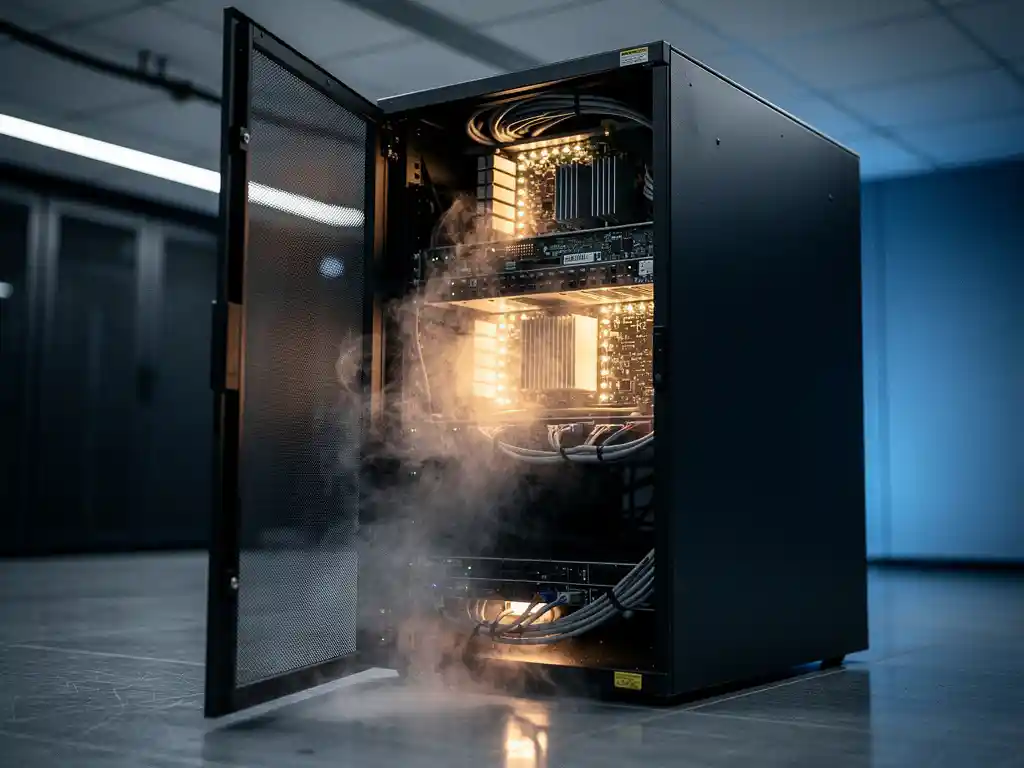
Cabinet-level fire suppression is more effective than room-level systems because it detects and extinguishes fire at the exact point of origin, before heat, smoke, and combustion gases spread beyond the enclosure. Room-level systems protect the space around equipment; cabinet-level protection secures the equipment itself. The sections below break down why that distinction matters for industrial safety managers responsible for high-value, mission-critical assets.
What are the key limitations of room-level fire suppression systems?
Room-level fire suppression systems protect the general space around equipment, but they do not address fire where it actually starts. By the time a ceiling-mounted detector registers smoke or heat, a fire inside a switchgear cabinet or server rack has often already caused significant internal damage. That delay is the central weakness of room-level protection.
Several structural limitations compound this problem:
- Late detection: Smoke and heat must escape an enclosure and travel upward before a ceiling sensor responds, which typically adds minutes to the detection time.
- Diluted suppression agent: A room-level system floods an entire space. Inside a closed cabinet, the concentration of suppressant needed to extinguish the fire is rarely achieved quickly enough to prevent hardware damage.
- Collateral damage: Gaseous or water-mist agents discharged into a server room or electrical switchroom can damage equipment that was never involved in the fire.
- False alarm risk: Room-level systems are more susceptible to environmental triggers such as dust, humidity, and airborne particles common in industrial environments.
- Regulatory gaps: Many standards now require object-level fire protection for specific asset classes, meaning a room-level system alone may not satisfy compliance requirements.
For industrial facilities where a single cabinet failure can halt an entire production line, these limitations translate directly into operational and financial risk.
How does cabinet-level suppression detect and extinguish fire earlier?
Cabinet-level fire suppression detects fire earlier because detection happens inside the enclosure itself, not in the ambient air of the room. Aspirating smoke detection draws air samples directly from within the cabinet, identifying combustion particles at concentrations far below what a standard point detector can sense. Suppression is then triggered at the same location, containing the fire before it develops.
This integrated approach works in a tightly controlled sequence. Aspirating smoke detection continuously samples air from within the cabinet, providing early warning at the pre-fire smoldering stage. When particle concentration crosses a threshold, the suppression agent is released directly into the cabinet interior. Because the volume is small and enclosed, the agent reaches an effective concentration almost instantly. The fire is extinguished at the source before it can breach the cabinet walls, spread to adjacent equipment, or trigger a broader room-level event.
The result is a response time measured in seconds rather than minutes, which is the critical difference between a contained incident and a costly equipment loss.
What types of equipment benefit most from cabinet-level protection?
Equipment that is enclosed, electrically energized, and difficult or costly to replace benefits most from cabinet-level fire suppression. The common thread is that these assets concentrate heat-generating components in a confined space where small faults can escalate rapidly.
The most common applications include:
- Switchgear and high-voltage cabinets: Arc faults and insulation failures generate intense localized heat that room-level systems cannot address quickly enough.
- ICT and server racks: Dense electronics, continuous power draw, and cooling airflow create conditions where smoldering can begin long before visible flame.
- Battery Energy Storage Systems (BESS): Lithium-ion thermal runaway is one of the most dangerous and fast-moving fire scenarios in modern industrial and energy infrastructure.
- Industrial control cabinets: PLC enclosures and SCADA hardware in manufacturing environments often contain irreplaceable configurations that cannot be quickly restored.
- Telecommunications and data infrastructure: Unplanned downtime in these systems carries immediate financial and reputational consequences.
In each of these cases, switchgear fire protection and equivalent object-level strategies offer a level of precision that room-level systems structurally cannot match.
Why is nitrogen gas preferred over chemical agents for enclosed cabinet suppression?
Nitrogen is preferred for enclosed cabinet suppression because it extinguishes fire by displacing oxygen without leaving any residue, causing no secondary damage to electronics, conductors, or sensitive components. Unlike chemical suppressants, nitrogen is inert, non-corrosive, and completely clean, making it the logical choice when protecting hardware that must return to service quickly.
Chemical agents, including many halon alternatives and PFAS-based gases, leave deposits that can degrade circuit boards, connectors, and insulation over time. Cleanup after a chemical discharge adds cost and extends downtime. In some jurisdictions, PFAS-containing agents face active regulatory restrictions, creating long-term compliance risk for facilities that rely on them.
Nitrogen also carries no toxicity risk to personnel who may re-enter the protected space, which simplifies post-incident procedures and reduces liability. Stored in a solid, non-pressurized state rather than as a compressed gas, nitrogen-based systems avoid the maintenance burden and safety concerns associated with high-pressure cylinders. This non-pressurized storage model also eliminates the risk of accidental discharge due to pressure vessel failure, a meaningful consideration in environments where cabinets are accessed regularly for maintenance.
How do cabinet-level systems affect downtime and business continuity?
Cabinet-level fire suppression systems reduce downtime significantly compared to room-level alternatives because they contain the fire to a single enclosure, leaving surrounding equipment operational. When suppression is delivered directly inside the affected cabinet, the incident is resolved without triggering a full facility evacuation, shutting down adjacent systems, or contaminating the broader environment.
The business continuity impact operates on two levels. First, the hardware inside the protected cabinet is more likely to survive intact because suppression occurs before thermal damage becomes irreversible. Second, the rest of the facility continues operating because the fire never escapes the cabinet. A room-level discharge, by contrast, typically requires clearing and inspecting the entire protected zone before operations resume.
For industries where production stoppages carry measurable hourly costs, such as oil and gas processing, pharmaceutical manufacturing, or continuous data center operations, the difference between a contained cabinet incident and a full room-level response can represent hours or days of lost output. Early detection through aspirating smoke detection further shortens response time, increasing the probability that suppression reaches the fire before irreversible damage occurs.
What compliance and certification standards apply to cabinet-level fire suppression?
Cabinet-level fire suppression systems are subject to a combination of international fire safety standards, product-specific certifications, and industry-sector regulations. The applicable framework depends on the type of equipment being protected, the geographic market, and the industry in which the facility operates.
Key standards and certifications relevant to object-level fire protection include:
- EN 15004 / ISO 14520: Governing gaseous fire suppression systems, including requirements for agent concentration, enclosure integrity, and system design.
- NFPA 2001: The North American standard for clean agent fire extinguishing systems, widely referenced in global procurement specifications.
- IEC 62368-1 and IEC 60950: Equipment safety standards for ICT hardware that influence fire protection requirements for server and network enclosures.
- ATEX Directive (2014/34/EU): Applicable where cabinets are located in potentially explosive atmospheres, requiring certified equipment throughout the detection and suppression chain.
- FM Global Property Loss Prevention Data Sheets: Influential in insurance-driven procurement, particularly for high-value electrical and data infrastructure.
- CNPP and TÜV Nord testing: Third-party performance certifications that validate suppression effectiveness and system reliability under controlled conditions.
Safety and compliance managers should verify that any cabinet-level suppression system carries third-party test certification relevant to their sector and region, not just self-declared conformity. Independent testing by recognized bodies provides the evidentiary basis needed to satisfy insurers, regulators, and internal risk governance requirements.
How ExxFire protects critical equipment with cabinet-level fire suppression
ExxFire’s integrated detection and suppression systems are purpose-built for the object-level protection scenarios described throughout this article. Each system combines aspirating smoke detection with nitrogen suppression delivered through the patented Cool Gas Generator technology, all within a single pre-engineered unit designed for closed enclosures up to 4.5 m³. Key features that directly address the challenges covered above include:
- Early detection at source: Aspirating smoke detection identifies combustion particles inside the cabinet at the pre-fire smoldering stage, well before conventional detectors respond.
- Clean, residue-free suppression: Non-pressurized nitrogen leaves no chemical deposits, protecting sensitive electronics and allowing rapid return to service.
- PFAS-free compliance: ExxFire systems contain no PFAS compounds, meeting current and anticipated environmental regulations without requiring agent replacement.
- Easy installation and low maintenance: Pre-engineered for self-installation without special certification, with built-in relays for integration into existing fire panels.
- Scalable protection: Multiple units can be interconnected to protect larger volumes, covering everything from a single server rack to a full battery energy storage enclosure.
- Third-party certified: Tested and certified by CNPP in France and DMT, part of TÜV Nord in Germany, providing the independent validation that compliance managers require.
If you are responsible for protecting switchgear, ICT infrastructure, BESS installations, or industrial control cabinets, contact ExxFire to discuss which system configuration is right for your application.
Related Articles
- What fire risks do candles pose in a home?
- What are the fire risks in care homes and assisted living facilities?
- What is integrated fire management?
- Can existing fire suppression systems be upgraded to reduce environmental impact?
- What are the key sustainability certifications for fire suppression systems?