

What is integrated fire management?
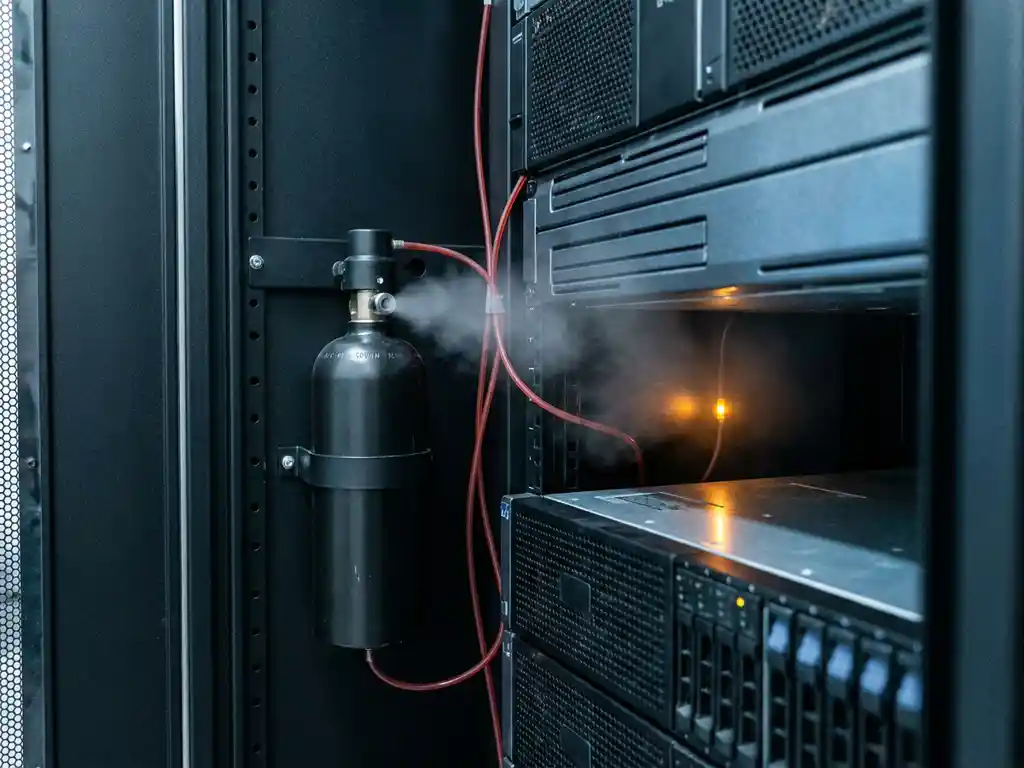
Integrated fire management is a unified approach to fire safety that combines early smoke detection and automatic suppression within a single coordinated system. Rather than treating detection and suppression as separate functions, integrated fire management links them so that a confirmed fire signal triggers suppression immediately, without manual intervention. This approach is especially relevant for protecting mission-critical equipment, high-value assets, and environments where downtime carries serious operational or financial consequences. The sections below answer the most important questions about how integrated fire management works, what it involves, and where it applies.
How does integrated fire management differ from traditional fire protection?
Integrated fire management differs from traditional fire protection by combining detection and suppression into one coordinated system that acts automatically at the source of a fire, rather than relying on separate, independently triggered components. Traditional fire protection typically uses standalone detectors that alert occupants or trigger a building-wide suppression system, often with a delay and without targeting the specific object at risk.
In a traditional setup, a smoke detector identifies a fire and sounds an alarm. A sprinkler system or gaseous suppression system may then activate, but it typically covers an entire room or zone. This approach can cause significant collateral damage, particularly in environments filled with sensitive electronics, because water or certain suppression agents can affect equipment that was never near the fire itself.
Integrated fire management eliminates this gap. Detection and suppression share the same system, so when a fire is confirmed at the object level, suppression activates precisely where it is needed. The result is faster response, less damage, and a much higher chance of maintaining business continuity after an incident.
What are the main components of an integrated fire management system?
An integrated fire management system consists of three core components: an early detection mechanism, a suppression agent delivery system, and a control and reporting interface that connects the system to broader fire safety infrastructure. Each component works in concert to detect, confirm, and suppress a fire with minimal delay.
- Aspirating smoke detection: This type of detector actively draws air samples from inside a protected enclosure, identifying smoke particles at very low concentrations. It detects fire at a much earlier stage than conventional point detectors, giving the suppression system time to act before a fire escalates.
- Suppression delivery mechanism: Once a fire is confirmed, the system releases a suppression agent directly into the protected space. In nitrogen-based systems, the agent reduces oxygen levels within the enclosure to a point where combustion cannot continue, without damaging the equipment inside.
- Control and reporting interface: Integrated systems include relay outputs that communicate system status, alarms, and fault conditions to a central fire panel. This allows facility managers to monitor the system remotely and integrate it with existing building management or fire alarm infrastructure.
Together, these components create a self-contained fire protection system that operates independently of human response time, which is critical in unmanned or remotely monitored environments.
Why is object-level protection central to integrated fire management?
Object-level protection is central to integrated fire management because most high-consequence fires in industrial and commercial settings originate inside a specific piece of equipment, such as a server rack, electrical cabinet, or battery storage unit. Protecting the object itself, rather than the room around it, is the most effective way to stop a fire before it spreads and causes wider damage.
Room-level suppression systems are designed to protect a space once a fire has already grown large enough to affect the surrounding environment. By that point, the equipment at the source of the fire has often already sustained serious damage. Object-level protection intercepts the fire at its origin, typically during the smoldering stage when smoke is detectable but flames have not yet developed.
This approach also limits the suppression footprint. When suppression is targeted at a specific enclosure, the agent is contained within that enclosure. Adjacent equipment, personnel, and the wider facility are not exposed to suppression agents unnecessarily. For organizations protecting high-value electronics, this distinction is the difference between a minor incident and a costly replacement and recovery operation.
What suppression agents are used in integrated fire management systems?
Integrated fire management systems use clean agent suppression, with inert gases being the most widely adopted category. Nitrogen is the most environmentally responsible option available, as it is a naturally occurring gas that leaves no chemical residues and causes no damage to sensitive electronics or mechanical components.
Nitrogen suppresses fire by reducing the oxygen concentration inside a closed enclosure below the level required to sustain combustion. Because it is chemically inert, it does not react with the materials inside the protected space. Once the suppression event is over, no cleanup is required, and the equipment can be inspected and returned to service without dealing with chemical contamination.
This stands in direct contrast to older suppression technologies that relied on halon or PFAS-containing compounds. These substances are now subject to increasing regulatory restrictions across many jurisdictions due to their environmental impact. Nitrogen-based systems offer a PFAS-free alternative that meets modern compliance requirements while delivering reliable suppression performance. The non-pressurized storage format used in some nitrogen systems also removes the risks associated with storing high-pressure gas cylinders in confined spaces.
Which environments benefit most from integrated fire management?
Environments that benefit most from integrated fire management are those where fire in a single piece of equipment can cause disproportionate operational, financial, or safety consequences. These include data centers, telecommunications infrastructure, battery energy storage systems, industrial switchgear, and healthcare or pharmaceutical facilities.
In data centers and ICT environments, a fire inside a single server rack can result in data loss, extended downtime, and expensive hardware replacement. Integrated fire management that contains the fire within the rack prevents it from spreading to adjacent racks or the broader facility, protecting both data and infrastructure.
Battery energy storage systems present a particularly demanding fire risk because lithium-ion batteries can enter thermal runaway, a self-sustaining chain reaction that is difficult to interrupt once it begins. Early detection paired with rapid suppression at the object level is the most effective strategy for interrupting this process before it escalates.
Industrial environments with high-voltage switchgear and power distribution cabinets also benefit significantly. Electrical fires in these enclosures can disable entire production lines or utilities. Integrated fire management systems installed directly in these cabinets provide continuous protection regardless of whether personnel are present, making them well suited to unmanned substations and remote installations.
What certifications and standards apply to integrated fire management systems?
Integrated fire management systems are subject to testing and certification by independent fire safety bodies that verify performance under controlled conditions. The specific certifications required depend on the jurisdiction and application, but third-party validation by recognized testing organizations is considered the baseline standard for credible fire protection products.
In Europe, testing bodies such as CNPP in France and DMT in Germany, part of the TÜV Nord group, conduct rigorous performance testing on fire detection and suppression systems. Certification from these organizations confirms that a system performs as claimed under standardized fire scenarios and that its components meet defined quality thresholds.
For object protection systems specifically, certification typically covers suppression effectiveness within defined enclosure volumes, detection sensitivity thresholds, and the reliability of system activation. Buyers should verify that any integrated fire management system they consider carries independent third-party certification rather than relying solely on manufacturer claims.
Compliance with local fire codes and building regulations is a separate requirement that varies by country and application. In many jurisdictions, object protection systems installed inside electrical cabinets or server racks are classified as supplementary protection and can be installed without the same regulatory process required for room-level suppression systems, which can simplify deployment significantly.
How ExxFire delivers integrated fire management
ExxFire provides combined fire detection and suppression systems purpose-built for the environments where integrated fire management matters most. Key features of ExxFire’s approach include:
- Aspirating smoke detection combined with nitrogen suppression in a single pre-engineered unit, designed for closed enclosures up to 4.5 m³
- Patented Cool Gas Generator technology that produces nitrogen from a solid, non-pressurized chemical block, eliminating the risks of high-pressure gas storage
- PFAS-free suppression that leaves no chemical residues and causes no secondary damage to electronics or components
- Built-in relay outputs for reporting system status directly to an existing fire panel, enabling seamless integration with current fire safety infrastructure
- Easy self-installation with no special certification required, and no ongoing maintenance or check-ups after commissioning
- Independent certification by CNPP France and DMT, part of TÜV Nord, confirming performance under standardized fire test conditions
Whether you are protecting a server room, a battery energy storage installation, or a high-voltage switchgear cabinet, ExxFire’s integrated approach ensures that fire is contained at the source before it can cause wider damage. Contact ExxFire to discuss the right system for your application.
Related Articles
- What are the fire risks linked to dust accumulation in industrial settings?
- How do you achieve EN54 compliance for an electrical enclosure?
- What is the difference between EN54 and NFPA standards?
- What is the most overlooked fire hazard in the home?
- How does nitrogen fire suppression compare to traditional sprinkler systems?