

How do land managers use controlled burns?
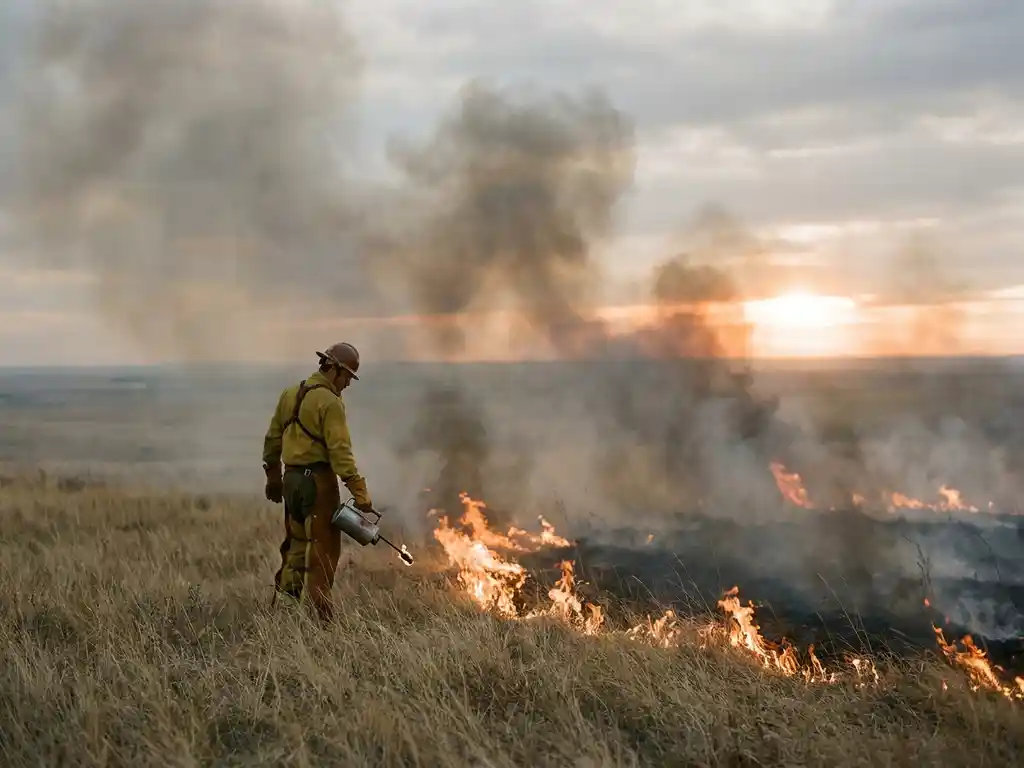
Land managers use controlled burns as a deliberate, planned tool to achieve specific ecological, agricultural, or safety objectives. By igniting vegetation under carefully monitored conditions, they can reduce fuel loads, restore native habitats, improve grazing land quality, and lower the risk of destructive wildfires. This article unpacks the key questions practitioners and landowners ask about prescribed fire land management.
What types of land benefit most from controlled burns?
Grasslands, savannas, shrublands, and fire-adapted forests benefit most from controlled burns. These ecosystems evolved with fire as a natural process, meaning many native plant species depend on periodic burning to germinate, regenerate, or outcompete invasive vegetation. Agricultural grazing land and wetland margins also respond well to prescribed burning when managed correctly.
Grassland ecosystems are among the most responsive landscapes. Fire removes accumulated dead plant material, stimulates fresh grass growth, and returns nutrients to the soil. In tallgrass prairies, for example, burning in late spring encourages warm-season grasses while suppressing cool-season invasives that would otherwise dominate.
Fire-adapted forests, including longleaf pine stands in the southeastern United States and eucalyptus woodlands in Australia, also benefit significantly. Without periodic low-intensity burns, leaf litter and woody debris accumulate to dangerous levels, increasing the likelihood of high-severity crown fires. Controlled burning in these environments maintains an open understory and protects mature trees by removing the ladder fuels that would otherwise carry flames into the canopy.
Agricultural land managers use prescribed burns to clear crop residue, control brush encroachment on pasture, and improve forage quality for livestock. Wetlands and coastal marshes can benefit too, with burning used to manage invasive reed species and maintain habitat diversity for nesting birds and amphibians.
How do land managers plan and execute a controlled burn?
Land managers plan a controlled burn by developing a written prescribed burn plan that defines objectives, acceptable weather conditions, equipment needs, crew assignments, and contingency procedures. Execution follows only when all conditions fall within the plan’s parameters, and a qualified burn boss supervises the operation from ignition through mop-up.
The planning phase is the most time-intensive part of the process. A thorough burn plan documents the specific goals of the burn, maps the burn unit boundaries, identifies natural and constructed firebreaks, and establishes the weather window required for safe ignition. Key weather variables include wind speed and direction, relative humidity, temperature, and the fuel moisture content of the vegetation being burned.
Before ignition, crews prepare the site by mowing or discing firebreaks, staging water tankers, and briefing all personnel on escape routes and safety zones. Notifying neighboring landowners, local fire departments, and aviation authorities is standard practice to prevent confusion and enable rapid support if conditions change unexpectedly.
During the burn, ignition typically starts on the downwind side of the unit using a backing fire, which moves slowly against the wind and produces lower flame heights. Strip head fires, which move with the wind, may be used once the backing fire has created a safe black line. After the fire is extinguished, crews conduct a thorough mop-up to ensure no smoldering material can reignite beyond the intended perimeter.
What are the ecological goals of prescribed burning?
The ecological goals of prescribed burning include restoring native plant communities, improving wildlife habitat, cycling nutrients back into the soil, and maintaining the natural disturbance regimes that fire-dependent ecosystems require to remain healthy. Prescribed fire land management mimics the role that lightning-ignited fires historically played before widespread human suppression.
Habitat restoration is one of the most widely cited ecological objectives. Many native wildflowers, grasses, and shrubs germinate or spread more successfully after fire clears the competitive canopy of invasive or encroaching species. In longleaf pine savannas, regular burning maintains the open, park-like structure that supports dozens of rare and endangered species, including the red-cockaded woodpecker and gopher tortoise.
Nutrient cycling is another important ecological benefit. When organic matter burns, the ash it produces releases phosphorus, potassium, and calcium directly into the soil in plant-available forms. This rapid nutrient flush promotes vigorous regrowth and can improve the nutritional quality of vegetation for both wildlife and livestock.
Prescribed burns also help control invasive species that lack fire adaptations. Many exotic grasses and woody shrubs are more vulnerable to fire than native vegetation, giving land managers a chemical-free tool for suppressing unwanted species across large areas. Over successive burn cycles, native plant diversity typically increases as fire-tolerant species reassert themselves.
How does controlled burning reduce wildfire risk?
Controlled burning reduces wildfire risk by removing the accumulated dead vegetation, leaf litter, and woody debris that serve as fuel for uncontrolled fires. When fuel loads are kept low through regular prescribed burning, wildfires that do ignite are less intense, spread more slowly, and are far easier for firefighters to contain.
The relationship between fuel load and fire behavior is direct. A landscape with years of accumulated dry grass, brush, and fallen timber provides enormous amounts of energy to a wildfire. By contrast, a recently burned area offers little material to sustain combustion, creating natural breaks that slow or stop fire spread.
Prescribed fire land management is widely recognized by fire ecology researchers and land management agencies as one of the most cost-effective tools for reducing catastrophic wildfire risk at scale. Strategic placement of burn units across a landscape creates a mosaic of recently burned and unburned areas that disrupts the continuous fuel beds that allow wildfires to travel rapidly across terrain.
In communities situated near fire-prone forests and shrublands, sometimes called the wildland-urban interface, coordinated prescribed burning programs can significantly reduce the likelihood of a wildfire reaching homes and infrastructure. When burns are conducted in buffer zones around populated areas, they remove the fuel that would otherwise carry a wildfire directly into neighborhoods.
What are the risks and limitations of controlled burns?
The primary risks of controlled burns include smoke impacts on air quality and human health, the potential for fire to escape the intended burn unit, and negative effects on sensitive species or habitats if burns are poorly timed. Limitations include weather dependency, regulatory restrictions, and the need for trained personnel and adequate resources.
Smoke is often the most immediate concern for land managers and the communities near a burn. Particulate matter from burning vegetation can affect air quality across a wide area, posing health risks for people with respiratory conditions. Many jurisdictions require air quality permits and mandate that burns only proceed on days when atmospheric conditions will disperse smoke quickly and away from populated areas.
Escape risk, while manageable with proper planning, is a genuine concern. If wind conditions shift unexpectedly or a firebreak fails to hold, a prescribed burn can transition into an uncontrolled wildfire. This is why thorough site preparation, conservative weather windows, and adequate crew numbers are non-negotiable elements of responsible burn planning.
Ecological timing also matters enormously. Burns conducted during nesting season can destroy ground-nesting bird habitat. Burns in drought conditions can kill trees that would otherwise survive a low-intensity fire. Land managers must balance ecological goals against the real-world constraints of when conditions are safe enough to burn, which may not always align with the optimal ecological window.
How do controlled burns differ from wildfires?
Controlled burns differ from wildfires in intent, timing, conditions, and management. A prescribed burn is deliberately ignited under pre-approved weather conditions by trained personnel to achieve specific land management goals. A wildfire is an unplanned, uncontrolled fire that ignites from natural causes or human accident and spreads without deliberate direction or restraint.
The most fundamental distinction is control. In a prescribed burn, trained crews manage ignition, fire behavior, and suppression within a defined perimeter. Every aspect of the operation is governed by a written plan with pre-established conditions that must be met before a single match is struck. A wildfire, by contrast, ignites and spreads according to wind, terrain, and fuel availability, with firefighters working reactively to limit its reach rather than directing it.
Fire intensity also differs substantially in most cases. Prescribed burns are typically low-to-moderate intensity fires that move through surface fuels without climbing into the tree canopy. Wildfires, particularly those burning through landscapes with heavy accumulated fuel loads, frequently become high-intensity crown fires that are far more destructive to vegetation, soil, and infrastructure.
The ecological outcomes can also diverge. A well-timed, low-intensity controlled burn promotes biodiversity, stimulates native plant regeneration, and leaves most mature trees intact. A high-severity wildfire can sterilize soil, eliminate seed banks, and create conditions where invasive species colonize the landscape before native plants can recover. This difference in outcome is one of the strongest arguments for using prescribed fire proactively rather than waiting for wildfire to impose its own, less predictable effects.
How ExxFire supports fire safety in critical environments
While controlled burning is a tool for managing landscapes, the principles behind fire prevention and early intervention apply equally to built environments where fire poses a serious risk to high-value equipment and business continuity. ExxFire’s integrated fire detection and suppression systems are designed precisely for these environments, offering a proactive, clean, and reliable layer of protection.
- Early smoke detection: Aspirating smoke detection identifies fire at the earliest possible stage, before flames develop, giving operators time to respond.
- Clean nitrogen suppression: Non-pressurized nitrogen gas extinguishes fire without leaving chemical residues, protecting sensitive electronics, server racks, and electrical cabinets from secondary damage.
- PFAS-free and environmentally responsible: ExxFire’s patented Cool Gas Generator technology is a sustainable alternative to PFAS-containing suppression agents, supporting compliance with evolving environmental regulations.
- Easy installation and low maintenance: Systems are pre-engineered for straightforward self-installation and require no ongoing maintenance once commissioned, keeping the total cost of ownership low.
- Certified and tested: All systems are tested and certified by CNPP in France and DMT, part of TÜV Nord in Germany, ensuring verified performance in real-world conditions.
If you manage mission-critical equipment and want to ensure it is protected by a clean, certified, and proven suppression system, contact ExxFire to discuss the right solution for your application.