

What is the role of fire breaks in fire management?
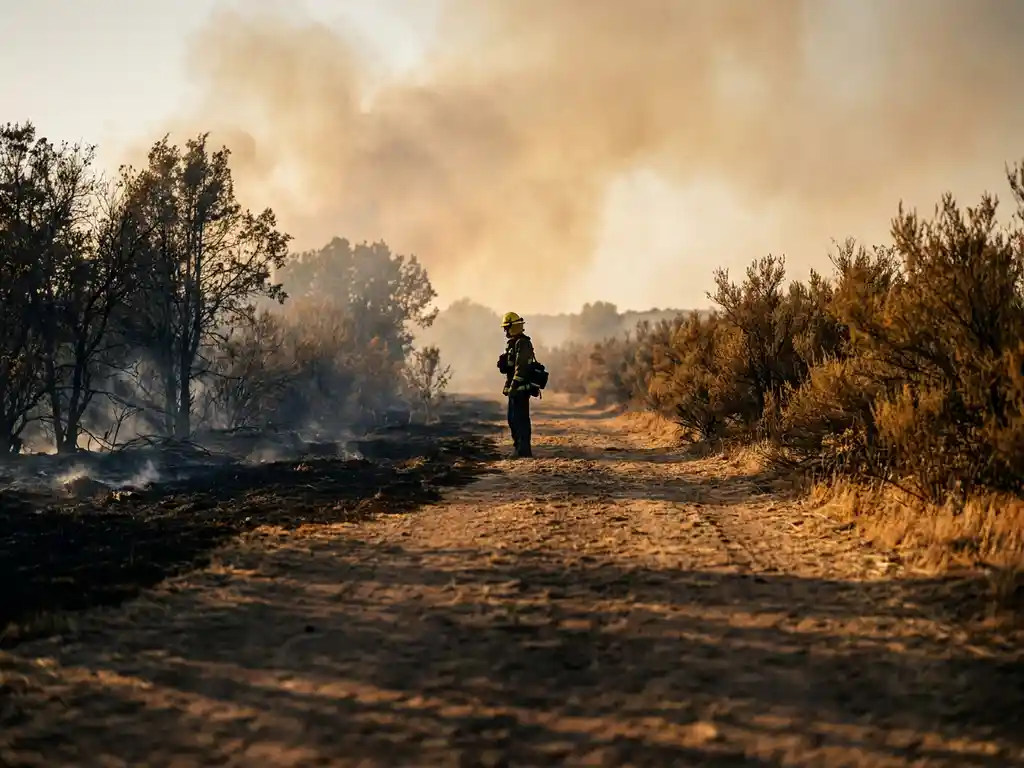
Fire breaks play a direct and practical role in fire management by creating gaps in vegetation or fuel that slow or stop the forward movement of a fire. By removing the combustible material a fire needs to travel, fire breaks interrupt the path of ignition and give firefighters time and space to work. This article unpacks how fire breaks function, the different forms they take, and where their limits lie.
How do fire breaks actually stop a fire from spreading?
A fire break stops a fire from spreading by eliminating or reducing the fuel that the fire needs to continue burning. Fire spreads by igniting adjacent combustible material, so when it reaches a cleared strip of land, a road, a body of water, or any other gap in fuel, it loses its pathway forward. Without fuel to consume, the fire front weakens, slows, or dies out entirely.
The mechanism is straightforward: combustion requires heat, oxygen, and fuel. Fire breaks target the fuel component directly. When a fire reaches a wide enough break, radiant heat from the fire front cannot jump the gap and ignite vegetation on the other side. The wider and more thoroughly cleared the break, the more effective this barrier becomes.
In practice, fire breaks also serve as staging areas for firefighting crews. They provide safe zones where ground teams can operate, create access routes for vehicles, and act as anchor points from which controlled burns can be managed. This makes fire breaks both a passive barrier and an active tool in coordinated fire management operations.
What are the different types of fire breaks used in fire management?
Fire breaks come in several forms, each suited to different landscapes, fire risks, and management goals. The main types are natural fire breaks, constructed fire breaks, and fuel-reduced buffers. Each works on the same principle of interrupting fuel continuity but differs in how that interruption is created and maintained.
- Natural fire breaks: Rivers, lakes, rocky ridges, cliffs, and naturally bare terrain all act as fire breaks without human intervention. These features are often incorporated into fire management planning as anchor points for suppression strategies.
- Constructed fire breaks (firebreaks): These are deliberately cleared strips of land from which all vegetation and combustible material has been removed. They are commonly created using heavy machinery, controlled burns, or manual clearing.
- Fuel-reduced buffers: Rather than complete clearance, some fire breaks involve thinning vegetation, removing dead material, or managing ground cover to reduce fire intensity without eliminating all plant life. These are often used near urban areas or in ecologically sensitive zones.
- Roads and tracks: Existing infrastructure such as dirt roads and firebreaks double as access routes and fuel-free corridors. Many land management agencies maintain a network of roads specifically designed to serve this dual purpose.
- Prescribed burn lines: Controlled burns are sometimes used to create fuel-free zones ahead of a predicted fire front, effectively creating a fire break through deliberate ignition under managed conditions.
How wide does a fire break need to be to be effective?
The effective width of a fire break depends on the type of vegetation, the intensity of the fire, wind speed, and terrain. As a general principle, a fire break must be wide enough that radiant heat from the fire front cannot ignite vegetation on the opposite side. In practice, this means widths can range from a few meters for low-intensity grassland fires to several hundred meters in dense forest environments with high fire intensity.
Wind is a critical variable. A strong wind can carry embers far beyond a fire break, rendering even a well-constructed barrier ineffective if it is too narrow. In high-wind conditions, fire breaks may need to be many times wider than they would be in calm conditions to account for spotting, where airborne embers land and ignite new fires ahead of the main front.
Terrain also influences width requirements. Fire moves faster uphill, and a fire break on a slope may need to be significantly wider on the uphill side to compensate for the increased rate of spread. Fire management professionals calculate required widths based on local fuel loads, historical fire behavior, and modeled fire spread scenarios rather than applying a single universal standard.
What is the difference between a fire break and a fire line?
A fire break is a pre-established, maintained barrier created before a fire occurs as part of a long-term fire management strategy. A fire line, by contrast, is a line constructed during an active fire response, typically by firefighters working directly ahead of or around a fire front to contain it. The key distinction is timing: fire breaks are preventive infrastructure, while fire lines are reactive suppression tools.
Fire lines are often created under urgent conditions using hand tools, bulldozers, or aerial retardant drops. They are less refined than fire breaks and are built with the immediate goal of stopping a specific fire rather than providing a permanent management feature. Once a fire is extinguished, a fire line may be rehabilitated, left to revegetate, or incorporated into a broader fire management network.
Fire breaks, on the other hand, require ongoing maintenance. Vegetation regrows, debris accumulates, and a fire break that is not regularly cleared can lose its effectiveness over time. Land management agencies typically schedule annual or seasonal maintenance of fire break networks to ensure they remain functional before the high-risk fire season arrives.
Where are fire breaks most commonly used?
Fire breaks are most commonly used in wildfire-prone landscapes including forests, grasslands, shrublands, and areas at the interface between natural vegetation and human settlements. Countries with significant wildfire risk, such as Australia, the United States, Canada, Portugal, and South Africa, rely heavily on fire break networks as part of their national and regional fire management frameworks.
In forested regions, fire breaks are typically cut through tree stands to create corridors that disrupt canopy continuity. In grassland environments, mown or grazed strips serve a similar function. At the urban-wildland interface, fire breaks are often integrated into land use planning, with cleared buffers required around residential developments in high-risk zones.
Fire breaks are also used in agricultural settings to protect crops, farm infrastructure, and livestock. In these contexts, ploughed firebreaks around paddock perimeters are a standard practice. Industrial sites, energy infrastructure, and communication towers located in fire-prone areas similarly depend on cleared perimeters as a first line of fire defense.
What are the limitations of fire breaks in modern fire management?
Fire breaks have well-documented limitations, particularly as wildfire behavior becomes more extreme due to changing climate conditions. The most significant limitation is that fire breaks cannot stop ember-driven fires, where wind carries burning material across gaps and starts new ignitions far ahead of the main fire front. In severe fire weather, this can make even wide, well-maintained fire breaks ineffective.
Other important limitations include:
- Ecological impact: Constructing and maintaining fire breaks disrupts habitats, fragments ecosystems, and can increase erosion. In sensitive environments, the environmental cost of fire breaks must be weighed against their protective benefit.
- Maintenance burden: Fire breaks require continuous upkeep. Vegetation regrowth, fallen timber, and accumulated debris can quickly reduce a break’s effectiveness, demanding significant ongoing labor and resources.
- Terrain constraints: In steep, rocky, or densely vegetated landscapes, constructing fire breaks may be physically impractical or prohibitively expensive.
- Scope limitations: Fire breaks are most effective for surface fires. Crown fires, which travel through the upper canopy driven by wind, can jump over fire breaks that would stop a ground-level fire.
- They address only outdoor spread: Fire breaks are a landscape-scale tool. They do not protect individual structures, equipment, or assets once a fire has reached a built environment.
This last point is particularly relevant for businesses and facility operators. Once fire reaches infrastructure, the outdoor fire break has done its job, but the assets inside buildings, enclosures, and cabinets remain exposed. At that point, object-level fire protection becomes critical.
How ExxFire complements fire management at the asset level
Fire breaks manage fire at the landscape scale, but they cannot protect the sensitive equipment, electrical cabinets, and mission-critical systems inside buildings once fire reaches a facility. ExxFire addresses this gap with integrated fire detection and suppression systems designed to protect individual enclosures and high-value assets from the inside out.
- Early smoke detection: Aspirating smoke detection identifies fire at the earliest possible stage, before flames develop.
- Non-pressurized nitrogen suppression: ExxFire’s patented Cool Gas Generator releases clean nitrogen gas to suppress fire without chemical residues, protecting sensitive electronics and components.
- PFAS-free and environmentally responsible: The system uses no PFAS-containing agents, aligning with modern sustainability and compliance requirements.
- Easy installation and low maintenance: Systems are pre-engineered for straightforward self-installation and require no ongoing maintenance once commissioned.
- Tested and certified: All systems are tested and certified by CNPP in France and DMT, part of TÜV Nord in Germany.
Whether you are protecting server racks, switchgear cabinets, battery energy storage systems, or other critical enclosures, ExxFire provides a clean, certified, and maintenance-free layer of fire suppression that works where fire breaks cannot reach. Contact ExxFire to discuss the right solution for your assets.
Related Articles
- How does climate change affect fire management strategies?
- What is the difference between VdS and EN54 certification?
- How do you select a fire detection system for a regulated environment?
- What is the fire triangle and why is it important for fire prevention?
- How does fire prevention work in residential buildings?