

How does climate change affect fire management strategies?
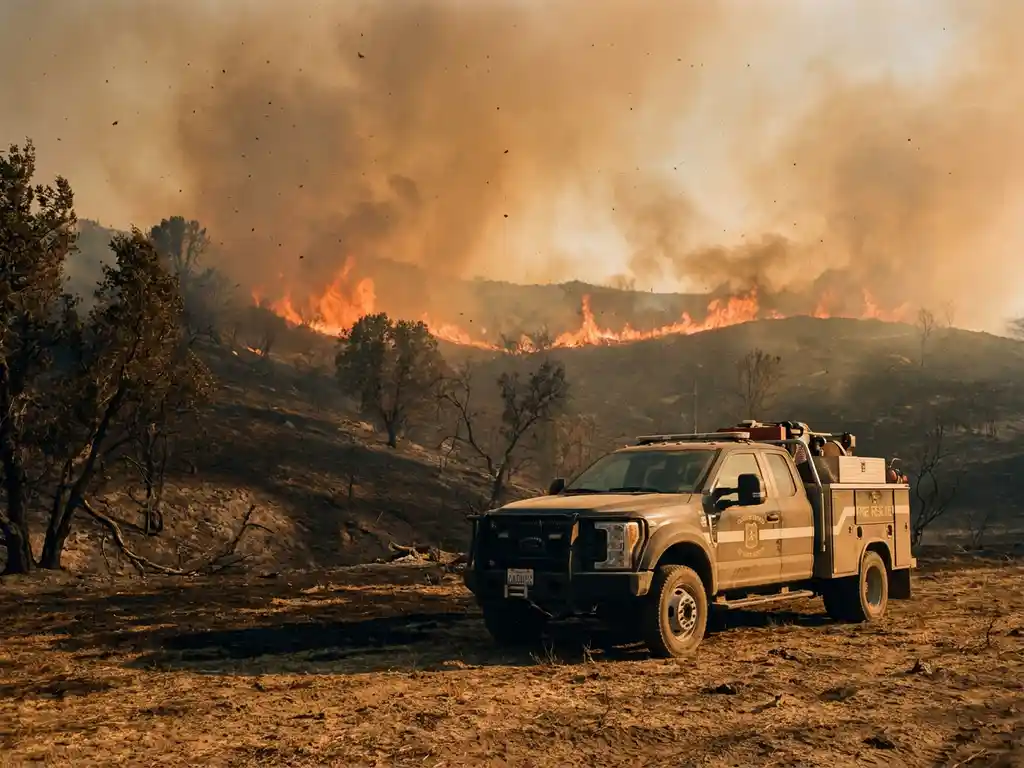
Climate change is fundamentally reshaping fire management strategies by intensifying fire risk, extending fire seasons, and accelerating the spread of wildfires in ways that existing frameworks were not designed to handle. Rising temperatures, prolonged droughts, and shifting weather patterns are creating conditions where fires ignite faster, burn hotter, and reach environments previously considered low-risk. For organizations responsible for critical infrastructure, this shift demands a fundamental rethink of how fire safety is planned, implemented, and maintained.
How is climate change altering fire behavior and frequency?
Climate change is altering fire behavior by creating drier, hotter, and windier conditions that allow fires to ignite more easily, spread more rapidly, and burn with greater intensity than historical patterns suggest. Fire seasons are lengthening across multiple continents, and fires are occurring in regions where they were previously rare, including boreal forests and peatlands.
The core mechanism is straightforward: higher average temperatures dry out vegetation and soil, creating abundant fuel. Reduced precipitation in many regions compounds this effect, while stronger and more erratic winds accelerate fire spread. The result is not just more fires, but fires that behave in more unpredictable ways. Spotting events, where embers travel kilometers ahead of the main fire front, are becoming more common, making containment far more difficult.
For urban and industrial environments, changing fire behavior also means that wildfires increasingly threaten the perimeters of cities and industrial sites. The concept of a “wildland-urban interface” is expanding, bringing fire risk closer to facilities, data centers, and infrastructure that were once considered safely removed from natural fire zones.
What are the biggest fire risks facing critical infrastructure today?
The biggest fire risks facing critical infrastructure today include electrical faults in high-density equipment, thermal runaway in battery energy storage systems, and the cascading damage caused by fire in enclosed environments where sensitive electronics operate. Climate change amplifies these risks by raising ambient temperatures and increasing the likelihood of power grid stress events that trigger electrical failures.
Critical infrastructure environments present unique fire risk profiles. Server rooms, electrical switchgear cabinets, telecommunications enclosures, and battery storage systems all generate heat, contain flammable materials, and house equipment that is both difficult to replace and essential to operations. A fire that starts inside a single cabinet can destroy hardware worth hundreds of thousands of euros and cause operational downtime that extends far beyond the physical damage.
Battery energy storage systems deserve particular attention. As organizations accelerate their adoption of renewable energy and on-site storage, the fire risk associated with lithium-ion battery thermal runaway is growing. These fires are notoriously difficult to extinguish with conventional methods and can reignite hours after appearing to be controlled. The combination of high asset value, complex fire behavior, and climate-driven pressure to deploy more storage capacity makes BESS one of the most pressing fire risk management challenges of 2026.
How are fire management strategies adapting to climate change?
Fire management strategies are adapting to climate change by shifting from reactive suppression to proactive, early-stage detection and object-level protection. Rather than relying solely on building-wide systems that respond after a fire has already grown, modern strategies prioritize stopping fires at their point of origin, before they can escalate.
This shift reflects a recognition that climate-driven fire conditions reduce the window between ignition and uncontrollable spread. In practice, adaptation involves several converging approaches:
- Earlier detection: Aspirating smoke detection systems can identify smoke particles at concentrations far below what conventional detectors register, giving operators critical additional response time.
- Object-level suppression: Protecting individual cabinets, enclosures, and equipment directly, rather than relying on room-level suppression, ensures that suppression reaches the fire source before it spreads.
- Integrated systems: Combining detection and suppression in a single unit reduces the gap between alert and action, which matters most in fast-developing fire scenarios.
- Risk-based planning: Organizations are increasingly conducting climate-adjusted fire risk assessments that account for higher ambient temperatures, longer dry periods, and proximity to wildland-urban interface zones.
These adaptations are not just technical. They also involve updating maintenance schedules, reviewing insurance requirements, and ensuring that fire safety strategies are embedded in broader business continuity planning.
Why are traditional fire suppression systems falling short in a changing climate?
Traditional fire suppression systems are falling short in a changing climate because they were designed for historical fire conditions, not the faster-developing, higher-intensity scenarios that climate change is producing. Many conventional systems also rely on chemical agents that are increasingly regulated or banned due to environmental harm, creating both a performance gap and a compliance problem.
Halon-based systems have been phased out in most markets due to their ozone-depleting properties. Many of their replacements rely on PFAS-containing agents, which are now under growing regulatory scrutiny across Europe and beyond due to their persistence in the environment and links to health risks. Organizations still operating these systems face a dual challenge: the systems may not perform adequately in more intense fire conditions, and they may soon be non-compliant with tightening environmental regulations.
There is also a practical limitation in how traditional systems are deployed. Room-level suppression systems flood an entire space with agent when triggered, which can damage sensitive electronics, disrupt operations, and create hazardous conditions for personnel. In environments where equipment is densely packed and downtime is costly, this approach is increasingly difficult to justify.
What role does sustainability play in modern fire management?
Sustainability plays a central and growing role in modern fire management strategies, driven by regulatory pressure, corporate environmental commitments, and the recognition that fire suppression agents themselves can cause significant environmental harm. The transition away from PFAS-containing systems is the most immediate expression of this shift, but sustainability considerations extend across the entire fire safety lifecycle.
PFAS compounds, sometimes called “forever chemicals,” persist in the environment indefinitely and have been detected in soil, water, and living organisms far from their point of use. Regulatory frameworks in the European Union and other jurisdictions are progressively restricting their use, and organizations that have not yet planned for this transition face both compliance risk and reputational exposure.
Beyond agent chemistry, sustainability in fire management also encompasses energy efficiency, maintenance requirements, and total lifecycle cost. Systems that require frequent chemical refills, specialist maintenance visits, or generate significant waste at end of life carry a higher environmental footprint than those designed for longevity and minimal intervention. For organizations with formal environmental, social, and governance commitments, fire safety procurement decisions are increasingly evaluated through this lens.
How should organizations future-proof their fire safety strategy?
Organizations should future-proof their fire safety strategy by auditing current systems against both evolving fire risk profiles and upcoming regulatory requirements, then prioritizing object-level, early-detection solutions that use clean, non-toxic suppression agents. The goal is a strategy that remains effective, compliant, and sustainable as both climate conditions and legal frameworks continue to change.
A practical future-proofing approach involves three core steps:
- Assess current exposure: Identify which assets carry the highest fire risk under climate-adjusted conditions, with particular attention to electrical enclosures, battery storage systems, and equipment in environments with rising ambient temperatures.
- Evaluate suppression agent compliance: Determine whether existing systems use PFAS-containing or otherwise regulated agents, and map out a transition timeline that aligns with regulatory deadlines and corporate sustainability targets.
- Invest in integrated, low-maintenance protection: Systems that combine early smoke detection with automatic suppression at the object level reduce both response time and total cost of ownership, while minimizing the operational disruption that fire events cause.
Organizations should also ensure that fire safety planning is connected to broader climate resilience strategies. As ambient temperatures rise and weather events become more extreme, fire risk does not sit in isolation. It intersects with power supply resilience, cooling system performance, and supply chain continuity. A fire safety strategy that accounts for these interdependencies is better positioned to protect operations across a range of future scenarios.
How ExxFire supports fire management strategies in a changing climate
ExxFire provides a direct answer to the fire management challenges that climate change is accelerating. Its combined fire detection and suppression systems are built specifically for the environments where fire risk is most consequential and most difficult to manage with conventional approaches.
- PFAS-free suppression: ExxFire’s patented Cool Gas Generator technology uses non-pressurized nitrogen gas, leaving no chemical residues and causing no damage to sensitive electronics. It is a certified alternative to PFAS-containing systems, addressing both performance and compliance requirements.
- Early detection at the source: Aspirating smoke detection identifies fire at the earliest possible stage, maximizing response time in fast-developing fire scenarios.
- Object-level protection: Systems protect individual server racks, switchgear cabinets, battery storage enclosures, and other critical equipment directly, stopping fires before they escalate.
- Low total cost of ownership: Easy self-installation without specialist certification, no ongoing maintenance requirements, and seamless integration with existing fire panels keep long-term costs manageable.
- Tested and certified: Systems are validated by CNPP in France and DMT, part of TÜV Nord in Germany, providing the third-party assurance that compliance-driven organizations require.
If your organization is reviewing its fire safety strategy in response to evolving climate risks or upcoming regulatory changes, contact ExxFire to discuss how object-level fire protection can be integrated into your existing infrastructure.