

How does fire risk change in high-rise buildings?
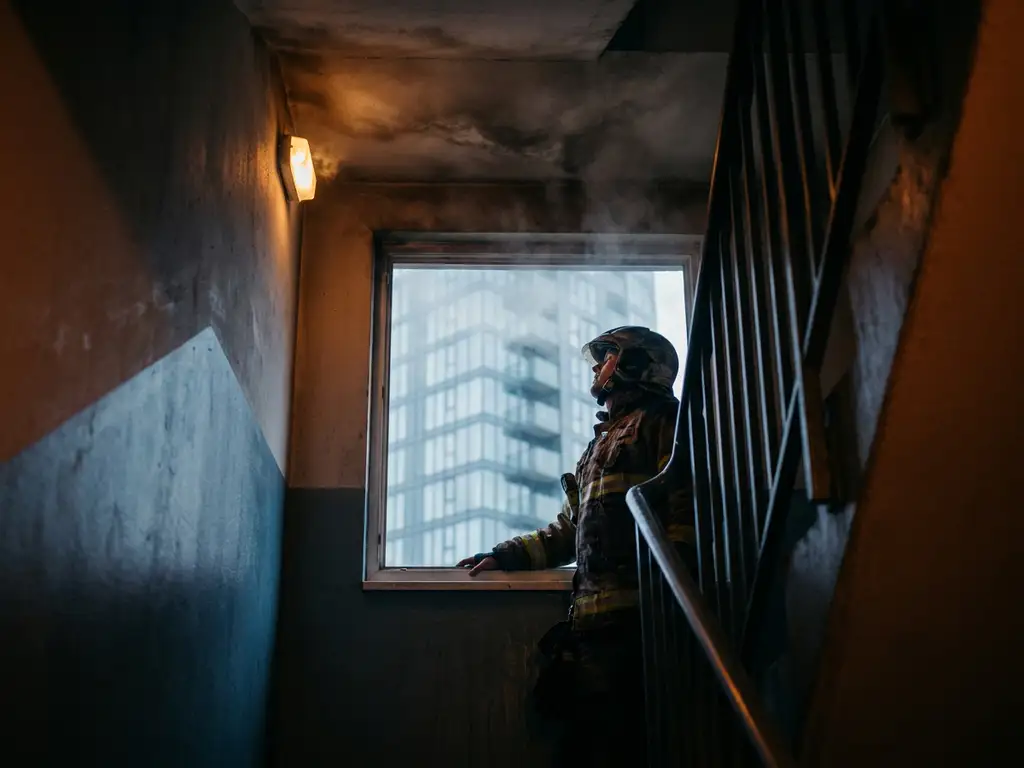
Fire risk in high-rise buildings increases significantly with height. The combination of vertical air movement, longer evacuation distances, and the concentration of electrical and mechanical infrastructure creates conditions where fires can escalate faster and cause greater damage than in low-rise structures. This article unpacks the specific hazards, suppression strategies, detection methods, and regulations that define high-rise fire safety today.
Why does fire spread faster in high-rise buildings?
Fire spreads faster in high-rise buildings primarily because of the stack effect — the natural movement of air upward through vertical shafts such as stairwells, elevator shafts, and utility ducts. This upward airflow acts like a chimney, drawing heat, smoke, and flames rapidly from lower floors to upper ones, dramatically accelerating fire propagation compared to single-story structures.
The stack effect intensifies in taller buildings because the pressure difference between inside and outside air grows with height. In cold climates, warm interior air rises aggressively through any available vertical opening. In warm climates, mechanical ventilation systems can create similar dynamics. Either way, a fire that ignites on a lower floor can push toxic smoke to occupied floors far above within minutes.
Building materials and interior design also play a role. Many high-rise structures contain extensive electrical wiring, data cabling, and HVAC ductwork that can carry both flames and smoke horizontally before they travel vertically. Open-plan floors with few fire compartments allow fire to spread laterally before the stack effect takes over. The result is a fire that can become life-threatening across multiple floors far sooner than in a conventional building.
What are the most common fire hazards in high-rise buildings?
The most common fire hazards in high-rise buildings are electrical faults, overloaded switchgear and distribution cabinets, HVAC system failures, and improperly stored flammable materials. In commercial and mixed-use towers, server rooms, battery energy storage systems, and high-voltage electrical cabinets represent particularly high-risk zones because they combine high energy density with equipment that can self-ignite.
Electrical infrastructure is consistently the leading cause of fires in tall buildings. Switchgear cabinets, power distribution units, and ICT enclosures generate heat during normal operation. When insulation degrades, connections loosen, or equipment is overloaded, the risk of arcing and ignition rises sharply. These hazards are especially dangerous because the fire often starts inside a sealed enclosure, where it can smolder undetected before breaking out.
Battery energy storage systems introduce a newer but rapidly growing hazard in high-rise environments. As buildings adopt renewable energy and backup power solutions, lithium-based battery arrays are being installed in basement levels and plant rooms. These systems are vulnerable to thermal runaway — a self-sustaining chemical reaction that generates intense heat and is extremely difficult to extinguish with conventional methods once it begins.
Kitchen areas, loading docks, and maintenance spaces also contribute to the fire risk high-rise buildings face on a daily basis. However, the hazards that are hardest to manage are the ones embedded in the building’s own infrastructure — the electrical and energy systems that run continuously and are often housed in spaces with limited human oversight.
How does evacuation become more complex in tall buildings?
Evacuation becomes more complex in tall buildings because occupants must travel longer vertical distances using a limited number of stairwells, often while smoke is rising through the same shafts they rely on to escape. The sheer number of people on multiple floors creates congestion, and firefighters must move upward against the flow of evacuating occupants.
In a low-rise building, most occupants can exit within minutes. In a 40-story tower, occupants on upper floors may need 20 minutes or more to reach ground level under ideal conditions. If stairwells become smoke-filled, that timeline becomes dangerous. Elevators are typically taken out of service during a fire, removing a key vertical transport option and placing the entire evacuation load on stairs.
Phased evacuation is a common strategy used in high-rise fire safety planning. Rather than evacuating all floors simultaneously, building managers evacuate the fire floor, the floor above, and the floor below first, then expand outward if needed. This reduces congestion and prevents panic-driven bottlenecks in stairwells. However, phased evacuation depends entirely on reliable communication systems and occupants who follow instructions — both of which can fail under real fire conditions.
People with mobility limitations present an additional challenge. Refuge areas — designated fire-protected spaces on each floor where people unable to use stairs can wait for assisted evacuation — are required in many jurisdictions, but their effectiveness depends on regular training and practiced emergency response procedures.
What fire suppression systems are used in high-rise buildings?
High-rise buildings typically use a combination of wet pipe sprinkler systems, dry pipe systems for areas prone to freezing, gaseous suppression for sensitive equipment rooms, and object-level protection for enclosed electrical and ICT cabinets. Each system is selected based on the specific fire risk profile of the space it protects.
Wet pipe sprinkler systems remain the most widely deployed suppression method in high-rise buildings. Water is held under pressure throughout the pipe network and releases automatically when a sprinkler head is triggered by heat. These systems are effective for open floor areas, corridors, and storage spaces, but they are unsuitable for server rooms, electrical switchgear, or battery storage areas where water contact would destroy the very assets being protected.
For enclosed high-value equipment, gaseous and inert gas suppression systems are the preferred approach. These systems displace oxygen within a sealed enclosure to extinguish fire without leaving residue or causing secondary damage to electronics. Nitrogen-based systems are increasingly favored because nitrogen is a clean, non-toxic inert gas that poses no harm to personnel, leaves no chemical residue, and carries none of the environmental concerns associated with older halon or PFAS-containing agents.
Object-level protection — suppression systems installed directly inside individual cabinets or enclosures — adds a targeted layer of defense that building-wide sprinkler systems cannot provide. By placing suppression capability at the source of the most likely ignition points, these systems can stop a fire before it ever leaves the enclosure, preventing both equipment damage and the broader spread of fire through the building.
How does early smoke detection reduce fire risk in tall buildings?
Early smoke detection reduces fire risk in tall buildings by identifying combustion at its earliest stage — before visible flames appear — giving building systems and occupants the maximum possible time to respond. In a high-rise environment where fire can spread rapidly through vertical shafts, detecting a fire seconds or minutes earlier translates directly into reduced damage, safer evacuation, and lower risk of structural involvement.
Aspirating smoke detection is among the most sensitive detection technologies available. Rather than waiting for smoke to reach a detector, aspirating systems actively draw air samples through a network of pipes and analyze them for the earliest trace particles of combustion. This approach is particularly valuable inside electrical cabinets and server racks, where a smoldering fault may produce detectable smoke long before it becomes an open fire.
The advantage of early detection in a tall building context extends beyond the immediate fire zone. Smoke management systems — which control pressurization in stairwells and ventilation in corridors — depend on timely fire signals to activate correctly. A delayed detection signal means delayed activation of these systems, which directly compromises evacuation safety on every floor above the fire. The faster the detection, the more effectively the entire building’s fire safety infrastructure can respond.
Integrated systems that combine detection and suppression in a single unit are especially effective for fire detection in tall buildings because they eliminate the response gap between identifying a fire and acting on it. When detection triggers suppression automatically within the same enclosure, the fire is addressed at its origin point without requiring human intervention.
What regulations govern fire safety in high-rise buildings?
Fire safety in high-rise buildings is governed by a combination of national building codes, fire safety legislation, and international standards that specify requirements for suppression systems, detection, evacuation routes, compartmentation, and regular testing. In most countries, buildings above a defined height threshold — commonly 18 meters or 30 meters depending on jurisdiction — are subject to enhanced fire safety requirements.
In the United Kingdom, the Building Safety Act 2022 introduced sweeping changes following the Grenfell Tower fire, creating new legal duties for building owners and managers of residential high-rises above 18 meters. Similar regulatory reviews have taken place across Europe, North America, and Asia-Pacific, with most jurisdictions tightening requirements around cladding materials, sprinkler retrofitting, and fire door standards.
International standards such as NFPA 13 (for sprinkler systems) and EN 15004 (for gaseous suppression systems) provide technical benchmarks that inform national regulations. For organizations operating across multiple countries, compliance with these standards provides a consistent baseline for high-rise fire safety regardless of local regulatory variation.
Sustainability and environmental compliance are increasingly shaping fire safety regulation as well. The phase-out of PFAS-containing fire suppression agents is advancing across the European Union and other markets, pushing building operators to replace legacy systems with PFAS-free alternatives. Organizations that proactively adopt cleaner suppression technologies are not only reducing environmental risk but also positioning themselves ahead of regulatory requirements that are expected to tighten further through 2026 and beyond.
How ExxFire helps with fire risk in high-rise buildings
ExxFire’s integrated fire detection and suppression systems address the specific fire risks that high-rise buildings face at the object level — protecting the enclosed electrical cabinets, server racks, switchgear, and battery storage systems that are among the most common ignition sources in tall buildings. Key capabilities include:
- Aspirating smoke detection that identifies combustion at the earliest possible stage, before flames develop inside an enclosure
- Non-pressurized nitrogen gas suppression that extinguishes fire without water, chemical residue, or damage to sensitive electronics
- PFAS-free technology that meets current and anticipated environmental regulations across the EU and beyond
- Easy installation without special certification, making the systems practical for retrofitting into existing high-rise infrastructure
- Relay-based status reporting to existing fire panels, ensuring seamless integration with building-wide fire safety systems
- Tested and certified by CNPP France and TÜV Nord, providing the documented compliance evidence that high-rise building operators and facility managers require
For facility managers, health and safety officers, and IT infrastructure directors responsible for fire safety in tall buildings, ExxFire provides a targeted, maintenance-free solution that closes the protection gap between building-wide suppression systems and the high-value equipment that needs it most. Contact ExxFire to find out how object-level fire protection can be integrated into your high-rise fire safety strategy.