

What are the fire risks in care homes and assisted living facilities?
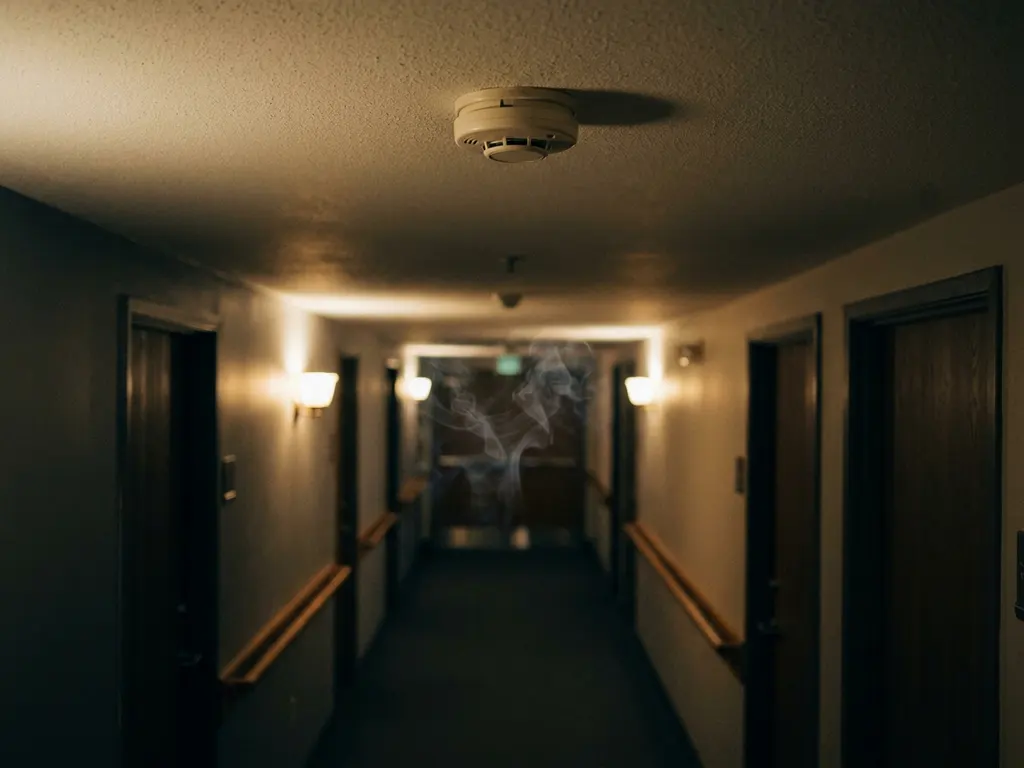
Care homes and assisted living facilities face some of the highest fire risks of any building type. Residents are often elderly, have reduced mobility, or live with cognitive impairments that make self-evacuation difficult or impossible. Electrical systems, kitchen equipment, medical devices, and around-the-clock staffing demands all create conditions where fire hazards are persistent and the consequences of a fire are severe. This article breaks down the key fire risks, common causes, regulatory requirements, and the most effective prevention and suppression strategies for care home environments.
Why are care homes at higher risk of fire than other buildings?
Care homes are at higher risk of fire than most other buildings because their residents are among the most vulnerable people in society. Many residents have limited mobility, cognitive decline, or medical conditions that prevent them from responding quickly to a fire alarm or evacuating without assistance. This means that even a small, contained fire can result in serious injury or loss of life.
Unlike office buildings or retail spaces, care homes operate continuously, 24 hours a day, every day of the year. Night shifts are typically staffed at lower ratios, which means fewer people are available to assist residents during the critical first minutes of a fire. At the same time, the building environment itself introduces risk: cooking facilities, medical equipment, electrical systems, and mobility aids all represent potential ignition sources.
The combination of a high-risk occupant profile and a complex operational environment means that fire safety in care homes requires a level of planning and investment that goes well beyond that of standard commercial buildings.
What are the most common causes of fires in care homes?
The most common causes of fires in care homes are cooking equipment, electrical faults, smoking, and arson. Cooking-related fires are the single largest category, typically starting in kitchens when equipment is left unattended or grease accumulates around heat sources. Electrical faults in aging wiring, overloaded sockets, and faulty appliances are the second most significant cause.
Smoking remains a notable hazard in care settings, particularly where residents with dementia or cognitive impairments may not use designated areas or may be unaware of the danger. Discarded cigarettes near bedding, furniture, or waste materials can smolder for extended periods before igniting.
Other frequently cited causes include:
- Overheating medical equipment such as electric blankets, heating pads, and mobility scooter chargers
- Faulty or overloaded electrical cabinets and distribution boards serving large residential buildings
- Laundry equipment left running unattended, particularly tumble dryers
- Candles and open flames in resident rooms, sometimes used for personal or religious reasons
- Deliberate ignition by residents with behavioral conditions
Understanding these causes is the foundation of effective fire prevention in care homes. Each source requires a targeted control measure rather than a one-size-fits-all approach.
How does a fire spread so quickly in assisted living environments?
Fire spreads quickly in assisted living environments because of the combination of combustible furnishings, open corridor layouts, and the time required to assist non-ambulatory residents. Soft furnishings such as mattresses, curtains, and upholstered chairs ignite rapidly and release significant heat and toxic smoke. Once a fire takes hold in a resident room, the corridor can become compromised within minutes.
Older care home buildings, in particular, may have been constructed before modern fire compartmentalization standards were in place. Gaps around pipes, unsealed door frames, and inadequate fire stopping allow smoke and flames to travel through walls and ceilings faster than evacuation can occur.
The evacuation challenge is a major amplifying factor. Assisting residents who use wheelchairs, walking frames, or who are bedbound takes considerably longer than a standard building evacuation. Staff must make sequential decisions about who to move first and which routes are still safe, all while managing their own safety and communicating with emergency services.
This is why early detection is not just beneficial in care home environments but essential. Every additional minute of warning time directly increases the likelihood of a successful evacuation.
What fire safety regulations apply to care homes?
Fire safety regulations for care homes vary by country, but most jurisdictions require care homes to comply with a combination of general fire safety law and sector-specific health and social care standards. In the United Kingdom, for example, the Regulatory Reform (Fire Safety) Order 2005 requires the responsible person to carry out and regularly review a fire risk assessment, implement appropriate fire safety measures, and ensure staff receive fire safety training.
In addition to the general fire safety framework, care homes registered with the Care Quality Commission (CQC) in the UK must demonstrate that their premises are safe, including adequate fire precautions. Similar regulatory structures exist across the European Union, where national building codes and care sector regulations work in parallel.
Key regulatory requirements typically include:
- A documented and regularly reviewed fire risk assessment
- Adequate fire detection and alarm systems appropriate to the building and its occupants
- Clearly marked and unobstructed escape routes
- Fire doors meeting minimum resistance standards
- Staff fire safety training at induction and on a regular basis thereafter
- A written personal emergency evacuation plan (PEEP) for each resident
- Regular fire drills, adapted to avoid distressing vulnerable residents
Non-compliance with fire safety regulations in care settings can result in enforcement notices, prohibition orders, or criminal prosecution in the most serious cases. Regulatory bodies and fire authorities have increased scrutiny of the sector following high-profile incidents.
What fire detection and suppression systems are used in care homes?
Care homes typically use addressable fire alarm systems with automatic detection across all areas of the building, including bedrooms, corridors, kitchens, and plant rooms. These systems identify the exact location of a triggered detector, enabling staff to respond quickly and precisely. Heat detectors are commonly used in kitchens to avoid false alarms from cooking fumes, while smoke detectors are standard elsewhere.
For areas containing electrical infrastructure such as switchgear cabinets, distribution boards, and server rooms, conventional room-level detection is often insufficient. Fires in electrical enclosures can smolder for a long time before reaching the temperature threshold of a standard detector, by which point significant damage has already occurred.
Aspirating smoke detection systems address this gap by continuously sampling air from within or around an enclosure, identifying smoke particles at very low concentrations long before a conventional detector would activate. When paired with a suppression system, this creates an integrated response that can extinguish a fire at its source before it has any opportunity to spread.
Water-based sprinkler systems are increasingly being required or recommended in new care home construction in several countries. However, sprinklers are not appropriate for electrical cabinets or sensitive equipment areas, where a clean agent or inert gas suppression system is the correct choice. These systems suppress fire without causing water damage or leaving chemical residues that could harm electronics.
How can care homes reduce fire risk in electrical and equipment areas?
Care homes can reduce fire risk in electrical and equipment areas by combining regular inspection and maintenance with targeted object-level fire suppression. Electrical distribution boards, switchgear cabinets, and charging stations for mobility equipment are among the highest-risk assets in a care home building. These areas often receive less routine attention than kitchens or resident spaces, yet they represent a significant and persistent ignition risk.
Practical steps to reduce electrical fire risk include:
- Scheduled inspection of electrical panels and wiring by a qualified electrician, particularly in older buildings
- Avoiding overloading circuits and replacing extension leads with properly installed fixed sockets
- Establishing a charging policy for mobility scooters, wheelchairs, and other battery-powered equipment, including designated charging areas with appropriate ventilation
- Installing thermal imaging inspections on electrical cabinets to identify hotspots before they become fires
- Fitting object-level suppression inside electrical enclosures to provide automatic protection at the source
Object-level protection is particularly valuable because it acts independently of the building’s main fire alarm system. If a fault develops inside a cabinet at night, a suppression system integrated directly into that enclosure can detect and extinguish the fire before it has any chance to spread to the surrounding area.
How ExxFire helps protect care homes from electrical fire risks
ExxFire provides combined fire detection and suppression systems designed specifically for the kind of enclosed electrical equipment found in care homes, including switchgear cabinets, distribution boards, and ICT enclosures. The systems use aspirating smoke detection to identify a fire at the earliest possible stage, paired with non-pressurized nitrogen gas suppression that extinguishes the fire at its source without leaving chemical residues or causing collateral damage.
- PFAS-free nitrogen suppression that leaves no residue on sensitive electrical components
- Non-pressurized gas storage that eliminates the safety risks associated with high-pressure cylinders
- Easy installation without the need for specialist certification, reducing setup time and cost
- Maintenance-free operation once commissioned, with status reporting available to the building’s existing fire panel via built-in relays
- Tested and certified by CNPP in France and DMT (part of TÜV Nord) in Germany
For care home operators looking to strengthen fire safety in electrical and equipment areas without disrupting residents or undertaking major installation work, ExxFire’s systems offer a practical, certified, and sustainable solution. Contact ExxFire to find out how object-level fire protection can be integrated into your care home environment.
Related Articles
- How does heat detection differ from smoke detection in cabinets?
- Why is fire safety certification important for industrial equipment?
- What are the IEC standards for fire detection in electrical enclosures?
- Why is multi-sensor fire detection more reliable than single-sensor systems?
- What are the differences between water mist and inert gas fire suppression?