

What are the differences between water mist and inert gas fire suppression?
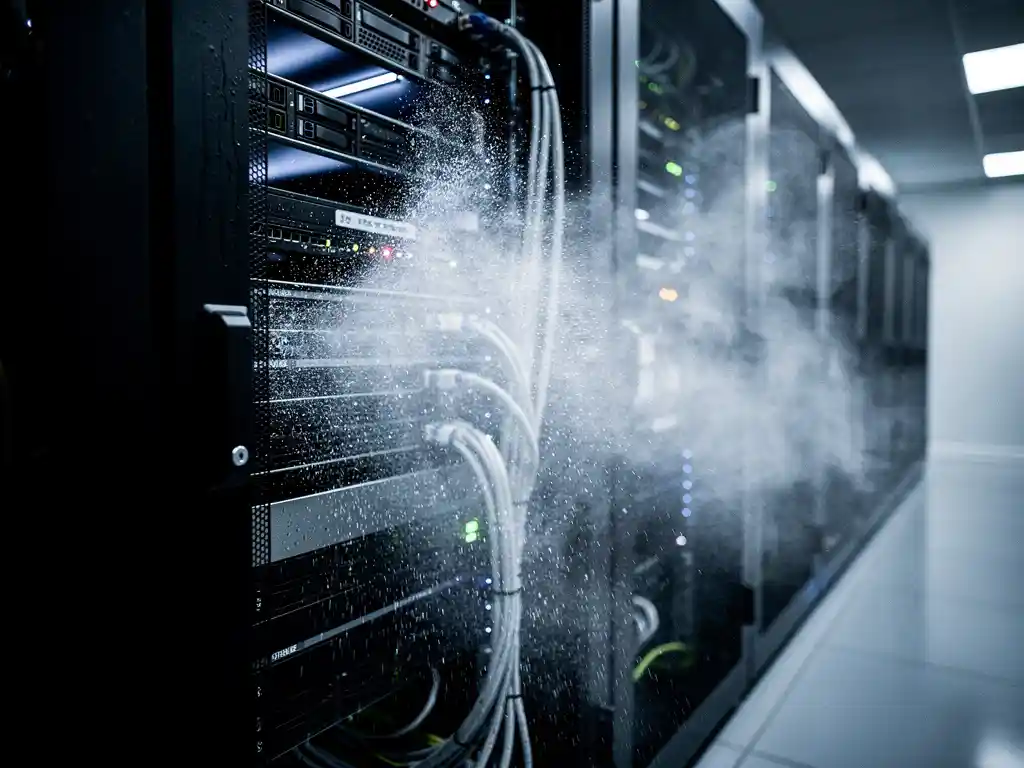
Water mist and inert gas fire suppression systems work through fundamentally different mechanisms and suit different environments. Water mist suppresses fire by cooling flames and displacing oxygen using fine water droplets, while inert gas suppression works by reducing oxygen concentration to a level that cannot sustain combustion. For protecting sensitive electronics and mission-critical equipment, the choice between them carries significant consequences for hardware safety, environmental compliance, and total cost of ownership. The sections below address the most important practical differences.
How does each system actually extinguish a fire?
Water mist fire suppression releases water at high pressure through specialized nozzles, producing extremely fine droplets that cool the fire, reduce radiant heat, and partially displace oxygen around the flame. Inert gas fire suppression works differently: it floods a protected space with a gas such as nitrogen, argon, or a blend of both, lowering the oxygen concentration below the threshold needed for combustion while remaining breathable for humans at design concentrations.
Water mist systems rely on a water supply, a pressurization pump, and a network of nozzles. Their effectiveness depends on droplet size, water pressure, and how well the mist reaches the fire source. In enclosed spaces, the mist can be highly effective at absorbing heat rapidly.
Inert gas systems, by contrast, work chemically and physically at the atmospheric level. By displacing oxygen rather than applying a substance directly to the flame, they suppress fire throughout the entire protected volume without leaving any residue. Nitrogen-based systems, in particular, use a gas that is already the dominant component of the air we breathe, making the suppression process clean and residue-free.
Which environments are water mist and inert gas systems suited for?
Water mist systems are well suited to engine rooms, turbine enclosures, commercial kitchens, and areas where water damage is acceptable and a water supply is readily available. Inert gas fire suppression systems are the preferred choice for enclosed spaces housing sensitive electronics, electrical cabinets, server rooms, battery energy storage systems, and any environment where water contact would cause secondary damage or where residue-free suppression is required.
Water mist performs strongly in spaces where the fire hazard involves flammable liquids or high-heat combustion and where the infrastructure can support a water supply and drainage. It is also used in heritage buildings and museums where a full sprinkler system would cause too much water damage but some moisture is still acceptable.
Inert gas systems are the standard choice wherever electronics, telecommunications infrastructure, or high-value electrical equipment must be protected. Because the gas leaves no residue and does not conduct electricity, it can suppress a fire inside a live cabinet or server rack without damaging the hardware. This makes inert gas protection for ICT cabinets a particularly well-established application.
Does water mist damage electronics and sensitive equipment?
Yes, water mist can damage electronics and sensitive equipment. Even fine water droplets can cause short circuits, corrosion, and irreversible damage to circuit boards, server components, and electrical switching gear. While water mist causes far less damage than traditional sprinkler systems, the risk of moisture contact with live electronics remains a genuine concern that limits its suitability in data centers and electrical enclosures.
The damage from water in an electronics environment is not always immediate. Corrosion can develop over time after a discharge event, leading to equipment failures weeks or months later. Cleanup after a water mist discharge also requires drying and inspection procedures that add to downtime and recovery costs.
Inert gas suppression eliminates this risk entirely. Because nitrogen and other inert gases are non-conductive and leave no chemical or physical residue, equipment can often continue operating during or immediately after a suppression event. For environments where hardware replacement costs are high and downtime is unacceptable, this distinction is critical.
What are the environmental differences between water mist and inert gas suppression?
Inert gas fire suppression systems, particularly those using nitrogen, have a significantly lower environmental impact than many alternative suppression technologies. Nitrogen is a naturally occurring, non-toxic gas with zero global warming potential and zero ozone depletion potential. Water mist systems are also environmentally benign in terms of the suppression agent itself, but some systems use additives or surfactants that may introduce chemical concerns.
The more significant environmental distinction in 2026 involves the regulatory pressure on PFAS-containing suppression agents. Many older gas suppression systems and foam-based alternatives contain per- and polyfluoroalkyl substances, which are persistent environmental pollutants now subject to increasing restrictions across Europe and globally. Nitrogen-based inert gas systems are entirely PFAS-free, making them a compliant and future-proof choice for organizations navigating tightening environmental regulations.
Water mist systems do not inherently contain PFAS, but they are also not a direct substitute for gas suppression in enclosed electrical environments. For organizations with sustainability mandates and compliance obligations, a nitrogen-based inert gas system offers the cleanest environmental profile available in the suppression market.
Which fire suppression system has lower total cost of ownership?
Inert gas suppression systems, particularly those designed for enclosed enclosures, typically offer a lower total cost of ownership for protecting individual cabinets and electrical equipment. Their installation is simpler, maintenance requirements are minimal, and there are no water supply connections, drainage systems, or pump maintenance schedules to manage. Water mist systems involve more complex infrastructure and higher ongoing maintenance costs, particularly for the high-pressure components.
When evaluating total cost of ownership, the following factors favor inert gas systems for electronics protection:
- No secondary damage costs: No water cleanup, drying, or corrosion repair after a discharge
- Simpler installation: Enclosed-cabinet systems can often be self-installed without specialist contractors
- Lower maintenance burden: Non-pressurized nitrogen systems have fewer mechanical components requiring regular servicing
- Faster recovery: Equipment can often resume operation immediately after suppression, reducing downtime costs
- Longer service life: Solid-state gas generator technology has a long operational lifespan with minimal intervention
Water mist systems can offer competitive total cost of ownership in large open spaces where their coverage efficiency outweighs infrastructure costs, but for targeted protection of high-value enclosed equipment, the economics favor inert gas.
When should you choose inert gas over water mist suppression?
Choose inert gas fire suppression over water mist when protecting enclosed electrical or electronic equipment, when water contact would cause damage or data loss, when environmental compliance requires a PFAS-free solution, or when minimal downtime after a fire event is a business requirement. Inert gas is also the better choice when the suppression system must operate without a water supply connection or drainage infrastructure.
Specific scenarios where inert gas suppression is the clear choice include:
- Server rooms, data centers, and ICT cabinet enclosures
- Switchgear and high-voltage electrical cabinets
- Battery energy storage systems where thermal runaway must be contained
- Telecom infrastructure in remote or unmanned locations
- Industrial control panels and automation equipment
- Healthcare and pharmaceutical environments with sensitive instruments
Water mist remains the stronger option for open spaces with flammable liquid hazards, machinery spaces, or environments where a water supply is integrated into the building’s fire safety infrastructure and electronics are not at risk.
How ExxFire protects mission-critical equipment with inert gas suppression
ExxFire provides integrated fire detection and suppression systems built specifically for the enclosed environments where inert gas suppression delivers its greatest advantage. For organizations protecting ICT cabinets, switchgear, BESS installations, and other high-value enclosures, ExxFire’s systems offer:
- Combined early detection and suppression: Aspirating smoke detection identifies a fire threat at the earliest stage, triggering nitrogen suppression before significant damage occurs
- Non-pressurized nitrogen technology: The patented Cool Gas Generator delivers nitrogen in a solid, non-pressurized state, eliminating the safety and logistics challenges of pressurized gas cylinders
- Residue-free, PFAS-free suppression: Nitrogen leaves no chemical residue, protecting sensitive electronics and meeting current and forthcoming environmental regulations
- Easy self-installation: Systems are pre-engineered for installation without specialist certification, reducing deployment costs and complexity
- Certified performance: All systems are tested and certified by CNPP France and DMT, part of TÜV Nord, providing verified protection for mission-critical assets
- Scalable coverage: Units protect enclosures up to 4.5 m³ and can be interconnected for larger volumes, with built-in relays for integration with existing fire panels
If your organization is evaluating fire suppression options for electrical cabinets, server infrastructure, or energy storage systems, contact ExxFire to discuss which system configuration best fits your environment and compliance requirements.