
How does fire risk affect building insurance premiums?
Fire risk directly affects building insurance premiums because insurers price policies based on the likelihood and potential severity of a loss. The higher the assessed fire risk of a building, the more an insurer stands to pay out in the event of a claim, and that cost is passed on through higher premiums. Businesses operating in environments with combustible materials, high-value equipment, or inadequate fire protection measures consistently pay more. The sections below unpack the key questions around fire risk, insurance pricing, and what businesses can do to reduce both.
What factors make a building high-risk for fire insurance?
A building is considered high-risk for fire insurance when its construction, contents, or operations increase the probability of a fire starting or spreading. Insurers evaluate several factors simultaneously, and even one high-risk characteristic can push premiums significantly upward. Buildings housing electrical infrastructure, industrial machinery, or large volumes of flammable materials are routinely flagged as elevated risk.
The most common factors that increase fire risk classification include:
- Construction materials: Timber-framed or older buildings with limited fire resistance carry higher risk than modern concrete or steel structures.
- Occupancy type: Industrial facilities, warehouses, and data centers present different risk profiles than standard office buildings.
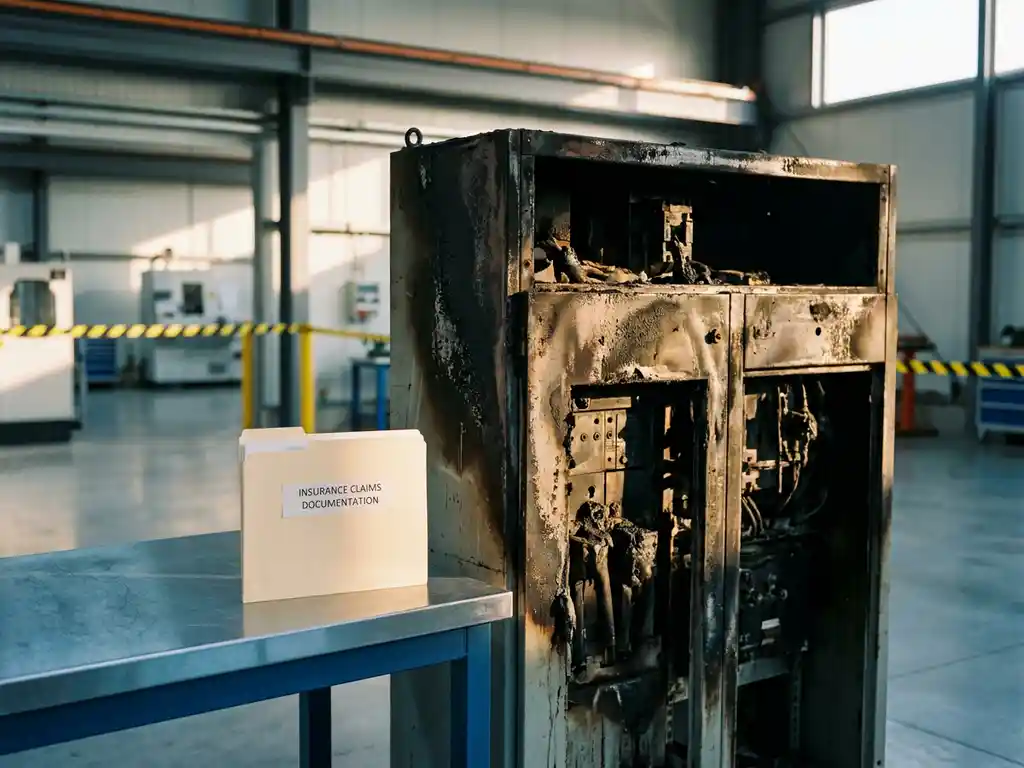
- Electrical infrastructure: High-voltage cabinets, switchgear, battery energy storage systems, and dense server environments are frequent ignition sources.
- Absence of suppression systems: Buildings with no automatic fire suppression or early detection face higher potential damage and therefore higher premiums.
- Previous claims history: A record of prior fire incidents signals ongoing risk to underwriters.
- Proximity to fire services: Remote locations with slow emergency response times increase the expected severity of any fire event.
For businesses operating mission-critical environments, the presence of high-value and easily damaged equipment, such as server racks or electrical cabinets, adds another layer of risk that insurers factor into their assessments.
How do insurers calculate fire risk when setting premiums?
Insurers calculate fire risk by conducting a structured risk assessment that weighs the probability of a fire occurring against the likely financial impact of that fire. This process combines physical site surveys, documentation reviews, and actuarial modeling. The result is a risk score that determines both the premium level and any conditions attached to the policy.
During a fire risk assessment for insurance purposes, underwriters typically examine:
- The age, construction, and layout of the building
- The nature and value of the contents and equipment inside
- Existing fire detection and suppression measures
- Compliance with local fire safety regulations and building codes
- Employee fire safety training and documented procedures
- Maintenance records for electrical systems and fire safety equipment
Insurers also consider the total cost of a worst-case scenario, which includes not just property damage but business interruption, equipment replacement, and liability exposure. For organizations running critical infrastructure, downtime costs alone can far exceed the physical damage, which is why insurers treat operational continuity as a core part of the risk calculation.
Does having a fire suppression system lower insurance premiums?
Yes, installing a fire suppression system can lower building insurance premiums because it directly reduces the potential severity of a fire loss. Insurers recognize that automatic suppression systems limit the spread of fire, protect high-value assets, and reduce the time between ignition and control. This translates into a lower expected payout, which insurers reward with reduced premiums or improved policy terms.
The extent of the reduction depends on the type of system installed, its certification status, and how comprehensively it covers the risk areas within the building. Systems that are independently tested and certified by recognized bodies, such as CNPP in France or TÜV Nord in Germany, carry more weight with underwriters than uncertified solutions.
Object-level protection, where suppression is applied directly inside high-risk enclosures such as server racks or electrical cabinets, is particularly valued because it addresses fire at its most likely source. This type of targeted protection reduces the probability of a localized ignition escalating into a major incident, which is precisely the scenario insurers are pricing against.
Beyond premium reductions, documented fire suppression can also improve the terms of a policy, including higher coverage limits, lower deductibles, and fewer exclusions related to electrical or equipment fire events.
What is the difference between fire detection and fire suppression for insurance purposes?
For insurance purposes, fire detection and fire suppression serve different functions and are weighted differently in risk assessments. Fire detection identifies a fire event and triggers an alert, while fire suppression actively intervenes to extinguish or contain the fire. Insurers value both, but suppression systems have a greater impact on reducing potential loss because they limit damage rather than simply notifying of it.
Fire detection systems
Detection systems, including smoke detectors, heat sensors, and aspirating smoke detection units, reduce risk by shortening the time between ignition and response. Early detection allows occupants to evacuate, emergency services to be called, and manual intervention to begin sooner. For insurance, detection systems demonstrate a commitment to fire safety governance and reduce the likelihood of a fire going unnoticed for an extended period.
Fire suppression systems
Suppression systems go further by taking autonomous action to control or extinguish a fire without requiring human intervention. This is particularly important in unmanned or partially staffed environments such as server rooms, electrical substations, or battery storage facilities. From an insurance standpoint, suppression systems directly reduce the probable maximum loss, which is the key metric underwriters use to set premium levels.
A combined system that integrates both early smoke detection and automatic suppression in a single unit provides the strongest case for premium reduction, as it addresses both the detection gap and the suppression gap simultaneously.
Do fire suppression chemicals or agents affect insurance compliance?
Yes, the type of suppression agent used can affect insurance compliance, particularly as environmental regulations tighten around certain chemical agents. Insurers and regulators are increasingly scrutinizing systems that rely on PFAS-containing agents, also known as per- and polyfluoroalkyl substances, due to their environmental persistence and associated liability. Using a non-compliant or restricted agent can create coverage gaps or complications at the time of a claim.
PFAS-based fire suppression agents have faced growing regulatory pressure across Europe and internationally. Businesses that continue to rely on these systems may find that their insurers impose conditions, require upgrades, or apply exclusions related to environmental contamination liability. In some jurisdictions, the cost of cleaning up PFAS contamination following a suppression event can exceed the original property damage.
Inert gas systems that use clean agents such as nitrogen present no such complications. Nitrogen leaves no chemical residue, causes no secondary damage to electronics or sensitive equipment, and raises no environmental compliance concerns. For insurers, this means no additional liability exposure beyond the fire event itself, which simplifies the claims process and removes a category of risk from the policy assessment.
What steps can businesses take to reduce fire risk and lower premiums?
Businesses can reduce fire risk and lower insurance premiums by systematically addressing the factors that underwriters use to assess risk. The most effective steps combine physical fire safety measures with documentation, maintenance, and compliance, creating a verifiable record that demonstrates reduced exposure to loss.
Key actions that have a direct impact on fire risk assessments include:
- Install certified fire suppression systems: Particularly in high-risk areas such as server rooms, electrical cabinets, and battery storage units, where ignition risk is concentrated.
- Upgrade to early smoke detection: Aspirating smoke detection systems identify combustion particles far earlier than standard detectors, reducing the window between ignition and response.
- Replace PFAS-containing agents: Transitioning to clean, inert gas suppression removes environmental liability and aligns with tightening regulatory requirements.
- Maintain electrical infrastructure: Regular inspection and maintenance of switchgear, high-voltage cabinets, and power distribution units reduce ignition risk at the source.
- Document all fire safety measures: Insurers require evidence, not just assurances. Certification documents, maintenance logs, and installation records all support a stronger risk profile.
- Train staff in fire safety procedures: Documented training programs demonstrate operational readiness and reduce human error as a contributing risk factor.
- Commission a professional fire risk assessment: An independent assessment identifies gaps, satisfies insurer requirements, and provides a baseline for ongoing improvement.
Businesses that take a proactive approach to fire safety, rather than treating it as a compliance checkbox, consistently achieve better insurance terms. Underwriters respond to evidence of reduced risk, and every verified measure contributes to a stronger negotiating position at renewal.
How ExxFire helps reduce fire risk in critical environments
ExxFire’s integrated fire detection and suppression systems are designed specifically for the environments that carry the highest fire risk and the greatest potential for operational disruption. For businesses looking to strengthen their fire safety profile and support a more favorable insurance assessment, ExxFire offers several distinct advantages:
- Combined detection and suppression: Aspirating smoke detection paired with automatic nitrogen suppression in a single system, addressing both the detection gap and the suppression gap at once.
- PFAS-free inert gas technology: Non-pressurized nitrogen leaves no chemical residue, causes no secondary damage to electronics, and carries no environmental compliance risk.
- Object-level protection: Systems are installed directly inside server racks, electrical cabinets, and switchgear enclosures, targeting suppression at the most likely ignition source.
- Certified and independently tested: Systems are tested and certified by CNPP in France and DMT, part of TÜV Nord in Germany, providing the documented evidence that underwriters require.
- Easy installation and maintenance-free operation: Once commissioned, the system requires no further maintenance or check-ups, reducing the ongoing cost and administrative burden of fire safety compliance.
- Fire panel integration: Built-in relays allow the system to report status directly to an existing fire panel, ensuring seamless compatibility with current infrastructure.
For businesses operating data centers, BESS installations, industrial facilities, or any environment where high-value equipment and operational continuity are at stake, ExxFire provides a certified, clean, and cost-effective path to stronger fire safety protection. Contact ExxFire to discuss how the right suppression system can support your risk profile and insurance position.