

What is the difference between a fire alarm and a smoke detector?
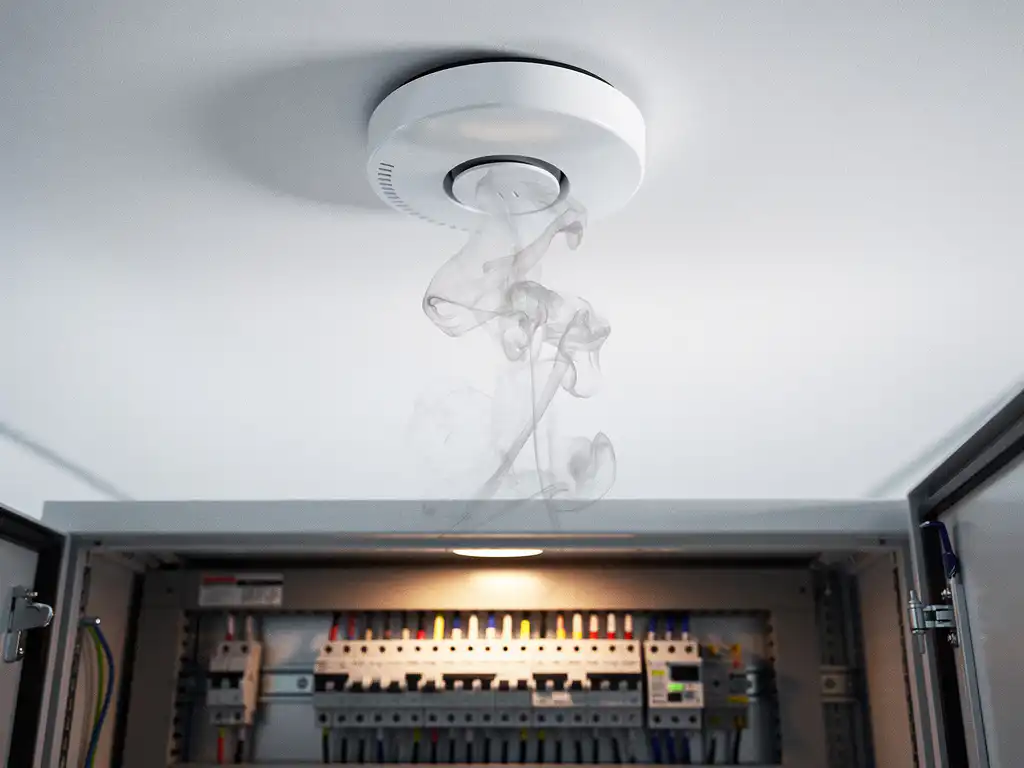
A smoke detector and a fire alarm system are not the same thing. A smoke detector is a single sensing device that detects smoke particles in the air. A fire alarm system is a broader network of components — including detectors, control panels, sounders, and sometimes suppression equipment — designed to detect, alert, and respond to fire across an entire building or facility. Understanding the difference matters because the right fire safety setup depends on what you are protecting and how quickly you need to act. The sections below walk through how each component works, where they overlap, and when a more advanced solution is needed.
How does a smoke detector actually work?
A smoke detector is a standalone sensing device that monitors the air for particles produced by combustion. When smoke enters the detector’s sensing chamber, it triggers an internal alarm — typically a loud buzzer or beep — to alert anyone nearby. Most smoke detectors operate independently and are not connected to a wider fire safety system.
There are two main technologies used in smoke detectors. Ionization detectors use a small amount of radioactive material to ionize the air inside a sensing chamber. When smoke particles disrupt the ionization current, the alarm triggers. These are generally faster at detecting fast-flaming fires. Photoelectric detectors use a light beam and a sensor. When smoke scatters the light toward the sensor, the alarm activates. These tend to respond more quickly to slow, smoldering fires.
A more advanced variant is the aspirating smoke detector, which actively draws air samples into a detection chamber through a network of pipes or tubes. This allows extremely early detection of smoke — often before visible smoke is present — making it well suited for environments where early warning is critical, such as server rooms or electrical enclosures.
What is a fire alarm system made up of?
A fire alarm system is an integrated network of components that work together to detect fire, alert occupants, and in some configurations, trigger suppression. Unlike a standalone smoke detector, a fire alarm system is connected, monitored, and managed through a central control panel.
The core components of a fire alarm system typically include:
- Initiating devices: Smoke detectors, heat detectors, manual call points, and flame detectors that sense fire conditions
- Control panel: The central hub that receives signals from initiating devices, processes the information, and activates outputs
- Notification devices: Sounders, strobes, and voice evacuation systems that alert building occupants
- Suppression interfaces: Relay outputs that can trigger sprinkler systems, gas suppression, or other extinguishing equipment
- Monitoring connections: Links to building management systems or remote monitoring services
The control panel is the brain of the system. It can distinguish between zones, identify which detector triggered, and escalate the response accordingly. This level of coordination is what separates a fire alarm system from a simple standalone detector.
What’s the difference between detection and suppression?
Fire detection identifies that a fire or smoke condition exists and raises an alert. Fire suppression actively intervenes to extinguish or contain the fire. Detection without suppression warns you — suppression takes action. In many environments, both are needed together to minimize damage.
Detection systems, including smoke detectors and fire alarm panels, are designed to give people time to evacuate and to alert emergency services. They are passive in the sense that they do not stop the fire themselves. The speed and sensitivity of detection directly affect how much time is available to respond.
Suppression systems, by contrast, apply an extinguishing agent — water, gas, foam, or inert gas — directly to the fire or the protected space. The goal is to reduce oxygen, cool the fire, or chemically interrupt combustion before the fire spreads. In environments where human response time is insufficient or where the equipment itself must be preserved, suppression is essential.
The most effective fire safety setups combine both: detection triggers suppression automatically, reducing the gap between identifying a fire and acting on it. This is especially important in unmanned facilities or locations where fire can escalate rapidly inside enclosed equipment.
Can a smoke detector trigger a fire suppression system?
Yes, a smoke detector can trigger a fire suppression system, but only when it is connected to a control panel or suppression interface that is wired or programmed to activate suppression upon receiving a detection signal. A standalone smoke detector with only a built-in sounder cannot trigger suppression on its own.
In integrated systems, the smoke detector sends a signal to the control panel when smoke is detected. The panel then evaluates the signal — sometimes requiring confirmation from a second detector to reduce false activations — and if the threshold is met, it sends an output signal to the suppression system. This output activates the extinguishing agent release.
The type of suppression triggered depends on the system design. Options include water mist, CO2, clean agent gas, or inert gas systems. For sensitive electronics, inert gas suppression is often preferred because it extinguishes fire without leaving residue or causing secondary damage to components.
When is a smoke detector not enough to protect critical equipment?
A standalone smoke detector is not enough when the equipment being protected is high-value, sensitive to damage, or located in an environment where a fire can escalate faster than a human can respond. In these situations, early detection alone does not prevent hardware loss, data destruction, or costly downtime.
Consider environments such as server rooms, electrical switchgear cabinets, battery energy storage systems, or high-voltage enclosures. In these spaces, a fire can start inside a closed cabinet and grow rapidly before smoke even reaches a ceiling-mounted detector. By the time an alarm sounds and someone responds, the damage may already be severe.
There are several conditions where a standalone detector falls short:
- The fire originates inside a closed enclosure, where ceiling-mounted detectors cannot sense it early enough
- The facility is unmanned or remotely operated, leaving no one to respond to an alarm
- The equipment is irreplaceable or extremely expensive to restore, making even minor fire damage unacceptable
- Regulatory or insurance requirements demand active suppression, not just detection
- The business cannot tolerate downtime, making rapid automatic suppression critical
In these cases, detection must be paired with suppression at the object level — protecting the equipment directly rather than relying on room-level detection and manual intervention.
Which fire safety solution is right for industrial and ICT environments?
For industrial and ICT environments, the right fire safety solution combines early smoke detection with automatic suppression targeted at the specific equipment at risk. Room-level fire alarms provide a safety baseline, but they are not designed to protect individual cabinets, enclosures, or racks from internal fire. Object-level protection is the appropriate standard for mission-critical assets.
In these environments, the key requirements for a fire safety solution are:
- Early detection: The system must detect smoke at the earliest possible stage, ideally before visible flames develop
- Automatic suppression: The system should respond without requiring human intervention, especially in unmanned facilities
- No residue or secondary damage: The extinguishing agent must not damage sensitive electronics, circuit boards, or stored data
- Environmental compliance: The solution should be free of PFAS and other harmful chemicals, in line with tightening environmental regulations
- Low total cost of ownership: Easy installation, minimal maintenance, and long service life reduce ongoing costs
Inert gas suppression using nitrogen is widely regarded as one of the cleanest and most effective options for these environments. Nitrogen is non-conductive, leaves no residue, and poses no risk of chemical contamination to sensitive components.
How ExxFire protects critical equipment from fire
ExxFire provides a combined fire detection and suppression system purpose-built for exactly the environments described above. The system integrates aspirating smoke detection with nitrogen gas suppression in a single, pre-engineered unit that installs directly inside or alongside closed enclosures such as server racks, switchgear cabinets, battery energy storage systems, and ICT infrastructure.
Key features of ExxFire’s approach include:
- Aspirating smoke detection that actively samples air inside the enclosure, catching smoke at the earliest possible stage before flames develop
- Non-pressurized nitrogen gas suppression using the patented Cool Gas Generator technology, which releases inert nitrogen directly at the fire source without residue or collateral damage
- PFAS-free extinguishing agent, making ExxFire systems a clean, compliant alternative to legacy chemical suppression systems
- Built-in relay outputs that report system status to an existing fire alarm panel, ensuring seamless integration with your current fire safety infrastructure
- Self-installation without special certification, reducing deployment costs and simplifying maintenance
- Tested and certified by CNPP in France and DMT (part of TÜV Nord) in Germany, providing verified performance assurance
ExxFire systems protect enclosures up to 4.5 m³, with multiple units interconnectable for larger volumes. Whether you manage a data center, an industrial facility, or a distributed network of telecom cabinets, ExxFire delivers automatic, object-level fire protection that keeps your operations running. Contact ExxFire to discuss the right configuration for your environment.
Related Articles
- What is the role of remote sensing in fire management?
- What fire prevention measures reduce the risk of a wildfire spreading?
- What is GWP and why does it matter for fire protection?
- What are the long-term costs of using high-GWP fire suppression agents?
- Why are data centers switching to green fire suppression systems?