

How do sprinkler systems lower fire risk?
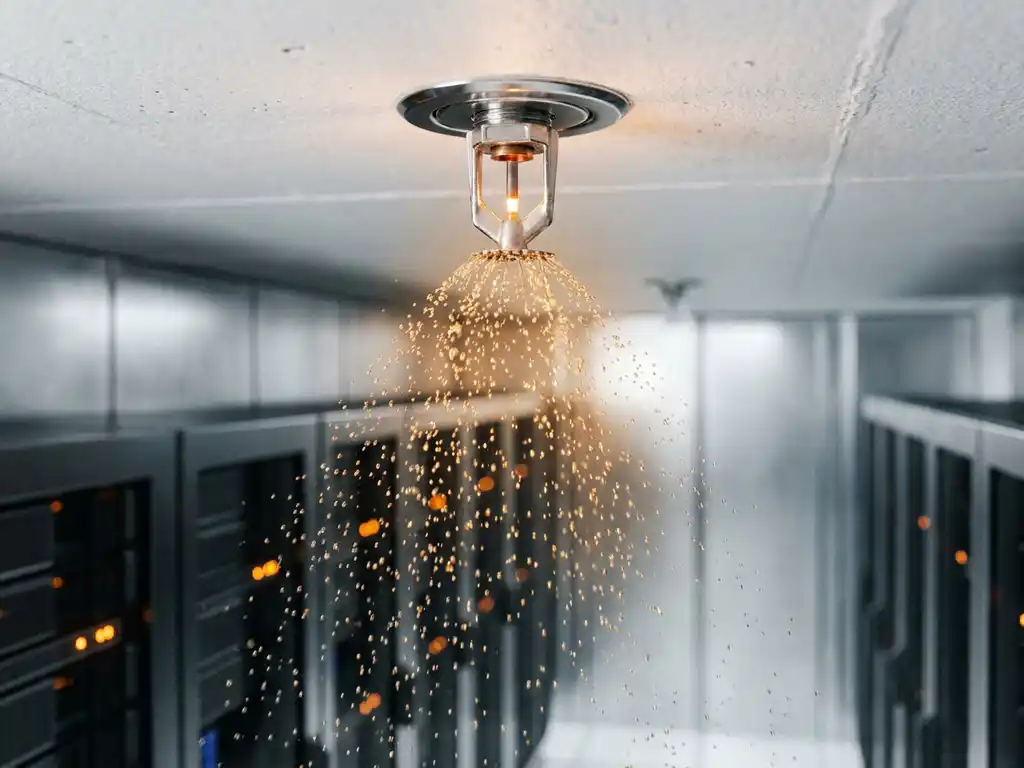
Sprinkler systems lower fire risk by automatically detecting heat and discharging water to suppress flames before they spread. They are one of the most widely deployed fire protection systems in commercial and residential buildings, designed to limit structural damage and protect occupants. This article unpacks how they work, what types exist, where they fall short, and how they compare to alternative suppression approaches.
How do sprinklers detect and respond to a fire?
Sprinklers detect fire through heat-sensitive elements built into each sprinkler head, typically a glass bulb filled with a glycerin-based liquid or a fusible metal link. When the ambient temperature rises to a set threshold, usually between 57°C and 74°C for standard installations, the element breaks and the sprinkler head opens, releasing water directly onto the fire source.
A common misconception is that all sprinkler heads activate simultaneously when a fire alarm sounds. In reality, only the heads exposed to sufficient heat open. This targeted response means that a contained fire in one room typically activates only one or two heads, limiting water damage to the immediate area rather than flooding an entire floor.
The response sequence is straightforward: heat triggers the head, water pressure from the building’s supply pushes water through the open head, and the spray pattern disperses water over the fire. Some systems also trigger an alarm when water flow is detected, alerting occupants and emergency services as suppression begins. This dual function, suppression and notification, is one reason automatic sprinkler systems are so effective at reducing the overall scale of fire incidents.
What types of sprinkler systems are used in buildings?
The four main types of sprinkler systems used in buildings are wet pipe, dry pipe, pre-action, and deluge systems. Each is designed for a specific environment and risk profile, and choosing the right type depends on the building’s use, climate, and the nature of the assets being protected.
- Wet pipe systems are the most common. Pipes are permanently filled with pressurized water, so the response is immediate when a head activates. They suit most commercial and residential buildings where freezing temperatures are not a concern.
- Dry pipe systems keep pipes filled with pressurized air or nitrogen rather than water. When a head opens, the air releases first, then water flows in. This delay makes them suitable for unheated spaces like parking garages or cold storage facilities.
- Pre-action systems require two independent events before water is released: a fire detection signal and the physical activation of a sprinkler head. This two-step mechanism reduces the risk of accidental discharge, making them common in data centers and museums.
- Deluge systems have open heads and release water across all heads simultaneously when triggered. They are used in high-hazard environments such as aircraft hangars, chemical plants, and power generation facilities where rapid, total coverage is essential.
Beyond these four, specialized variants such as foam-water systems and residential sprinkler systems exist for specific applications. The type installed in any given building reflects a balance between suppression speed, accidental discharge risk, and the sensitivity of the environment.
Are sprinkler systems effective at preventing total fire loss?
Yes, sprinkler systems are highly effective at preventing total fire loss in buildings. Fire safety research and decades of real-world data consistently show that automatic sprinklers control or extinguish fires in the vast majority of cases before they escalate to full structural involvement. Their effectiveness is strongest when fires originate in open areas where heat can build quickly enough to trigger a head.
The key reasons sprinkler systems reduce total fire loss include early intervention, continuous coverage, and independence from human response. Unlike manual firefighting, sprinklers activate whether or not occupants are present, making them particularly valuable in after-hours scenarios when buildings are unoccupied.
Sprinklers also significantly reduce the thermal energy available to a fire. By cooling the immediate area and removing oxygen from the combustion zone, they slow flame spread, buy evacuation time, and reduce the structural load on fire services. In many cases, a single activated head is enough to control a fire entirely, preventing the kind of total loss that results when suppression is delayed.
That said, effectiveness depends on proper system design, regular maintenance, and an adequate water supply. A poorly maintained system with corroded heads or insufficient pressure will underperform. Fire protection systems only deliver on their promise when they are correctly specified, installed, and serviced.
What are the limitations of sprinkler systems for protecting sensitive equipment?
Sprinkler systems have significant limitations when it comes to protecting sensitive electronic equipment. Water and electronics are fundamentally incompatible. Even a brief discharge from a single sprinkler head can cause irreversible damage to server racks, switchgear cabinets, battery energy storage systems, and other high-value hardware, often causing more financial harm than the fire itself would have.
Several specific limitations apply in these environments:
- Collateral water damage can destroy equipment that was never directly exposed to flames. Water travels, and electronics in adjacent racks or cabinets can be damaged even if the fire was contained to one unit.
- Late detection threshold is a structural problem. Sprinklers activate on heat, not smoke. By the time a head reaches its activation temperature, a fire inside an electrical cabinet may have already destroyed critical components and generated significant smoke damage.
- No object-level protection is possible with ceiling-mounted sprinklers. They protect the room, not the individual piece of equipment. A fire that starts inside a closed enclosure may smolder for a long time before heat escapes to trigger a sprinkler.
- Downtime and recovery costs are substantially higher after a water-based suppression event. Drying out equipment, replacing damaged hardware, and recertifying systems can take days or weeks, creating extended operational disruption.
For environments where business continuity and hardware integrity are priorities, ceiling sprinklers alone are rarely sufficient. This is why mission-critical facilities increasingly combine building-level sprinkler protection with dedicated object-level suppression for their most sensitive enclosures.
What’s the difference between sprinkler systems and gaseous suppression?
The fundamental difference between sprinkler systems and gaseous suppression is the agent used and the mechanism of extinguishment. Sprinklers use water to cool flames and remove heat energy. Gaseous suppression systems use inert or chemical gases to reduce oxygen concentration within an enclosed space, extinguishing fire without introducing any liquid or residue.
This distinction has major practical consequences:
- Sprinklers are designed for structural fire protection across large open areas. They are cost-effective, widely standardized, and highly reliable for general building coverage. However, they introduce water, which damages electronics, and they respond to heat rather than early-stage smoke.
- Gaseous systems are designed for enclosed, sensitive environments. They suppress fire using agents such as nitrogen, CO2, or inert gas blends that leave no residue and cause no secondary damage to equipment. They also typically integrate early smoke detection, allowing them to respond at a much earlier stage than heat-triggered sprinklers.
Another important difference is environmental impact. Traditional gaseous systems have historically relied on halon or hydrofluorocarbon-based agents, many of which are now restricted or banned due to their environmental harm. Modern alternatives, including nitrogen-based systems, offer a PFAS-free fire suppression approach that avoids both chemical residues and environmental liability.
In short, sprinklers protect buildings. Gaseous suppression protects the equipment inside them. The two approaches are complementary rather than competing, and many well-designed facilities deploy both.
When should a building use both sprinklers and object-level suppression?
A building should use both sprinklers and object-level suppression whenever it houses sensitive or mission-critical equipment that cannot tolerate water exposure or delayed detection. Ceiling-mounted sprinklers provide essential structural fire protection for the building itself, while object-level systems address the specific vulnerabilities of high-value enclosures that sprinklers cannot adequately protect on their own.
The combination is particularly justified in the following scenarios:
- Data centers and server rooms where hardware replacement and downtime costs are substantial
- Facilities operating battery energy storage systems, where thermal runaway can develop rapidly inside sealed enclosures
- Industrial environments with switchgear and high-voltage cabinets that are sources of electrical fire risk
- Telecom infrastructure and ICT cabinets in locations where continuous availability is contractually or operationally required
- Healthcare and pharmaceutical facilities where equipment failure carries patient safety implications
Using both systems creates a layered fire safety strategy. The sprinkler system handles any fire that reaches the room level. The object-level suppression system intervenes earlier, at the point of origin, before a fire has the chance to spread beyond its source enclosure. This layered approach minimizes both hardware damage and the risk of building-wide suppression events.
The decision to add object-level protection is ultimately driven by a cost-benefit assessment. When the cost of hardware loss, data recovery, regulatory non-compliance, or operational downtime exceeds the cost of installing a dedicated suppression unit, the case for adding object-level protection is straightforward.
How ExxFire complements sprinkler systems with object-level fire protection
ExxFire provides the layer of fire suppression that ceiling sprinklers cannot deliver: direct, early-stage protection at the source of fire, inside the enclosure itself. Where sprinklers respond to heat at room level, ExxFire’s combined detection and suppression systems act earlier, at the first sign of smoke, using clean nitrogen gas that leaves no residue and causes no damage to sensitive electronics.
- Aspirating smoke detection triggers suppression at the earliest stage of a fire event
- Non-pressurized nitrogen gas extinguishes fire without water, chemicals, or PFAS agents
- Systems are designed for server racks, electrical cabinets, switchgear, and BESS enclosures up to 4.5 m³
- Easy self-installation with no special certification required, and no ongoing maintenance after commissioning
- Status reporting via built-in relays integrates seamlessly with existing fire panels
- Tested and certified by CNPP France and DMT (TÜV Nord), with over 500 systems installed across 40 countries
For facilities that already have sprinkler coverage and need to close the gap for their most critical equipment, ExxFire’s object-level suppression systems offer a practical, certified, and environmentally responsible solution. Contact ExxFire to find out which system configuration fits your enclosures and risk profile.
Related Articles
- What is fire management?
- How do you maintain compliance with fire safety standards over time?
- What are the IEC standards for fire detection in electrical enclosures?
- What fire suppression agents have the lowest environmental impact?
- How do inert gas fire suppression systems reduce greenhouse gas emissions?