

What is fire management?
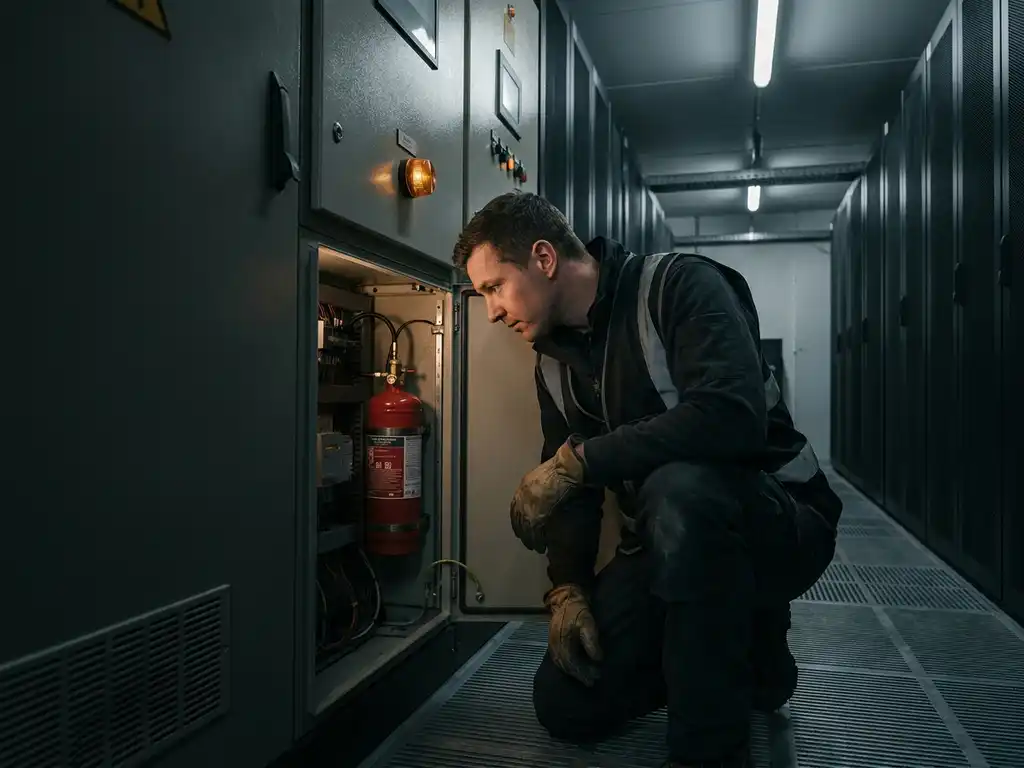
Fire management is the coordinated process of detecting, controlling, and suppressing fire to protect people, property, and operations. It combines prevention strategies, detection technology, and suppression systems into a unified approach that minimizes risk before, during, and after a fire event. The sections below unpack the key questions every organization should be able to answer about its own fire management approach.
What does fire management involve in practice?
Fire management involves a structured set of activities designed to prevent fires from starting, detect them at the earliest possible stage, and suppress them before they cause significant damage. In practice, it covers risk assessment, the installation of detection and suppression systems, staff training, maintenance protocols, and post-incident review. For businesses protecting mission-critical equipment, fire management also includes planning for continuity of operations.
At its core, fire management is not a single product or action but an ongoing discipline. It begins with identifying the assets and environments most vulnerable to fire risk, whether server rooms, electrical switchgear, battery energy storage systems, or industrial cabinets. From there, organizations select appropriate detection and suppression technologies, establish inspection routines, and define response procedures.
Effective fire management also accounts for the consequences of a fire event beyond the immediate physical damage. Hardware replacement costs, data loss, regulatory penalties, and operational downtime all factor into how a business should prioritize its fire protection strategy. The goal is not just to extinguish a fire but to prevent one from escalating in the first place.
What are the main types of fire management systems?
The main types of fire management systems are detection systems, suppression systems, and combined systems that integrate both functions. Detection systems identify the presence of smoke, heat, or gases. Suppression systems actively extinguish or control a fire. Combined systems, increasingly common in mission-critical environments, handle both detection and suppression within a single unit installed directly at the risk source.
Detection systems
Detection systems range from conventional point smoke detectors to advanced aspirating smoke detection technology, which continuously samples air from within an enclosure to identify smoke particles at extremely early stages. Aspirating detection is particularly valuable in enclosed environments like server racks or electrical cabinets, where a fire can develop rapidly and where early warning is critical to preventing equipment loss.
Suppression systems
Suppression systems include water-based sprinklers, chemical agents, and inert gas systems. For environments containing sensitive electronics or high-value components, inert gas suppression is often preferred because it extinguishes fire without leaving residue, causing water damage, or introducing corrosive substances. The choice of suppression agent directly affects whether equipment can be returned to service quickly after activation.
How does fire management differ from fire suppression?
Fire management is the broader strategic discipline that encompasses prevention, detection, suppression, and recovery planning. Fire suppression is one specific element within that framework, focused solely on extinguishing or controlling an active fire. You can have a suppression system without a coherent fire management strategy, but you cannot have effective fire management without suppression capability.
The distinction matters because organizations sometimes invest in suppression technology while neglecting the surrounding practices that make it effective. A suppression system installed in a cabinet without proper risk assessment, commissioning checks, or integration with a fire alarm panel is a partial solution at best. Fire management ensures that suppression is deployed in the right place, activated at the right time, and supported by the right procedures.
For businesses managing large numbers of assets across multiple sites, fire management also includes governance and reporting, understanding which systems are active, which require attention, and how performance data flows back to facility managers or safety officers.
What causes fire management systems to fail?
Fire management systems most commonly fail due to poor maintenance, incorrect installation, inadequate coverage of the actual risk area, or the use of outdated technology that does not match the current environment. In many cases, failure is not a single cause but a combination of gaps that accumulate over time until a real fire event exposes them.
Maintenance neglect is a leading contributor. Pressurized gas cylinders require regular inspection and recertification. Chemical suppression agents can degrade. Detection sensors can drift out of calibration. Any of these issues can result in a system that appears operational but fails to activate when needed.
Installation errors are equally significant. A suppression system designed to protect an entire room may not adequately protect a specific high-value cabinet within that room. Object-level protection, where suppression is deployed directly inside or immediately adjacent to the at-risk enclosure, addresses this gap by securing the equipment closest to the potential ignition source rather than relying on area-wide coverage.
Finally, systems can become mismatched with their environment. A data center that doubles its server density, a facility that adds battery storage, or a switchroom that is reconfigured may outgrow its original fire management design. Regular reviews are essential to ensure coverage keeps pace with operational changes.
What is the role of inert gas in modern fire management?
Inert gas plays a central role in modern fire management by providing a clean, residue-free suppression method that extinguishes fire through oxygen reduction without damaging sensitive equipment or introducing harmful substances. Nitrogen is the most widely used inert agent, valued for its availability, environmental compatibility, and its ability to suppress fire without leaving chemical traces on electronics or components.
Traditional suppression agents, including many chemical gases, carry environmental and health concerns. Several have been identified as PFAS-containing substances, subject to increasing regulatory restrictions across Europe and globally. Inert gas systems avoid these issues entirely, making them both a technically sound and a compliance-conscious choice for organizations managing sustainability commitments alongside safety requirements.
Advances in inert gas technology have also addressed earlier limitations around storage and pressure. Conventional inert gas systems required large, high-pressure cylinders that were difficult to install in space-constrained environments. Newer approaches, such as solid-state nitrogen generation, produce inert gas from a compact chemical block at low pressure, eliminating the risks associated with storing pressurized vessels while maintaining full suppression effectiveness. This makes inert gas suppression practical for enclosure-level object protection in a wide range of settings.
When should a business review its fire management strategy?
A business should review its fire management strategy whenever there is a significant change to its environment, assets, or risk profile, and at minimum on an annual basis. Trigger events include adding new equipment, changing facility layout, adopting new energy technologies such as battery storage, or becoming subject to new regulatory requirements. Waiting for an incident to reveal gaps is not a review strategy.
In 2026, two trends are accelerating the need for reviews. First, the rapid deployment of Battery Energy Storage Systems across commercial and industrial sectors introduces fire risks that many existing strategies were not designed to address. BESS installations involve high-voltage lithium-based batteries with distinct ignition and suppression requirements that differ significantly from conventional electrical equipment.
Second, regulatory pressure around PFAS-containing fire suppression agents is tightening across multiple jurisdictions. Organizations still relying on older chemical gas systems may find themselves facing compliance obligations that require a complete reassessment of their suppression technology. A proactive review now avoids a reactive and potentially costly replacement under regulatory deadlines.
A thorough review should assess whether current detection systems provide early enough warning, whether suppression coverage matches the actual location of high-value assets, and whether the chosen suppression agent remains compliant, effective, and aligned with the organization’s environmental commitments.
How ExxFire supports your fire management strategy
ExxFire provides combined fire detection and suppression systems that address the most common gaps in fire management for organizations protecting mission-critical equipment. Rather than relying on room-level coverage, ExxFire systems deliver object-level protection directly inside or adjacent to the enclosure where fire is most likely to start.
- Early detection: Aspirating smoke detection identifies fire risk at the earliest stage, before flames develop
- Clean suppression: Non-pressurized nitrogen gas extinguishes fire without chemical residues, protecting sensitive electronics and components
- PFAS-free: A fully compliant alternative to chemical gas systems, aligned with current and emerging environmental regulations
- Easy installation: Systems are pre-engineered for self-installation without special certification, with no ongoing maintenance required after commissioning
- Scalable coverage: Units protect enclosures up to 4.5 m³ and can be interconnected for larger volumes, covering server racks, switchgear, BESS installations, and more
- Fire panel integration: Built-in relays report system status to existing fire panels, fitting seamlessly into broader fire safety infrastructure
If your organization is reviewing its fire management strategy or looking to replace an outdated suppression system, contact ExxFire to discuss which solution fits your environment.