

What are the fire risks of solar panel installations?
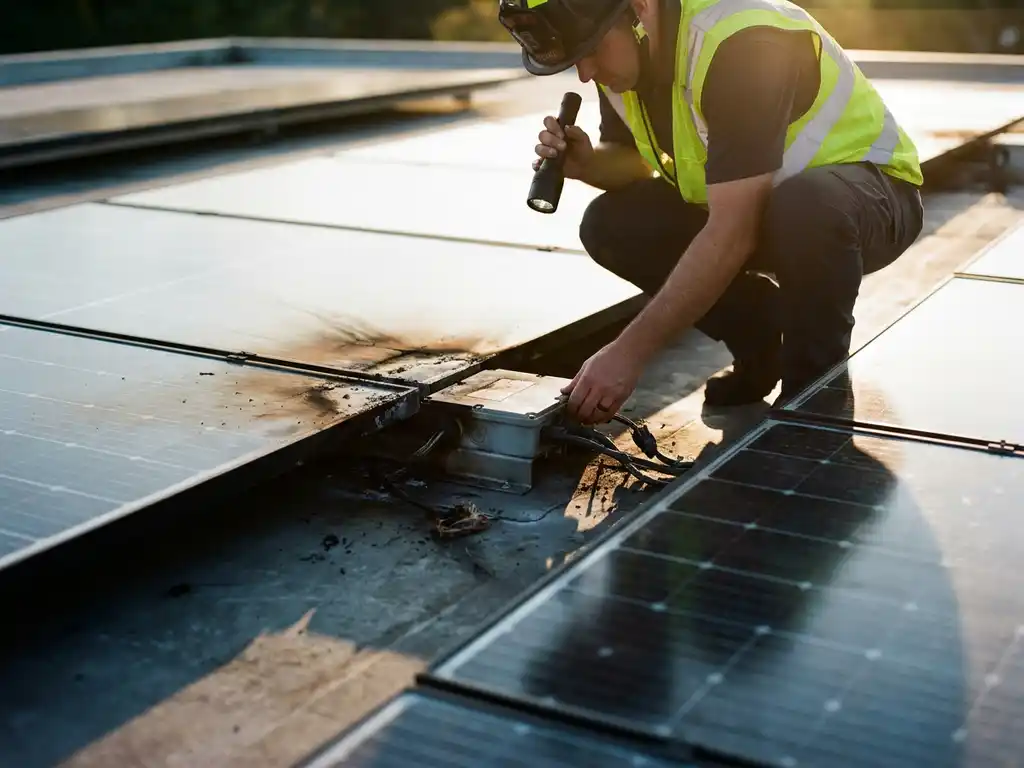
Solar panel installations do carry real fire risks, primarily stemming from electrical faults, poor installation quality, and degraded components. While solar panels themselves are not inherently more dangerous than other electrical systems, the combination of high DC voltages, continuous power generation, and the growing use of battery storage creates specific hazards that require careful attention. This article covers the most important questions about solar panel fire safety, from how fires start to how they can be detected and suppressed.
What causes fires in solar panel installations?
Fires in solar panel installations are most commonly caused by electrical faults such as arc faults, poor wiring connections, and component failures within the photovoltaic system. These faults generate heat at connection points or within inverters and junction boxes, which can ignite surrounding materials if left undetected. Installation errors and substandard components are among the leading contributing factors to solar installation fire risk.
The root causes generally fall into a few distinct categories:
- Arc faults: A damaged or poorly connected cable can produce electrical arcs that generate intense, localised heat. Because solar panels produce DC power continuously during daylight, these arcs cannot simply be switched off.
- Faulty connectors and terminations: Loose or corroded MC4 connectors are a frequent failure point. Resistance at these joints builds up over time, generating heat that can eventually ignite insulation materials.
- Inverter failures: The inverter converts DC power to AC and operates under significant electrical stress. Component failures inside the inverter can cause overheating or short circuits.
- Substandard installation: Incorrect cable sizing, improper earthing, and inadequate protection devices all increase photovoltaic fire risk significantly.
- Thermal hotspots on panels: Partial shading, cell defects, or soiling can create localised overheating on a panel’s surface, known as a hotspot effect, which degrades the panel and in severe cases can ignite roofing materials beneath it.
How do solar panel fires start and spread?
Solar panel fires typically start as small, localised electrical events – an arc, an overheating connector, or an inverter fault – that ignite nearby combustible materials such as cable insulation, mounting structures, or roofing membranes. Once ignited, fire can spread rapidly because solar installations often run across large roof surfaces, and the panels themselves can trap heat and restrict firefighting access.
Spread is also complicated by the fact that solar panels continue generating electricity as long as daylight is present. This means firefighters cannot simply isolate the power source the way they would with conventional electrical equipment. The ongoing DC voltage creates a persistent ignition risk even during active firefighting efforts.
In rooftop installations, fire can travel from the array into roof cavities, spreading to the building structure before it becomes visible from the outside. This hidden spread makes early detection particularly important. Ground-mounted and carport installations carry somewhat different spread patterns, but the underlying electrical ignition mechanisms remain the same.
Are solar panels a fire risk compared to other electrical systems?
Solar panels are not inherently more dangerous than other electrical systems, but they do present unique challenges that distinguish them from standard low-voltage AC installations. The primary difference is that a solar array cannot be fully de-energised during daylight hours, which complicates both detection and emergency response compared to conventional electrical equipment.
Standard AC electrical systems can be isolated at the distribution board, cutting power to a fault immediately. A solar PV system continues producing DC power at the panel level regardless of what switches are opened downstream. This persistent voltage, which can reach several hundred volts in a typical residential or commercial system, means that even after an inverter is shut down, cables between the panels and the inverter remain live.
Additionally, solar installations are often located on rooftops or integrated into building envelopes, making inspection and maintenance more difficult than for equipment installed in accessible indoor locations. When fire does occur, the combination of roof access difficulties, live DC cables, and the potential for hidden spread makes solar panel fire hazards more operationally complex than many comparable electrical risks.
What are the fire risks specific to solar battery storage systems?
Battery energy storage systems (BESS) paired with solar installations introduce a significantly elevated fire risk compared to solar panels alone. Lithium-ion batteries, the dominant technology in residential and commercial solar storage, are susceptible to a process called thermal runaway, where a cell failure triggers an uncontrollable self-heating reaction that can result in fire or explosion.
Thermal runaway can be triggered by overcharging, physical damage, manufacturing defects, or exposure to high ambient temperatures. Once a single cell enters thermal runaway, the heat it releases can cascade to neighbouring cells, making the fire extremely difficult to control with conventional suppression methods.
Key fire risks associated with solar battery storage include:
- Thermal runaway: Rapid, self-sustaining heat generation within lithium-ion cells that can escalate faster than conventional fire suppression can respond.
- Toxic gas release: Burning or venting lithium-ion batteries release flammable and toxic gases, including hydrogen fluoride, creating serious hazards for occupants and emergency responders.
- Reignition: Battery fires can reignite hours or even days after initial suppression if cells retain heat internally.
- Enclosed installation environments: BESS units installed in cabinets or enclosures concentrate heat and gases, accelerating the conditions for fire spread.
The risks associated with battery storage make early detection at the enclosure level particularly critical, since a fire that is caught at the very earliest stage – before thermal runaway becomes self-sustaining – is far more manageable than one that has already developed.
How can solar panel fire risks be detected early?
Early detection of solar panel fire hazards relies on monitoring for the first signs of an electrical fault or thermal event before a fire develops. The most effective approaches combine electrical monitoring at the system level with smoke or heat detection close to the highest-risk components, particularly inverters, junction boxes, and battery storage enclosures.
Effective early detection methods include:
- Arc fault detection devices (AFDDs): These devices monitor the electrical signature of the circuit and can identify the characteristic waveform of an arc fault before it causes ignition. They are increasingly required by installation standards in many countries.
- Thermal imaging inspections: Periodic infrared surveys of the panel array can identify hotspots caused by cell defects, soiling, or connection problems before they escalate.
- Aspirating smoke detection: For enclosed components such as inverter cabinets and battery storage units, aspirating smoke detection draws air samples continuously and can detect smoke particles at concentrations far below what conventional point detectors can sense. This allows detection at the very earliest stage of a developing fault.
- Remote monitoring platforms: Modern solar inverters and BESS units often include performance monitoring that flags unexpected drops in output or temperature anomalies, providing an additional layer of early warning.
The earlier a fault is detected, the more options are available for intervention. Detection that triggers an alert before ignition occurs allows for controlled shutdown and inspection. Detection after ignition but before fire has spread allows suppression systems to act while the fire is still contained.
What fire suppression methods work best for solar installations?
The most effective fire suppression methods for solar installations target the highest-risk enclosed components – inverters, junction boxes, and battery storage cabinets – directly at the source, rather than relying solely on building-level sprinkler or gas systems. Object-level suppression, which acts inside or immediately around a specific enclosure, provides the fastest possible response and limits damage to the equipment itself.
For battery storage enclosures and electrical cabinets within solar installations, inert gas suppression using nitrogen is particularly well-suited. Nitrogen reduces the oxygen concentration inside the enclosure to a level that cannot sustain combustion, without leaving any chemical residue that would damage sensitive electronics or battery management systems. This is especially important in BESS applications, where the equipment inside the cabinet is both the fire risk and a high-value asset.
Water-based systems, while effective for structural fire suppression, are generally unsuitable for direct application to live electrical equipment or lithium-ion batteries. Foam and powder agents can suppress flames but leave residues that damage electronics and create significant clean-up and disposal challenges. Inert gas suppression avoids both of these problems.
Key characteristics of effective suppression for solar and BESS applications include:
- Fast activation triggered by integrated smoke detection to catch fires at the earliest stage
- Clean suppression agent that does not damage electronics or battery components
- No pressurised gas cylinders that create additional safety concerns in enclosed spaces
- Compatibility with existing fire panel infrastructure for centralised monitoring
How ExxFire helps protect solar and battery storage installations
ExxFire’s combined fire detection and suppression systems are designed precisely for the kind of enclosed, high-value electrical environments found in solar and battery storage installations. The systems integrate aspirating smoke detection with non-pressurised nitrogen gas suppression, acting at the object level to protect inverter cabinets, BESS enclosures, and electrical switchgear before a fire can develop into a larger incident.
- Aspirating smoke detection continuously samples air inside the protected enclosure, detecting fire at the earliest possible stage
- Non-pressurised nitrogen suppression via the patented Cool Gas Generator eliminates combustion without leaving chemical residues that could damage sensitive battery or electronic components
- No PFAS or harmful agents – ExxFire’s technology is a clean, environmentally responsible alternative to legacy gas suppression systems
- Easy installation and maintenance-free operation once commissioned, with built-in relay outputs for integration with existing fire panels
- Tested and certified by CNPP France and DMT (TÜV Nord), providing confidence for compliance-driven procurement decisions
For facility managers and energy operators looking to address the solar panel fire risks associated with battery storage and electrical enclosures, ExxFire offers a proven, sustainable solution. Contact the ExxFire team to discuss the right configuration for your installation.
Related Articles
- How do you prevent wildfires from spreading to residential areas?
- How do you verify that a suppression system meets NFPA requirements?
- What is the most overlooked fire hazard in the home?
- What is the difference between fire prevention and fire safety?
- What are the fire prevention rules for holiday decorations?