

What are the fire prevention rules for holiday decorations?
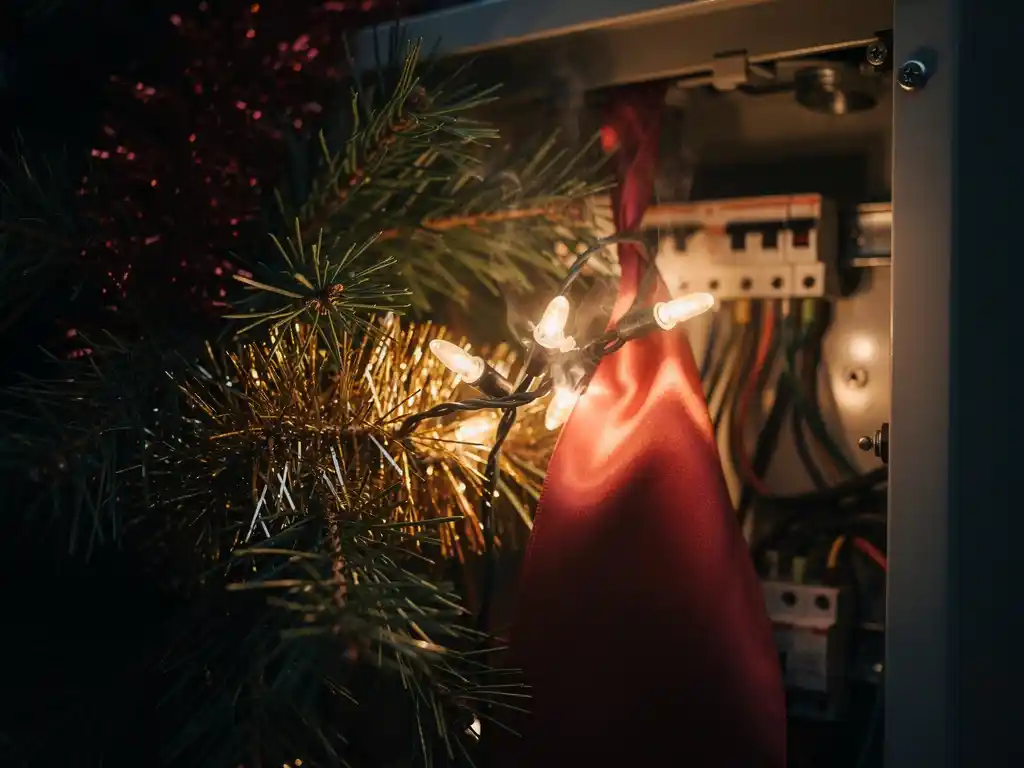
Holiday decorations create real fire hazards every year, and the rules for preventing fires are clear: keep lights away from heat, never leave candles unattended, choose flame-retardant materials, and inspect all electrical decorations before use. These rules apply to homes, offices, and commercial spaces alike. The sections below break down each key question about holiday decoration fire safety so you can protect people and property throughout the festive season.
What makes holiday decorations a fire hazard?
Holiday decorations become fire hazards because they combine flammable materials, electrical components, and heat sources in close proximity, often in spaces that are already occupied and where people are distracted. Dry foliage, paper ornaments, fabric ribbons, and synthetic materials all ignite quickly when exposed to a spark or an open flame. Electrical decorations add another layer of risk through overloaded circuits, frayed wires, and overheating bulbs.
Several specific factors drive the risk higher during the holiday season:
- Dry Christmas trees: A real tree that has not been watered loses moisture rapidly, turning into highly combustible material within days.
- Overloaded power strips: Plugging multiple light strings and electrical decorations into a single outlet or extension cord creates heat that can ignite nearby materials.
- Proximity to heat sources: Decorations placed near fireplaces, radiators, or candles are at immediate risk of catching fire.
- Older or damaged lights: Lights stored from previous years may have cracked insulation, loose connections, or broken sockets that pose a serious ignition risk.
- Unattended flames: Candles left burning near decorative foliage or paper materials are among the most common causes of holiday fires.
Understanding these risk factors is the first step toward applying effective fire prevention rules for holiday decorations. Each hazard is manageable with the right precautions, but awareness must come before action.
What are the main fire safety rules for Christmas lights and electrical decorations?
The main fire safety rules for Christmas lights and electrical decorations are: use only certified products, inspect all lights before use, avoid overloading circuits, turn off lights when leaving or sleeping, and never use indoor lights outdoors or vice versa. Following these rules consistently eliminates the majority of electrical fire risks associated with holiday decorations.
When buying new lights or using stored ones, check for a recognized safety certification mark. In Europe, look for CE marking; in the US, look for UL or ETL listings. These certifications confirm the product has been tested to meet electrical safety standards.
Before hanging any lights, inspect every strand carefully:
- Look for cracked, frayed, or bare wires
- Check for broken or missing bulb sockets
- Test the strand before placing it on a tree or around a window
- Discard any strand that shows signs of damage — repairs are not a safe substitute
When it comes to power, connect no more than three standard light strings end-to-end unless the manufacturer explicitly permits more. Use surge-protected power strips rather than basic extension cords, and never run cords under rugs or through doorways where they can be pinched or worn down. Always switch off all decorative lighting before going to bed or leaving the building unoccupied.
How should you safely place and maintain a Christmas tree to prevent fires?
To prevent a Christmas tree from becoming a fire hazard, place it at least one metre away from all heat sources, keep it well-watered if it is a real tree, and secure it so it cannot tip over. Real trees dry out quickly and become highly flammable, so daily watering is not optional — it is a critical fire prevention measure.
When choosing a location for the tree, apply these placement rules:
- Keep the tree away from fireplaces, radiators, space heaters, and heating vents
- Never block an exit or emergency route with a tree
- Position the tree away from curtains and other hanging fabrics
- Ensure the tree stand is stable and cannot be knocked over by children or pets
For real trees, check the water level in the stand at least once a day. A well-hydrated tree is significantly harder to ignite than a dry one. When a real tree begins dropping large numbers of needles, it has dried out and should be removed from the building promptly.
Artificial trees carry their own considerations. Only use artificial trees that are labeled fire-resistant or flame-retardant. This does not mean they are fireproof, but it does mean they are less likely to ignite from a stray spark. Never use candles on or near any Christmas tree, real or artificial.
Are candles and open flames allowed near holiday decorations?
Candles and open flames should never be placed directly near holiday decorations. While candles are not universally prohibited during the holiday season, fire safety guidance is consistent: maintain a clear distance of at least half a metre between any open flame and flammable decorative materials, and never leave candles burning unattended.
The combination of candles and holiday decorations is one of the most persistent causes of festive fires. Dried foliage, paper gift wrapping, fabric ribbons, and synthetic ornaments all ignite rapidly when a flame makes contact. A candle that tips over onto a wrapped present or a paper garland can start a fire within seconds.
Practical rules for candle use during the holiday season include:
- Place candles in stable, non-flammable holders on a flat, heat-resistant surface
- Keep candles away from Christmas trees, garlands, wreaths, and any paper or fabric decorations
- Extinguish all candles before leaving a room
- Keep candles out of reach of children and away from pet traffic
- Consider flameless LED candles as a safer alternative that closely mimics the appearance of real candles
In many commercial buildings and public spaces, open flames including candles are prohibited entirely under fire safety regulations. Always check the fire safety policy of the building before lighting candles in a workplace or communal space.
What fire prevention rules apply to holiday decorations in commercial or office buildings?
In commercial and office buildings, fire prevention rules for holiday decorations are typically stricter than in residential settings. Most jurisdictions require that all decorations be made from flame-retardant or non-combustible materials, that electrical decorations carry valid safety certifications, and that decorations do not obstruct fire exits, sprinklers, smoke detectors, or fire extinguishers.
Building managers and facility managers carry legal responsibility for fire safety compliance in commercial spaces. During the holiday season, this means enforcing specific rules around decorations:
- No blocking fire safety equipment: Decorations must never cover or obstruct smoke detectors, sprinkler heads, fire extinguishers, or emergency signage.
- Certified electrical decorations only: All lights and powered decorations must carry appropriate safety certifications and be inspected before use.
- Flame-retardant materials required: Paper, fabric, and natural foliage decorations must meet flame-retardancy standards in most commercial fire codes.
- No open flames: Candles and other open flames are prohibited in most commercial buildings under standard fire safety regulations.
- Designated switch-off responsibility: A named person should be responsible for ensuring all decorative lighting is switched off at the end of each working day.
Fire risk assessments in commercial buildings should be updated to account for seasonal changes, including the introduction of holiday decorations. If a building has a fire warden or safety officer, they should conduct a brief walkthrough once decorations are in place to confirm compliance.
What should you do if a fire starts from holiday decorations?
If a fire starts from holiday decorations, the immediate priorities are to alert everyone in the building, call the emergency services, and evacuate without delay. Do not attempt to fight the fire yourself unless it is very small, contained, and you have a clear escape route behind you. Your safety and the safety of others always come before property.
Follow these steps if a fire breaks out:
- Raise the alarm immediately by activating the nearest fire alarm call point or shouting to alert others in the space.
- Call the emergency services as soon as possible — in most countries this is 112 (Europe) or 999 (UK) or 911 (US).
- Evacuate the building using the nearest safe exit. Do not use lifts. Close doors behind you to slow the spread of fire and smoke.
- Do not re-enter the building for any reason until emergency services confirm it is safe to do so.
- If smoke is present, stay low where the air is cleaner and move quickly toward the exit.
For small, contained fires — such as a single candle that has caught a piece of paper — a fire extinguisher may be appropriate if you are trained to use one and the fire is not spreading. Never use water on an electrical fire. If there is any doubt about the size or spread of the fire, evacuate immediately and let the fire service handle it.
After any fire incident, even a minor one, a full fire safety review should be conducted before decorations are reinstated or the space is reoccupied.
How ExxFire helps protect against holiday decoration fire risks
While following fire prevention rules for holiday decorations significantly reduces risk, no environment is entirely free from the possibility of fire. This is especially true in commercial buildings, data centers, server rooms, and facilities where high-value electrical equipment operates continuously throughout the festive season. ExxFire’s integrated fire detection and suppression systems provide an additional layer of protection precisely where it matters most.
ExxFire’s systems are built around early smoke detection and fast, clean suppression, making them well-suited to environments where fire must be stopped before it can spread or cause serious damage:
- Aspirating smoke detection identifies smoke particles at the earliest possible stage, long before a fire develops into a serious incident.
- Non-pressurized nitrogen gas suppression extinguishes fire at the source without leaving chemical residues, protecting sensitive electronics and avoiding secondary damage.
- PFAS-free technology ensures suppression is clean, environmentally responsible, and compliant with increasingly strict sustainability requirements.
- Easy installation means systems can be deployed in electrical cabinets, server racks, and switchgear enclosures without specialist certification.
- Integration with existing fire panels via built-in relays ensures the system works seamlessly alongside any current fire safety infrastructure.
If your facility houses mission-critical equipment that cannot afford downtime or fire damage, contact ExxFire to find out how its combined detection and suppression technology can strengthen your fire safety setup year-round.