

What are the fire risks of EV charging stations in buildings?
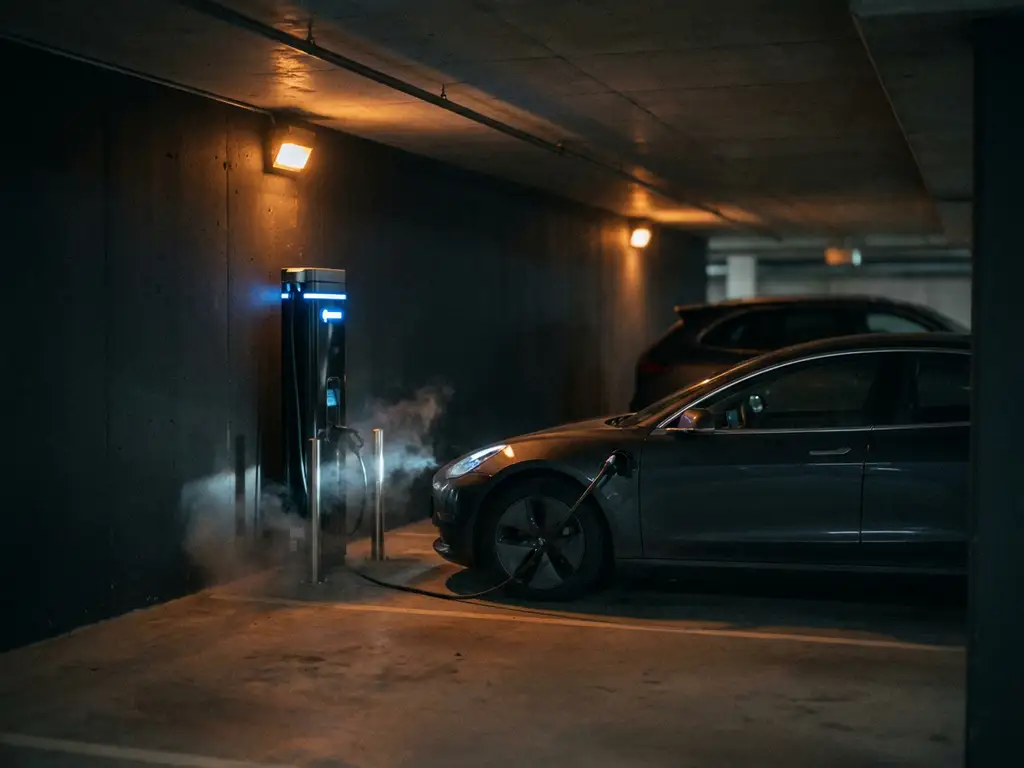
EV charging stations inside buildings pose a genuine and serious fire risk, primarily because lithium-ion battery fires are extremely difficult to extinguish and can release toxic gases rapidly in enclosed spaces. The risk is not theoretical: as electric vehicle adoption accelerates through 2026, more buildings are integrating charging infrastructure without fully accounting for the fire safety implications. This article works through the key questions facility managers, building owners, and safety professionals need answered.
What makes EV charging stations a fire hazard inside buildings?
EV charging stations are a fire hazard inside buildings because they deliver high-voltage electrical energy to large lithium-ion battery packs, creating conditions where electrical faults, overheating, or physical damage can trigger a chemical chain reaction known as thermal runaway. Unlike conventional electrical fires, lithium-ion battery fires are self-sustaining and highly resistant to standard suppression methods.
The hazard is compounded by the enclosed nature of indoor environments. Parking garages, underground car parks, and commercial buildings restrict airflow, concentrate heat, and limit evacuation routes. The combination of high energy density in EV batteries, the proximity of multiple vehicles, and the presence of combustible building materials creates a scenario where a single ignition event can escalate quickly.
Key fire hazard factors specific to indoor EV charging include:
- High electrical load: Fast chargers can draw significant power continuously, increasing the risk of wiring faults, overloaded circuits, and connector failures
- Battery chemistry: Lithium-ion cells store energy at high density and can enter thermal runaway without visible warning
- Toxic gas release: A burning EV battery releases hydrogen fluoride and other hazardous gases, which are especially dangerous in confined indoor spaces
- Limited suppression access: Battery packs are sealed units, making it difficult for water or conventional agents to reach the seat of the fire
What causes thermal runaway in EV batteries during charging?
Thermal runaway in EV batteries during charging is caused by a self-reinforcing cycle in which heat generation inside a battery cell exceeds the cell’s ability to dissipate it, triggering exothermic chemical reactions that produce more heat, gas, and ultimately fire. The most common triggers are overcharging, internal short circuits, physical damage, and manufacturing defects.
During charging, lithium ions move between electrodes. If this process is disrupted by a fault, the cell temperature rises. Once a critical threshold is crossed, the electrolyte decomposes, releasing flammable gases. These gases can ignite, and because battery cells are packed tightly together, the reaction spreads from cell to cell in a process called cell-to-cell propagation. This is why a single compromised cell can destroy an entire battery pack and ignite the vehicle.
Conditions that increase the probability of thermal runaway during indoor charging include:
- Charging a battery that is already damaged or degraded
- Incompatible or faulty charging equipment
- Poor ventilation around the vehicle during charging
- Extreme ambient temperatures in the charging area
- Charging at the maximum rate for extended periods without thermal management
Which types of buildings face the highest EV charging fire risk?
Buildings with the highest EV charging fire risk are underground or enclosed parking structures, multi-storey car parks, and large commercial or residential buildings where multiple vehicles charge simultaneously. These environments combine restricted ventilation, limited firefighter access, and high occupancy, making fire containment and evacuation significantly more challenging.
Underground car parks present the greatest challenge. Smoke and toxic gases accumulate rapidly, sprinkler systems may not be designed for lithium-ion fires, and the structural heat load can compromise the building itself. Multi-storey car parks share many of the same risks, with the added complexity of fire spreading between levels.
Other high-risk building types include:
- Commercial office buildings with basement or ground-floor charging bays, where occupants above may be unaware of a developing fire
- Logistics and warehousing facilities charging electric forklifts or delivery vehicles indoors
- Hospitals and critical infrastructure buildings where evacuation is complex and operational continuity is essential
- Residential apartment blocks with shared underground parking, where residents may be asleep during overnight charging
How quickly can an EV charging fire spread in an enclosed space?
An EV charging fire in an enclosed space can spread to engulf a vehicle fully within minutes of thermal runaway initiating, with toxic smoke filling the surrounding area even faster. The speed of spread depends on the battery state of charge, ambient temperature, proximity of other vehicles, and the building’s ventilation characteristics.
What makes EV fires particularly dangerous is the timeline before ignition becomes visible. Thermal runaway can develop internally for some time before flames appear, during which flammable gases are already venting. Once ignition occurs, fire growth is rapid and the heat output from a large lithium-ion battery pack is substantially higher than a conventional vehicle fire.
In enclosed spaces, the consequences of rapid fire spread include:
- Toxic gas concentrations reaching dangerous levels within the first few minutes
- Structural temperatures that can compromise concrete and steel in underground or enclosed car parks
- Adjacent vehicles igniting through radiant heat transfer
- Suppression systems being overwhelmed if not specifically designed for lithium-ion fires
Early detection is therefore critical. The window between the first signs of thermal runaway and a fully developed fire is narrow, and acting within that window determines whether damage is contained or catastrophic.
What fire suppression methods work for EV charging station fires?
Effective fire suppression for EV charging station fires requires methods capable of managing lithium-ion battery fires specifically, which behave differently from conventional vehicle or electrical fires. Inert gas suppression, targeted water mist, and early-stage object protection systems are among the approaches that offer meaningful protection in enclosed charging environments.
Conventional sprinkler systems can slow the spread of fire and protect surrounding structures, but they are generally not sufficient to extinguish a lithium-ion battery fire on their own. The battery pack continues to react chemically even when cooled externally. This is why suppression strategies increasingly focus on early intervention before thermal runaway fully develops.
Inert gas suppression works by reducing oxygen concentration around the fire source, interrupting the combustion process without introducing water or chemical residues that could damage adjacent equipment. This approach is particularly relevant where the charging infrastructure includes sensitive electrical cabinets, power distribution units, or energy management systems that must remain functional after an incident.
For the electrical infrastructure associated with EV charging, including high-voltage distribution cabinets and control enclosures, object-level fire protection provides a targeted layer of defence. Aspirating smoke detection paired with inert gas suppression can identify the earliest signs of overheating and suppress a fire at its source before it reaches the vehicle or the surrounding structure.
What fire safety regulations apply to EV charging in buildings?
Fire safety regulations for EV charging in buildings vary by country and are still evolving in many jurisdictions, but they generally draw on existing electrical installation standards, building fire codes, and emerging EV-specific guidance. In 2026, regulators across Europe and internationally are actively updating standards to address the specific risks of lithium-ion battery fires in enclosed spaces.
In the European Union, the revised Energy Performance of Buildings Directive requires new buildings and those undergoing major renovation to include EV charging infrastructure, which is driving demand for corresponding fire safety measures. The IEC 60364 series covers electrical installations including EV charging equipment, while national building codes address fire compartmentation, ventilation, and suppression requirements.
Key regulatory considerations for building owners and facility managers include:
- Fire risk assessments: Most jurisdictions require updated risk assessments when EV charging is added to an existing building
- Ventilation requirements: Regulations increasingly specify minimum ventilation rates in enclosed charging areas to manage gas accumulation
- Suppression system standards: Sprinkler standards such as EN 12845 are being reviewed for adequacy against EV fires, and supplementary suppression measures are often recommended
- Electrical installation standards: Charger installation must comply with applicable wiring regulations, including protection against overload and fault conditions
- PFAS restrictions: EU regulations restricting per- and polyfluoroalkyl substances are influencing the choice of fire suppression agents, favouring inert gas solutions over fluorinated foam or gas alternatives
Building owners should consult their national fire authority and a qualified fire safety engineer when planning EV charging installations, as local requirements can be more stringent than baseline standards.
How ExxFire helps protect EV charging infrastructure from fire
ExxFire provides integrated fire detection and suppression systems that are directly applicable to the electrical infrastructure surrounding EV charging stations, including high-voltage cabinets, power distribution units, and switching enclosures. These are precisely the components where an undetected fault can initiate a fire before any visible flame appears.
ExxFire’s systems offer:
- Aspirating smoke detection that identifies the earliest signs of overheating at the object level, long before conventional detectors respond
- Non-pressurized nitrogen gas suppression that extinguishes fire at the source without water, foam, or PFAS-containing agents, leaving no chemical residue on sensitive electronics
- Easy self-installation with no special certification required, and no ongoing maintenance burden after commissioning
- Integration with existing fire panels via built-in relays, ensuring the system fits within your building’s current fire safety infrastructure
- CNPP-certified and TÜV Nord-tested performance, giving facility managers and safety officers documented proof of system reliability
For facility managers, safety officers, and building owners looking to address the EV charging station fire risks associated with electrical enclosures and charging infrastructure, ExxFire’s object protection approach provides a targeted, sustainable, and low-maintenance solution. Contact ExxFire to discuss the right system for your building.