

What is the environmental impact of CO2 fire suppression systems?
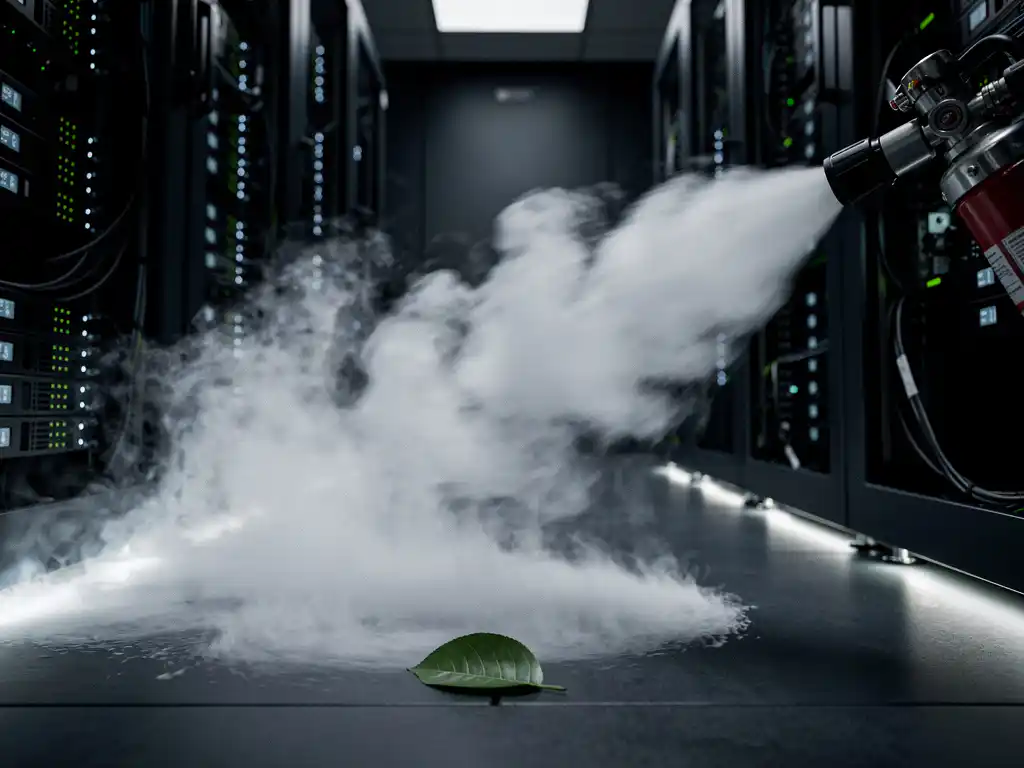
CO2 fire suppression systems have a measurable environmental impact, primarily because carbon dioxide is a greenhouse gas. When discharged during a fire suppression event, CO2 is released directly into the atmosphere, contributing to global warming. While CO2 occurs naturally, large-volume intentional releases add to the cumulative greenhouse gas burden that regulators and businesses are increasingly working to reduce.
The environmental concern goes beyond climate alone. CO2 systems also carry serious safety risks for people nearby, and growing regulatory scrutiny is pushing many industries to reconsider their suppression strategies. The sections below address the most common questions about CO2 fire suppression and its environmental and safety implications.
How does CO2 fire suppression release greenhouse gases?
CO2 fire suppression systems release greenhouse gases by discharging stored carbon dioxide gas directly into a protected space to displace oxygen and extinguish a fire. Because CO2 is a greenhouse gas with a Global Warming Potential (GWP) of 1, large-volume discharges contribute directly to atmospheric warming when the gas vents to the outside environment after an event.
A single suppression system can hold hundreds of kilograms of pressurized CO2. When activated, whether by an actual fire or an accidental discharge, all of that gas is released. Unlike some other agents that remain contained or degrade quickly, CO2 is a stable molecule that persists in the atmosphere for decades. For facilities that experience multiple discharges over a system’s lifetime, the cumulative carbon dioxide fire suppression environmental impact becomes significant.
It is also worth noting that the pressurized storage cylinders required for CO2 systems must be regularly inspected, refilled, and transported, with each step adding to the overall carbon footprint of the system across its operational life.
What are the health and safety risks of CO2 system discharges?
CO2 fire suppression system discharges pose serious and potentially fatal health risks to people in or near the protected space. At concentrations above roughly 5%, carbon dioxide causes rapid loss of consciousness; at the concentrations used for fire suppression, typically 34% or higher, exposure for even a few seconds can be lethal. This makes accidental discharges a significant occupational safety hazard.
Unlike some suppression agents that give occupants time to evacuate, CO2 acts quickly and is invisible and odorless in high concentrations, meaning people may not immediately recognize the danger. Facilities using carbon dioxide fire suppression systems are required to implement strict lockout and warning procedures, pre-discharge alarms, and evacuation protocols to manage this risk.
Accidental discharges have caused fatalities in real-world industrial settings. This safety profile has led many facility managers and health and safety officers to question whether the suppression benefit justifies the risk, particularly in spaces where personnel are regularly present.
How does CO2 compare to other fire suppression agents environmentally?
Compared to other common fire suppression agents, CO2 sits in a middle position environmentally. It has a GWP of 1, which is lower than many hydrofluorocarbon (HFC) based agents that carry GWP values in the thousands. However, CO2 performs worse than inert gas alternatives such as nitrogen, argon, and nitrogen-argon blends, which have a GWP of zero and pose no direct greenhouse gas contribution upon discharge.
PFAS-containing agents, including certain aqueous film-forming foams and some fluorinated suppression gases, present a different category of environmental harm. Rather than contributing to atmospheric warming, PFAS compounds are persistent organic pollutants that contaminate soil and groundwater and do not break down in the environment. Regulatory pressure on PFAS-containing fire suppression systems is intensifying across Europe and North America.
Inert gases like nitrogen offer a compelling environmental profile because they are naturally abundant, chemically inert, leave no residue, and have no warming potential. For enclosed equipment protection, nitrogen-based systems represent the most environmentally neutral option currently available among fire suppression greenhouse gas alternatives.
Are CO2 fire suppression systems being regulated or phased out?
CO2 fire suppression systems are not currently subject to a direct phase-out in the way that certain refrigerants and fluorinated gases are, but they face increasing regulatory scrutiny on safety grounds rather than purely environmental ones. In several European countries, national regulations restrict or discourage the use of total-flooding CO2 systems in normally occupied spaces due to the lethal risk they present to personnel.
At the European Union level, the F-Gas Regulation primarily targets high-GWP fluorinated gases rather than CO2 itself. However, broader sustainability frameworks, including corporate ESG commitments and green building standards, are driving organizations to voluntarily move away from CO2 extinguishing systems in favor of cleaner alternatives.
In parallel, PFAS regulations are accelerating across the EU and in jurisdictions like the United States, which is pushing the entire fire suppression industry toward PFAS-free solutions. This regulatory momentum is creating an environment in 2026 where procurement teams and facility managers are actively evaluating whether their current suppression systems align with both existing rules and anticipated future requirements.
What is a more environmentally friendly alternative to CO2 suppression?
Nitrogen-based fire suppression is the most environmentally friendly alternative to CO2 suppression currently available. Nitrogen has a GWP of zero, is naturally abundant in the atmosphere, leaves no chemical residue, and poses no toxicity risk to electronics or sensitive equipment. It suppresses fire by reducing oxygen concentration within a protected enclosure without introducing any harmful substances.
For organizations protecting enclosed equipment such as server racks, switchgear, electrical cabinets, and battery energy storage systems, nitrogen-based systems offer a practical and sustainable replacement for both CO2 and PFAS-containing agents. The agent itself is clean, the suppression is targeted, and there is no post-discharge cleanup or residue damage to hardware.
Other inert gas alternatives include argon and IG-541 blends, which similarly carry a GWP of zero. The choice between these agents typically depends on system design requirements, enclosure volume, and the specific protection scenario rather than environmental performance, since all inert gases are broadly comparable in their ecological footprint.
How ExxFire provides an eco-friendly alternative to CO2 fire suppression
ExxFire’s combined fire detection and suppression systems are built around non-pressurized stored nitrogen gas, making them a direct, PFAS-free alternative to CO2 extinguishing systems. The systems are designed to protect enclosed equipment at the source, preventing fire damage before it spreads to surrounding infrastructure. Key features include:
- Zero GWP suppression agent: Nitrogen has no global warming potential and no environmental persistence, making it the most sustainable suppression choice available.
- No chemical residue: Unlike CO2 or PFAS-based agents, nitrogen leaves no residue on sensitive electronics, meaning hardware remains operational and no post-discharge cleanup is needed.
- Aspirating smoke detection: The integrated system detects smoke at the earliest stage, triggering suppression before a fire develops, which reduces the likelihood of a full discharge event.
- Non-pressurized storage: ExxFire’s patented Cool Gas Generator technology stores nitrogen in a solid, non-pressurized state, eliminating the pressure hazards and transport emissions associated with traditional gas cylinder systems.
- Easy installation and low maintenance: Pre-engineered for self-installation without special certification, ExxFire systems deliver a low Total Cost of Ownership over their operational life.
- Certified and tested: Systems are validated by CNPP in France and DMT, part of TÜV Nord in Germany, meeting the rigorous standards required by compliance-driven organizations.
If you are evaluating fire suppression alternatives for mission-critical equipment and want to move away from CO2 or PFAS-containing systems, contact ExxFire to discuss which solution fits your specific environment and protection requirements.