

How do you assess fire risk on your property?
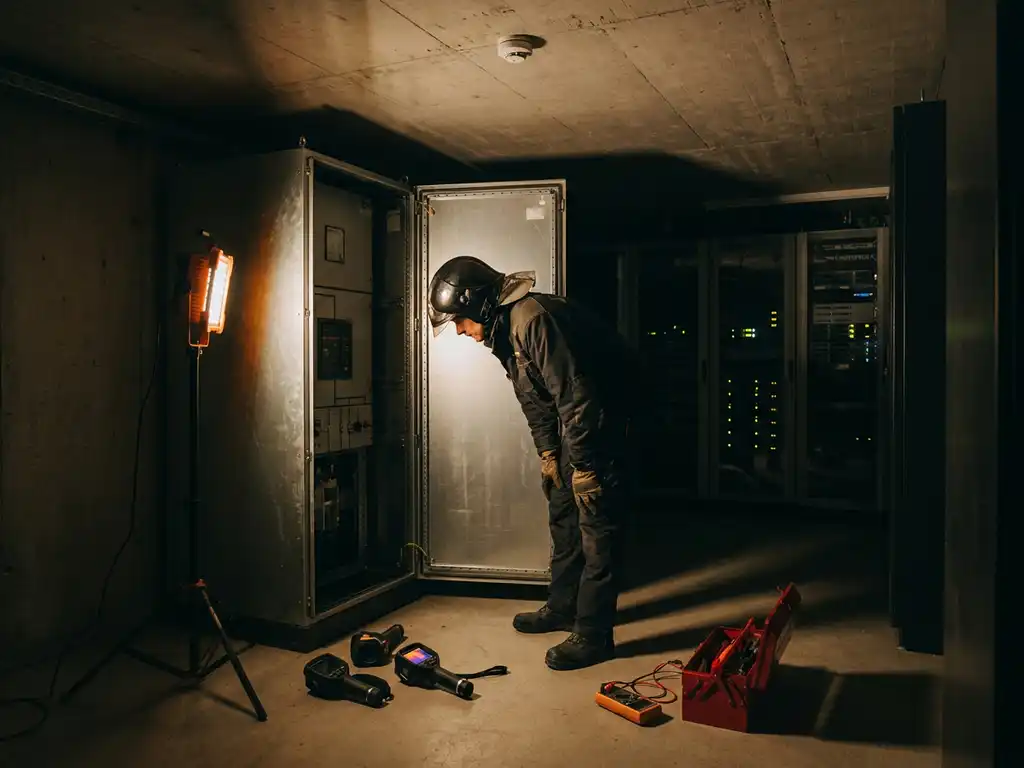
To assess fire risk on your property, you need to identify potential ignition sources, flammable materials, and the people or assets most at risk, then evaluate how likely a fire is to start and how severe the consequences would be. This process is called a fire risk assessment, and it applies to virtually every commercial or industrial property. The sections below unpack the key questions every property manager, facility director, or safety officer should be able to answer.
What does a fire risk assessment actually involve?
A fire risk assessment is a structured evaluation of your property that identifies fire hazards, determines who or what is at risk, and establishes what controls are in place to prevent a fire or limit its impact. It results in a documented record of findings and a prioritized action plan to address any gaps in your fire safety setup.
In practice, the assessment typically follows five core steps: identifying ignition sources and flammable materials, identifying people and assets at risk, evaluating existing fire prevention and suppression measures, recording findings and implementing improvements, and reviewing the assessment at regular intervals.
For commercial and industrial properties, the scope goes beyond exits and extinguishers. A thorough fire risk evaluation considers electrical installations, equipment-specific risks, storage arrangements, and the fire suppression provisions protecting high-value or mission-critical assets. The goal is not just regulatory compliance but genuine protection of people, property, and business continuity.
What are the most common fire hazards found on commercial properties?
The most common fire hazards on commercial properties are electrical faults, overheating equipment, flammable materials stored near ignition sources, and poor housekeeping that allows combustible waste to accumulate. In industrial and technology-heavy environments, high-voltage cabinets, battery energy storage systems, and server infrastructure add a further layer of risk.
Electrical hazards consistently rank as the leading cause of commercial fires. Overloaded circuits, aging wiring, faulty switchgear, and inadequately maintained electrical cabinets all create conditions where heat or arcing can ignite surrounding materials. In data centers and ICT environments, the combination of high electrical load, continuous operation, and densely packed equipment makes fire hazard assessment particularly critical.
Other frequently identified hazards include:
- Lithium-ion battery systems, including BESS installations, which carry a thermal runaway risk
- Flammable liquids or gases stored in or near operational areas
- Heating equipment left unattended or placed too close to combustibles
- Inadequate separation between high-risk zones and general workspace areas
- Human error, including improper use of electrical equipment or failure to follow safety procedures
Identifying these hazards is the foundation of any credible fire safety assessment. Without a clear picture of what could start or fuel a fire, the rest of the assessment lacks the specificity needed to drive meaningful action.
How often should a fire risk assessment be reviewed?
A fire risk assessment should be reviewed at least annually, and immediately whenever there is a significant change to the property, its use, its occupants, or the equipment it houses. Waiting for the annual cycle is not appropriate if new risks have been introduced in the meantime.
Triggers that should prompt an immediate review include:
- Installation of new electrical infrastructure, battery systems, or server equipment
- Changes to building layout, including new partitions or altered escape routes
- Introduction of new processes or materials that carry fire risk
- A fire incident or near-miss event, even if minor
- Changes in occupancy or the number of people present in the building
- Regulatory updates affecting fire safety requirements in your sector
For organizations operating in high-risk environments such as energy storage facilities, industrial manufacturing plants, or data centers, more frequent reviews are advisable. The dynamic nature of these environments means that risk profiles can shift quickly, and an outdated assessment provides a false sense of security.
What’s the difference between fire detection and fire suppression?
Fire detection identifies the presence of fire or its precursors, such as smoke or heat, and triggers an alarm. Fire suppression actively intervenes to extinguish or contain a fire once it has been detected. The two functions are distinct but work most effectively when combined into a single integrated system.
Detection systems range from basic ionization alarms to advanced aspirating smoke detection, which continuously samples air and can identify smoke particles at concentrations far below what a standard detector would register. This early warning capability is especially valuable in environments where even a small fire can cause catastrophic damage to sensitive equipment.
Suppression systems, by contrast, deploy an extinguishing agent, whether water, gas, foam, or inert gas, to reduce oxygen levels or cool the fire below its ignition threshold. The choice of suppression agent matters enormously in environments with sensitive electronics: water and foam cause secondary damage, while clean inert gas agents, such as nitrogen, extinguish the fire without leaving chemical residues or damaging components.
The most effective approach to fire risk reduction combines both: detection that identifies a problem early, and suppression that acts immediately at the source before the fire can spread.
Which areas of a property carry the highest fire risk?
The highest fire risk areas on a commercial or industrial property are typically those that combine high electrical load, limited human oversight, and equipment that operates continuously. This includes server rooms, electrical switchgear rooms, battery storage areas, high-voltage cabinet installations, and any space where flammable materials are stored or processed.
Server rooms and data halls are particularly vulnerable because they run around the clock, generate significant heat, and house densely packed equipment where a fault in one unit can quickly affect neighboring hardware. Similarly, switchgear and power distribution cabinets concentrate electrical energy in a compact space, making them prime candidates for fire hazard assessment.
Battery energy storage systems represent an increasingly prominent risk category in 2026, as more organizations deploy large-scale BESS installations for energy management. Lithium-ion batteries can undergo thermal runaway, a self-sustaining exothermic reaction that is extremely difficult to extinguish once it takes hold. Early detection within the battery enclosure itself is therefore critical.
Other high-risk zones include:
- Telecommunications infrastructure rooms and network enclosures
- Industrial production areas with machinery that generates heat or sparks
- Storage areas containing flammable liquids, gases, or packaging materials
- Catering and kitchen facilities in commercial buildings
What fire suppression options are available for high-risk equipment?
For high-risk equipment such as server racks, electrical cabinets, and battery systems, the primary suppression options are gaseous suppression agents, including inert gases and chemical clean agents, as well as water mist systems and aerosol-based solutions. The right choice depends on the sensitivity of the equipment, the enclosure volume, and environmental and regulatory considerations.
Gaseous suppression using inert agents such as nitrogen is widely regarded as the cleanest and most equipment-safe option. Nitrogen reduces oxygen concentration within a closed enclosure to a level that cannot sustain combustion, without introducing moisture, chemical residues, or corrosive byproducts. This makes it particularly well-suited to electronics-dense environments where secondary damage from the suppression agent itself would be as costly as the fire.
Key factors to evaluate when selecting a suppression option for high-risk equipment include:
- Agent cleanliness: Does the suppression agent leave residues that damage components or require cleanup?
- PFAS content: Many legacy chemical suppression agents contain per- and polyfluoroalkyl substances (PFAS), which face increasing regulatory restriction and carry environmental liability
- Pressurization risk: High-pressure stored gas cylinders introduce their own mechanical risks in confined spaces
- Detection integration: Suppression is most effective when paired with early smoke detection that triggers release before the fire has grown
- Maintenance requirements: Some systems require regular inspection and recharging; others are designed for minimal ongoing maintenance
- Certification: Independent testing and certification by recognized bodies validates performance claims
Object-level protection, where suppression is applied directly inside or immediately adjacent to the at-risk enclosure rather than across an entire room, is increasingly recognized as the most targeted and cost-effective approach for high-value equipment. It addresses the fire at its most likely point of origin before it can spread to the wider facility.
How ExxFire helps with fire risk on your property
ExxFire’s integrated fire detection and suppression systems are designed specifically for the high-risk equipment zones identified in any thorough fire risk assessment. The systems combine aspirating smoke detection with non-pressurized nitrogen suppression, delivering early warning and immediate response at the object level, inside server racks, electrical cabinets, switchgear, and battery enclosures.
- PFAS-free nitrogen suppression: Extinguishes fire without chemical residues, protecting sensitive electronics from secondary damage
- Non-pressurized storage: Eliminates the mechanical risks associated with high-pressure gas cylinders in confined spaces
- Early aspirating detection: Identifies smoke at concentrations far below standard detector thresholds, enabling faster response
- Easy installation, minimal maintenance: Systems are pre-engineered for self-installation without special certification, with no ongoing maintenance checks required after commissioning
- Fire panel integration: Built-in relays report system status to existing fire panels, fitting seamlessly into your current fire safety infrastructure
- Independently certified: Tested and validated by CNPP France and DMT (TÜV Nord), providing verified performance assurance
If your fire risk assessment has identified gaps in protection for critical equipment, contact ExxFire to discuss the right object protection solution for your environment.
Related Articles
- How do European fire safety standards apply to imported equipment?
- What is fire safety compliance for electrical cabinets?
- How does fire prevention work in residential buildings?
- How does fire suppression system design affect environmental performance?
- How does nitrogen-based fire suppression protect the environment?