

How do you prevent fires while cooking on a gas stove?
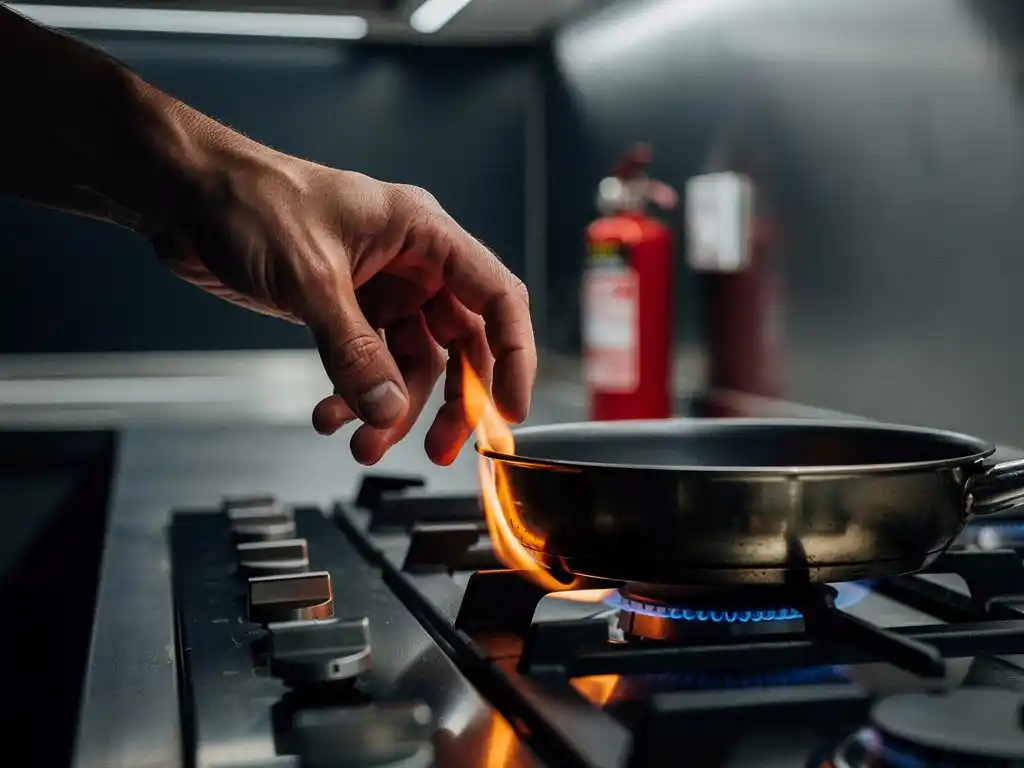
Preventing fires while cooking on a gas stove comes down to one principle: never leave an open flame unattended, and keep the area around the burners clear of anything flammable. Most kitchen fires start because of a momentary lapse in attention, a misplaced dish towel, or a burner left on by accident. The sections below cover the most important gas stove fire safety questions, from recognizing common hazards to knowing what to do when something goes wrong.
What are the most common causes of gas stove fires?
The most common causes of gas stove fires are unattended cooking, grease buildup, flammable materials placed too close to burners, and gas leaks. Unattended cooking is the leading factor in residential kitchen fires, as food left on a lit burner can overheat, ignite, or cause oil to catch fire within minutes.
Grease accumulation on burner grates, drip pans, and the stovetop surface is a persistent hazard. When grease heats up beyond its smoke point, it can ignite rapidly. Even a small splatter left uncleaned after previous cooking sessions can become the starting point for a fire.
Flammable materials near the stove are another frequent culprit. Dish towels, paper towels, oven mitts, plastic bags, and loose clothing can all catch fire if they come into contact with an open flame or an extremely hot surface. Many stove fire causes are entirely preventable through consistent habits and a tidy cooking environment.
How do you safely use a gas stove to reduce fire risk?
To safely use a gas stove and reduce fire risk, stay present while cooking, use appropriately sized pots and pans, keep burners clean, and ensure proper ventilation. These habits directly address the most common stove fire causes and make cooking fire prevention a natural part of your routine.
- Stay in the kitchen while cooking — especially when using high heat or frying with oil. If you must leave, turn the burner off.
- Match pot size to burner size — flames extending beyond the base of a pot can ignite handles or nearby items.
- Keep burners and grates clean — wipe down the stovetop after every use to prevent grease from accumulating.
- Use a timer — a simple kitchen timer reminds you that something is on the stove, reducing the risk of forgetting a lit burner.
- Ensure ventilation — use a range hood or open a window to prevent heat and gas fumes from building up.
- Check ignition — after turning on a burner, confirm the flame has ignited before walking away. An unlit burner releasing gas is a serious hazard.
These kitchen fire safety tips are straightforward, but their impact is significant. Consistently applying them reduces the likelihood of a small cooking mishap escalating into a dangerous fire.
What should you never do near a gas stove while cooking?
Never leave flammable materials near a gas stove, never cook in loose or flowing clothing, and never leave the stove unattended while using high heat or oil. These behaviors are responsible for a large share of preventable kitchen fires and should be avoided without exception.
Specific things to avoid near a gas stove include:
- Placing dish towels, paper, or plastic items on or next to burners
- Wearing loose sleeves or flowing fabric while cooking over an open flame
- Leaning over a lit burner, especially with hair down
- Storing aerosol cans, oils, or cleaning products near the stove
- Allowing children or pets to be unsupervised near a lit stove
- Ignoring a burner that fails to light on the first try — if gas is flowing but not igniting, turn it off and wait before trying again
Many of these situations seem minor in the moment but can escalate within seconds. Gas stove fire safety depends as much on what you avoid as on what you actively do right.
How do you detect a gas leak before it causes a fire?
You can detect a gas leak by recognizing the smell of rotten eggs or sulfur, listening for a hissing sound near the stove or gas line, and watching for a flame that is unusually low or discolored. Natural gas is odorless in its raw form, but suppliers add a chemical called mercaptan specifically to make leaks detectable by smell.
If you suspect a gas leak, follow these steps immediately:
- Do not turn any electrical switches on or off — a spark could ignite the gas.
- Avoid using open flames, lighters, or matches.
- Open windows and doors to ventilate the space.
- Turn off the gas supply at the main valve if it is safe to do so.
- Leave the building and call your gas supplier or emergency services from outside.
Installing a dedicated gas leak detector near your stove provides an additional layer of protection. These devices sense gas concentration levels in the air and trigger an alarm before the gas reaches a dangerous threshold, giving you time to act before any ignition risk develops.
What is the best way to put out a small stove fire?
The best way to put out a small stove fire depends on the type of fire. For a grease fire in a pan, slide a lid over the pan and turn off the burner — cutting off oxygen smothers the flame. For a general stovetop fire, a dry chemical or CO2 fire extinguisher rated for kitchen use is the most effective tool.
What you should never do with a grease fire is pour water on it. Water causes burning oil to splatter violently, spreading the fire and potentially causing serious burns. Similarly, do not attempt to carry a burning pan to the sink.
If the fire spreads beyond the pan or stovetop, do not try to fight it yourself. Leave the kitchen immediately, close the door behind you to slow the spread, alert others in the building, and call emergency services. A small fire can double in size within a minute, so the decision to evacuate should be made quickly and without hesitation.
Should you install a fire suppression system in your kitchen?
Installing a fire suppression system in a residential kitchen is not legally required in most jurisdictions, but it is a worthwhile investment in homes where cooking happens frequently or where the kitchen is part of a larger property with significant assets to protect. Professional kitchens and commercial food service environments are typically required by regulation to have suppression systems installed above cooking equipment.
For residential use, a combination of a working smoke alarm, a fire extinguisher within reach, and consistent safe cooking habits covers the majority of risk scenarios. Smoke alarms should be placed outside the kitchen to avoid false alarms from cooking steam, but close enough to detect a real fire quickly. Test them monthly and replace batteries at least once a year.
How ExxFire helps protect high-value environments from fire
While the tips above apply to everyday kitchen fire safety, some environments demand a more robust and automated level of protection. For organizations managing mission-critical equipment such as server racks, electrical switchgear, battery energy storage systems, or industrial control cabinets, a passive approach to fire safety is not enough.
ExxFire’s integrated fire detection and suppression systems are purpose-built for exactly these environments. The systems combine aspirating smoke detection with non-pressurized nitrogen gas suppression, activating automatically at the earliest sign of fire before damage can occur. Key features include:
- Early smoke detection that identifies fire risk at the pre-combustion stage, well before flames develop
- Nitrogen-based suppression that leaves no chemical residue, protecting sensitive electronics and high-value components
- PFAS-free technology that meets growing environmental compliance requirements
- Easy self-installation without special certification, reducing installation costs and complexity
- Compatibility with existing fire panels via built-in relays, integrating seamlessly into current safety infrastructure
ExxFire systems are tested and certified by CNPP in France and validated by DMT, part of TÜV Nord in Germany, making them a trusted choice for organizations in over 40 countries. If your business relies on uninterrupted operations and cannot afford downtime or hardware loss caused by a fire, contact ExxFire to find out which system is right for your environment.
Related Articles
- How does fire management differ between countries?
- How do you conduct a fire risk assessment for a forest?
- What is the difference between fire prevention and fire safety?
- Should you use a fire blanket or an extinguisher to put out a kitchen fire?
- What is the role of fire suppression in green building certification?