
How do you test a fire suppression system for regulatory compliance?
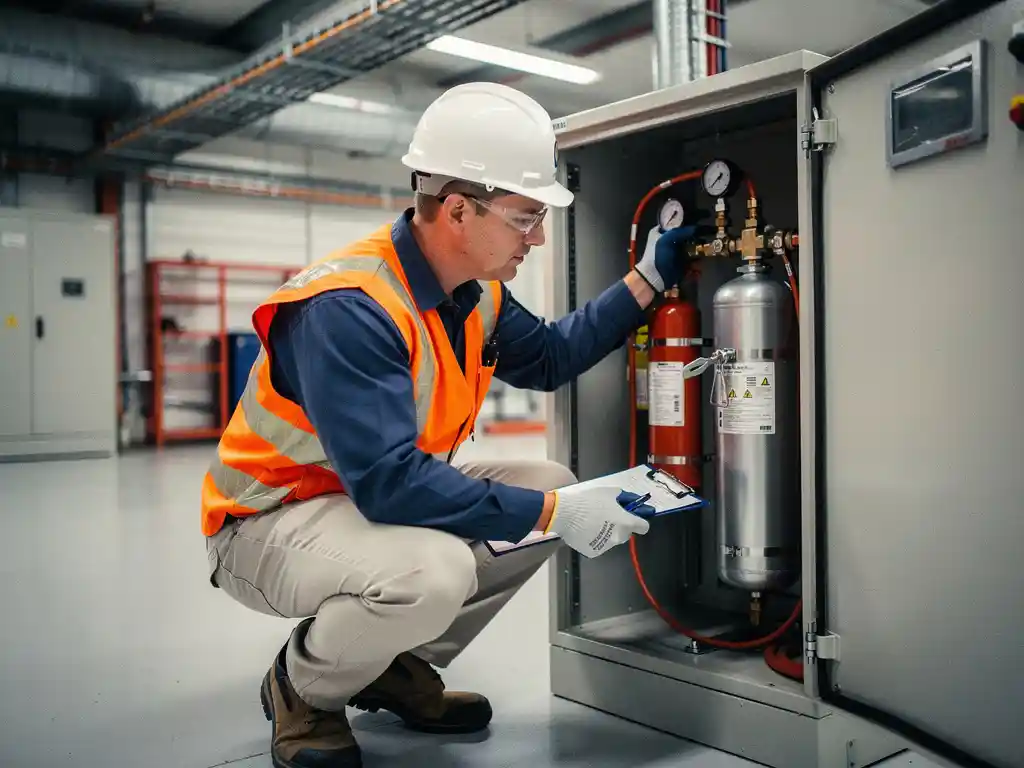
Testing a fire suppression system for regulatory compliance requires a combination of scheduled inspections, functional tests, and third-party verification carried out according to the standards applicable to your industry and region. For most industrial facilities, this means following a structured programme that covers detection components, suppression agent delivery, and system integrity at defined intervals. The sections below break down the key questions safety and compliance managers face when navigating fire suppression system testing requirements.
What standards govern fire suppression system testing?
Fire suppression system testing is governed by a combination of international, national, and industry-specific standards that define inspection frequency, test methods, and acceptance criteria. The most widely referenced frameworks include NFPA 2001 for clean agent systems, NFPA 12 for carbon dioxide systems, NFPA 13 for sprinkler systems, and FM Global guidelines for property risk management. In Europe, EN 15004 covers gaseous fire suppression systems, while ATEX directives apply to equipment in explosive atmospheres.
For industrial facilities operating across multiple jurisdictions, the applicable standard depends on the suppression agent used, the type of hazard being protected, and local authority having jurisdiction (AHJ) requirements. NFPA fire suppression testing standards are often adopted as the baseline even outside the United States because of their technical depth and global recognition. Compliance managers should confirm which standards their insurer, local fire authority, and any applicable industry regulator require before designing a testing programme.
What types of tests are required for compliance?
Regulatory compliance for fire suppression systems typically requires four categories of testing: visual inspections, functional component tests, agent quantity verification, and full system discharge or simulation tests. Each category occurs at a different frequency, ranging from monthly visual checks to annual functional tests and multi-year discharge verifications.
- Visual inspections: Carried out monthly or quarterly, these confirm that nozzles are unobstructed, control panels show no fault signals, manual pull stations are accessible, and signage is in place.
- Functional component tests: Performed annually, these verify that detection devices, releasing panels, solenoid valves, and alarm circuits operate correctly without discharging the agent.
- Agent quantity checks: Suppression agent containers are weighed or pressure-checked at defined intervals to confirm the agent has not degraded or leaked below the minimum design quantity.
- Discharge or simulation tests: Some standards require a full or partial discharge test at installation and at specified intervals thereafter to confirm the system delivers agent correctly within the protected enclosure.
For systems protecting electrical enclosures and critical equipment, the simulation approach is often preferred over a live discharge to avoid unnecessary exposure of sensitive components. The testing programme should be documented in a written inspection and testing plan that maps each requirement to its applicable standard and interval.
Who is qualified to perform fire suppression system tests?
Fire suppression system testing must be performed by qualified personnel whose competency is recognised by the applicable standard and local authority. For most regulated systems, this means a certified fire protection technician or an engineer with documented training from the system manufacturer or a recognised certification body such as NICET in the United States or equivalent national programmes in other countries.
Some jurisdictions require that testing be conducted or witnessed by a third-party inspection body. In Germany, for example, TÜV-affiliated bodies are commonly involved in acceptance testing of suppression systems in industrial facilities. In France, organisations such as CNPP provide independent system testing and certification services. Regardless of who performs the tests, the technician must have access to the system’s original design documentation, approved drawings, and the manufacturer’s maintenance manual to verify that the system still conforms to its design intent.
Facility managers should not rely solely on the installing contractor for ongoing compliance testing. An independent qualified inspector provides an objective assessment and is better positioned to identify deviations from the original design that may have accumulated through equipment changes or enclosure modifications over time.
What documentation is required to prove compliance?
Proving fire suppression system compliance requires a complete and current documentation package that can be presented to regulators, insurers, and auditors. At minimum, this package should include the original system design drawings, hydraulic calculations, acceptance test records, and all subsequent inspection and maintenance reports.
The core documents required are:
- As-built drawings and design basis documentation confirming the system was installed to an approved specification.
- Acceptance test certificate signed by the qualified inspector or third-party body that witnessed commissioning.
- Inspection and testing logs recording the date, technician name, tests performed, results, and any deficiencies found, with corrective actions taken.
- Agent container records showing weight or pressure readings at each inspection interval.
- Impairment records documenting any period during which the system was taken out of service, the reason, and the steps taken to restore protection.
Many industrial facilities now maintain these records in a digital asset management system to ensure they are retrievable during unannounced inspections. Gaps in documentation are treated by most regulators and insurers as equivalent to gaps in compliance, even if the physical system is fully functional.
How does suppression agent type affect testing requirements?
The type of suppression agent used in a system directly determines which standard applies, what discharge testing is required, and what environmental reporting obligations exist. Different agents carry different safety, regulatory, and environmental considerations that shape the entire testing and compliance programme.
Gaseous clean agents regulated under NFPA 2001, such as HFCs and HFOs, require concentration verification testing to confirm the agent reaches the minimum design concentration within the protected enclosure. These tests are typically performed using measurement ports and gas analysers rather than full discharges. Agents that fall under PFAS regulations in the European Union or under state-level restrictions in the United States now carry additional reporting and phase-out obligations that compliance managers must track alongside standard testing requirements.
Inert gas systems using nitrogen or argon are not subject to PFAS restrictions and generally have simpler environmental reporting obligations. However, they operate at high storage pressures, which means cylinder integrity and pressure monitoring are critical testing elements. Carbon dioxide systems require strict personnel safety protocols during any testing activity because of the oxygen displacement hazard. Water-based systems such as sprinklers follow NFPA 13 or 25 and require flow tests, pressure tests, and internal inspection of piping at defined intervals.
What happens if a fire suppression system fails a compliance test?
If a fire suppression system fails a compliance test, the facility is required to implement an impairment procedure immediately, notify the relevant authority having jurisdiction and the insurer, and restore the system to full operational status as quickly as possible. Leaving a failed system in service without implementing compensatory measures is a regulatory violation and may void property insurance coverage.
The immediate steps after a failed test are:
- Declare an impairment and initiate the facility’s fire watch or hot work permit procedure for the affected area.
- Notify the AHJ, insurer, and facility management of the impairment and its cause.
- Engage a qualified technician to diagnose the root cause of the failure.
- Complete corrective repairs and retest the system before returning it to service.
- Document the entire sequence, including the failure finding, corrective action, and retest result.
Common causes of compliance test failures include agent quantity loss from slow leaks, detector drift or contamination, solenoid valve fouling, and enclosure modifications that have increased the protected volume beyond the original design capacity. Addressing the root cause rather than just the symptom is essential, because a system that passes a retest without a genuine fix will likely fail again and may not perform in an actual fire event.
How ExxFire supports fire suppression system compliance
ExxFire’s integrated fire detection and suppression systems are designed to simplify compliance for facilities protecting electrical enclosures, switchgear, ICT cabinets, and battery energy storage systems. The systems combine aspirating smoke detection with non-pressurized nitrogen suppression delivered through the patented Cool Gas Generator technology, and are independently tested and certified by CNPP in France and DMT in Germany, part of TÜV Nord. This third-party certification directly addresses the documentation and qualification requirements that compliance managers must satisfy.
Key compliance advantages of ExxFire systems include:
- PFAS-free nitrogen suppression that eliminates the environmental reporting and phase-out obligations associated with fluorinated clean agents.
- Non-pressurized agent storage that removes the high-pressure cylinder inspection requirements that apply to conventional inert gas systems.
- Pre-engineered, self-installable design that maintains a clear as-built documentation baseline without requiring specialist installation certification.
- Built-in relay outputs that report system status to an existing fire panel, supporting the functional component testing and alarm circuit verification required by most standards.
- Independent third-party certification from CNPP and TÜV Nord-affiliated DMT, providing the recognised test evidence that regulators and insurers require.
If you are reviewing your facility’s fire suppression system compliance programme or specifying protection for new critical assets, contact ExxFire to discuss how the Cool Gas Generator technology can meet your testing and regulatory requirements.