

How does sustainable fire protection support corporate climate commitments?
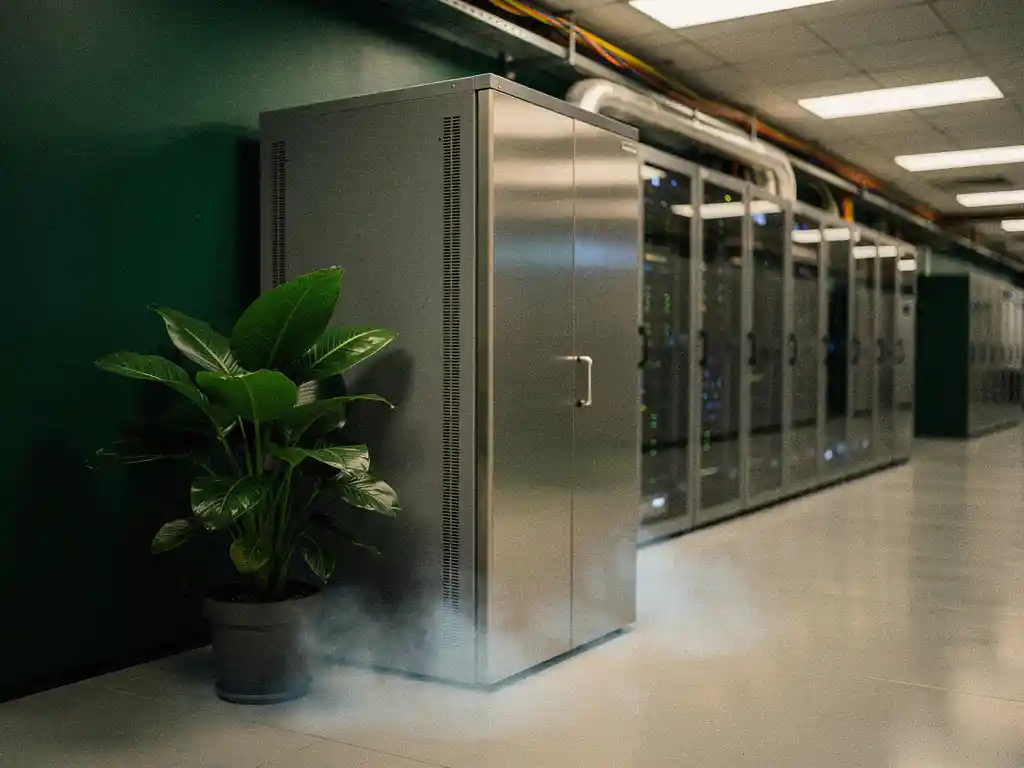
Sustainable fire protection directly supports corporate climate commitments by eliminating the use of harmful chemicals in fire suppression systems, reducing an organization’s environmental footprint in a measurable, compliance-relevant way. For companies with active ESG frameworks or net-zero targets, the choice of fire suppression technology is no longer a purely technical decision — it is a sustainability decision. The sections below unpack the key questions organizations are asking as they align fire safety with green business strategy.
What fire suppression chemicals are under pressure from climate regulations?
Per- and polyfluoroalkyl substances, known as PFAS, are the primary fire suppression chemicals facing mounting regulatory pressure globally. These synthetic compounds, found in aqueous film-forming foam (AFFF) and many traditional suppression agents, are classified as persistent environmental pollutants because they do not break down naturally and accumulate in ecosystems and human tissue.
In the European Union, the PFAS restriction proposal under REACH represents one of the broadest chemical bans in regulatory history, targeting thousands of substances used across industries, including fire safety. In parallel, several EU member states have already moved to restrict or ban AFFF use outside of critical aviation applications. Similar legislative momentum is building in North America, Australia, and parts of Asia.
Halon, an earlier generation of fire suppression gas, was phased out under the Montreal Protocol due to its ozone-depleting properties. Many hydrofluorocarbons (HFCs) used as halon replacements are now themselves under pressure from the Kigali Amendment to the Montreal Protocol, which targets substances with high global warming potential (GWP). For organizations still operating legacy systems based on these agents, the regulatory direction is clear: transitioning away from chemical-based suppression is not a matter of preference but of compliance trajectory.
How does nitrogen-based fire suppression reduce environmental impact?
Nitrogen-based fire suppression reduces environmental impact because nitrogen is a naturally occurring, inert gas that makes up approximately 78% of the Earth’s atmosphere. When used as a suppression agent, it leaves no chemical residue, produces no toxic byproducts, and contributes zero ozone depletion potential and zero global warming potential.
Unlike chemical suppression agents, nitrogen does not introduce synthetic compounds into the environment during discharge. There is no contamination of soil, water, or air with persistent substances. This is particularly significant for organizations operating in environmentally sensitive locations or those subject to strict waste and discharge regulations.
From a lifecycle perspective, nitrogen suppression systems also avoid the disposal challenges associated with chemical agents. Traditional extinguishing agents often require specialist handling and certified disposal at end-of-life. Nitrogen systems, by contrast, involve no hazardous materials at any stage, simplifying both maintenance and decommissioning from an environmental compliance standpoint.
Which corporate ESG goals does sustainable fire protection directly support?
Sustainable fire protection directly supports multiple pillars of a corporate ESG framework, spanning environmental impact reduction, regulatory compliance, operational governance, and long-term risk management. It is most directly relevant to the environmental and governance dimensions of ESG reporting.
On the environmental side, replacing PFAS-containing or high-GWP suppression systems eliminates a source of persistent chemical pollution from an organization’s operational footprint. This contributes to measurable reductions in hazardous substance use, which many ESG reporting frameworks — including GRI Standards and the EU Corporate Sustainability Reporting Directive (CSRD) — require organizations to track and disclose.
From a governance perspective, proactively adopting environmentally friendly fire suppression ahead of regulatory deadlines demonstrates responsible risk management. It signals to investors, insurers, and regulators that the organization is not carrying legacy compliance liabilities. For companies with science-based targets or net-zero pledges, eliminating high-GWP substances from all operational systems, including fire safety infrastructure, is consistent with the scope of those commitments.
The social dimension of ESG is also relevant: suppression systems that leave no chemical residue protect workers, first responders, and surrounding communities from exposure to toxic substances during and after a fire event.
What is the difference between PFAS-free and traditional fire suppression systems?
The core difference between PFAS-free and traditional fire suppression systems lies in the suppression agent used and its environmental and health consequences. Traditional systems often rely on chemical agents containing PFAS compounds or synthetic gases with high global warming potential, while PFAS-free systems use inert substances such as nitrogen that leave no harmful residue.
Traditional chemical suppression systems, including those using AFFF foam or certain clean agent gases, are effective at extinguishing fires but introduce substances that persist in the environment long after deployment. PFAS compounds in particular have been linked to ecological damage and human health concerns, and their use is increasingly restricted by law.
PFAS-free systems based on inert gases such as nitrogen work by reducing the oxygen concentration within a protected enclosure to a level at which combustion cannot be sustained. Because no synthetic chemicals are involved, there is no residue on equipment after discharge. This is especially valuable for protecting sensitive electronics, server infrastructure, and high-value components where chemical contamination would cause secondary damage on top of any fire damage.
From a practical standpoint, PFAS-free fire suppression systems also tend to carry a simpler regulatory compliance profile going forward, as organizations avoid the need to retrofit or replace systems in response to chemical bans. Choosing a PFAS-free solution now removes a foreseeable compliance burden from future capital planning.
Should organizations replace existing fire suppression systems to meet sustainability targets?
Organizations with sustainability targets should assess their existing fire suppression systems as part of their broader environmental compliance review, particularly if those systems use PFAS-containing agents or gases with high global warming potential. Replacement is not always immediately mandatory, but the regulatory and reputational direction strongly favors proactive transition.
The case for replacement is strongest when existing systems use agents that are already restricted or scheduled for restriction under applicable regulations. Organizations operating in the EU, for example, face a tightening regulatory environment around PFAS that makes continued reliance on AFFF or similar agents a growing liability rather than a stable long-term solution.
For organizations with formal ESG commitments, the argument goes further. If sustainability reporting requires disclosure of hazardous substance use, or if net-zero targets encompass operational inputs, maintaining chemical-based suppression systems creates a visible gap between stated commitments and operational practice. Investors and auditors increasingly scrutinize this kind of inconsistency.
Replacement decisions should also factor in Total Cost of Ownership. Modern green fire safety systems, particularly those designed for self-installation and low maintenance, can offer a lower long-term cost profile than legacy chemical systems that require specialist servicing, agent replenishment, and eventual disposal under hazardous waste regulations.
How do fire safety certifications support corporate climate credibility?
Fire safety certifications support corporate climate credibility by providing independent, third-party validation that a suppression system meets defined performance and safety standards — which in turn substantiates the environmental claims an organization makes about its fire protection infrastructure. Certification transforms a sustainability claim into a verifiable fact.
When an organization states that its fire suppression systems are PFAS-free or environmentally sound, that claim carries significantly more weight when backed by recognized testing bodies. Certifications from institutions such as TÜV Nord or CNPP France confirm that a system has been rigorously tested against established criteria, giving procurement teams, auditors, and ESG reporting frameworks a credible reference point.
This matters particularly in the context of corporate sustainability disclosures. Frameworks such as the CSRD, CDP reporting, and ISO 14001 environmental management systems increasingly require organizations to substantiate environmental claims with evidence. A certified, PFAS-free suppression system provides exactly the kind of documented, auditable evidence these frameworks expect.
Certification also reduces greenwashing risk. As regulatory scrutiny of corporate sustainability claims intensifies, organizations that can point to independently tested and certified systems are better protected against challenges to their environmental credentials than those relying on self-declared claims alone.
How ExxFire supports corporate climate commitments through sustainable fire protection
ExxFire provides a concrete, certified answer to the challenge of aligning fire safety infrastructure with corporate sustainability goals. Its integrated fire detection and suppression systems are built entirely around nitrogen, a naturally inert gas that carries zero global warming potential, zero ozone depletion potential, and leaves no chemical residue on protected equipment. This makes ExxFire’s technology a fully PFAS-free alternative to legacy chemical suppression systems.
- Zero environmental footprint: Nitrogen is sourced from the atmosphere and returns to it harmlessly — no synthetic compounds, no persistent pollutants, no hazardous disposal requirements.
- Regulatory future-proofing: By eliminating PFAS and high-GWP agents entirely, ExxFire systems remove a foreseeable compliance liability from an organization’s fire safety infrastructure.
- Independent certification: Systems are tested and certified by CNPP in France and DMT, part of TÜV Nord in Germany, providing the third-party validation that ESG reporting frameworks and auditors require.
- No secondary damage: Nitrogen suppression leaves no residue on sensitive electronics, servers, switchgear, or battery systems, protecting both equipment value and operational continuity.
- Low Total Cost of Ownership: Pre-engineered for self-installation without specialist certification, with minimal maintenance requirements, ExxFire systems reduce the long-term cost burden compared to chemical alternatives.
- ESG-aligned credentials: As a PFAS-free, inert gas solution developed with roots in European Space Agency research, ExxFire’s technology supports measurable, reportable progress against environmental and governance ESG targets.
For organizations ready to bring their fire safety infrastructure in line with their climate commitments, contact ExxFire to discuss the right solution for your critical assets.