

How does urban expansion complicate wildfire management?
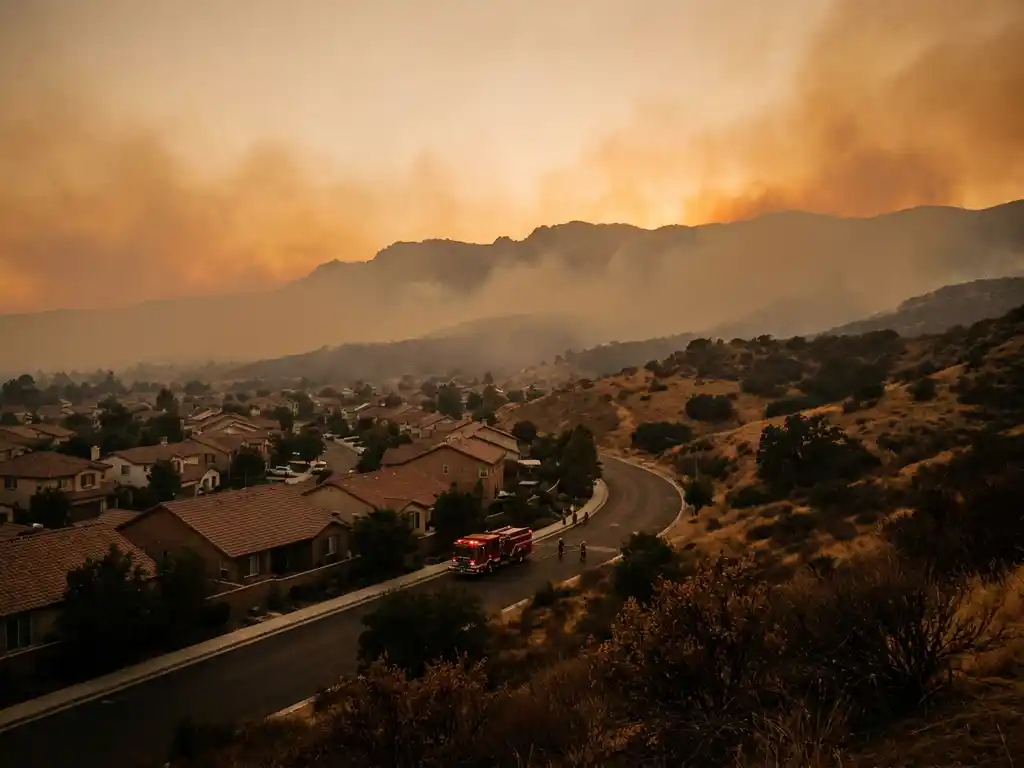
Urban expansion complicates wildfire management by placing more people, buildings, and infrastructure directly in the path of fires that were once contained to remote wildland areas. As cities and suburbs push into fire-prone landscapes, the boundary between developed land and natural vegetation becomes a persistent ignition and suppression challenge. The sections below unpack the specific ways this collision between growth and fire risk plays out.
What is the wildland-urban interface and why is it dangerous?
The wildland-urban interface (WUI) is the zone where human development meets or intermingles with undeveloped wildland vegetation. It is dangerous because structures and natural fuels exist side by side, meaning a fire that starts in grass, shrubs, or forest can quickly reach homes, businesses, and critical infrastructure with very little buffer zone to slow it down.
The WUI is not a single line on a map. It exists in two forms: the classic interface, where developed areas sit adjacent to wildland, and the intermix zone, where buildings and vegetation are scattered together across the same landscape. Both configurations create serious fire risk, but the intermix zone is particularly difficult to defend because fire can ignite from multiple directions simultaneously.
What makes the WUI especially hazardous is the combination of fuel continuity and structural vulnerability. Wooden fences, decking, dry gardens, and combustible building materials connect natural vegetation directly to homes. Embers carried on the wind can land hundreds of meters ahead of the fire front, igniting structures well before firefighters can establish a defensive perimeter. This ember-cast behavior is one of the primary reasons WUI fire risk is so difficult to mitigate through suppression alone.
How does urban sprawl increase wildfire ignition risk?
Urban sprawl increases wildfire ignition risk by introducing more human activity into fire-prone landscapes. The majority of wildfires are caused by human actions, including power line failures, vehicle sparks, discarded cigarettes, and unattended outdoor burning. As residential and commercial development expands into rural and semi-rural areas, these ignition sources multiply across terrain that contains abundant natural fuel.
Infrastructure expansion plays a significant role. Overhead power lines running through dry vegetation are a well-documented ignition source, and sprawling suburbs require extensive grid infrastructure that is difficult to harden or underground at scale. Roads and railways cut through fire-prone areas, and the vehicles using them introduce additional ignition potential year-round.
Urban sprawl also disrupts the natural fire ecology of many landscapes. Vegetation management that once occurred through controlled burns or natural fire cycles is suppressed in areas near development, allowing fuel loads to accumulate over decades. When fire does ignite in these overgrown zones, it burns with greater intensity than it would have under a more actively managed landscape, making suppression far more difficult and dangerous.
Why is it harder to suppress wildfires in densely populated areas?
Suppressing wildfires in densely populated areas is harder because firefighting resources must simultaneously protect lives, evacuate residents, and fight the fire itself. These competing demands divide attention and stretch capacity at exactly the moment when rapid suppression would be most effective. The presence of people in the fire’s path fundamentally changes operational priorities.
Access is a persistent problem. Narrow roads designed for residential traffic quickly become impassable when evacuation vehicles and fire apparatus are moving in opposite directions. Cul-de-sacs and dead-end streets, common in suburban developments, trap residents and limit the approach routes available to firefighting crews. In fast-moving fires, this loss of mobility can be catastrophic.
Water supply is another constraint. Wildland firefighting often relies on natural water sources and aerial resources, but urban areas introduce complex demands on hydrant systems and municipal water pressure. When multiple structures ignite simultaneously, the water demand can exceed local supply capacity. Aerial suppression is also restricted over populated areas due to safety concerns, removing one of the most effective tools available in remote fire environments.
What happens to critical infrastructure when wildfires reach urban zones?
When wildfires reach urban zones, critical infrastructure faces cascading failures. Power substations, telecommunications equipment, water treatment facilities, and transportation networks are all vulnerable to direct fire damage and heat exposure. A single substation fire can cut power to thousands of homes and businesses, compounding the emergency by disabling the very systems needed to coordinate the response.
Electrical infrastructure is particularly exposed. Transformers and switchgear cabinets located outdoors or in partially enclosed structures can ignite or fail when exposed to radiant heat and embers. Once power distribution is compromised, emergency services lose communications, hospitals switch to backup generation, and traffic systems fail, all of which increase the difficulty and danger of evacuation.
Data centers, server facilities, and telecommunications nodes are also at serious risk. These facilities often operate continuously and cannot be shut down without significant data loss or service disruption. Even a fire that does not directly destroy a building can cause smoke and heat damage to sensitive electronic equipment housed within it, resulting in extended downtime and costly hardware replacement. The economic consequences of infrastructure failure during a wildfire event can far exceed the direct damage to structures.
How can cities reduce wildfire risk through planning and prevention?
Cities can reduce wildfire risk through a combination of land use planning, building code enforcement, and vegetation management. The most effective approach addresses risk before development occurs, by restricting high-density construction in the highest-risk WUI zones and requiring fire-resistant design standards for any structures built near wildland areas.
Key prevention strategies include:
- Defensible space requirements: Mandating that property owners maintain cleared zones around structures, reducing the fuel available to carry fire toward buildings
- Fire-resistant building materials: Requiring non-combustible roofing, ember-resistant vents, and fire-rated cladding in WUI developments
- Fuel management programs: Conducting prescribed burns and mechanical clearing in the wildland areas adjacent to development to reduce accumulated fuel loads
- Improved road network design: Ensuring new developments include multiple access and egress routes wide enough to accommodate simultaneous evacuation and emergency vehicle movement
- Underground utilities: Burying power lines in high-risk corridors to eliminate a major ignition source
Community-level education programs also contribute meaningfully to prevention. When residents understand how embers ignite structures and how to prepare their properties, the overall resilience of a neighborhood improves significantly. Prevention at the property level scales up to community-level risk reduction in ways that no single infrastructure investment can replicate.
What fire protection measures matter most for equipment inside buildings?
For equipment inside buildings, the fire protection measures that matter most are early detection at the source, rapid suppression before fire spreads, and the use of clean suppression agents that do not damage sensitive electronics. Protecting individual assets, rather than waiting for a room-level sprinkler system to activate, is the approach that best limits downtime and hardware loss.
Standard building-wide fire suppression systems are designed to protect the structure, not the equipment inside it. By the time a ceiling-mounted detector triggers and a sprinkler activates, a fire that started inside a server rack, electrical cabinet, or switchgear enclosure may have already caused significant damage to the hardware within. Water and many conventional suppression agents compound this damage further, leaving equipment non-functional even after the fire is out.
Object-level protection addresses this gap directly. Systems that monitor the air inside individual enclosures for early smoke signals can detect a developing fire at a much earlier stage than room-level detectors, and suppression can be delivered precisely at the source before the fire escalates. For environments housing mission-critical equipment, this level of granularity is the difference between a contained incident and a prolonged operational outage.
As wildfires increasingly threaten urban and peri-urban facilities, the risk of fire reaching buildings that house critical equipment is no longer theoretical. Facilities that have invested only in perimeter or structural fire protection may find that their internal assets remain unprotected when it matters most.
How ExxFire supports fire protection for critical equipment
ExxFire provides combined fire detection and suppression systems designed specifically to protect the equipment inside enclosures, not just the building around them. Where wildfire management operates at a landscape and urban planning scale, ExxFire addresses the final layer of protection: the server rack, electrical cabinet, or switchgear enclosure that cannot afford to fail.
Key features of ExxFire’s approach include:
- Aspirating smoke detection: Continuously samples air inside the enclosure to identify fire at the earliest possible stage, well before conventional detectors would respond
- Non-pressurized nitrogen suppression: Delivers clean inert gas directly at the source without water, powder, or PFAS-containing agents that would damage sensitive electronics
- No chemical residues: Nitrogen leaves no residue, meaning equipment can be assessed and returned to service without the cleanup and decontamination required after conventional suppression
- Easy installation and low maintenance: Systems are pre-engineered for straightforward self-installation and require no ongoing maintenance checks once commissioned
- Tested and certified: Validated by CNPP in France and DMT (TÜV Nord) in Germany, ensuring performance meets recognized fire safety standards
For facility managers, IT infrastructure directors, and health and safety officers responsible for protecting mission-critical environments in an era of growing wildfire suppression challenges, ExxFire offers a proven, sustainable, and operationally sound solution. Contact ExxFire to discuss how object-level fire protection can be integrated into your facility’s overall fire safety strategy.