

What are the fire risks of improper waste storage?
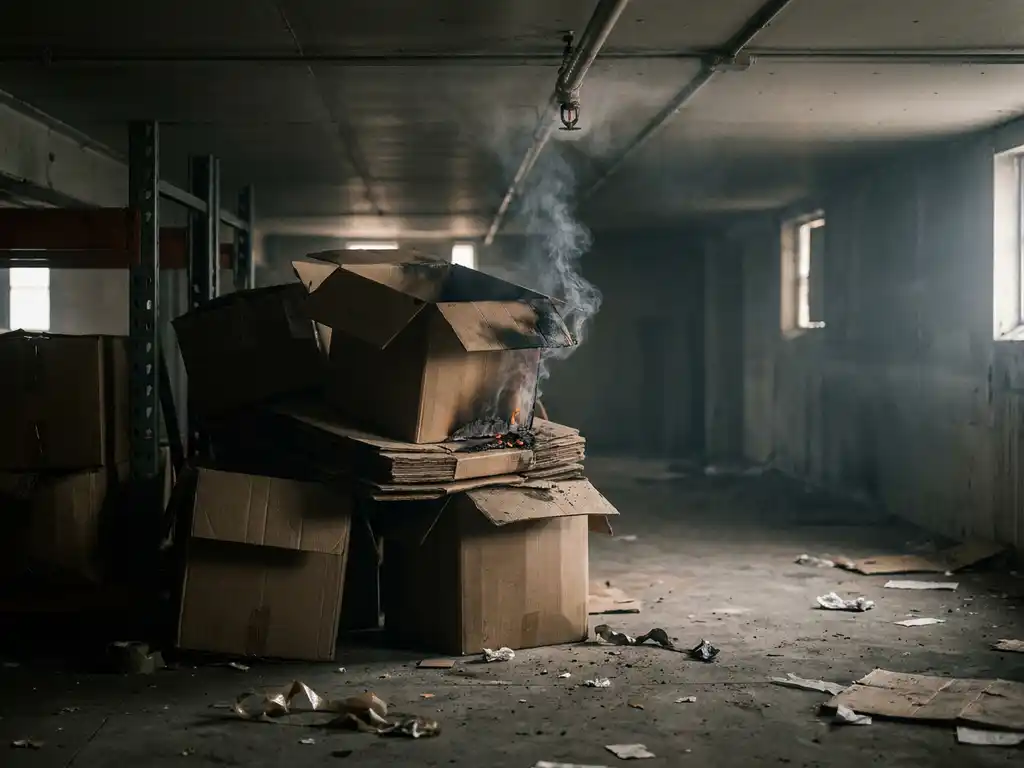
Improper waste storage creates serious fire risks by accumulating combustible materials in conditions that allow heat to build up, ignition sources to go unnoticed, and flames to spread rapidly once started. Facilities that store waste carelessly — whether organic, chemical, or mixed material — are significantly more vulnerable to fire incidents that can escalate beyond the point of easy containment. The questions below unpack the specific hazards, consequences, and prevention strategies every facility manager should understand.
What types of waste are most likely to catch fire?
The waste types most likely to catch fire are those that are either highly combustible, chemically reactive, or capable of self-heating. These include paper and cardboard, wood waste, textile scraps, flammable liquid residues, aerosol canisters, organic waste undergoing decomposition, and mixed industrial waste containing solvent-soaked materials. Each of these categories presents a distinct ignition pathway.
Paper, cardboard, and packaging materials are among the most common combustible waste found in commercial and industrial facilities. They ignite easily and burn fast, producing intense heat that can overwhelm nearby materials. Textile and foam waste behave similarly, often generating thick, toxic smoke as they burn.
Organic waste is particularly problematic because it can self-heat through biological decomposition. When organic matter breaks down in a confined space without adequate ventilation, the internal temperature can rise to the point of spontaneous combustion without any external ignition source. This makes improperly stored organic waste a hidden fire risk that may go undetected until flames are already established.
Chemical and industrial waste adds another layer of danger. Solvent-soaked rags, aerosol containers, and waste containing flammable residues are highly sensitive to heat, friction, or even a nearby spark. When these materials are mixed together in a general waste bin or skip, the risk compounds significantly.
How does improper waste storage cause fires to start?
Improper waste storage causes fires to start by creating conditions where combustible materials come into contact with ignition sources, or where heat accumulates to the point of spontaneous ignition. The most common triggers include electrical faults near waste accumulations, discarded smoking materials, arson, and the self-heating of organic or reactive waste stored in poorly ventilated areas.
One of the most frequent causes is the placement of waste bins or skips too close to buildings, electrical panels, or heat-generating equipment. Combustible waste stored directly against a wall or near electrical infrastructure dramatically shortens the path from a minor fault to a serious fire. A single electrical arc near a pile of cardboard or packaging waste can be enough to start a blaze that spreads to the building itself within minutes.
Inadequate segregation of waste types is another key factor. When reactive or flammable waste is mixed with general combustible materials, the risk of chemical ignition increases. Aerosol cans, for example, can rupture under heat and project flammable contents onto surrounding materials, turning a small fire into a much larger one almost instantly.
Infrequent waste collection also contributes. When waste is allowed to accumulate over days or weeks rather than being removed regularly, the volume of combustible material grows, and the risk of spontaneous heating in organic or mixed waste increases proportionally.
Why do waste storage fires spread so quickly?
Waste storage fires spread quickly because waste is typically stored in high-density accumulations of combustible material with little resistance to flame travel. The loose, dry nature of most waste — combined with the variety of materials present — means fire can move horizontally and vertically through a waste pile far faster than it would through a structured building element.
The geometry of waste storage plays a significant role. Loose materials create air pockets that feed oxygen to the fire, accelerating combustion. Cardboard, paper, and plastic packaging in particular collapse and shift as they burn, exposing fresh surfaces to heat and allowing fire to advance unpredictably.
When waste is stored inside a facility — in corridors, loading bays, plant rooms, or storage areas adjacent to electrical cabinets and switchgear — the fire has a direct path into the building’s core infrastructure. Smoke and heat travel through cable trays, ventilation ducts, and open doorways, reaching sensitive equipment and occupied areas well before flames do. This is one of the reasons waste storage fires consistently produce disproportionate damage relative to where they start.
Outdoor waste fires present a different but equally serious risk. A skip fire positioned close to a building facade can generate enough radiant heat to ignite window frames, cladding, or roofing materials within a short time, bringing the fire back inside the structure from the exterior.
What are the consequences of a waste storage fire in a facility?
A waste storage fire in a facility can result in significant damage to infrastructure, extended operational downtime, regulatory penalties, and in severe cases, injury or loss of life. Beyond the immediate physical damage, the business continuity implications are often the most costly consequence for commercial and industrial operators.
Electrical cabinets, switchgear, server rooms, and other mission-critical enclosures are particularly vulnerable when a waste fire originates nearby. Smoke and heat can infiltrate these systems even without direct flame contact, causing corrosion, short circuits, and data loss. Replacing or restoring this type of equipment is expensive and time-consuming, and the downtime involved can have cascading effects on operations, supply chains, and client commitments.
Regulatory and insurance consequences are also significant. Facilities found to have inadequate waste management practices or insufficient fire protection may face increased insurance premiums, enforcement action from fire safety authorities, or difficulty making successful insurance claims following an incident. In sectors such as healthcare, pharmaceuticals, and energy infrastructure, regulatory compliance is non-negotiable, and a preventable fire incident can trigger formal investigations.
The environmental impact of waste fires should not be overlooked either. Burning mixed waste releases toxic compounds into the air and can contaminate soil and water through firefighting runoff. For organizations with sustainability commitments, a waste fire represents both a reputational and an environmental liability.
How can facilities reduce the fire risk from waste storage?
Facilities can reduce the fire risk from waste storage by implementing structured waste management practices, enforcing safe storage distances, segregating waste types, and ensuring regular collection schedules. These measures address the root causes of waste fires before they have the opportunity to develop.
- Store waste at a safe distance from buildings: Keep skips, bins, and waste accumulation points at least five meters from building facades, windows, and external electrical infrastructure.
- Segregate combustible and reactive waste: Never mix flammable liquid residues, aerosols, or chemically reactive materials with general combustible waste. Use clearly labeled, dedicated containers for each category.
- Establish regular waste collection cycles: Prevent waste from accumulating over extended periods, particularly organic or mixed industrial waste that may self-heat.
- Secure waste storage areas: Restrict access to waste storage points to reduce the risk of arson, which is a leading cause of deliberate waste fires.
- Eliminate ignition sources near waste areas: Enforce strict no-smoking policies around waste storage zones and ensure no electrical faults or heat-generating equipment are located nearby.
- Train staff on waste fire risks: Employees should understand which materials are combustible, how to report unsafe accumulations, and what to do if a waste fire is discovered.
Fire risk assessments should specifically include waste storage areas as a reviewed category. Many facilities conduct thorough assessments of internal spaces but overlook the fire hazard potential of their waste management practices until an incident occurs.
What fire suppression approach works best for waste storage areas?
The most effective fire suppression approach for waste storage areas combines early smoke detection with a suppression method matched to the environment. For enclosed areas adjacent to or containing electrical and high-value equipment, suppression systems that do not cause secondary damage — such as those using clean inert gas — are strongly preferred over water-based or chemical alternatives.
Waste storage areas connected to or located near electrical infrastructure, switchgear rooms, or ICT cabinets require particular care. Water-based suppression can cause as much damage to sensitive electronics as the fire itself. Chemical suppression agents may leave residues that corrode components or contaminate environments, creating additional remediation costs. A clean agent approach eliminates these secondary damage risks.
Early detection is equally critical. Aspirating smoke detection systems can identify the presence of smoke particles at very low concentrations, long before visible smoke or heat becomes apparent. This early warning window is often the difference between a contained incident and a full facility emergency.
For larger waste storage facilities or areas with high volumes of combustible material, zoned suppression strategies that combine perimeter detection with targeted suppression at the most vulnerable points provide the most robust protection. The goal is to interrupt the fire at the earliest possible stage, before it reaches the intensity needed to spread beyond the waste storage zone itself.
How ExxFire helps protect facilities from waste storage fire risks
ExxFire provides integrated fire detection and suppression systems designed to protect the mission-critical equipment most at risk when a waste storage fire occurs nearby. Where waste accumulation near electrical infrastructure, switchgear, or server environments creates a combustible waste fire risk, ExxFire’s systems act as a targeted last line of defense for the equipment itself.
- Combined aspirating smoke detection and suppression: ExxFire systems detect smoke at very early stages and trigger suppression automatically, minimizing response time.
- Non-pressurized nitrogen gas suppression: Clean, inert nitrogen leaves no chemical residues and causes no secondary damage to sensitive electronics or components.
- PFAS-free technology: ExxFire’s patented Cool Gas Generator technology is a fully sustainable alternative to PFAS-containing fire suppression agents.
- Easy installation, low maintenance: Systems are designed for self-installation without special certification, with no ongoing maintenance requirements once commissioned.
- Tested and certified: All systems are tested and certified by CNPP in France and validated by DMT, part of TÜV Nord in Germany.
For facility managers responsible for environments where waste storage fire hazards intersect with high-value equipment, ExxFire offers a clean, proven, and cost-effective solution. Explore ExxFire’s fire suppression systems to find the right protection for your facility.