

What increases the fire risk in older buildings?
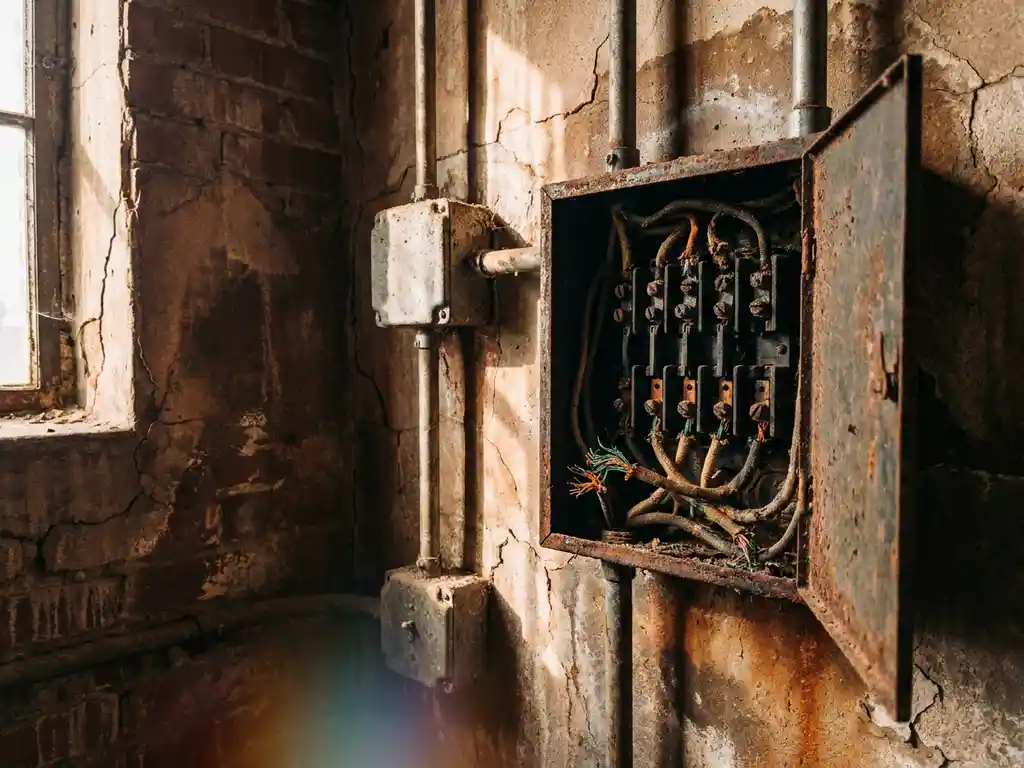
Older buildings carry a significantly higher fire risk than modern structures. Outdated wiring, aging materials, obsolete detection systems, and growing electrical loads all combine to create environments where fire can ignite faster, spread further, and cause more damage before anyone responds. The sections below break down the specific risk factors and what facility managers can do about them.
What types of electrical systems make older buildings more fire-prone?
Aging electrical infrastructure is one of the leading fire risk factors in older buildings. Systems installed decades ago were designed for far lower electrical loads than modern equipment demands, and deterioration over time makes faults, overheating, and arcing far more likely.
Several specific electrical issues raise fire risk in older buildings:
- Aluminium wiring: Common in buildings constructed between the 1960s and 1980s, aluminium wiring expands and contracts more than copper, loosening connections over time and creating heat buildup at junction points.
- Knob-and-tube or cloth-insulated wiring: Found in pre-1950s construction, these wiring types lack the insulation integrity of modern cables and are prone to cracking, fraying, and arcing.
- Outdated fuse boxes: Older fuse boards and distribution panels often lack the circuit protection sophistication of modern residual current devices, meaning overcurrent conditions can persist longer before being interrupted.
- Overloaded circuits: Buildings originally wired for modest electrical loads are now running server rooms, high-voltage cabinets, and dense ICT infrastructure, pushing circuits well beyond their design capacity.
For facility managers overseeing older buildings, switchgear and electrical cabinet areas are particularly high-risk zones. These enclosures concentrate electrical load in a confined space, and a fault inside them can escalate rapidly without localized fire protection in place.
How does building construction age contribute to fire spread?
Older building construction materials and structural methods allow fire to spread faster and more extensively than in modern builds. Before fire-resistant materials and compartmentalization standards became mandatory, buildings were constructed with continuous void spaces, untreated timber, and materials that fuel rather than slow combustion.
Timber-framed floors, walls, and roof structures were standard practice in buildings constructed before the mid-twentieth century. Unlike modern fire-rated assemblies, these structural elements ignite readily and burn quickly. Open wall cavities and unblocked floor voids act as hidden channels, allowing fire and smoke to travel between rooms, floors, and compartments long before detection occurs at the surface level.
Historic buildings also frequently used materials such as horsehair plaster, tar-based sealants, and cellulose insulation, all of which contribute to fire load. Retrofitting fire compartmentalization into these structures is complex and expensive, meaning many older buildings still lack the passive fire protection that is standard in new construction.
What role do outdated fire detection and suppression systems play?
Outdated fire detection and suppression systems are a critical vulnerability in older buildings. Legacy systems may have slower detection thresholds, limited coverage, or suppression agents that are no longer fit for purpose, all of which extend the time between ignition and response and increase the severity of damage.
Many older buildings still rely on heat detectors rather than smoke detectors, which only trigger once a fire has already developed significant energy. Early-stage smoke detection, by contrast, identifies combustion products at the smoldering phase, long before open flame develops. This difference in detection speed can be decisive in limiting damage to sensitive equipment.
Suppression systems in older buildings present additional concerns. Systems originally installed with halon or older chemical agents have either been decommissioned or replaced with alternatives that may not be suitable for the electrical environments now present in the building. Some legacy gaseous systems also rely on high-pressure stored cylinders, which introduce their own safety and maintenance challenges in confined spaces.
For buildings housing electrical cabinets, server racks, or power distribution units, the absence of object-level fire protection is a particular gap. Room-level suppression systems may not respond quickly enough to contain a fire that originates inside a closed enclosure, where heat and smoke can build to damaging levels within minutes.
Are older buildings more at risk from BESS and modern electrical loads?
Yes, older buildings face elevated fire risk when Battery Energy Storage Systems and modern high-density electrical loads are introduced into infrastructure that was never designed to accommodate them. The combination of aging wiring, limited circuit protection, and the specific thermal characteristics of lithium-ion battery technology creates a particularly challenging risk environment.
Battery Energy Storage Systems present a distinct hazard known as thermal runaway, where a cell fault triggers a self-sustaining exothermic reaction that is difficult to interrupt once started. When BESS units are installed in older buildings without upgraded electrical infrastructure or localized suppression, the risk of a contained fault escalating into a structural fire increases substantially.
Beyond BESS, the general trend toward higher electrical density in ICT, telecommunications, and industrial environments means that older buildings are routinely asked to support loads their original design never anticipated. Every additional kilowatt of load placed on aging infrastructure increases stress on connections, insulation, and protective devices, compounding the underlying fire risk factors already present in the structure.
What are the compliance and regulatory gaps in older buildings?
Older buildings frequently operate under grandfathered permissions that exempt them from current fire safety standards, creating meaningful compliance gaps. Regulations governing fire detection coverage, suppression system types, and electrical installation standards have all been updated significantly in recent decades, but existing buildings are not always required to retrofit to the current standard.
In 2026, regulatory pressure is increasing across Europe and other markets, particularly around the phase-out of PFAS-containing fire suppression agents. Many legacy gaseous suppression systems use fluorinated compounds that fall under emerging restrictions, meaning buildings still operating these systems face both compliance risk and reputational exposure.
Additional regulatory gaps commonly found in older buildings include:
- Fire compartmentalization that does not meet current building regulations for the building’s current use
- Electrical installations that predate modern wiring regulations and have not been subject to periodic inspection and testing
- Suppression systems that use agents now restricted or scheduled for phase-out under environmental legislation
- Detection systems that do not meet current coverage and sensitivity standards for high-risk occupancies
Facility managers and health and safety officers should treat compliance gaps not simply as a legal issue but as a direct indicator of elevated fire risk. Buildings that do not meet current standards are, by definition, less protected than the standard considers acceptable.
How can facility managers reduce fire risk in older buildings?
Facility managers can meaningfully reduce fire risk in older buildings by prioritizing electrical system audits, upgrading detection at the object level, and addressing the highest-risk enclosures before investing in broader infrastructure changes. A targeted, risk-based approach delivers faster protection than waiting for a full building upgrade.
Practical steps to reduce fire risk in older buildings include:
- Commission a full electrical installation condition report: This identifies deteriorated wiring, overloaded circuits, and outdated protective devices that represent the most immediate ignition risks.
- Upgrade detection inside high-risk enclosures: Electrical cabinets, server racks, and power distribution units benefit from aspirating smoke detection, which identifies combustion products at the pre-flame stage.
- Replace PFAS-containing suppression agents: Where legacy gaseous systems are still in place, transitioning to inert gas alternatives eliminates both environmental compliance risk and the chemical residue hazard to sensitive equipment.
- Install object-level suppression in critical enclosures: Room-level systems cannot always respond quickly enough when a fire originates inside a closed cabinet. Localized suppression at the enclosure level provides a faster, more targeted response.
- Review passive fire protection: Inspect wall penetrations, cable entry points, and floor voids for gaps that allow fire and smoke to travel undetected through the building fabric.
- Establish a maintenance schedule: Even where systems are upgraded, older buildings require consistent inspection routines to catch deterioration before it creates a new risk.
How ExxFire helps protect older buildings from fire risk
ExxFire’s integrated fire detection and suppression systems are designed specifically to address the object-level fire risk that older buildings face, particularly in electrical enclosures, server racks, and high-voltage cabinets where aging infrastructure and modern electrical loads converge.
- Early smoke detection: Aspirating detection identifies combustion products at the smoldering stage, well before open flame develops inside a cabinet.
- Non-pressurized nitrogen suppression: The patented Cool Gas Generator delivers clean nitrogen gas without chemical residues, protecting sensitive electronics without causing secondary damage.
- PFAS-free technology: ExxFire systems are a direct replacement for legacy fluorinated suppression agents, addressing both environmental compliance requirements and the phase-out of PFAS-containing systems.
- Easy installation, no ongoing maintenance: Systems are designed for straightforward self-installation without special certification, with no routine maintenance required after commissioning.
- Fire panel integration: Built-in relays allow status reporting to an existing fire panel, making ExxFire compatible with the legacy infrastructure already present in older buildings.
If your building hosts electrical cabinets, server racks, or battery storage that currently lack localized fire protection, contact ExxFire to find the right system for your environment.
Related Articles
- How does poor electrical wiring increase fire risk?
- How does fire risk change during hot and dry weather?
- When should you upgrade your fire suppression system to meet new standards?
- How do you verify that a suppression system meets NFPA requirements?
- What fire prevention measures are required in schools?