

What is active fire protection and how is it different from passive?
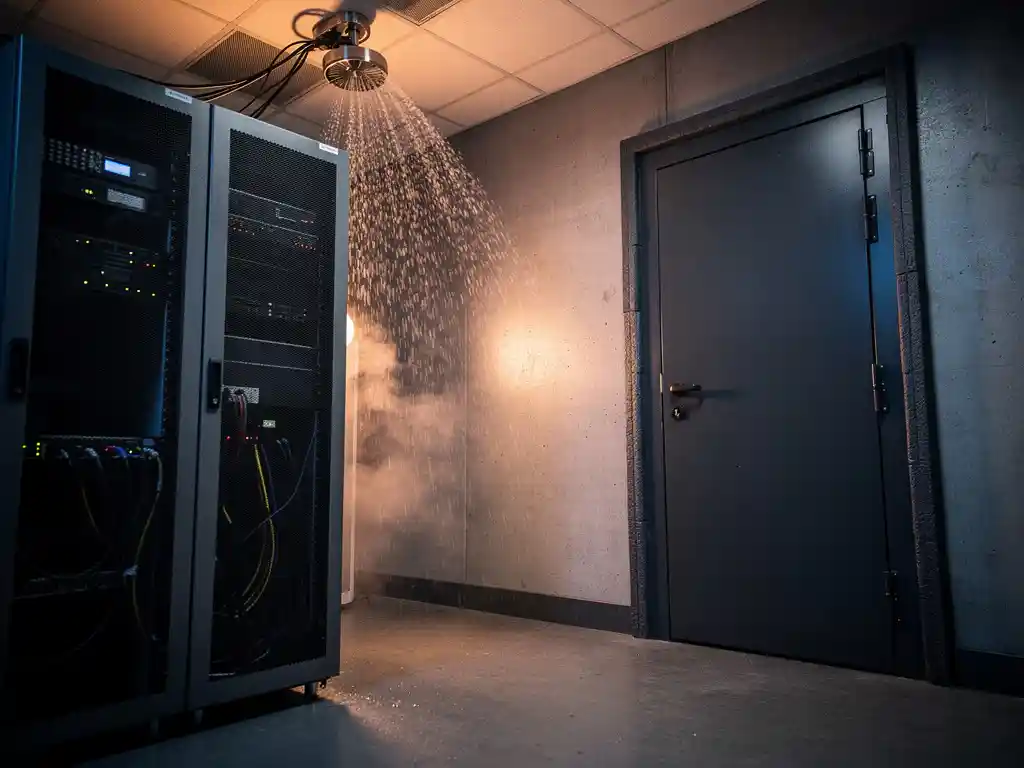
Active fire protection and passive fire protection are two distinct but complementary approaches to fire safety. Active fire protection refers to systems that detect and respond to fire dynamically, such as sprinklers, fire alarms, and suppression systems. Passive fire protection uses structural and material-based measures to contain fire and slow its spread without any mechanical action. Understanding both helps organizations choose the right combination for their specific risk environment.
How does active fire protection actually work?
Active fire protection works by detecting the presence of fire, smoke, or heat and triggering a response, either automatically or manually, to suppress or control the fire. Unlike passive measures built into the structure of a building, active systems require activation, whether by a sensor, a person, or a control panel, to perform their function.
The process typically follows a sequence: detection, alert, and suppression. A detector identifies early warning signs, such as smoke particles or a rise in temperature. That signal triggers an alarm to notify occupants and, in automated systems, simultaneously activates a suppression mechanism to address the fire at its source.
Early detection is the critical factor. The sooner a fire event is identified, the more effectively an active system can intervene before heat, flames, or smoke cause serious damage. This is especially important in enclosed spaces where fire can develop rapidly and where the equipment inside, such as electrical cabinets or server racks, is both the fuel source and the asset being protected.
What are the main types of active fire protection systems?
The main types of active fire protection systems include fire detection systems, fire alarm systems, sprinkler systems, gaseous suppression systems, and foam or dry chemical suppression systems. Each type is suited to different environments depending on the nature of the fire risk, the assets being protected, and operational requirements.
Fire detection and alarm systems
These systems identify smoke, heat, or combustion gases and alert building occupants. They range from simple point detectors to advanced aspirating smoke detection systems that sample air continuously and can identify smoke at extremely early stages, often before a fire has fully ignited.
Suppression systems
Suppression systems physically intervene to extinguish or control a fire. Water-based sprinkler systems are the most widely recognized, but they are unsuitable for many environments. Gaseous suppression systems, which use agents such as inert nitrogen or CO2, are preferred in areas with sensitive electronics, archives, or high-value equipment where water or chemical residue would cause secondary damage. Foam and dry powder systems are common in industrial or fuel-storage environments.
What is passive fire protection and how does it work?
Passive fire protection is a set of structural and material-based measures built into a building to contain fire, limit its spread, and protect escape routes, without requiring any activation or mechanical response. It works continuously and automatically simply by being present in the building’s construction.
Common passive fire protection measures include fire-resistant walls, floors, and ceilings that create compartments to prevent fire from spreading between areas. Fire doors slow the movement of flames and smoke. Intumescent seals expand when exposed to heat to block gaps around pipes and cables that would otherwise act as pathways for fire. Fire-rated glazing protects escape routes while maintaining visibility.
The purpose of passive protection is not to extinguish fire but to buy time. By slowing the spread of fire and smoke, it gives occupants more time to evacuate and gives active systems, as well as firefighters, more time to respond effectively.
What’s the difference between active and passive fire protection?
The key difference between active and passive fire protection is that active systems respond to fire dynamically, while passive systems work continuously through structural design without requiring any trigger or activation. Active protection suppresses or controls fire; passive protection contains and slows it.
A practical way to understand the distinction is to think about what happens during a fire event:
- Active systems detect the fire, trigger an alarm, and deploy a suppression agent to extinguish or control the flames.
- Passive systems are already working before, during, and after the fire by limiting how far it can spread through the building’s structure.
Both approaches address fire risk, but they do so at different stages and through entirely different mechanisms. Active protection is reactive by design; passive protection is preventive by design. Neither replaces the other, and the most resilient fire safety strategies incorporate both.
Which fire protection approach is better for sensitive electronics?
For sensitive electronics, active fire protection using gaseous suppression is generally the better approach. Water-based sprinkler systems and chemical agents can cause as much damage to electronics as the fire itself. Inert gas suppression, particularly nitrogen-based systems, extinguishes fire without leaving residue, moisture, or corrosive agents that would damage circuit boards, server components, or battery systems.
The specific challenge with electronics is that the equipment is both the ignition risk and the asset being protected. A fire inside a server rack or switchgear cabinet needs to be addressed at the source, not at the room level. This requires suppression systems designed for enclosed enclosures, capable of detecting smoke at the earliest stage and delivering a clean suppression agent directly into the cabinet.
Passive measures such as fire-resistant enclosures can complement this approach by limiting how a fire might spread outward from the cabinet, but they cannot prevent internal damage. For the equipment itself, early-detection active suppression is the decisive layer of protection.
Do buildings need both active and passive fire protection?
Yes, most buildings benefit from both active and passive fire protection, and in many jurisdictions, building codes and fire safety regulations require a combination of both. Each approach addresses risks that the other cannot fully cover on its own.
Passive fire protection ensures that even if active systems are delayed, fail, or are overwhelmed, the structure itself limits how quickly fire spreads. This protects escape routes, reduces structural damage, and contains the fire to a smaller area. Active systems, in turn, address the fire directly, reducing its severity before passive containment measures are tested to their limits.
In practice, the balance between the two depends on the building type, occupancy, and the nature of the assets inside. A data center, for example, may require highly sensitive active detection and suppression at the equipment level, combined with passive compartmentalization to protect the wider facility. A warehouse storing flammable materials needs robust passive separation alongside sprinkler or foam suppression. The two approaches reinforce each other rather than compete.
How ExxFire protects sensitive equipment with active fire suppression
ExxFire provides a combined fire detection and suppression system purpose-built for the enclosed environments where sensitive electronics face the greatest fire risk. The system integrates aspirating smoke detection with nitrogen-based gas suppression, enabling it to identify fire at the earliest possible stage and respond before damage occurs.
Key features of ExxFire’s active fire protection approach include:
- Early smoke detection through aspirating technology that continuously samples air inside the enclosure, catching fire events before they escalate.
- Nitrogen gas suppression delivered via a patented Cool Gas Generator, leaving no chemical residue or moisture that could damage electronics or components.
- PFAS-free inert gas as a sustainable, clean alternative to legacy chemical suppression agents.
- Pre-engineered design for closed enclosures up to 4.5 m³, with multiple units interconnectable for larger volumes.
- Easy self-installation without the need for specialist certification, reducing installation costs and time.
- Integration with existing fire panels via built-in relays, ensuring compatibility with current fire safety infrastructure.
- Tested and certified by CNPP France and DMT, part of TÜV Nord, providing verified performance assurance.
ExxFire’s systems are already protecting mission-critical equipment for global organizations across more than 40 countries. If you are responsible for safeguarding switchgear cabinets, ICT infrastructure, battery energy storage systems, or other high-value enclosures, contact ExxFire to find out how active fire suppression can secure your assets with minimal disruption and the lowest possible total cost of ownership.
Related Articles
- What makes wooden buildings more vulnerable to fire?
- What is the difference between active and passive fire suppression?
- Why is multi-sensor fire detection more reliable than single-sensor systems?
- What are the most dangerous fire hazards in older homes?
- What fire prevention measures are required in schools?