

What is community-based fire management?
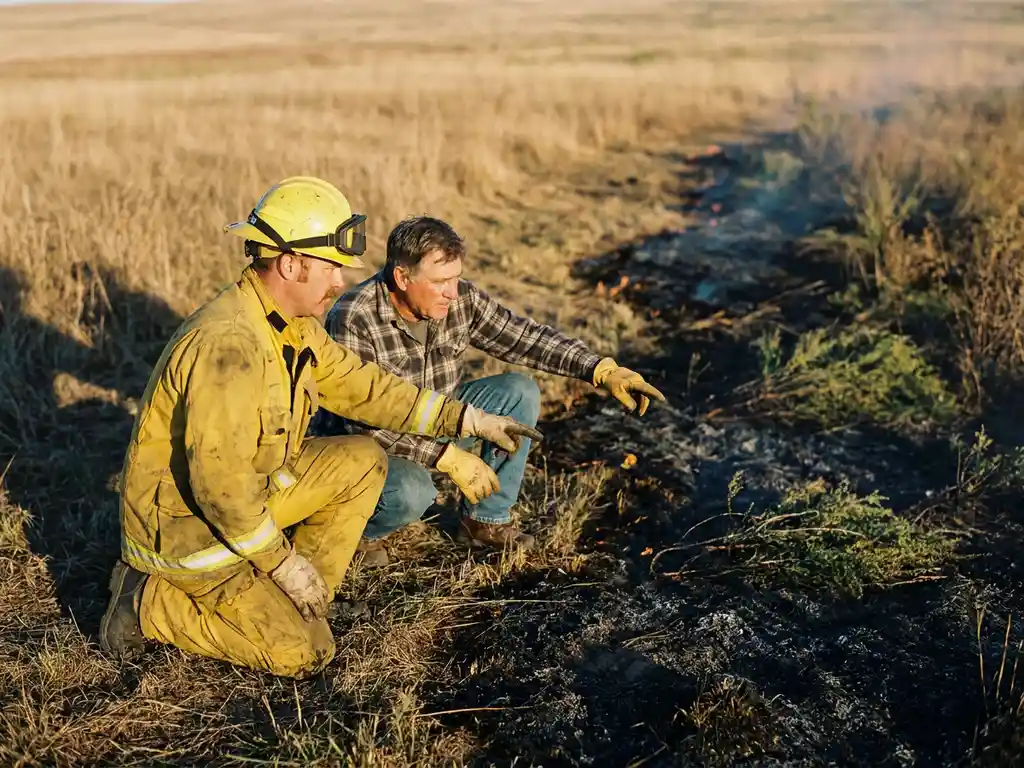
Community-based fire management is a structured approach to fire prevention, preparedness, and response that places local communities at the center of decision-making and action. Rather than relying solely on professional fire services, it empowers residents, landowners, and local organizations to take an active role in managing fire risk within their own environments. This article unpacks how these programs work, where they are applied, and what organizations can do to support them.
How does community-based fire management actually work?
Community-based fire management works by organizing local residents and stakeholders into coordinated groups that assess fire risk, implement prevention measures, and respond to fire incidents within their area. The approach combines local knowledge with structured training, shared resources, and clear protocols to reduce vulnerability before professional services are needed.
At its core, the model distributes responsibility. Rather than waiting for a fire to occur and then calling in external responders, community members actively manage the conditions that allow fires to start and spread. This includes activities like controlled burns, vegetation clearance, creating defensible space around structures, and maintaining early warning systems.
The process typically begins with a community-level risk assessment, identifying which areas are most vulnerable and what resources are available locally. From there, a fire management plan is developed, roles are assigned, and members receive training. Regular drills and reviews keep the plan current and the community prepared. The approach is most effective when it is supported by local authorities, fire agencies, and relevant organizations that provide technical guidance and resources.
Where is community-based fire management most commonly used?
Community-based fire management is most commonly used in rural, semi-rural, and wildland-urban interface areas where professional fire services have limited reach or long response times. It is widely practiced across sub-Saharan Africa, Southeast Asia, parts of Latin America, southern Europe, and rural regions of Australia and North America where wildfire risk is elevated.
In developing regions, community fire management programs are often coordinated by national forestry departments, conservation organizations, or international development agencies. These programs address both wildfire risk and the management of fire used in agriculture, such as land clearing and seasonal burning practices that can escalate if left unmanaged.
In higher-income countries, the model has gained traction in the context of increasing wildfire frequency. Programs such as community fireguard groups in Australia, FireSmart in Canada, and various neighborhood preparedness initiatives in the western United States reflect a growing recognition that community-level action is essential alongside professional fire services. The common thread across all these settings is geography: communities that are remote, dispersed, or located near fire-prone landscapes benefit most from localized fire management strategies.
What are the main components of a community fire management plan?
A community fire management plan typically includes a risk and hazard assessment, defined roles and responsibilities, prevention and mitigation actions, early warning and communication protocols, evacuation procedures, and a post-incident review process. Together, these components create a cycle of preparedness that a community can maintain and adapt over time.
The key components in more detail are:
- Risk assessment: Mapping fire-prone areas, identifying vulnerable structures, and understanding seasonal fire behavior in the local environment.
- Roles and responsibilities: Assigning specific tasks to community members, including fire wardens, communication leads, and equipment managers.
- Prevention measures: Clearing vegetation buffers, managing land use, and enforcing community fire safety practices during high-risk periods.
- Early warning systems: Establishing alert networks, whether through formal detection technology, phone trees, or local radio, so that residents receive timely warnings.
- Response protocols: Defining when community members act independently, when they support professional services, and when evacuation is the priority.
- Training and drills: Regular exercises that keep skills current and test the plan under realistic conditions.
- Review and improvement: Evaluating the plan after incidents or annually to incorporate lessons learned.
The strength of any community fire management plan lies in how well it reflects local conditions. A plan developed with genuine community input, using local knowledge about terrain, wind patterns, and resource availability, will consistently outperform a generic template imposed from outside.
How does community fire management differ from professional fire services?
Community fire management differs from professional fire services primarily in scope, focus, and timing. Professional fire services are trained to suppress active fires using specialized equipment and command structures. Community fire management focuses on prevention, preparedness, and early intervention before a fire becomes an emergency that requires professional suppression.
Professional fire services operate reactively, responding to incidents after they are reported. They bring technical expertise, heavy equipment, and coordinated command systems that community groups cannot replicate. However, their reach is limited by geography and response time, particularly in rural or remote areas.
Community fire management fills the gap that exists before professional responders arrive. It is proactive rather than reactive. Community members know their local landscape intimately, can identify risk conditions early, and can take immediate action, whether that means alerting neighbors, beginning an evacuation, or applying localized suppression to a small ignition before it spreads.
The two approaches are most effective when they work together. Many professional fire agencies actively encourage and support community programs, recognizing that a prepared community reduces the scale of incidents that require professional intervention. Community fire management is not a replacement for professional services but a complementary layer of protection that makes the overall fire safety system more resilient.
What are the biggest challenges in community-based fire management?
The biggest challenges in community-based fire management include sustaining volunteer engagement over time, securing consistent funding and resources, bridging gaps between traditional practices and formal fire management frameworks, and ensuring that plans remain current as conditions and community demographics change.
Volunteer fatigue is a persistent issue. Community fire management depends on the ongoing commitment of local residents who have other responsibilities. Maintaining motivation between fire seasons, when the risk feels less immediate, requires active leadership and visible support from local authorities and partner organizations.
Resource constraints are equally significant. Communities in high-risk areas are often in regions with limited budgets. Access to basic equipment, training materials, and communication tools cannot be assumed. Without sustained investment, even well-designed programs deteriorate.
There is also the challenge of integrating community-based approaches with formal fire management systems. Misaligned protocols, unclear legal responsibilities, and poor communication between community groups and professional agencies can create confusion during actual incidents. Effective programs invest time in building relationships and clarifying roles before a fire occurs, not during one.
Finally, climate change is shifting fire behavior in ways that make historical knowledge less reliable. Communities that have managed fire successfully for generations may find that established seasonal patterns no longer hold. Adapting community fire management strategies to account for longer fire seasons and more extreme fire weather is one of the defining challenges of wildfire community management in 2026.
How can organizations support community fire management programs?
Organizations can support community fire management programs by providing funding, technical expertise, equipment, training resources, and advocacy. Whether a business, government agency, or non-profit, meaningful support goes beyond financial contributions and includes active engagement with community groups to build long-term capacity.
Practical ways organizations can contribute include:
- Funding training and exercises: Sponsoring community fire drills, first responder training, and fire warden certification programs.
- Providing equipment: Donating or subsidizing early warning systems, communication tools, or basic suppression equipment for community use.
- Sharing expertise: Deploying staff with relevant knowledge, such as fire safety engineers, ecologists, or emergency planners, to support community risk assessments and plan development.
- Advocating for policy support: Using organizational influence to push for government funding and regulatory frameworks that recognize and support community fire management.
- Integrating community programs into business continuity planning: Organizations operating in fire-prone areas can align their own emergency plans with local community programs, creating mutual benefit.
Organizations that operate in or near fire-vulnerable regions have a direct interest in the effectiveness of local fire management. A community that is well-prepared reduces the risk of large-scale fire events that could disrupt operations, damage infrastructure, and affect employees and supply chains. Supporting community fire management programs is therefore both a social responsibility and a practical risk management strategy.
How ExxFire supports fire prevention at the object level
While community-based fire management addresses fire risk at the landscape and neighborhood scale, protecting the assets and equipment within your organization requires a complementary layer of object-level fire prevention. ExxFire specializes in exactly this: combined fire detection and suppression systems designed to protect mission-critical equipment from fire at its source.
- Early smoke detection: Aspirating smoke detection identifies fire risk at the earliest possible stage, before flames develop.
- Clean suppression with nitrogen: ExxFire’s patented Cool Gas Generator technology uses non-pressurized nitrogen gas to suppress fire without leaving chemical residues, protecting sensitive electronics and high-value components.
- Easy installation, zero maintenance: Systems are pre-engineered for self-installation inside or outside enclosures such as server racks, switchgear cabinets, and battery energy storage systems, with no ongoing maintenance required.
- PFAS-free and environmentally responsible: ExxFire provides a clean alternative to PFAS-containing suppression agents, supporting sustainability goals alongside fire safety compliance.
- Certified and tested: All systems are tested and certified by CNPP France and DMT, part of TÜV Nord, ensuring independently verified performance.
Whether your organization is building a broader fire management strategy or looking to protect a specific critical asset, ExxFire’s integrated systems deliver reliable, low-TCO protection. Contact the ExxFire team to find out which system is right for your environment.