
What is a clean agent fire suppression system?
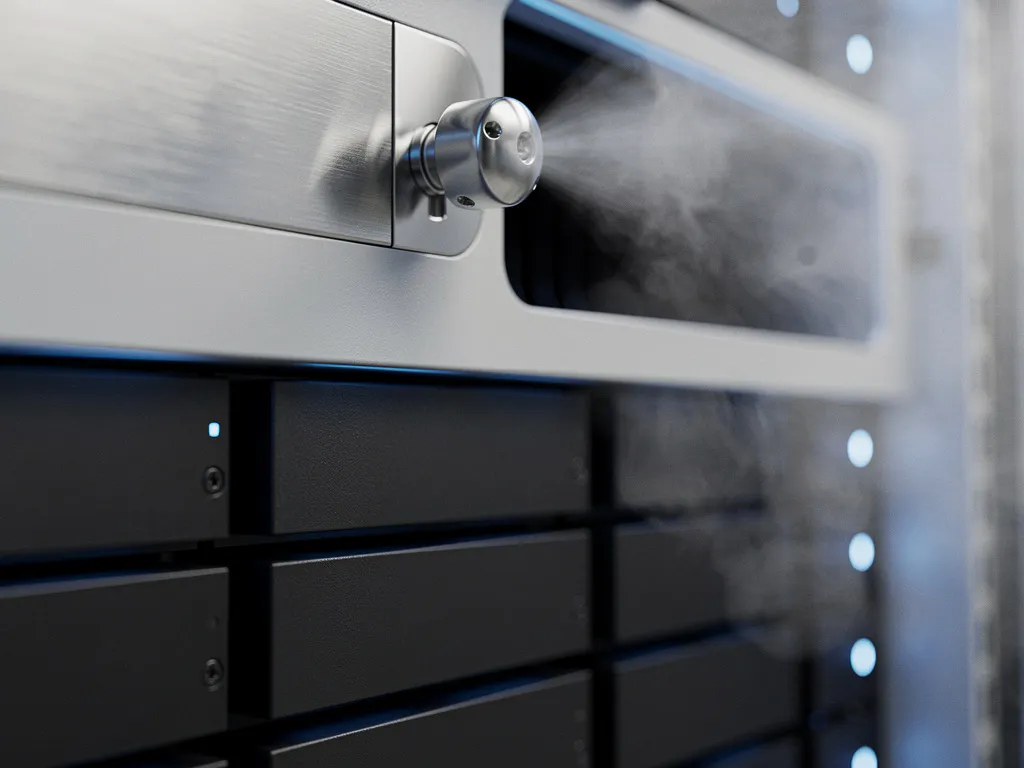
A clean agent fire suppression system is a fire extinguishing system that uses gaseous or chemical agents to suppress fires without leaving any residue, water damage, or harmful deposits on the equipment it protects. Unlike water-based systems, clean agents evaporate completely after discharge, making them the preferred choice for environments containing sensitive electronics, valuable equipment, or irreplaceable assets. The sections below explore how these systems work, what agents are used, and which environments benefit most from clean agent suppression.
How does a clean agent fire suppression system work?
A clean agent fire suppression system detects a fire in its early stages and automatically releases a suppression agent that either removes heat from the fire, reduces oxygen concentration, or interrupts the chemical chain reaction of combustion. The entire process typically takes seconds, suppressing the fire before it spreads and without damaging surrounding equipment.
Most clean agent systems combine detection with suppression in a single integrated unit. Detection components monitor the protected space continuously, often using aspirating smoke detection technology that draws air samples through a network of pipes to identify smoke particles at very low concentrations. When a threshold is reached, the system triggers the release of the suppression agent directly into the protected enclosure.
Because the agent is discharged at the source of the fire rather than flooding an entire room, the response is targeted and precise. This localized approach minimizes collateral effects, protects equipment that is not directly involved in the fire, and allows systems to be reset quickly after an event, supporting faster recovery and business continuity.
What types of clean agents are used in fire suppression?
Clean agents used in fire suppression fall into two main categories: inert gases and synthetic chemical agents. Inert gases such as nitrogen, argon, and IG-541 (a blend of nitrogen, argon, and carbon dioxide) work by reducing the oxygen concentration in a protected space below the level needed to sustain combustion. Synthetic agents such as HFCs and HFOs interrupt the chemical reactions that drive a fire.
Inert gas agents
Inert gases are naturally occurring components of the atmosphere and leave absolutely no chemical residue after discharge. Nitrogen, in particular, is one of the most widely used inert suppression agents. It is non-toxic, non-corrosive, and completely safe for sensitive electronics and metals. Because inert gases do not rely on chemical reactions to suppress fire, they pose no risk of secondary contamination to the equipment they protect.
Synthetic chemical agents
Synthetic agents such as HFC-227ea (FM-200) and newer HFO-based alternatives suppress fire by absorbing heat and disrupting combustion chemistry. While effective, some synthetic agents raise environmental concerns. Older HFC-based agents have high global warming potentials, and certain fluorinated compounds have come under increasing regulatory scrutiny due to their classification as PFAS (per- and polyfluoroalkyl substances). This has driven demand for PFAS-free fire suppression alternatives, particularly in sustainability-conscious industries.
What’s the difference between clean agent and traditional sprinkler systems?
The key difference between a clean agent suppression system and a traditional sprinkler system is the suppression medium and the resulting damage profile. Sprinklers discharge water, which can destroy electronics, cause corrosion, and require extensive cleanup and drying before equipment can be returned to service. Clean agent systems discharge gas, which evaporates completely and leaves no residue, making them far safer for mission-critical environments.
Beyond the medium itself, the two system types also differ in how they respond:
- Activation threshold: Sprinklers typically activate at a set heat level, meaning a fire must already be producing significant heat before suppression begins. Clean agent systems, especially those paired with aspirating smoke detection, can detect combustion products at extremely early stages, often before visible flames develop.
- Targeted vs. area-wide discharge: Sprinklers are designed to flood an area with water. Clean agent systems can be engineered to protect individual enclosures, cabinets, or racks, limiting the suppression zone to exactly where it is needed.
- Recovery time: After a sprinkler activation, cleanup, drying, and equipment replacement can take days or weeks. After a clean agent discharge, the affected area is typically ready for inspection and restart within hours.
- Equipment damage: Water causes corrosion, short circuits, and physical damage to electronics. Clean agents cause none of these effects, protecting the hardware itself as well as the data and operations it supports.
For environments where downtime is costly and equipment replacement is expensive, the operational advantages of clean agent suppression over water-based systems are substantial.
Are clean agent fire suppression systems safe for electronics and people?
Yes, clean agent fire suppression systems are safe for both electronics and people, provided the correct agent is selected and the system is properly designed. Inert gas agents such as nitrogen are non-corrosive, non-conductive, and leave no residue, meaning they pose no physical or chemical risk to sensitive components. At correctly calculated concentrations, inert gas suppression systems are also safe for occupied spaces.
For electronics specifically, the absence of residue is critical. Water, foam, and many dry powder agents leave deposits that can cause corrosion, short circuits, or contamination of precision components. Clean agents evaporate entirely, leaving hardware in the same condition it was in before the discharge. This is particularly important for server infrastructure, medical equipment, industrial control systems, and any environment where contamination could cause secondary failures.
For people, safety depends on agent type and concentration. Inert gas systems reduce oxygen levels, so systems designed for occupied areas must be carefully engineered to maintain oxygen at levels that suppress fire without posing a risk to anyone present. Synthetic agents at suppression concentrations are generally considered safe for brief exposure, but any suppression system in an occupied space should include appropriate pre-discharge alarms and evacuation procedures.
Which environments are best suited for clean agent suppression?
Clean agent suppression systems are best suited for environments where water or residue-producing agents would cause as much damage as the fire itself. These are typically spaces containing high-value electronics, critical infrastructure, or sensitive data that must be protected without interruption.
The most common environments that benefit from clean agent fire extinguishing include:
- Data centers and server rooms: Server racks and networking equipment are highly vulnerable to water damage. Clean agent systems protect hardware and data without triggering costly downtime.
- Electrical switchgear and high-voltage cabinets: Electrical enclosures are common ignition points. Targeted clean agent suppression can extinguish a fire at the source before it spreads to adjacent systems.
- Battery Energy Storage Systems (BESS): Lithium-ion battery fires present unique challenges. Early detection paired with inert gas suppression can interrupt thermal events before they escalate.
- Telecom and ICT infrastructure: Network equipment and communication hardware require protection that preserves functionality after a suppression event.
- Healthcare and pharmaceutical facilities: Medical devices, laboratory instruments, and pharmaceutical storage environments require clean suppression to avoid contamination.
- Industrial control rooms: Programmable logic controllers and SCADA systems are expensive to replace and critical to production continuity.
In all these settings, the ability to suppress a fire early, at the source, without damaging surrounding equipment is what makes clean agent systems the technically and commercially superior choice.
What are the environmental and regulatory considerations for clean agents?
Environmental and regulatory considerations for clean agents center on two main concerns: global warming potential (GWP) and PFAS classification. Older synthetic clean agents such as HFC-227ea have high GWP values, meaning their atmospheric release contributes meaningfully to climate change. Regulatory frameworks in the European Union and other jurisdictions have been progressively restricting the use of high-GWP fluorinated gases, pushing the market toward lower-impact alternatives.
The PFAS issue adds a further layer of complexity. Many fluorinated suppression agents fall under the broad category of PFAS (per- and polyfluoroalkyl substances), which are increasingly regulated due to their persistence in the environment and potential health effects. In 2026, regulatory pressure on PFAS-containing products continues to intensify across Europe and North America, making PFAS-free fire suppression a compliance priority for organizations in regulated industries.
Inert gas agents such as nitrogen sidestep both concerns entirely. Nitrogen has zero GWP, zero ozone depletion potential, and contains no fluorinated compounds. It is already present in the atmosphere at approximately 78% concentration, meaning its release during a suppression event has no measurable environmental impact. For organizations seeking to align fire safety with sustainability commitments and regulatory compliance, inert gas systems represent the most defensible long-term choice.
When evaluating clean agent systems, decision-makers should also consider certification and testing standards. Systems validated by recognized bodies such as TÜV Nord or CNPP provide documented evidence of performance, which supports both internal risk management and external compliance reporting.
How ExxFire protects mission-critical equipment with clean agent suppression
ExxFire’s integrated fire detection and suppression systems deliver all the advantages of clean agent suppression in a purpose-built, pre-engineered format designed for the environments where protection matters most. The systems combine aspirating smoke detection with non-pressurized nitrogen gas suppression, using ExxFire’s patented Cool Gas Generator technology to release inert gas directly inside the protected enclosure at the first sign of a fire.
Key features of ExxFire’s approach include:
- PFAS-free inert gas suppression: Nitrogen leaves zero chemical residue and has no environmental impact, making ExxFire systems fully compliant with tightening PFAS and fluorinated gas regulations.
- Early smoke detection: Aspirating detection technology identifies combustion particles before a fire develops, enabling suppression at the earliest possible stage.
- Non-pressurized storage: Unlike traditional gas cylinder systems, ExxFire’s nitrogen is stored in a solid, non-pressurized state, eliminating the risks and maintenance demands associated with pressurized vessels.
- Easy self-installation: Systems are pre-engineered for installation without specialist certification, reducing both installation cost and ongoing maintenance burden.
- Certified performance: All systems are tested and certified by CNPP in France and DMT (part of TÜV Nord) in Germany, providing verified assurance of suppression effectiveness.
- Scalable protection: Units protect enclosures up to 4.5 m³ and can be interconnected to cover larger volumes, making them suitable for a wide range of cabinet and rack configurations.
If your organization relies on switchgear, server infrastructure, battery storage systems, or any high-value enclosed equipment, ExxFire’s clean agent suppression systems provide targeted, certified, and environmentally responsible protection. Contact ExxFire today to discuss the right solution for your specific environment.
Related Articles
- What are the fire prevention requirements for rental properties in 2026?
- How do you store flammable materials safely at home?
- What are the basic principles of fire prevention?
- How do PFAS restrictions impact fire protection planning in 2026?
- What fire suppression options meet EU environmental standards in 2026?