

How do you measure the effectiveness of a fire management strategy?
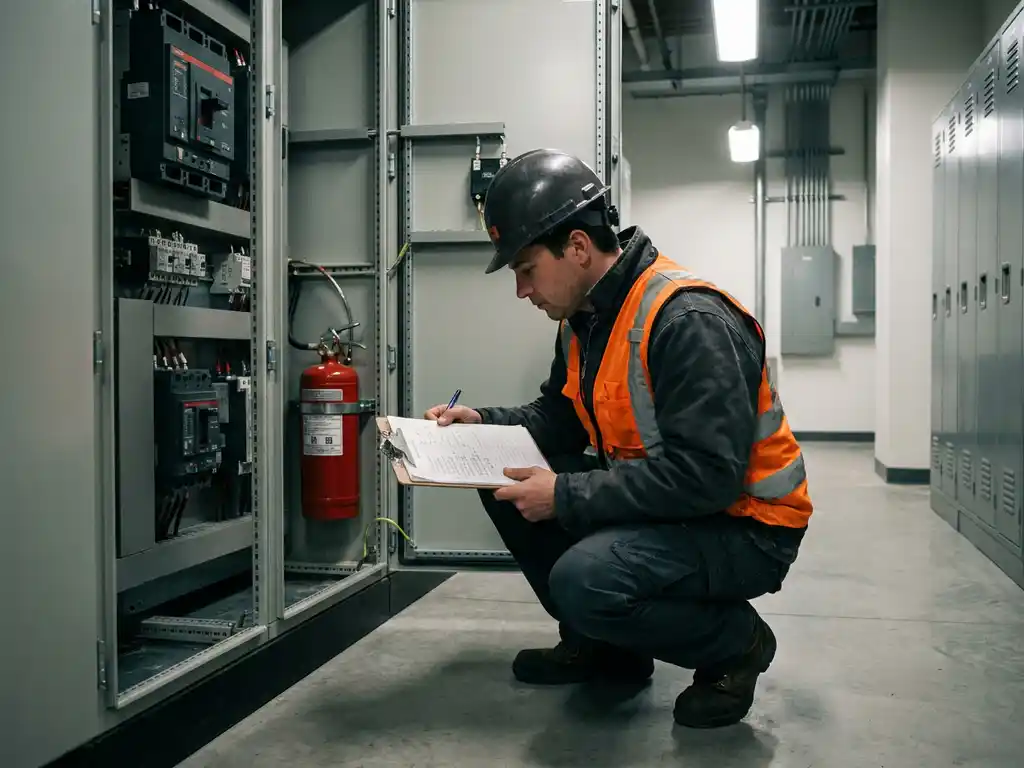
You measure the effectiveness of a fire management strategy by tracking how quickly fires are detected, how successfully suppression prevents damage, and how well the strategy supports business continuity after an incident. Effectiveness is not a single number but a combination of operational, financial, and safety metrics evaluated together. The questions below unpack each dimension in detail, from detection speed to total cost of ownership.
What metrics are used to evaluate fire management performance?
Fire management performance is evaluated using a combination of fire safety KPIs that span detection speed, suppression success rate, equipment damage levels, downtime duration, and compliance status. Together, these metrics give organizations a clear picture of whether their fire safety strategy is working as intended or leaving critical gaps.
The most commonly tracked fire safety metrics include:
- Time to detection: How quickly smoke or heat is identified after ignition begins
- Time to suppression: The interval between detection and active suppression deployment
- Asset damage rate: The proportion of protected assets damaged in fire incidents
- System availability: The percentage of time the detection and suppression system is operational and ready
- False alarm rate: The frequency of unwarranted alerts that cause unnecessary disruption
- Compliance status: Whether the strategy meets current regulatory and certification standards
- Downtime per incident: The operational hours lost following a fire event or suppression activation
No single metric tells the full story. An organization with fast detection but slow suppression still faces significant asset risk. One with low false alarm rates but outdated suppression chemistry may be creating environmental and compliance liabilities. Reviewing these metrics together, on a scheduled basis, is what separates a reactive fire safety posture from a genuinely effective one.
How does early detection speed affect overall fire strategy outcomes?
Early detection speed is one of the most influential variables in fire strategy outcomes. The faster a fire is identified at its earliest stage, typically the smoldering phase before open flame develops, the more time the suppression system has to act before heat, smoke, and damage spread beyond the point of origin.
In environments protecting sensitive electronics, server racks, or electrical cabinets, the difference between detecting a fire in seconds versus minutes can mean the difference between replacing a single component and replacing an entire system. Aspirating smoke detection, which actively draws air samples into a detection chamber rather than waiting for smoke to reach a passive sensor, is significantly faster than conventional point detectors. This approach identifies combustion particles at concentrations far below what standard detectors register.
From a fire risk assessment perspective, detection latency should be treated as a primary risk driver. A strategy that invests heavily in suppression capability but neglects early detection is essentially accepting that fires will be allowed to develop before intervention begins. The most effective fire management strategies treat detection and suppression as a single integrated function, not two separate systems.
What role does suppression method play in protecting sensitive equipment?
The suppression method used has a direct impact on whether sensitive equipment survives a fire event intact. Different suppression agents carry very different consequences for electronics, components, and the people working nearby. Choosing the wrong method can cause more damage to high-value assets than the fire itself.
Water-based and foam suppression systems are generally unsuitable for electrical cabinets, server rooms, or battery enclosures because the extinguishing agent itself destroys electronics on contact. Chemical gas systems may suppress fire effectively but can leave residues that corrode components or require costly decontamination. Systems containing PFAS compounds introduce additional environmental and regulatory risk that organizations are increasingly required to address.
Inert gas suppression using nitrogen is widely regarded as one of the cleanest options for mission-critical environments. Nitrogen reduces oxygen concentration to a level that cannot sustain combustion without creating a toxic atmosphere, and it leaves no chemical residue on components. For enclosures containing high-value electronics, this means suppression can occur without secondary damage to the very assets the system is designed to protect. Fire suppression effectiveness in sensitive environments is therefore not just about stopping the fire but about doing so without introducing a new damage pathway.
How do you assess fire strategy effectiveness for mission-critical environments?
Assessing fire strategy effectiveness in mission-critical environments requires evaluating three core dimensions: how well the strategy prevents fire from escalating, how precisely it protects the specific assets at risk, and how quickly normal operations can resume after an activation. Generic fire safety assessments designed for open floor plans rarely apply directly to enclosed, high-value equipment environments.
A structured fire risk assessment for mission-critical environments should examine:
- Whether detection is positioned at the source of the most likely ignition, not just at room level
- Whether the suppression method is appropriate for the specific equipment type and enclosure volume
- Whether the system is certified by a recognized independent testing body
- Whether suppression activation triggers appropriate alerts to existing fire panels or building management systems
- Whether the system can be restored to full operational readiness quickly after use
Object-level protection, where suppression is applied directly inside or immediately adjacent to the enclosure containing critical equipment, consistently outperforms room-level suppression in these environments. It reduces the volume of agent needed, limits collateral effects on surrounding equipment, and ensures the suppression response is proportionate to the actual risk location.
What is the total cost of ownership in a fire management strategy?
Total cost of ownership (TCO) in a fire management strategy includes not just the upfront purchase and installation cost but the full lifecycle cost of operating, maintaining, and eventually replacing or updating the system. For many organizations, ongoing maintenance and compliance costs exceed the initial investment over a five to ten year horizon.
TCO components worth calculating include:
- Initial hardware and installation cost: Equipment, mounting, integration with existing fire panels
- Commissioning and certification: Testing, documentation, and compliance verification
- Ongoing maintenance: Scheduled inspections, agent refills, sensor calibration, and service contracts
- Downtime costs: Operational losses if a fire event or false activation disrupts business
- Asset replacement risk: The financial exposure from unprotected or poorly protected high-value equipment
- Regulatory compliance costs: Adapting to evolving standards, particularly around PFAS restrictions
Systems that are easy to install without specialist contractors, require minimal maintenance after commissioning, and use suppression agents that are not subject to tightening environmental regulations tend to carry significantly lower TCO over time. When comparing fire suppression options, organizations should model the full lifecycle cost rather than evaluating purchase price alone.
When should a fire management strategy be reviewed or updated?
A fire management strategy should be reviewed whenever there is a significant change to the environment it protects, and at a minimum on an annual basis. Strategies that were appropriate for an environment three years ago may no longer reflect the actual risk profile, regulatory landscape, or available technology in 2026.
Specific triggers that should prompt an immediate review include:
- Addition of new high-value equipment, such as battery energy storage systems or expanded server infrastructure
- Changes to building layout, occupancy, or use that affect fire load or egress
- Regulatory updates, particularly around PFAS-containing suppression agents
- An actual fire event or near-miss, regardless of outcome
- A false alarm that reveals detection sensitivity or placement issues
- Acquisition of new facilities or consolidation of existing ones
- Expiry of system certifications or manufacturer support for existing equipment
Beyond reactive triggers, proactive reviews aligned with broader risk assessment cycles ensure that fire management effectiveness does not quietly degrade as environments evolve. Organizations operating in regulated industries should also track emerging standards and factor anticipated compliance requirements into their review schedule rather than waiting for mandates to take effect.
How ExxFire supports a measurable, effective fire management strategy
ExxFire’s integrated fire detection and suppression systems are designed to address the core metrics that define fire management effectiveness: fast detection, clean suppression, minimal downtime, and low total cost of ownership. Key features include:
- Aspirating smoke detection that identifies combustion at the earliest possible stage, directly inside the protected enclosure
- Non-pressurized nitrogen suppression that leaves no chemical residues, protecting sensitive electronics from secondary damage
- PFAS-free technology that eliminates environmental and regulatory risk associated with legacy suppression agents
- Easy self-installation with no special certification required, reducing upfront and ongoing maintenance costs
- Built-in relay outputs for seamless integration with existing fire panels, supporting real-time status reporting
- Independent certification by CNPP France and TÜV Nord, providing verifiable performance validation
Whether you are protecting server racks, switchgear cabinets, battery energy storage systems, or other mission-critical enclosures, ExxFire provides a clean, certified, and cost-effective approach to object-level fire protection. Contact ExxFire to discuss how its systems can be matched to your specific environment and fire safety requirements.