
What are the fire risks in restaurants and commercial kitchens?
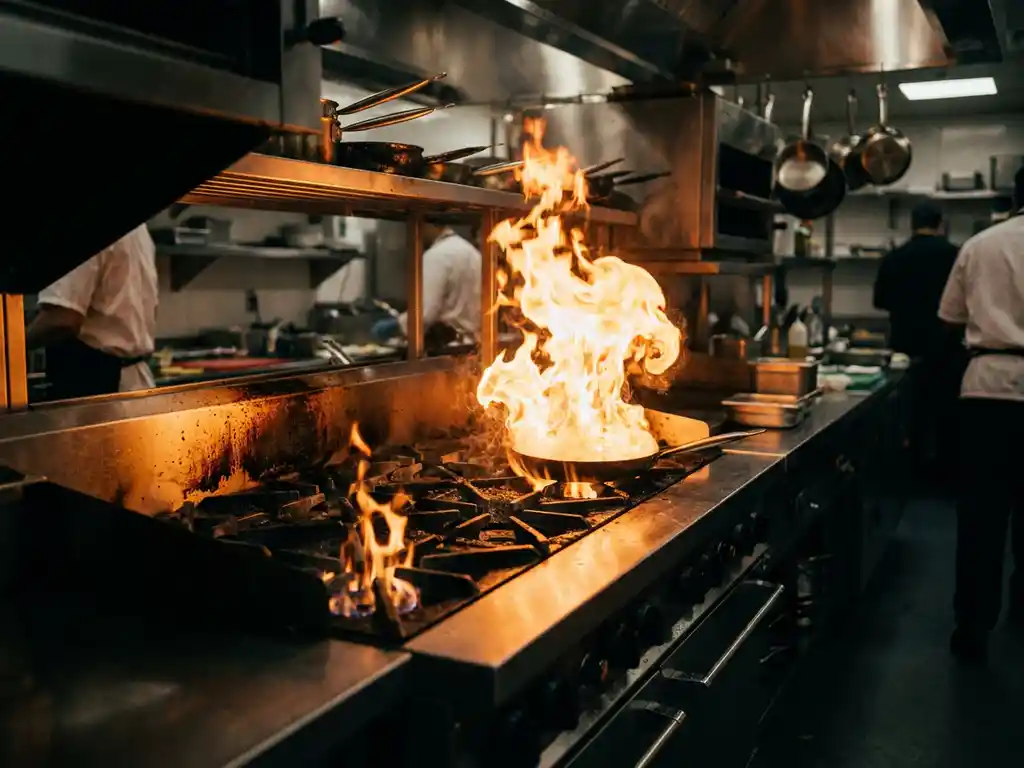
Restaurants and commercial kitchens face some of the highest fire risks of any workplace environment. The combination of open flames, high-heat cooking equipment, grease accumulation, and dense electrical infrastructure creates conditions where fires can ignite quickly and spread with little warning. Restaurant operators, facility managers, and health and safety officers need to understand these hazards clearly to protect staff, assets, and business continuity.
What causes most fires in commercial kitchens?
The most common causes of fires in commercial kitchens are cooking equipment and grease accumulation. Unattended cooking, overheated oils, and poorly maintained extraction systems account for the majority of kitchen fire incidents. These fires can escalate rapidly because kitchens operate at high temperatures continuously, often with multiple heat sources running simultaneously.
Beyond cooking equipment, electrical faults and human error are also significant contributors. High-powered appliances running for long shifts generate heat, and worn or overloaded wiring can ignite without obvious warning signs. In a busy kitchen environment, staff may leave equipment unattended or fail to notice early signs of overheating.
Kitchen fire risks in restaurants are compounded by the pace of work. During peak service hours, monitoring every heat source closely is difficult, and small hazards that would be caught in a quieter environment can go unnoticed until they become serious incidents.
How does grease buildup lead to kitchen fires?
Grease buildup leads to kitchen fires by creating a highly flammable layer on cooking surfaces, extraction hoods, ductwork, and filters. When this accumulated grease reaches its ignition temperature, it catches fire rapidly and can spread flames through the entire ventilation system, turning a contained cooktop fire into a building-wide emergency.
The danger is particularly acute in the extraction and ventilation system. Grease-laden vapors travel upward through hoods and ducts during cooking, depositing residue along the way. Without regular professional cleaning, this residue builds up to levels where a single flare-up from a pan can ignite the entire duct run.
Grease fires also behave differently from standard fires. They burn at extremely high temperatures and react violently to water, which can cause a grease fire to explode outward rather than be extinguished. This makes grease one of the most dangerous commercial kitchen fire hazards operators face, and it is the primary reason kitchen fire suppression systems are specifically engineered for fat fryers and hood protection.
What electrical fire hazards are common in restaurant kitchens?
Common electrical fire hazards in restaurant kitchens include overloaded circuits, damaged wiring, faulty appliances, and inadequate grounding. Commercial kitchens draw enormous amounts of electrical power to run ovens, refrigeration units, ventilation systems, and food preparation equipment simultaneously, placing heavy demand on the building’s electrical infrastructure.
Older restaurant premises are especially vulnerable. Wiring installed for lighter loads may not be rated for modern commercial kitchen equipment, and frequent modifications or additions to the electrical setup can create unsafe conditions over time. Moisture, heat, and grease vapors in kitchen environments also accelerate the degradation of wiring insulation and electrical components.
Electrical control panels and switchgear cabinets in or near kitchen environments deserve particular attention. These enclosures can accumulate heat and, in the event of an internal fault, ignite without triggering conventional room-based fire detection systems until the fire has already caused significant damage. Protecting this type of enclosed electrical infrastructure is a critical and often overlooked element of restaurant fire prevention.
Why are restaurant fires more dangerous than fires in other commercial buildings?
Restaurant fires are more dangerous than fires in most other commercial buildings because kitchens concentrate multiple ignition sources, flammable materials, and high-heat conditions in a single space. Cooking oils, gas lines, grease-coated surfaces, and powerful ventilation systems that can draw flames through a building create a uniquely hazardous combination that allows fires to spread faster and reach higher temperatures.
The layout of a typical restaurant adds to the risk. Kitchen areas are often adjacent to dining rooms, storage areas, and escape routes. A fire that starts in the kitchen can quickly cut off exits and endanger staff and customers before the alarm is raised. The noise and activity of a busy service period can also delay detection.
From a financial and operational standpoint, kitchen fires in restaurants are particularly costly. Equipment replacement, structural repairs, regulatory inspections before reopening, and lost revenue during closure all contribute to a high total cost of a single fire incident. For many independent operators, a serious kitchen fire represents an existential business risk rather than a recoverable setback.
What fire suppression methods are used in commercial kitchens?
Commercial kitchens typically use wet chemical suppression systems designed specifically for cooking equipment, particularly fat fryers and cooking hoods. These systems discharge a potassium-based agent that reacts with hot cooking oil to form a soapy layer, smothering the fire and preventing re-ignition. They are the industry standard for direct cooking area protection.
Beyond cooking-area suppression, restaurants also need to consider protection for the electrical and mechanical infrastructure that supports kitchen operations. Electrical switchgear cabinets, control panels, and ICT enclosures are often located in or near kitchen environments and require a different approach to fire suppression than open cooking areas.
For enclosed electrical equipment, object-level suppression systems that detect smoke early and suppress fire at the source are the most effective option. These systems act before a fire in an electrical cabinet can spread to the surrounding environment, protecting high-value equipment and significantly reducing downtime.
How can restaurant operators reduce fire risk in their kitchens?
Restaurant operators can reduce fire risk in their kitchens by implementing a structured approach to prevention, detection, and suppression across all areas of the kitchen environment. No single measure eliminates risk entirely, but a layered strategy addressing the most common hazards significantly reduces both the likelihood and severity of a fire.
- Schedule regular grease cleaning: Have extraction hoods, filters, and ductwork professionally cleaned at intervals appropriate to the volume of cooking. High-volume kitchens may require monthly cleaning of filters and quarterly duct cleaning.
- Inspect and maintain cooking equipment: Regularly check burners, fryers, and ovens for signs of damage, malfunction, or grease accumulation on surfaces that are not part of the extraction system.
- Audit electrical infrastructure: Have a qualified electrician inspect wiring, switchgear, and control panels, particularly in older premises or after any modifications to kitchen equipment.
- Train staff on fire response: Ensure all kitchen staff know how to respond to a cooking fire, including never using water on a grease fire and how to operate manual suppression systems.
- Install appropriate suppression systems: Fit wet chemical systems over cooking equipment and consider object-level suppression for electrical enclosures and control panels.
- Test fire detection systems regularly: Ensure smoke detectors and alarm systems are tested and maintained according to manufacturer and regulatory requirements.
Kitchen fire safety in restaurants also benefits from a culture of awareness. Staff who understand the specific risks of their environment are more likely to notice early warning signs and take preventive action before a small hazard becomes a serious incident.
How ExxFire helps protect restaurant and commercial kitchen infrastructure
While cooking area suppression handles the most visible fire risks in a commercial kitchen, the electrical infrastructure that powers a restaurant is equally vulnerable and often less protected. ExxFire’s integrated fire detection and suppression systems provide targeted object-level protection for the enclosed electrical equipment that restaurants depend on.
- Early smoke detection: Aspirating smoke detection identifies fire at the earliest possible stage, inside electrical cabinets and control panels, before flames develop.
- Clean nitrogen suppression: The patented Cool Gas Generator releases non-pressurized nitrogen gas to suppress fire without leaving chemical residues, protecting sensitive electronics and avoiding secondary damage.
- PFAS-free technology: ExxFire systems contain no PFAS compounds, making them a safe and environmentally responsible choice aligned with current and emerging regulatory requirements.
- Easy installation and low maintenance: Systems are designed for straightforward self-installation without special certification requirements, and once commissioned, require no ongoing maintenance checks.
- Seamless integration: Built-in relays allow the system to report status to an existing fire panel, fitting into the restaurant’s wider fire safety infrastructure without disruption.
For restaurant operators looking to close the gap in their fire protection strategy, protecting electrical enclosures and control infrastructure is a practical next step. Explore ExxFire’s solutions to find out how object-level fire suppression can safeguard your kitchen’s critical equipment and support uninterrupted operations.
Related Articles
- What tools are used in fire management today?
- What training is required for fire management professionals?
- How does fire safety compliance support business continuity planning?
- How do inert gas systems perform compared to FM-200 in fire suppression?
- What happens to fire suppression agents after discharge?