

What are the environmental risks of halon fire suppression?
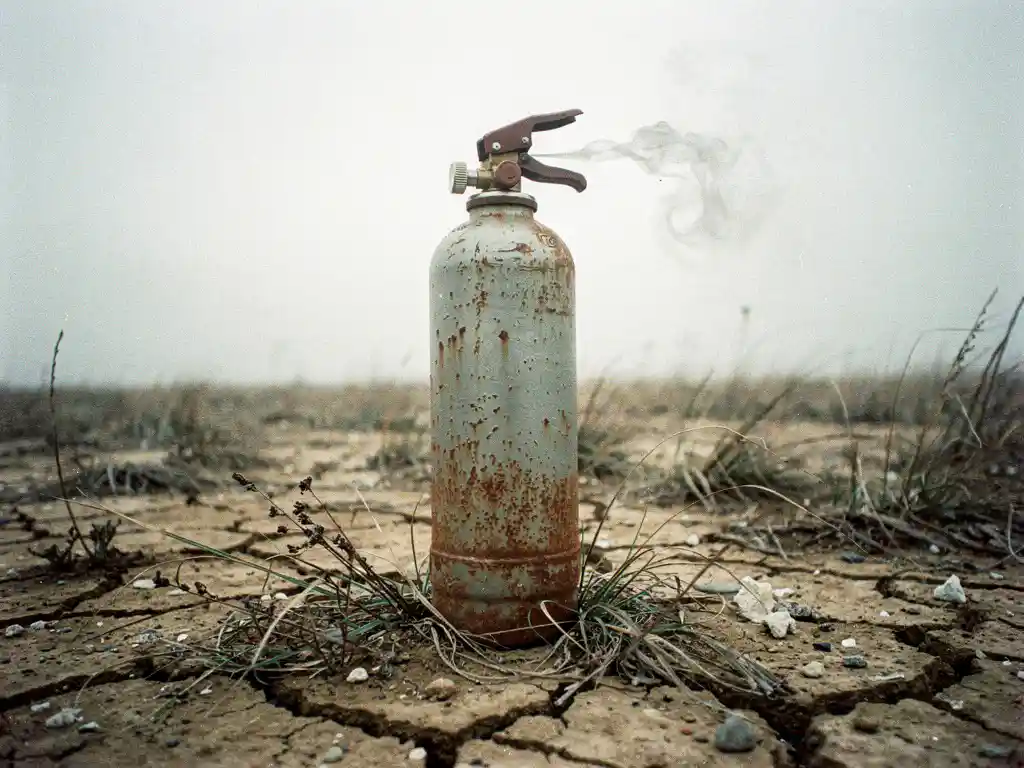
Halon fire suppression systems pose serious environmental risks, primarily through ozone layer destruction and their contribution to climate change. Halon gases belong to a class of halogenated compounds with an exceptionally high ozone depletion potential and a global warming potential many times greater than carbon dioxide. This article unpacks the key environmental concerns, the current legal status of halon systems, and what safer alternatives exist for organizations still relying on this technology.
Why was halon banned in most countries?
Halon was banned in most countries because of its severe and well-documented damage to the Earth’s ozone layer. The Montreal Protocol, an international environmental treaty signed in 1987, identified halon as one of the most destructive ozone-depleting substances and required signatory nations to phase out its production and import. Most developed countries completed their halon phase-out by 1994.
The ban targeted production and new supply rather than existing stockpiles, which is why halon fire suppression systems already in service were permitted to continue operating in many jurisdictions. However, the underlying chemistry made halon impossible to justify environmentally. A single bromine atom released from halon can destroy tens of thousands of ozone molecules before it is deactivated, making halon far more damaging per unit than chlorofluorocarbons (CFCs).
The phase-out was one of the most successful environmental policy interventions in history, effectively halting the expansion of halon use globally. Yet because existing systems were grandfathered in, halon fire suppression equipment remains in operation across many industries, from aviation to data centers, decades after the ban took effect.
How does halon damage the ozone layer?
Halon damages the ozone layer by releasing bromine atoms into the stratosphere, where they catalytically destroy ozone molecules. When halon is discharged during a fire suppression event or through leakage, it rises into the upper atmosphere. Ultraviolet radiation breaks the molecular bonds, freeing bromine, which then reacts with and depletes ozone at a rate far exceeding that of other ozone-depleting substances.
The ozone depletion potential (ODP) of halon is a key measure of this damage. Halon 1301, the most widely used variant in total flooding fire suppression systems, carries an ODP of 10 relative to the benchmark of CFC-11. Halon 1211, used in portable extinguishers, has an ODP of 3. By comparison, many common refrigerants and propellants have an ODP of less than 0.1.
The stratospheric ozone layer absorbs the majority of the sun’s harmful ultraviolet-B radiation. When this layer thins, increased UV-B exposure reaches the Earth’s surface, raising risks of skin cancer, cataracts, and immune suppression in humans, while also disrupting marine ecosystems and agricultural productivity. The halon ozone depletion problem is therefore not just an atmospheric chemistry issue but a direct public health and ecological concern.
What are halon’s effects on climate change?
Halon also contributes to climate change through its global warming potential. Halon 1301 has a global warming potential (GWP) estimated to be over 6,000 times that of carbon dioxide over a 100-year period. This means that even small releases of halon during testing, maintenance, or accidental discharge represent a significant greenhouse gas emission event.
Unlike carbon dioxide, which the atmosphere processes over centuries, halons persist for decades. Halon 1301 has an atmospheric lifetime of approximately 65 years, meaning a discharge today will continue trapping heat and depleting ozone well into the latter half of this century. The combination of long atmospheric persistence and high warming potential makes halon’s environmental impact disproportionate to the relatively small volumes typically used in fire suppression.
For organizations with sustainability targets, net-zero commitments, or environmental, social, and governance (ESG) reporting obligations, continued reliance on halon systems creates a measurable liability. Even where no active discharge occurs, the risk of leakage and the eventual decommissioning of aging systems mean the environmental exposure is ongoing.
Are halon fire suppression systems still legal to use?
In most countries, using existing halon fire suppression systems is still legal, but purchasing new halon or installing new systems is not. The Montreal Protocol banned halon production and trade, not the continued use of pre-existing equipment or stockpiles. Organizations in sectors such as aviation, military, and critical infrastructure were granted exemptions that allowed them to maintain and recharge halon systems using recycled gas from controlled stockpiles.
However, the legal landscape is tightening. Recycled halon stockpiles are finite and diminishing. Regulatory bodies in the European Union and other jurisdictions have progressively restricted exemptions and pushed for an accelerated transition to alternatives. In the EU, the F-Gas Regulation and related environmental legislation have created additional compliance pressure on organizations still operating halon-based systems.
The practical reality is that even where halon use remains technically legal, sourcing replacement gas is becoming increasingly difficult and expensive. Organizations that have not yet begun planning their transition face growing operational, financial, and reputational risks as halon availability declines and regulatory scrutiny increases.
What are the safest alternatives to halon fire suppression?
The safest alternatives to halon fire suppression are inert gas systems, clean agent systems, and integrated detection-suppression solutions that use environmentally neutral substances. These alternatives suppress fire effectively without ozone depletion, without leaving chemical residues, and without the climate impact associated with halon. The best choice depends on the type of environment being protected and the sensitivity of the equipment involved.
- Inert gas systems: Nitrogen, argon, and argonite (a mixture of both) suppress fire by reducing oxygen concentration to a level that cannot sustain combustion. These gases have zero ODP and zero GWP, making them the most environmentally benign option available.
- Clean agent alternatives (HFCs and FKs): Hydrofluorocarbons and fluoroketones such as FK-5-1-12 extinguish fire through heat absorption. They are PFAS-free and leave no residue, though some carry a non-trivial GWP and are subject to evolving regulation.
- CO2 systems: Carbon dioxide is effective for certain enclosed environments but poses serious risks to human safety and is unsuitable for occupied spaces.
- Integrated early detection and suppression: Systems that combine aspirating smoke detection with targeted suppression allow intervention at the earliest stage of fire development, reducing the volume of suppressant needed and minimizing damage to sensitive equipment.
For protecting high-value enclosed equipment such as electrical cabinets, server racks, and battery energy storage systems, nitrogen-based solutions are increasingly recognized as the leading choice. They are non-toxic, chemically inert, and produce no secondary contamination that could damage electronics or require costly post-incident cleanup.
How should organizations transition away from halon systems?
Organizations should transition away from halon systems by conducting a structured risk and asset review, selecting an appropriate alternative technology, and planning the replacement in stages aligned with maintenance cycles or regulatory deadlines. The transition does not need to happen overnight, but it should follow a deliberate roadmap rather than waiting until a system fails or halon becomes unavailable.
A practical transition process typically involves the following steps:
- Audit existing halon systems: Document all locations, volumes, discharge histories, and the criticality of the assets being protected.
- Assess the protected environment: Determine whether the space is occupied, the sensitivity of the equipment, the enclosure type, and the fire risk profile.
- Evaluate alternative technologies: Match the suppression method to the environment. Inert gas solutions are typically preferred for sensitive electronics and enclosed cabinets.
- Check regulatory requirements: Confirm current and upcoming compliance obligations in your jurisdiction, including any exemption deadlines or reporting requirements.
- Plan decommissioning and recovery: Halon must be recovered by certified professionals and transferred to authorized stockpile holders. It cannot be vented to the atmosphere.
- Install and commission the replacement system: Ensure the new system is tested, certified, and integrated with existing fire detection infrastructure.
Organizations that act proactively benefit from a wider selection of compliant alternatives, lower transition costs, and the ability to align the upgrade with planned maintenance or facility changes rather than reacting under pressure.
How ExxFire helps organizations replace halon fire suppression
ExxFire provides a direct, certified alternative for organizations looking to move away from halon fire suppression in enclosed, high-value environments. The ExxFire integrated fire detection and suppression system combines aspirating smoke detection with nitrogen-based suppression using the patented Cool Gas Generator technology. Key advantages of the ExxFire approach include:
- Zero environmental impact: Nitrogen has zero ozone depletion potential and zero global warming potential, making it the most environmentally responsible suppression medium available.
- No chemical residues: Nitrogen leaves no contamination on sensitive electronics, eliminating the secondary damage and cleanup costs associated with halon discharges.
- PFAS-free: ExxFire systems contain no per- and polyfluoroalkyl substances, meeting the strictest current and emerging environmental regulations.
- Non-pressurized storage: Gas is stored in a solid, non-pressurized state, removing the safety and maintenance complexity associated with pressurized cylinders.
- Easy installation: Systems are pre-engineered for self-installation in closed enclosures up to 4.5 m³, without requiring specialist certification, reducing both installation time and total cost of ownership.
- Certified performance: Systems are independently tested and certified by CNPP in France and validated by DMT, part of TÜV Nord, providing documented compliance confidence.
Whether you are replacing aging halon equipment in switchgear cabinets, ICT enclosures, or battery energy storage systems, ExxFire offers a proven, sustainable solution that protects both your assets and your environmental commitments. Contact ExxFire to discuss your specific environment and find out how a nitrogen-based suppression system can replace your halon installation with zero disruption and full regulatory compliance.