

What is the difference between fire management and fire suppression?
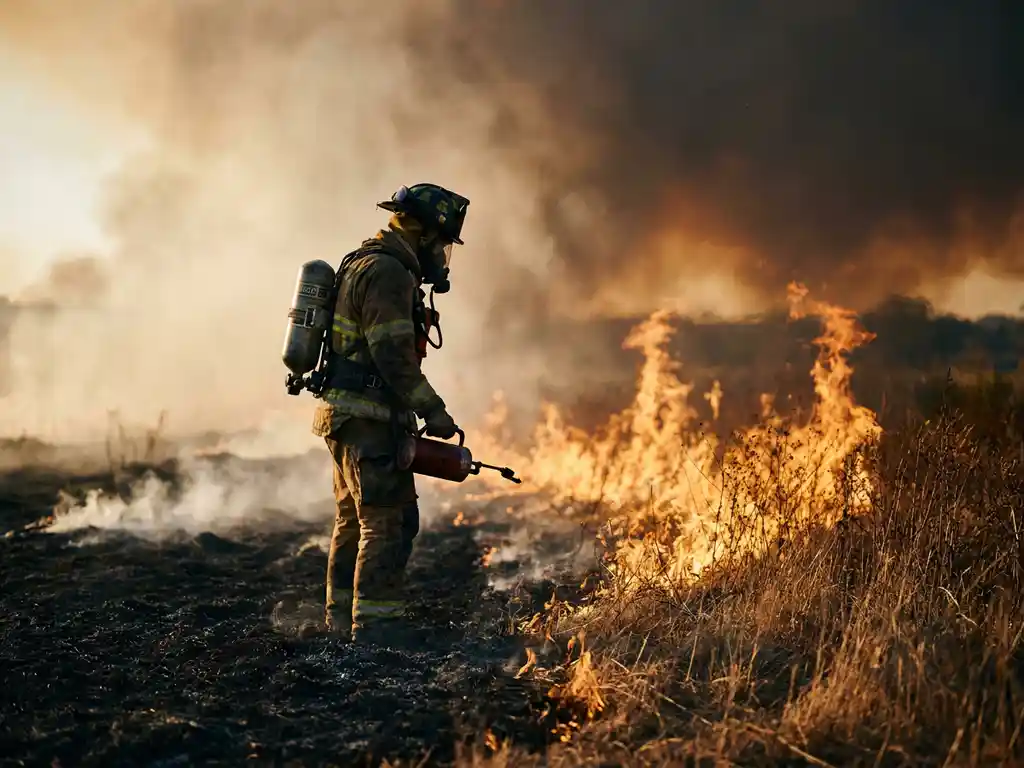
Fire management and fire suppression are related but distinct concepts in fire safety. Fire management is the broader discipline that encompasses all strategies, plans, and measures an organization uses to prevent, detect, respond to, and recover from fire. Fire suppression is one specific component within that framework — the active process of extinguishing or controlling a fire once it has started. Understanding the difference matters because effective fire safety requires both.
For organizations protecting mission-critical equipment, the distinction is especially important. A fire management plan without active suppression leaves gaps. Active suppression without a broader management framework lacks coordination and context. The sections below unpack each concept and explain how they work together.
What does fire management actually involve?
Fire management is the complete, organization-wide approach to reducing fire risk across all stages. It covers fire prevention, risk assessment, detection, response planning, evacuation procedures, staff training, regulatory compliance, and post-incident recovery. In short, fire management is the strategic layer that governs how an organization thinks about and responds to fire as a whole.
A structured fire management plan typically addresses several interconnected areas:
- Fire prevention: Identifying and eliminating ignition sources, managing combustible materials, and enforcing safe operating procedures
- Risk assessment: Evaluating which assets, spaces, and processes are most vulnerable to fire damage
- Detection infrastructure: Installing smoke detectors, heat sensors, and alarm systems to identify fire early
- Emergency response planning: Defining roles, evacuation routes, and communication protocols for when a fire occurs
- Training and compliance: Ensuring staff understand fire safety procedures and that systems meet regulatory requirements
- Recovery planning: Preparing for business continuity and asset restoration after a fire event
Fire management is fundamentally proactive. Its goal is to minimize the likelihood of a fire occurring and to limit damage if one does. Fire suppression is one of the tools that fire management deploys — but it is not the whole picture.
What is fire suppression and how does it work?
Fire suppression is the active, mechanical process of extinguishing or controlling a fire using a suppression agent. When a fire is detected, a suppression system releases a substance — such as water, foam, carbon dioxide, or inert gas — that removes one or more elements of the fire triangle: heat, oxygen, or fuel. The goal is to stop combustion before it spreads and causes serious damage.
Different suppression agents work through different mechanisms:
- Water-based sprinkler systems cool the fire and reduce heat, making them effective for large spaces but potentially damaging to electronics
- CO2 and inert gas systems reduce oxygen concentration in an enclosed space, starving the fire of the element it needs to sustain combustion
- Foam systems smother fuel surfaces, primarily used for flammable liquid fires
- Nitrogen-based systems displace oxygen within a defined enclosure, suppressing fire without leaving chemical residues or damaging sensitive equipment
For environments containing high-value electronics, the choice of suppression agent is critical. Water or foam systems that are effective in open spaces can cause as much damage as the fire itself when deployed near server racks, switchgear, or battery energy storage systems. Clean agent systems, particularly those using inert gases like nitrogen, are specifically designed to suppress fire without secondary damage to equipment.
Where does fire suppression fit within fire management?
Fire suppression sits within the response phase of fire management. It is the active intervention that occurs after detection has identified a fire and before the situation escalates into a major incident. Within a fire management framework, suppression is the critical bridge between early detection and damage limitation.
A well-designed fire management plan positions suppression as one layer within a defense-in-depth approach. Prevention reduces the probability of ignition. Detection identifies a fire in its earliest stage. Suppression contains or extinguishes the fire before it spreads. Evacuation and response procedures protect people. Recovery planning restores operations afterward.
Without suppression, a fire management plan relies entirely on detection and human response, which introduces delay and uncertainty. Without the broader fire management framework, a suppression system operates in isolation, with no coordinated plan for what happens before or after it activates. The two work best when integrated.
What types of fire suppression systems are used for critical equipment?
For mission-critical equipment such as server racks, electrical cabinets, switchgear, and battery energy storage systems, the most appropriate suppression systems are those that extinguish fire at the object level without damaging the equipment they protect. These are called object protection systems, and they differ from room-level or building-level suppression in both scale and precision.
Room-level vs. object-level suppression
Room-level suppression systems flood an entire space with a suppression agent. They are effective for containing fires across a larger area but may be disproportionate for protecting a single cabinet or rack. Object-level suppression targets a specific enclosure, releasing the suppression agent directly at the source of the fire with minimal effect on the surrounding environment.
Clean agent systems for sensitive electronics
For electronics-rich environments, clean agent systems are the standard choice. These systems use gaseous agents — such as nitrogen or other inert gases — that suppress fire by reducing oxygen levels within a closed enclosure. Because they leave no residue and cause no water or chemical damage, they protect both the equipment and the data or processes it supports. Nitrogen-based systems are particularly valued for their environmental profile, as nitrogen is a naturally occurring, non-toxic inert gas with no global warming potential and no PFAS content.
Systems designed for closed enclosures typically incorporate aspirating smoke detection, which samples air continuously and identifies combustion particles far earlier than conventional point detectors. This early detection capability allows suppression to activate at the very first sign of fire, before heat or flames develop.
How do fire detection and suppression work together?
Fire detection and suppression work together as a combined, automated system where detection triggers suppression at the earliest possible stage. Detection identifies the presence of smoke or combustion particles. Suppression responds by releasing an extinguishing agent. When integrated into a single system, the time between detection and suppression is measured in seconds, which is critical for limiting damage to sensitive equipment.
Aspirating smoke detection is particularly effective in this context. Unlike conventional smoke detectors that wait for smoke to reach a sensor, aspirating systems actively draw air samples from inside an enclosure and analyze them for the earliest traces of combustion. This means a fire can be identified at the pre-ignition smoldering stage, before visible smoke or flame develops.
When detection and suppression are integrated into the same unit, the system is self-contained and does not depend on external alarms or manual intervention to activate. Many combined systems also include relay outputs that report status to a central fire panel, allowing facility managers to monitor system condition and receive alerts through existing fire safety infrastructure. This integration makes combined fire detection and suppression systems a highly reliable choice for protecting enclosed, high-value assets.
When should an organization upgrade from fire management planning to active suppression?
An organization should add active suppression when it has identified high-value or mission-critical assets that cannot be adequately protected by detection and manual response alone. If the cost of losing or damaging a specific piece of equipment — through fire, water damage, or chemical residue from a conventional suppression system — exceeds the cost of installing a targeted suppression solution, active suppression is justified.
Several conditions signal that fire management planning alone is insufficient:
- Equipment is housed in enclosed spaces such as server racks, electrical cabinets, or battery enclosures where fire can develop rapidly
- Downtime caused by equipment damage would result in significant operational or financial impact
- Existing room-level suppression systems use agents that could damage sensitive electronics if activated
- Regulatory or insurance requirements mandate active suppression for specific asset categories
- The organization is replacing legacy systems that contain PFAS-based agents due to environmental compliance obligations
- Remote or unmanned facilities make manual fire response slow or impractical
In 2026, the regulatory pressure around PFAS-containing suppression agents is accelerating this decision for many organizations. Clean agent alternatives, particularly nitrogen-based object protection systems, allow organizations to meet both fire safety and environmental compliance requirements simultaneously.
How ExxFire helps with fire detection and suppression
ExxFire provides combined fire detection and suppression systems specifically designed to protect mission-critical equipment at the object level. For organizations that have identified a gap between their fire management plan and the active protection of high-value assets, ExxFire’s systems offer a practical, certified, and environmentally responsible solution.
- Aspirating smoke detection identifies fire at the earliest pre-ignition stage, before heat or flames develop inside an enclosure
- Non-pressurized nitrogen suppression extinguishes fire without leaving chemical residues, protecting sensitive electronics and components
- PFAS-free technology meets current and emerging environmental compliance requirements as a clean alternative to legacy gas systems
- Easy installation and zero maintenance after commissioning, with no special certification required for self-installation
- Fire panel integration via built-in relays, allowing seamless connection to existing fire safety infrastructure
- Certified performance tested and validated by CNPP France and DMT/TÜV Nord Germany
Whether you are protecting server racks, switchgear cabinets, battery energy storage systems, or other high-value enclosures, ExxFire’s object protection systems close the gap between fire management planning and active suppression. Contact ExxFire to discuss the right solution for your environment.
Related Articles
- How does fire management protect ecosystems?
- How does off-gas detection reduce the risk of thermal runaway in battery cabinets?
- How do children accidentally cause fires and how can parents prevent them?
- Should you use a fire blanket or an extinguisher to put out a kitchen fire?
- How does clutter increase the risk of a house fire?