

What is the difference between prescribed fire and arson?
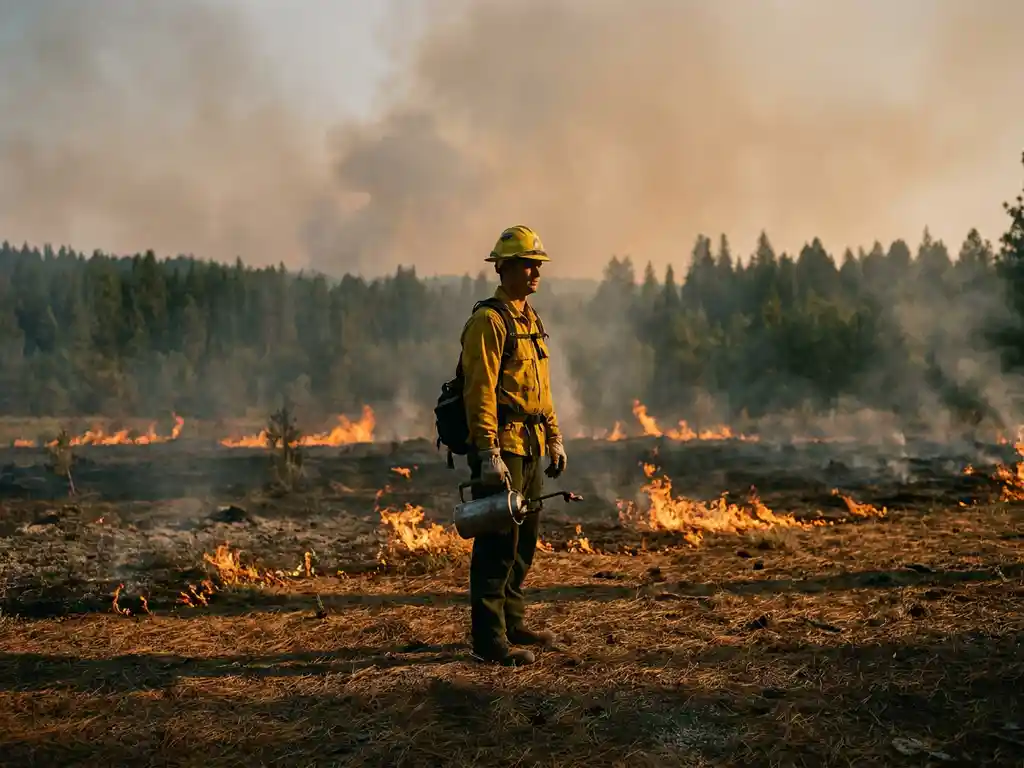
Prescribed fire and arson are both intentional acts of setting fire, but they are fundamentally different in purpose, legality, and outcome. Prescribed fire is a planned, legally authorized land management tool used to achieve specific ecological or safety goals, while arson is the deliberate and unlawful setting of fire with criminal intent. Understanding this distinction matters for landowners, emergency responders, insurers, and anyone involved in fire management or fire safety.
The sections below address the most common questions surrounding these two types of intentional fire, from legal authorization and environmental impact to how investigators distinguish one from the other.
How is prescribed fire legally authorized and controlled?
Prescribed fire is legally authorized through a formal permitting process administered by government agencies, land management authorities, or forestry departments. Before any controlled burn takes place, practitioners must obtain written approval, submit a detailed burn plan, and confirm that weather conditions, fuel moisture levels, and staffing meet predefined safety thresholds. Without this documentation, a fire set in the field has no legal standing as a prescribed burn.
The burn plan itself is a critical legal document. It specifies the objectives of the fire, the geographic boundaries of the burn area, acceptable wind speed and direction, relative humidity ranges, and the personnel and equipment required to maintain control. Regulatory bodies in most jurisdictions, including state forestry agencies in the United States and equivalent bodies across Europe and Australia, require this plan to be on file before ignition begins.
Control mechanisms during the burn include pre-established firebreaks, water-carrying equipment on standby, and trained burn crews who monitor the fire’s behavior throughout the operation. Once the fire achieves its objectives, the crew actively suppresses any remaining flames and monitors the site for hotspots. This level of oversight is what separates a prescribed burn from an uncontrolled wildfire and from criminal fire-setting.
What makes arson a criminal act under the law?
Arson is a criminal act because it involves the intentional setting of fire without lawful authority, typically with the intent to cause damage, destroy property, commit fraud, or harm individuals. Unlike prescribed fire, arson lacks any regulatory approval, safety planning, or legitimate purpose recognized by law. Most legal systems classify arson as a serious felony, with penalties that increase when the fire endangers human life or causes significant property destruction.
The legal definition of arson varies by jurisdiction, but the core elements are consistent: intent, an act of setting fire, and an unlawful target. The intent element distinguishes arson from accidental fires. Prosecutors must demonstrate that the accused deliberately caused the fire, not that it resulted from negligence or accident. Evidence of accelerant use, multiple points of origin, or a financial motive can all support a finding of criminal intent.
Arson carries severe consequences beyond criminal penalties. Insurance fraud through arson is treated as a separate, compounding offense. When arson results in injury or death, charges often escalate to aggravated arson or manslaughter. The damage caused by arson extends far beyond the immediate fire, including environmental harm, displacement of communities, and long-term costs to emergency services and insurers.
What are the environmental effects of prescribed fire versus arson?
Prescribed fire, when properly executed, produces net positive environmental outcomes by reducing accumulated fuel loads, restoring native plant communities, improving habitat for wildlife, and lowering the risk of catastrophic wildfire. Arson, by contrast, causes uncontrolled environmental destruction, burning areas indiscriminately, releasing pollutants without ecological benefit, and often igniting fires during conditions that maximize damage rather than support regeneration.
Ecologically, many landscapes evolved with fire as a natural process. Prescribed burns mimic this natural cycle in a managed way. They clear dense undergrowth, recycle nutrients into the soil, and create the open habitat conditions that certain species depend on. Land managers use prescribed fire as a tool for biodiversity, not just fuel reduction.
Arson disrupts these same ecosystems without any of the planning that makes fire ecologically productive. Fires set criminally often occur during dry, high-wind conditions that maximize spread, making them far more destructive than managed burns. They consume wildlife corridors, damage water catchments, and release carbon and particulate matter into the atmosphere at rates that dwarf those of controlled burns. The recovery timeline for arson-damaged land is typically far longer, and in some cases, the ecological damage is permanent.
How do investigators determine whether a fire was prescribed or criminal?
Fire investigators determine whether a fire was prescribed or criminal by examining the origin and cause of the fire, reviewing documentation, and assessing the burn pattern against known weather and fuel conditions at the time of ignition. A legitimate prescribed burn will have a verifiable paper trail, including permits, burn plans, and records of personnel on site. An arson investigation looks for the absence of authorization combined with physical evidence of deliberate ignition.
Physical indicators that investigators assess include the point of origin, the presence of accelerants detected through laboratory analysis, and whether the fire had single or multiple ignition points. Arson fires often show irregular burn patterns inconsistent with natural spread, while prescribed burns follow predictable patterns aligned with documented wind direction and terrain.
Witness accounts, surveillance footage, and cell phone location data increasingly play a role in distinguishing criminal fires from authorized ones. Investigators also cross-reference the fire’s timing and location against active burn permits in the area. If no permit exists and physical evidence points to deliberate ignition, the fire is treated as arson. When a permit exists but the fire exceeded its boundaries, a different set of legal questions arises, which the next section addresses.
Can a prescribed fire become arson if it spreads out of control?
A prescribed fire that escapes its planned boundaries does not automatically become arson, but it can result in serious civil and criminal liability depending on the jurisdiction and the circumstances of the escape. The legal outcome depends on whether the burn was properly authorized, whether the burn plan was followed, and whether negligence contributed to the fire escaping control. Arson requires criminal intent, which is generally absent in a legitimate prescribed burn gone wrong.
However, the legal exposure for an escaped prescribed fire is significant. Land managers and agencies can face civil lawsuits for property damage, and in some jurisdictions, criminal charges for reckless endangerment or negligent fire management are possible if it can be shown that the burn was conducted under conditions that fell outside the approved parameters. Igniting a burn during wind speeds that exceed the permit’s limits, for example, can shift liability substantially.
The distinction comes down to intent and authorization. If someone holds a valid permit, follows the burn plan, and the fire still escapes due to an unexpected weather change, the legal treatment is very different from a fire set deliberately without authorization. That said, the consequences of an escaped prescribed fire, both environmental and legal, underscore why strict adherence to burn plans and real-time weather monitoring are non-negotiable elements of responsible fire management.
How ExxFire helps protect against fire damage in critical environments
While prescribed fire and arson both relate to fire behavior in outdoor and wildland settings, the risk of fire extends equally into enclosed, mission-critical environments such as server rooms, electrical switchgear cabinets, and battery energy storage systems. ExxFire’s integrated fire detection and suppression systems are designed specifically to address this risk at the object level, before a fire can spread and cause catastrophic damage.
- Early smoke detection: Aspirating smoke detection identifies fire at the earliest possible stage, triggering suppression before flames develop.
- Clean nitrogen suppression: The patented Cool Gas Generator releases non-pressurized nitrogen gas that extinguishes fire without leaving chemical residues, protecting sensitive electronics and components.
- PFAS-free and environmentally responsible: ExxFire systems offer a certified alternative to harmful PFAS-containing suppression agents, supporting sustainability goals.
- Easy installation and low maintenance: Systems are pre-engineered for self-installation inside or outside enclosures, with no ongoing maintenance required after commissioning.
- Tested and certified: All systems are validated by CNPP France and DMT, part of TÜV Nord, ensuring compliance and reliability.
For organizations that cannot afford downtime, hardware loss, or environmental violations, ExxFire provides a proven, sustainable path to object-level fire protection. Contact ExxFire to discuss which system is right for your critical infrastructure.
Related Articles
- What are early warning systems used in fire management?
- What is the difference between active and passive fire suppression?
- What is the difference between fire prevention and fire protection?
- How do insurance requirements influence sustainable fire suppression choices?
- What are the alternatives to PFAS-containing fire suppression foam?