

Why are PFAS-containing fire suppression agents being banned?
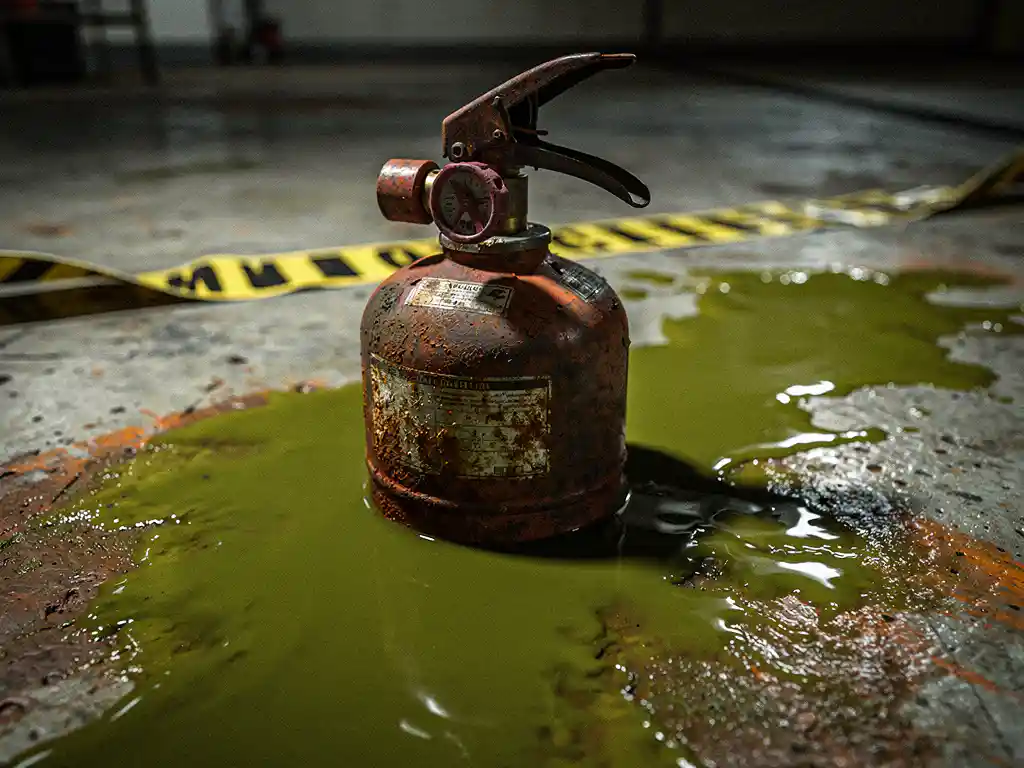
PFAS-containing fire suppression agents are being banned because they are persistent, bioaccumulative, and toxic chemicals that do not break down in the environment or the human body. Regulatory bodies across Europe, North America, and beyond have identified PFAS compounds as a serious public health and environmental hazard. This article unpacks which agents are affected, why the harm is significant, what regulations apply, and what alternatives exist.
Which fire suppression agents contain PFAS?
Fire suppression agents that contain PFAS are primarily those based on fluorinated compounds, most notably aqueous film-forming foam (AFFF) and other fluorinated surfactant-based agents. These agents rely on per- and polyfluoroalkyl substances to create a fast-spreading film over flammable liquids, which is highly effective but chemically hazardous. Many traditional gaseous suppression agents and halon replacements also fall under scrutiny when they contain fluorinated components.
The most widely used fluorinated fire suppression agents include:
- AFFF (Aqueous Film-Forming Foam): Used extensively in military, aviation, and industrial settings to suppress flammable liquid fires. Contains PFOS, PFOA, and related fluorinated surfactants.
- Fluoroprotein foams: Protein-based foams enhanced with fluorinated surfactants, used in petrochemical and industrial applications.
- Fluorinated clean agents: Certain hydrofluorocarbons (HFCs) and perfluorocarbons (PFCs) used in gaseous suppression systems for enclosed spaces, which fall under PFAS classifications in some regulatory frameworks.
- FFFP (Film-Forming Fluoroprotein Foam): A hybrid foam combining fluoroprotein and AFFF properties, raising the same PFAS concerns.
The core issue with all of these agents is the presence of carbon-fluorine bonds, which are among the strongest in chemistry. This is what makes them effective at suppression and, at the same time, what makes them environmentally indestructible.
Why are PFAS chemicals harmful to humans and the environment?
PFAS chemicals are harmful because they do not break down naturally in the environment or in living organisms, earning them the label “forever chemicals.” Once released, PFAS compounds accumulate in soil, groundwater, and biological tissue over time. Exposure has been linked to a range of serious health effects, including disruption of the endocrine system, immune suppression, liver damage, and an increased risk of certain cancers.
From an environmental perspective, PFAS contamination from fire suppression activities is particularly damaging because the agents are often applied directly onto land or near water sources. Fire training sites, airports, and industrial facilities that have historically used AFFF are now among the most heavily contaminated locations globally. PFAS compounds leach into groundwater, making remediation extremely difficult and expensive.
For human health, the risks are compounded by the fact that PFAS bioaccumulate through the food chain. Communities near contaminated sites, as well as firefighters with regular occupational exposure, face disproportionately high risks. Regulatory agencies including the European Chemicals Agency (ECHA) and the US Environmental Protection Agency (EPA) have classified multiple PFAS compounds as substances of very high concern, triggering the wave of regulatory action now reshaping the fire safety industry.
What regulations are banning PFAS in fire suppression?
Multiple regulatory frameworks are actively restricting or banning PFAS fire extinguishing agents, with the most significant action coming from the European Union and the United States. These regulations are accelerating across jurisdictions, and as of 2026, compliance timelines are already in effect or approaching for many organizations.
European Union regulations
The EU’s REACH regulation is the primary instrument restricting PFAS in Europe. ECHA has advanced a universal PFAS restriction proposal covering thousands of substances, including those used in firefighting foams and suppression agents. Several EU member states, including Germany, the Netherlands, Denmark, Sweden, and Norway, co-authored the restriction proposal and have already implemented national-level bans on AFFF use in training exercises. The EU’s broader Chemical Strategy for Sustainability also targets PFAS as a priority class for phase-out.
United States and international regulations
In the United States, the EPA designated PFOA and PFOS as hazardous substances under the Comprehensive Environmental Response, Compensation, and Liability Act (CERCLA) in 2024, creating significant liability for organizations still using PFAS-containing agents. Multiple US states have enacted their own bans on AFFF for non-emergency use, with states like California, New York, and Washington leading the way. Internationally, the Stockholm Convention on Persistent Organic Pollutants has listed PFOS and related compounds for global elimination, extending the regulatory pressure beyond Western markets.
Which industries are most affected by PFAS fire suppression bans?
The industries most affected by PFAS fire suppression bans are those that have historically relied on fluorinated foam agents for fire risk management. Aviation, military, oil and gas, and chemical manufacturing are the heaviest historical users of AFFF, making them the most immediately impacted by regulatory restrictions.
Beyond these traditional users, the bans are also reshaping fire protection strategies in sectors that use fluorinated clean agents in enclosed suppression systems:
- Data centers and ICT infrastructure: Many legacy suppression systems in server rooms and electrical enclosures have relied on fluorinated gaseous agents. Operators now face pressure to replace these systems ahead of regulatory deadlines.
- Energy storage: Battery Energy Storage System (BESS) operators require highly effective suppression but must now select agents that meet tightening PFAS standards.
- Telecommunications: Telecom infrastructure operators managing enclosed cabinets and switching equipment face similar replacement requirements.
- Industrial manufacturing: Facilities using high-voltage switchgear and electrical cabinets have long used fluorinated agents and must now transition to compliant alternatives.
- Healthcare and pharmaceuticals: Sensitive environments with critical equipment face both the regulatory requirement and the operational need for clean, residue-free suppression.
What are the PFAS-free alternatives for fire suppression?
PFAS-free alternatives for fire suppression include inert gases, water mist systems, fluorine-free foams, and dry chemical agents, each suited to different fire risk environments. The most appropriate alternative depends on the type of fire hazard, the sensitivity of the assets being protected, and the operational requirements of the facility.
For facilities protecting sensitive electronics, electrical cabinets, and mission-critical enclosures, inert gas suppression is the leading PFAS-free solution. Nitrogen, argon, and CO2-based systems suppress fires by reducing oxygen concentration without leaving chemical residues, making them safe for high-value equipment. Nitrogen in particular is a naturally occurring, non-toxic, and environmentally neutral gas that leaves no trace on electronics or components after activation.
For flammable liquid risks where foam was previously the agent of choice, fluorine-free foams (F3 foams) have emerged as the primary replacement. These agents use synthetic hydrocarbon-based surfactants to achieve film-forming properties without any fluorinated compounds. While performance parity with AFFF is still being validated in some high-intensity scenarios, F3 foams have been approved for use in many jurisdictions and are rapidly becoming the industry standard for aviation and industrial foam applications.
Water mist systems represent another effective PFAS-free option, particularly in enclosed spaces and machinery rooms, where fine water droplets suppress fire through cooling and oxygen displacement without chemical contamination.
How do you transition from PFAS-based to PFAS-free fire suppression?
Transitioning from PFAS-based to PFAS-free fire suppression requires a structured assessment of existing systems, identification of compliant alternatives, and a phased replacement plan that aligns with regulatory deadlines and operational continuity requirements. The process is manageable when approached systematically.
A practical transition follows these key steps:
- Audit existing systems: Identify all fire suppression agents currently in use across your facilities, including any legacy gaseous suppression systems, foam reserves, and portable extinguishers that may contain fluorinated compounds.
- Review applicable regulations: Determine which PFAS regulations apply to your jurisdiction, industry, and specific agent types. Compliance timelines vary by regulation and region, so mapping your exposure is essential.
- Assess fire risks and asset sensitivity: Match replacement agents to the specific fire risks in each protected area. Sensitive electronics require residue-free inert gas solutions, while flammable liquid risks may call for fluorine-free foam.
- Evaluate Total Cost of Ownership: Consider not just the upfront replacement cost but also installation complexity, maintenance requirements, and the cost of non-compliance or fire damage. Systems that are easy to install and maintain can reduce long-term TCO significantly.
- Engage certified, tested solutions: Select replacement systems that have been independently tested and certified by recognized bodies. This protects against liability and ensures performance standards are met.
- Plan for disposal of PFAS-containing agents: Existing PFAS-based agents must be disposed of according to hazardous waste regulations. Work with licensed disposal contractors to avoid liability from improper handling.
Organizations that begin the transition proactively, rather than waiting for enforcement deadlines, are better positioned to negotiate favorable procurement terms, avoid operational disruption, and demonstrate sustainability credentials to clients and regulators alike.
How ExxFire helps with transitioning to PFAS-free fire suppression
ExxFire provides a fully PFAS-free fire detection and suppression solution purpose-built for the environments most affected by fluorinated agent bans. The system combines aspirating smoke detection with non-pressurized nitrogen gas suppression through ExxFire’s patented Cool Gas Generator technology, protecting closed enclosures such as server racks, switchgear cabinets, battery energy storage systems, and telecom enclosures without leaving any chemical residues on sensitive equipment.
Key advantages of ExxFire’s approach for organizations making the switch include:
- Completely PFAS-free: Nitrogen is an inert, naturally occurring gas with no fluorinated compounds, making ExxFire systems fully compliant with current and forthcoming PFAS regulations across all major jurisdictions.
- No residue, no damage: Unlike foam or chemical agents, nitrogen suppression leaves electronics and components completely unharmed, protecting asset value and enabling immediate restart after an event.
- Easy self-installation: Systems are pre-engineered and do not require special certification to install, reducing transition costs and minimizing downtime during changeover.
- Independently tested and certified: ExxFire systems are tested and certified by CNPP in France and validated by DMT, part of TÜV Nord, giving procurement managers and safety officers the documented assurance they need.
- Scalable protection: Multiple units can be interconnected to protect larger volumes, and built-in relays allow seamless integration with existing fire panels.
If your organization is managing a transition away from PFAS-containing suppression agents and needs a certified, residue-free alternative for critical enclosures, contact ExxFire to discuss the right configuration for your specific environment.