

How does inert gas suppress fire without damaging the environment?
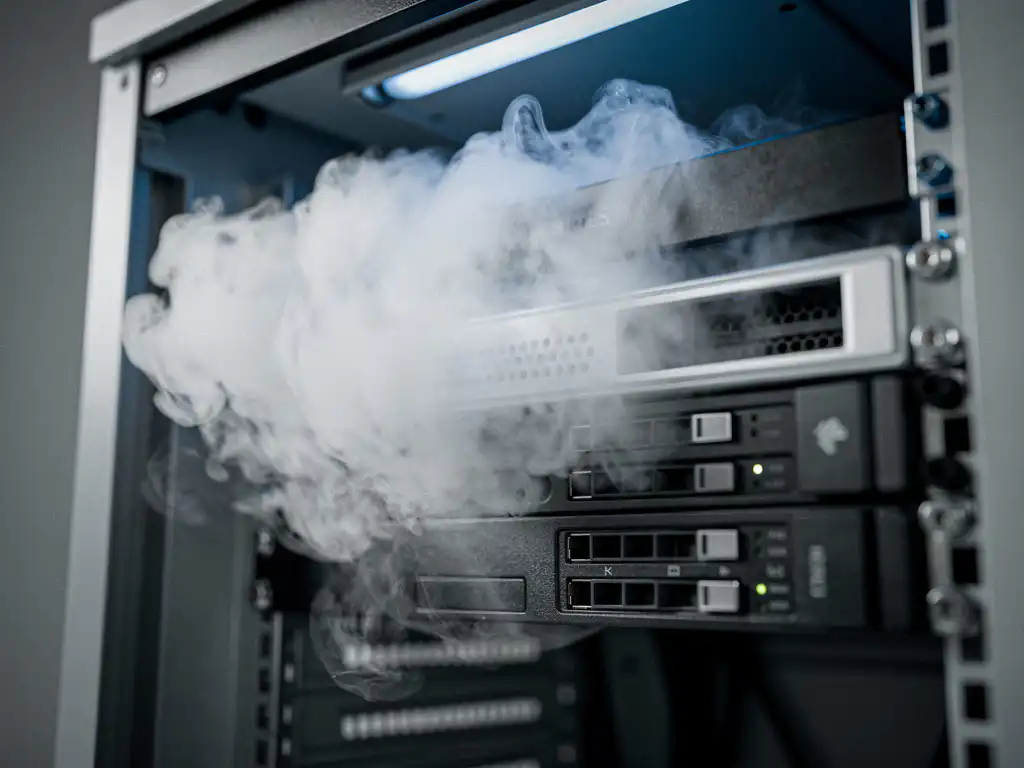
Inert gas fire suppression works by reducing the oxygen concentration inside a protected enclosure to a level where combustion can no longer be sustained, without using water, foam, or chemical agents. Nitrogen, the most widely used inert gas for this purpose, is non-reactive and leaves no residue, making it safe for sensitive electronics and the surrounding environment. The sections below unpack the science, the safety, and the practical scope of inert gas suppression in detail.
How does nitrogen actually put out a fire?
Nitrogen suppresses fire by displacing oxygen within an enclosed space. Combustion requires oxygen to sustain itself, and when nitrogen floods a protected enclosure, the oxygen concentration drops below the threshold needed to support a flame, typically around 13 to 15 percent by volume. The fire is extinguished not by chemical reaction, but by simple oxygen deprivation.
This mechanism is known as inert gas extinguishing, and it is one of the oldest and most reliable principles in fire suppression science. Nitrogen makes up approximately 78 percent of the air we breathe, which means it is already a familiar, stable element rather than an engineered chemical compound. When released into a closed enclosure such as a server rack or electrical cabinet, it acts quickly and completely, reaching every corner of the protected space without leaving anything behind.
The speed of suppression matters enormously in environments where even a few seconds of fire can cause irreversible damage to hardware or trigger cascading failures. Early smoke detection paired with rapid nitrogen release is what makes the difference between a contained incident and a major operational disruption.
Why doesn’t inert gas damage sensitive electronics or equipment?
Inert gas fire suppression does not damage sensitive electronics because nitrogen is chemically inert, meaning it does not react with the materials it contacts. Unlike water-based systems, it leaves no moisture. Unlike chemical agents such as dry powder or halon alternatives, it leaves no residue, no corrosive byproducts, and no contamination that would require extensive cleanup or component replacement.
This is a critical distinction for mission-critical environments. When a fire suppression system activates in a server room, a switchgear cabinet, or a battery energy storage system, the goal is not just to stop the fire, but to preserve the equipment itself. Water and foam systems often cause as much damage as the fire. Chemical suppression agents can coat circuit boards and components with residue that degrades performance or requires full replacement.
Nitrogen simply dissipates after activation. Once the enclosure is ventilated, the environment returns to normal atmospheric conditions with no cleaning, no decontamination, and no damage to the hardware inside. This is why nitrogen gas fire safety is particularly well suited to high-value, sensitive electronic environments where hardware replacement costs and downtime are both unacceptable outcomes.
What makes inert gas suppression environmentally friendly?
Inert gas fire suppression is environmentally friendly because nitrogen is a naturally occurring, non-toxic gas with zero global warming potential and zero ozone depletion potential. It contains no per- and polyfluoroalkyl substances, commonly known as PFAS, and produces no harmful byproducts when released. This makes it the cleanest available alternative to legacy chemical suppression agents.
Many older and still widely used fire suppression systems rely on fluorinated gases or PFAS-containing agents, which are now subject to increasing regulatory scrutiny across Europe and globally. These substances persist in the environment for extremely long periods and have been linked to serious ecological and health concerns. Regulatory pressure to phase them out is growing, and organizations that continue to rely on them face both compliance risk and reputational exposure.
Nitrogen-based suppression sidesteps all of these concerns entirely. Because it is drawn from the atmosphere and returns to it without transformation, the environmental footprint of a PFAS-free fire suppression system based on nitrogen is negligible. For sustainability-conscious organizations operating under environmental, social, and governance commitments, this distinction is increasingly decisive when evaluating fire safety solutions.
How does a non-pressurized nitrogen system differ from traditional gas systems?
A non-pressurized nitrogen system stores nitrogen in a solid chemical compound rather than as a compressed gas in a high-pressure cylinder. When the system activates, a controlled reaction releases nitrogen gas on demand. Traditional gas suppression systems, by contrast, store their extinguishing agent in pressurized cylinders that require specialized handling, regular pressure checks, and strict installation protocols.
The practical implications of this difference are significant. Pressurized systems carry inherent risks during storage, transport, and installation. They require certified technicians for installation and periodic professional inspection to verify pressure integrity. A non-pressurized system eliminates these requirements, making installation simpler, safer, and accessible without specialist certification.
Non-pressurized storage also means the system remains stable over time without the gradual pressure loss that can affect traditional cylinders. Maintenance demands are lower, and the total cost of ownership over the system’s lifetime reflects that. For organizations managing multiple sites or large numbers of protected enclosures, the cumulative savings in installation and maintenance costs are substantial.
What types of equipment can inert gas systems protect?
Inert gas fire suppression systems are designed to protect closed enclosures containing high-value or mission-critical equipment. The most common applications include server racks and ICT cabinets, electrical switchgear, high-voltage cabinets, battery energy storage systems, and telecommunications enclosures. Any enclosed environment where fire risk is present and hardware damage must be avoided is a candidate for nitrogen-based protection.
The range of industries served reflects the breadth of this need. Data center operators use inert gas systems to protect server infrastructure. Energy companies deploy them around battery energy storage systems, where thermal runaway is a well-documented and serious risk. Industrial manufacturers apply them to switchgear and control cabinets that, if damaged, could halt production lines. Healthcare and pharmaceutical organizations rely on them to protect sensitive diagnostic and operational equipment.
The key requirement across all of these use cases is that the protected space must be sufficiently enclosed for the nitrogen concentration to build and be maintained long enough to extinguish the fire. Systems can be interconnected to cover larger volumes, and fire suppression for cabinets and enclosures up to several cubic meters is achievable with modular configurations.
Are inert gas fire suppression systems safe for people nearby?
Inert gas fire suppression systems are safe for people in the vicinity when the systems are designed and deployed correctly. Nitrogen itself is non-toxic and makes up the majority of the air we breathe. However, because suppression works by reducing oxygen concentration inside an enclosure, the system must be installed in a way that prevents unintended release into occupied spaces at concentrations that could pose a suffocation risk.
This is why inert gas extinguishing systems intended for enclosed cabinets and equipment racks represent a fundamentally different risk profile from room-flooding systems. A cabinet-level system targets a specific, bounded volume. The nitrogen released is contained within the enclosure and dissipates naturally when the door is opened or the space is ventilated, rather than flooding an entire room.
For organizations with personnel working near protected equipment, this distinction provides important reassurance. The suppression agent is harmless, the deployment is targeted, and the system does not require evacuation protocols or lockout procedures that would disrupt operations. Safety for people and safety for equipment are both achieved by the same design principle: precise, contained suppression at the source of the fire.
How ExxFire protects mission-critical equipment with nitrogen suppression
ExxFire’s integrated fire detection and suppression systems apply all of the principles described above in a single, pre-engineered solution designed for real-world deployment. Key features of the ExxFire approach include:
- Aspirating smoke detection: Early smoke detection identifies a developing fire before it escalates, triggering suppression at the earliest possible moment to minimize hardware damage.
- Patented Cool Gas Generator technology: Nitrogen is stored in a solid, non-pressurized state and released on activation, eliminating the risks and maintenance demands of high-pressure cylinders.
- PFAS-free, residue-free suppression: Nitrogen leaves no chemical residue, protecting sensitive electronics and removing any need for post-incident cleanup or decontamination.
- Easy self-installation: Systems are pre-engineered and require no special certification to install, reducing deployment costs across single or multiple sites.
- Modular and scalable design: Units can be interconnected to protect enclosures up to 4.5 m³ and beyond, with built-in relays for integration with existing fire panels.
- Certified and independently tested: Systems are validated by CNPP in France and DMT, part of TÜV Nord in Germany, providing documented assurance of performance.
If your organization depends on the continuous operation of server racks, switchgear, battery energy storage systems, or other high-value enclosures, contact ExxFire to find out how its nitrogen-based suppression systems can protect your assets with the lowest possible total cost of ownership.
Related Articles
- How do you prioritise fire risks when resources are limited?
- What are the fire risks in care homes and assisted living facilities?
- How do you reduce fire risk without disrupting daily operations?
- What are the benefits of proactive fire management?
- How does IEC 62368 relate to fire safety in electronic equipment?