

What is sustainable fire protection?
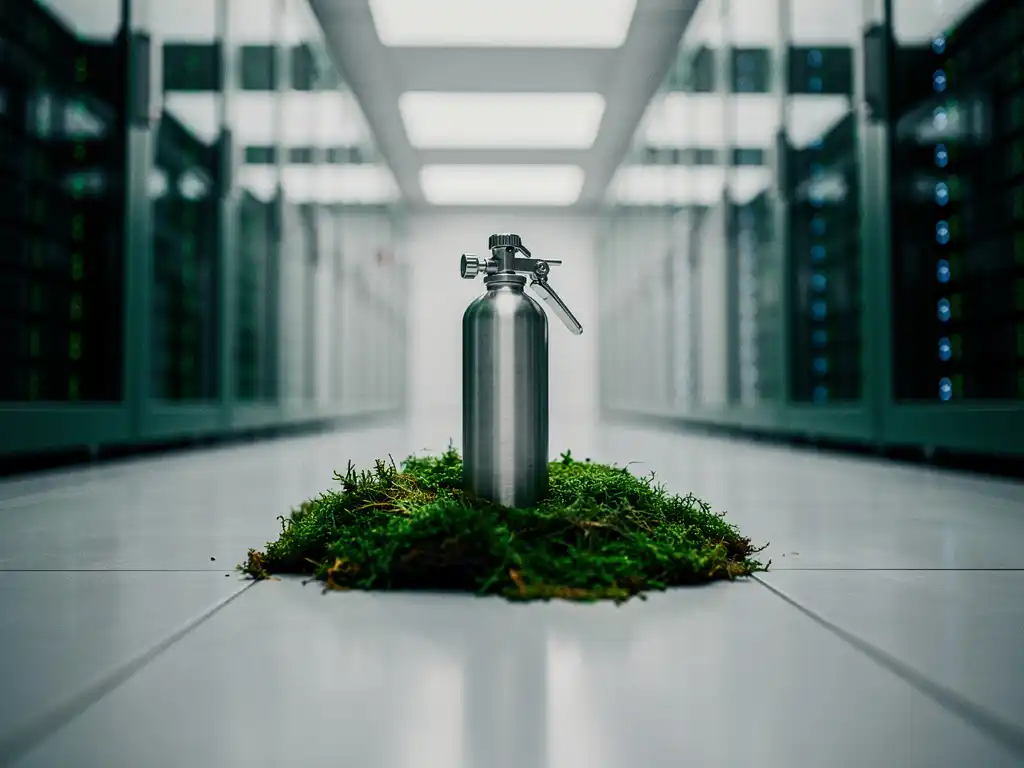
Sustainable fire protection means using fire detection and suppression methods that eliminate or minimize harm to the environment, human health, and the protected assets themselves. It prioritizes non-toxic, residue-free suppression agents, energy-efficient designs, and long service lives that reduce waste over time. The sections below unpack what that means in practice, from the agents used to the certifications that prove a system delivers on its sustainability claims.
What makes a fire suppression system sustainable?
A fire suppression system is sustainable when it suppresses fire without releasing toxic chemicals, causing collateral damage to protected equipment, or creating disposal problems at end of life. The most important factors are the suppression agent itself, the system’s physical footprint, and how much maintenance and replacement it demands over its operational lifetime.
Sustainability in fire suppression is not a single attribute but a combination of criteria. An environmentally friendly fire safety solution should meet several conditions at once:
- Non-toxic suppression agent: The agent must not release harmful substances into the air, water, or soil during discharge or disposal.
- No residue: After activation, the agent should leave no chemical residue that damages equipment or requires hazardous cleanup.
- Low global warming potential: The agent and its production process should have a minimal climate impact.
- Long service life with low maintenance: Systems that require frequent replacement of consumables or complex servicing generate ongoing environmental and financial costs.
- Targeted suppression: Protecting the object at risk rather than flooding an entire room reduces the volume of agent used and limits disruption to adjacent systems.
Green fire suppression goes beyond simply avoiding banned substances. It reflects a design philosophy that treats fire safety as part of a broader commitment to operational and environmental responsibility.
Why are PFAS-based fire suppression agents a problem?
PFAS-based fire suppression agents are a problem because per- and polyfluoroalkyl substances persist indefinitely in the environment and accumulate in living organisms, earning them the label “forever chemicals.” Regulatory pressure across Europe, North America, and beyond is accelerating bans on PFAS-containing agents, making systems that rely on them a growing compliance and liability risk.
Aqueous film-forming foam (AFFF) and certain halon replacements have historically relied on PFAS compounds to achieve fast flame knockdown. The environmental consequences are severe: PFAS compounds do not break down naturally, contaminate groundwater and soil at training and discharge sites, and have been linked to health effects in both humans and wildlife. Regulators in the European Union have been tightening restrictions significantly, and organizations that have not yet transitioned face both legal exposure and reputational risk.
Beyond environmental harm, PFAS-based agents often cause secondary damage. Foam residue, for example, can destroy sensitive electronics, meaning the suppression event itself becomes a source of costly hardware loss. Switching to a PFAS-free fire suppression approach therefore protects both the environment and the equipment being safeguarded.
How does nitrogen work as a sustainable fire suppressant?
Nitrogen suppresses fire by displacing oxygen within a protected enclosure, reducing the oxygen concentration below the threshold needed to sustain combustion. Because nitrogen is an inert gas that makes up roughly 78% of the air we breathe, it introduces no toxic compounds, leaves no residue, and has zero global warming potential, making it one of the most genuinely sustainable fire suppression options available.
In a nitrogen fire suppression system, the gas is released into a closed space such as a server rack or electrical cabinet when a fire is detected. The reduction in oxygen concentration halts combustion without the chemical reactions associated with powder, foam, or synthetic gas agents. Once the threat is neutralized, the nitrogen dissipates naturally, and the protected equipment can be returned to service without any cleaning process.
A key advantage of inert gas fire protection with nitrogen is that it causes no harm to electronics, plastics, or metals. There is no corrosive residue, no moisture, and no chemical byproduct. For organizations protecting high-value sensitive equipment, this means the suppression event itself does not become a secondary loss event. Combined with early smoke detection, nitrogen suppression can intervene at the very earliest stage of a fire, limiting damage to a small area rather than allowing a fire to escalate.
What types of equipment can sustainable fire protection cover?
Sustainable fire protection using inert gas suppression can cover any mission-critical equipment housed in a closed or semi-closed enclosure where early intervention is essential. Common applications include server racks and ICT cabinets, electrical switchgear, high-voltage cabinets, Battery Energy Storage Systems (BESS), and telecommunications enclosures.
The range of environments where green fire suppression adds value is broad:
- Data centers and server rooms: Server racks and ICT cabinets house irreplaceable data infrastructure where fire, water, or chemical suppression would all cause catastrophic loss.
- Electrical switchgear and high-voltage cabinets: These are high-risk ignition points in industrial and commercial facilities, often located in areas where a room-level suppression system would be impractical or disproportionate.
- Battery Energy Storage Systems: BESS installations present a particular fire risk due to thermal runaway in lithium-ion cells. Early detection combined with targeted nitrogen suppression can interrupt the chain reaction before it spreads.
- Telecommunications infrastructure: Remote or unstaffed telecom enclosures benefit from autonomous detection and suppression that operates without human intervention.
- Healthcare and pharmaceutical equipment: Sensitive diagnostic and laboratory equipment requires a suppression method that causes no secondary damage.
The common thread across all these applications is that the cost of fire damage, whether measured in hardware replacement, data loss, or operational downtime, far exceeds the cost of protection. Sustainable fire suppression systems designed for object-level protection are particularly well suited to these environments because they act close to the ignition source, before a localized event becomes a facility-wide emergency.
How does sustainable fire protection lower total cost of ownership?
Sustainable fire protection lowers total cost of ownership by combining low installation complexity, minimal maintenance requirements, and the elimination of costly post-suppression cleanup or equipment replacement. A system that suppresses a fire at the object level with a clean, residue-free agent dramatically reduces the financial impact of a suppression event compared to conventional alternatives.
Several factors contribute to a lower TCO over the lifetime of a sustainable fire suppression system:
- Easy installation: Pre-engineered systems designed for self-installation without specialist certification reduce initial deployment costs and shorten commissioning time.
- Low maintenance burden: Systems based on non-pressurized stored nitrogen do not require the regular pressure checks, agent refills, or specialist servicing associated with pressurized gas or foam systems.
- No post-activation cleanup costs: Because nitrogen leaves no residue, there are no hazardous waste disposal costs and no equipment cleaning requirements after a suppression event.
- Prevention of hardware loss: Early smoke detection paired with targeted suppression means fires are caught before they cause extensive hardware damage, avoiding the cost of replacing high-value equipment.
- Reduced downtime: Faster recovery after a suppression event translates directly into reduced operational disruption and lost productivity.
For organizations operating across multiple sites or managing large estates of critical equipment, these savings compound significantly. The combination of low upfront cost, minimal ongoing maintenance, and protection against catastrophic loss events makes environmentally friendly fire safety a financially sound choice as well as an ethical one.
What certifications should a sustainable fire suppression system have?
A sustainable fire suppression system should hold independent third-party certifications that validate both its fire suppression performance and the safety of its suppression agent. Recognized certifications from bodies such as CNPP in France and TÜV Nord in Germany provide verified assurance that a system performs as claimed under controlled test conditions.
Certifications serve several purposes. They demonstrate that a system has been tested against defined performance standards, provide the documentation required by insurers and regulators, and give procurement and safety teams confidence that the technology has been independently validated rather than self-assessed by the manufacturer.
When evaluating a green fire suppression system, look for:
- CNPP certification: The Centre National de Prévention et de Protection is a leading European fire testing and certification body whose approval carries significant weight with insurers and facility managers.
- TÜV Nord or DMT testing: TÜV Nord is one of Europe’s most respected technical inspection organizations. Systems tested by its subsidiary DMT in Dortmund, Germany, have undergone rigorous independent verification.
- Compatibility with existing fire panel infrastructure: While not a certification in itself, the ability to integrate with a building’s existing fire alarm panel via standard relays is an important technical requirement that certified systems should support.
- PFAS-free compliance documentation: As PFAS regulations tighten, systems should be able to demonstrate that their suppression agent contains no regulated substances.
Independent certification is the clearest signal that a manufacturer’s sustainability and performance claims are grounded in evidence. It also protects the purchasing organization in the event of a claim or regulatory audit.
How ExxFire supports sustainable fire protection
ExxFire delivers sustainable fire suppression systems that combine early smoke detection with clean, residue-free nitrogen suppression in a single integrated solution. Every system is built around the patented Cool Gas Generator technology, which stores nitrogen in a solid, non-pressurized state and releases it precisely at the point of risk. Here is what that means in practice:
- PFAS-free suppression agent: Nitrogen is a naturally occurring inert gas with zero global warming potential and no chemical residue, making ExxFire systems fully PFAS-free and compliant with tightening environmental regulations.
- Object-level protection: Systems are designed for closed enclosures up to 4.5 m³, including server racks, switchgear cabinets, BESS installations, and telecom enclosures, with multiple units interconnectable for larger volumes.
- Aspirating smoke detection: Integrated early detection identifies smoke at the very earliest stage, triggering suppression before a fire can escalate and cause extensive hardware damage.
- Easy self-installation: Pre-engineered systems require no specialist certification to install, reducing deployment costs and simplifying maintenance.
- Fire panel integration: Built-in relays allow seamless reporting to an existing fire alarm panel, ensuring compatibility with current safety infrastructure.
- Independent certification: All systems are tested and certified by CNPP France and DMT, part of TÜV Nord Germany, providing verified performance assurance.
If you are evaluating sustainable fire suppression systems for mission-critical equipment, contact ExxFire to discuss which solution fits your specific environment and operational requirements.
Related Articles
- Why is fire risk prevention important in the workplace?
- What are the fire risks linked to dust accumulation in industrial settings?
- What fire prevention measures reduce the risk of a wildfire spreading?
- What are the key sustainability certifications for fire suppression systems?
- How do inert gas systems compare to HFC-based suppression agents?