

How do you transition from PFAS-based to PFAS-free fire suppression?
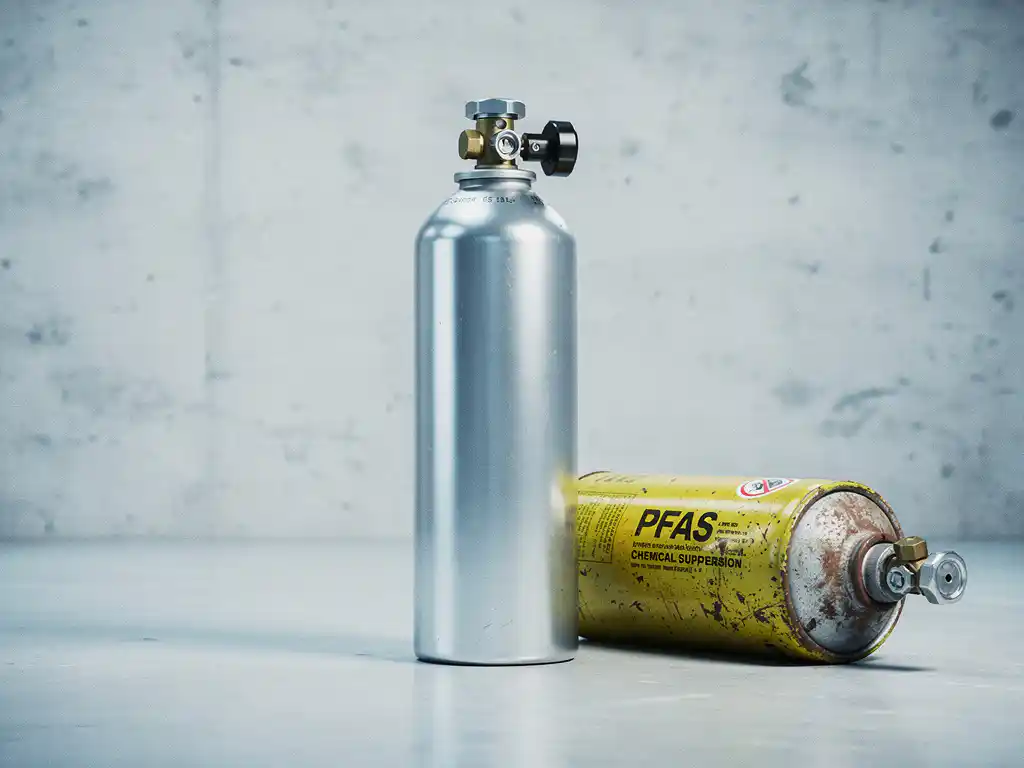
Transitioning from PFAS-based to PFAS-free fire suppression is achievable through a structured replacement process: audit your existing systems, identify compliant alternatives such as inert gas or nitrogen-based suppression, and phase out legacy equipment in line with current regulatory timelines. The process applies to any facility running older foam, AFFF, or fluorinated gas systems that fall under tightening PFAS restrictions across the EU and beyond. The sections below walk through each step in detail, from understanding the risks to estimating costs and timelines.
What makes PFAS-based fire suppression systems harmful?
PFAS-based fire suppression systems are harmful because they release per- and polyfluoroalkyl substances into the environment during use, testing, and disposal. These synthetic chemicals do not break down naturally, accumulating in soil, groundwater, and living organisms over time. The harm is both environmental and biological, with regulatory bodies classifying many PFAS compounds as persistent pollutants linked to serious health concerns.
The most widely known PFAS-containing suppression agent is aqueous film-forming foam, commonly called AFFF. It was used extensively in aviation, military, and industrial settings because of its exceptional effectiveness against flammable liquid fires. However, the same chemical properties that make it effective — extreme stability and surface-active fluorine chains — are what make it dangerous in the long term.
Fluorinated gases used in clean agent suppression systems, such as certain halon replacements, also fall under PFAS scrutiny depending on their chemical composition. Some of these agents have high global warming potential on top of their persistence concerns, meaning they carry a dual environmental liability.
For businesses, the harm is not only environmental. Regulatory pressure, insurance requirements, and reputational risk are now real business consequences of continuing to operate PFAS-containing systems. Many jurisdictions have moved from voluntary phase-outs to mandatory restrictions, making the question of replacement increasingly urgent rather than optional.
What are the PFAS-free alternatives available for fire suppression?
The main PFAS-free alternatives for fire suppression are inert gas systems, nitrogen-based suppression, water mist systems, and dry chemical agents that contain no fluorinated compounds. Among these, inert gas fire suppression and nitrogen suppression are the most suitable replacements for protecting sensitive electronics and enclosed equipment, because they leave no residue and cause no secondary damage.
Each alternative works through a different suppression mechanism:
- Nitrogen suppression: Displaces oxygen within a protected enclosure to a level where combustion cannot be sustained, without reaching concentrations harmful to nearby personnel in properly designed systems. It is chemically inert, leaves zero residue, and has no global warming potential.
- Inert gas blends (IG-541, IG-55, IG-100): Similar in principle to nitrogen-only systems, these blends of naturally occurring gases suppress fire by reducing oxygen concentration. They are fully PFAS-free and environmentally neutral.
- Water mist systems: Use fine water droplets to cool flames and displace oxygen. Effective for many applications, though less suitable for live electrical enclosures where water contact is a risk.
- Fluorine-free foams (F3): A direct replacement for AFFF in flammable liquid scenarios, formulated without any fluorinated surfactants. Performance has improved significantly in recent years.
- Dry chemical and aerosol agents: Useful in specific industrial applications, though they can leave residue that requires cleanup after activation.
For mission-critical environments such as server rooms, switchgear cabinets, and battery energy storage systems, nitrogen and inert gas suppression stand out as the most practical and sustainable choices. They protect sensitive hardware without the risk of chemical contamination or corrosion.
How do you assess which systems in your facility need replacing?
To assess which systems need replacing, start by inventorying every fire suppression system on-site and identifying the suppression agent each one uses. Any system using AFFF, halon, or a fluorinated clean agent should be flagged for review. From there, prioritize based on regulatory status, proximity to sensitive equipment, and the risk profile of the protected area.
A practical assessment follows these steps:
- Compile a full system inventory: List every suppression system, its location, the agent it uses, its installation date, and its last service record.
- Identify PFAS-containing agents: Cross-reference your agent list against known PFAS classifications. AFFF and many fluorinated clean agents will appear here.
- Check maintenance and testing history: Systems that require regular agent discharge for testing release PFAS into the environment repeatedly. These carry elevated urgency.
- Map systems to asset criticality: Suppression systems protecting high-value or mission-critical assets — electrical cabinets, data infrastructure, BESS installations — should be prioritized for early replacement.
- Consult your compliance obligations: Identify which regulatory frameworks apply to your sector and geography. This will determine whether replacement is voluntary, recommended, or legally required within a specific timeframe.
Facilities with multiple system types may find that only a subset requires urgent action. A phased approach, starting with the highest-risk or most regulated systems, is both practical and financially manageable.
What does the transition process from PFAS-based to PFAS-free actually involve?
The transition from PFAS-based to PFAS-free fire suppression involves four core stages: decommissioning the existing system, selecting and specifying the replacement technology, installing and commissioning the new system, and updating your fire safety documentation and compliance records. The complexity of each stage depends on the size of the facility and the type of system being replaced.
Decommissioning the existing system
Removing a PFAS-containing system is not simply a matter of disconnecting equipment. The suppression agent itself must be disposed of in accordance with hazardous waste regulations, which in many countries require specialist contractors. Storage tanks, piping, and nozzles that have been in contact with fluorinated agents may also require decontamination before disposal or repurposing.
Selecting and installing the replacement
Replacement system selection should be driven by the specific hazard class of the protected area, the volume of the enclosure, and any constraints on installation such as space, existing infrastructure, or the need to avoid downtime during changeover. For enclosed equipment such as electrical cabinets and server racks, nitrogen-based suppression systems designed for object-level protection are particularly well-suited. These systems can often be installed without specialist certification requirements and integrated with existing fire alarm panels via relay outputs, minimizing disruption to ongoing operations.
Once installed, the new system must be commissioned, tested, and signed off against the relevant certification standards before being brought into active service.
What compliance and regulatory requirements apply to PFAS fire suppression phase-outs?
The primary regulatory framework driving PFAS fire suppression phase-outs is the EU REACH regulation, which has been progressively restricting PFAS use across industrial applications. In addition, the EU’s universal PFAS restriction proposal, advanced by several member states, aims to cover a broad class of fluorinated substances including those used in fire suppression agents. National regulations in countries including Germany, the Netherlands, and the Nordic states have moved ahead of EU-wide timelines in some areas.
Key compliance points to be aware of include:
- REACH restrictions: Specific PFAS compounds used in fire suppression, including PFOS and related substances, are already restricted or banned under REACH Annex XVII and the Stockholm Convention.
- Universal PFAS restriction (EU): The proposed universal restriction under REACH, if adopted, would significantly broaden the scope of banned fluorinated agents in suppression systems.
- National legislation: Several EU member states have enacted or are enacting their own PFAS restrictions that go beyond current EU-wide rules. Facilities operating in multiple countries must track requirements jurisdiction by jurisdiction.
- Sector-specific standards: Industries such as aviation, defense, and petrochemicals have their own fire safety standards that may specify acceptable agents. Transitioning must remain compliant with these sector standards as well as environmental law.
- Insurance requirements: Insurers are increasingly factoring PFAS liability into coverage terms. Operating a non-compliant system may affect your policy.
The regulatory direction is clear and consistent: PFAS in fire suppression is being phased out, not just discouraged. Organizations that delay transition risk operating out of compliance as deadlines tighten through 2026 and beyond.
How long does it take and what does it cost to switch fire suppression systems?
Switching from a PFAS-based to a PFAS-free fire suppression system typically takes between a few days and several weeks per site, depending on system complexity and facility size. Costs vary widely based on the number of protected zones, the replacement technology chosen, and whether existing infrastructure such as piping or detection wiring can be reused.
For object-level suppression systems protecting individual enclosures such as electrical cabinets or server racks, the transition tends to be faster and more cost-effective than replacing a full room-flooding system. Pre-engineered systems designed for self-installation can be deployed rapidly, and because they do not require pressurized agent storage or complex pipework, installation costs are substantially lower than traditional alternatives.
Factors that influence total cost include:
- The number of enclosures or zones requiring protection
- Disposal costs for the existing PFAS-containing agent
- Whether new detection infrastructure is needed or existing systems can be integrated
- Certification and commissioning requirements in your jurisdiction
- Ongoing maintenance costs, which for nitrogen-based systems are typically low due to the absence of pressurized storage and chemical agent degradation
When evaluating cost, total cost of ownership over the system lifetime is a more reliable measure than upfront installation price alone. Systems with low maintenance requirements, no agent replacement cycles, and easy self-installation consistently deliver a lower TCO compared to legacy fluorinated systems that require regular servicing and agent testing.
How ExxFire supports your transition to PFAS-free fire suppression
ExxFire provides a complete, certified solution for organizations looking to replace PFAS-based fire suppression with a clean, sustainable alternative. The ExxFire integrated fire detection and suppression system is built around non-pressurized nitrogen gas, making it inherently PFAS-free, residue-free, and safe for use around sensitive electronics and high-value equipment.
Key features that make ExxFire the right choice for this transition include:
- Combined detection and suppression: Aspirating smoke detection is integrated with nitrogen gas suppression in a single system, enabling early fire detection and immediate response at the object level.
- No pressurized storage: The patented Cool Gas Generator technology stores nitrogen in a solid, non-pressurized state, eliminating the maintenance burden and safety risks associated with pressurized cylinders.
- Easy self-installation: Systems are pre-engineered and do not require specialist certification to install, reducing both installation time and cost.
- Enclosure-level protection: Designed for server racks, switchgear, ICT cabinets, BESS installations, and high-voltage enclosures up to 4.5 m³, with units interconnectable for larger volumes.
- Seamless integration: Built-in relays allow the system to report status to an existing fire panel, ensuring compatibility with your current fire safety infrastructure.
- Certified performance: Tested and certified by CNPP in France and DMT (TÜV Nord) in Germany, providing the documented compliance evidence your organization needs.
Whether you are replacing a single cabinet system or transitioning an entire facility, ExxFire’s integrated suppression systems are designed to make the switch straightforward, compliant, and cost-effective. Contact ExxFire today to discuss your specific requirements and receive a tailored transition plan.