

Are chemical fire suppression agents being phased out in Europe?
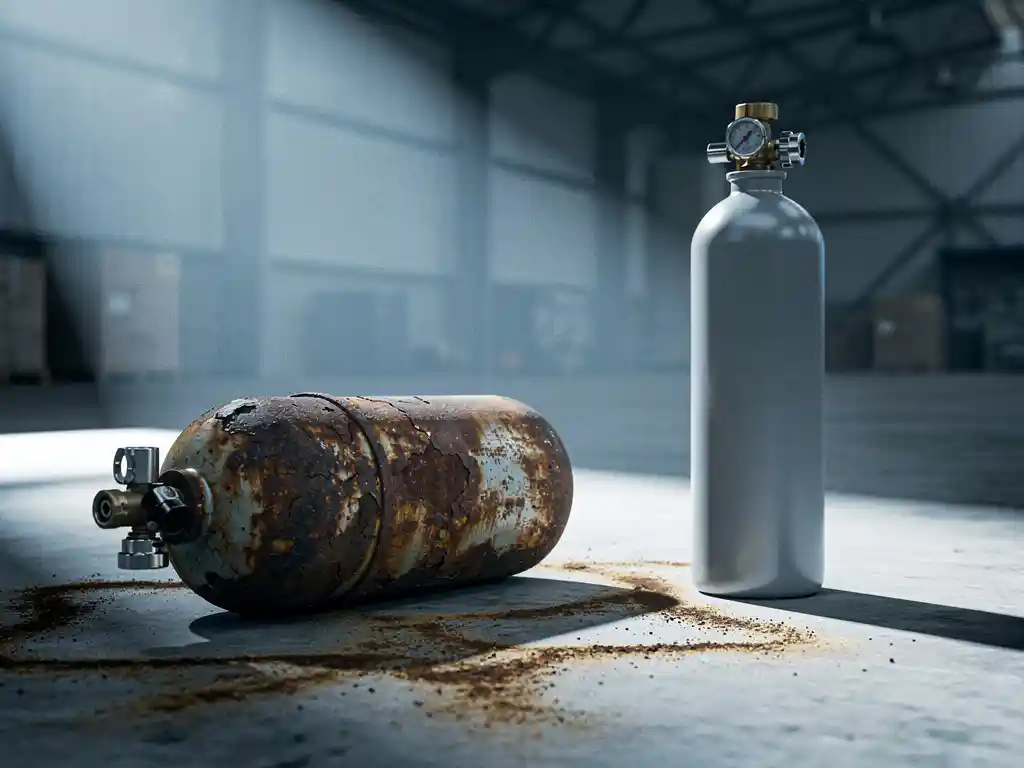
Yes, chemical fire suppression agents are being phased out across Europe. EU regulations targeting fluorinated gases and PFAS substances are progressively restricting or banning the most widely used chemical suppression agents, including HFCs and PFAS-based foams and gases. Organizations that rely on these systems face tightening compliance deadlines and growing liability risks. This article unpacks which agents are affected, what regulations are driving the change, and what cleaner alternatives are available today.
Which chemical fire suppression agents are being restricted in Europe?
The chemical fire suppression agents currently facing restrictions in Europe are primarily hydrofluorocarbons (HFCs) used in gaseous suppression systems, perfluoroalkyl and polyfluoroalkyl substances (PFAS) found in aqueous film-forming foams (AFFF) and other suppression media, and certain halon alternatives that fall under F-gas or PFAS classifications. These agents are being restricted because of their environmental persistence, global warming potential, or toxicity.
HFCs such as HFC-227ea (FM-200) and HFC-125 have been widely used to protect server rooms, electrical cabinets, and other enclosed spaces. While effective at suppressing fire, they carry a high global warming potential, making them targets under EU F-gas regulation. PFAS-based fire suppression agents, including AFFF foams, are particularly concerning because they do not break down in the environment and accumulate in living organisms, earning them the label “forever chemicals.”
Halon itself was phased out under the Montreal Protocol decades ago, but many of its replacements are now facing similar scrutiny. The direction of travel in European regulation is clear: agents that are either potent greenhouse gases or persistent environmental contaminants are being removed from the market.
What EU regulations are driving the phase-out of chemical fire suppression?
Two major EU regulatory frameworks are driving the phase-out of chemical fire suppression agents: the revised F-gas Regulation and the EU PFAS restriction under REACH. Together, they are eliminating the legal basis for using a wide range of chemical suppression agents across most commercial and industrial applications.
The revised F-gas Regulation (EU) 2024/573, which entered into force in 2024, significantly tightens restrictions on fluorinated greenhouse gases. It introduces stricter phase-down schedules for HFCs, limits their use in new equipment, and accelerates the timeline for transitioning to lower-impact alternatives. Fire suppression systems using HFC-based agents are directly affected, with new installations increasingly restricted and existing systems subject to tighter servicing and reporting requirements.
In parallel, the European Chemicals Agency (ECHA) is advancing a universal PFAS restriction under the REACH regulation. This restriction targets the entire class of PFAS chemicals rather than individual substances, which means PFAS-based fire suppression agents cannot simply be reformulated to sidestep the ban. The restriction covers manufacturing, use, and placing on the market, creating a comprehensive barrier against PFAS in fire suppression applications.
By 2026, organizations operating in Europe are navigating a regulatory environment where the window for continued use of non-compliant chemical suppression agents is narrowing rapidly. Compliance is no longer a future concern but a present operational requirement.
What are the risks of continuing to use PFAS-based fire suppression systems?
Continuing to use PFAS-based fire suppression systems in Europe exposes organizations to regulatory non-compliance, financial liability, and reputational damage. As PFAS restrictions under REACH move toward full implementation, organizations using banned or restricted agents may face penalties, mandatory decommissioning costs, and difficulties obtaining insurance coverage for non-compliant systems.
Beyond regulatory risk, PFAS agents pose direct environmental and health hazards. When a suppression system discharges, PFAS chemicals can contaminate surrounding surfaces, drainage systems, and soil. Cleanup costs following a PFAS discharge can far exceed the original cost of the suppression system itself. Regulatory authorities across Europe are increasingly holding site operators accountable for PFAS contamination, regardless of whether the discharge occurred during a fire emergency or a system test.
There is also a practical operational risk. As PFAS-containing agents become restricted, sourcing replacement charges for existing systems will become progressively more difficult and expensive. Organizations that delay transitioning may find themselves unable to legally recharge or service their systems following a discharge event, leaving critical assets unprotected at exactly the moment they need coverage most.
What alternatives exist to chemical fire suppression agents?
The main alternatives to chemical fire suppression agents in Europe are inert gases, clean agent gases with lower environmental impact, water mist systems, and aerosol-based suppression. Among these, inert gas systems using nitrogen, argon, or mixtures such as IG-541 are the most widely adopted for protecting sensitive electronics and enclosed spaces because they leave no residue and pose no chemical hazard to equipment or personnel.
Inert gases suppress fire by reducing the oxygen concentration within a protected space below the level needed to sustain combustion, without introducing any chemical reaction. This makes them inherently PFAS-free and exempt from F-gas restrictions, since they are not fluorinated compounds. Nitrogen in particular is attractive because it is naturally abundant, non-toxic, and leaves no trace after discharge.
Water mist systems are used in some applications but are generally unsuitable for protecting live electrical equipment or sensitive electronics due to the risk of water damage and short-circuiting. CO2 systems, while effective, carry serious risks to human safety in occupied spaces and require strict access controls. For most mission-critical enclosures, inert gas suppression has emerged as the practical, compliant, and commercially viable alternative to chemical agents.
How does nitrogen-based suppression compare to chemical agents for electronics protection?
Nitrogen-based fire suppression is superior to chemical agents for protecting sensitive electronics because it extinguishes fire without leaving any chemical residue, causing no secondary damage to components, circuit boards, or data storage media. Chemical agents such as HFCs, while gaseous and relatively clean compared to powder or foam, can still deposit residues or cause thermal shock to sensitive equipment. Nitrogen causes neither.
When a chemical suppression agent discharges in a server room or electrical cabinet, the affected equipment typically requires inspection, cleaning, and in some cases replacement before it can safely return to service. This extends downtime beyond the initial fire event. Nitrogen discharge, by contrast, allows equipment to be inspected and returned to operation far more quickly, because there is nothing to clean up and no chemical interaction with components to assess.
Nitrogen also has a significant advantage in terms of storage and safety. Traditional inert gas systems store nitrogen under high pressure, which introduces installation and maintenance complexity. Newer solid-state nitrogen generation technologies eliminate the need for pressurized cylinders entirely, reducing both the physical footprint and the safety risks associated with high-pressure storage. This makes nitrogen-based systems particularly well suited for installation inside or immediately adjacent to the enclosures they protect, enabling faster response at the point of risk rather than relying on room-level flooding.
When should organizations start replacing chemical fire suppression systems?
Organizations should begin planning the replacement of chemical fire suppression systems now, in 2026, rather than waiting for regulatory deadlines to force a reactive transition. The EU regulatory timeline for PFAS and F-gas restrictions is already in motion, and organizations that begin evaluating alternatives early will have more time to assess options, budget appropriately, and avoid the cost and disruption of emergency replacement under compliance pressure.
The practical triggers for beginning a replacement review include the following:
- Upcoming system service or recharge: If an existing chemical suppression system is due for maintenance or has recently discharged, this is the natural moment to evaluate whether recharging with a restricted agent is still legally permissible and commercially sensible.
- New installations or facility upgrades: Any new fire suppression installation should default to a compliant, PFAS-free alternative from the outset. Installing a chemical system today means facing mandatory replacement in the near term.
- Sustainability commitments and ESG reporting: Organizations with public sustainability targets or ESG reporting obligations should treat PFAS-containing fire suppression as a liability to be addressed proactively, not reactively.
- Insurance and compliance audits: Insurers and auditors are increasingly scrutinizing PFAS and F-gas exposure. Proactive replacement strengthens compliance posture and may reduce insurance premiums.
Waiting until a regulatory deadline forces action typically results in higher costs, compressed timelines, and reduced choice. Early movers benefit from better supplier availability, more thorough installation planning, and the operational confidence of knowing their systems are fully compliant.
How ExxFire helps organizations transition away from chemical fire suppression
ExxFire provides a direct, compliant alternative to chemical fire suppression agents through its integrated fire detection and suppression systems, purpose-built for the enclosed equipment environments where chemical agents have historically been used. The systems combine aspirating smoke detection with non-pressurized nitrogen suppression, delivering early intervention at the source of risk without any chemical residue, PFAS content, or F-gas liability.
Key features that make ExxFire’s systems a practical replacement for chemical suppression include:
- PFAS-free and F-gas compliant: Nitrogen is an inert gas with no global warming potential and no PFAS content, placing ExxFire systems entirely outside the scope of current and forthcoming EU chemical suppression restrictions.
- No pressurized storage: The patented Cool Gas Generator technology stores nitrogen in a solid, non-pressurized state, eliminating the complexity and safety risks of high-pressure cylinder systems.
- Designed for sensitive electronics: Systems are engineered for closed enclosures such as server racks, switchgear cabinets, and battery energy storage systems up to 4.5 m³, with no residue that could damage components or extend downtime.
- Easy installation and low maintenance: Pre-engineered for self-installation without special certification, with integration into existing fire safety systems via built-in relays, keeping total cost of ownership low.
- Tested and certified: Systems are validated by CNPP in France and DMT (TÜV Nord) in Germany, providing the independent certification that compliance-driven procurement processes require.
If your organization is currently operating chemical fire suppression systems and needs to plan a compliant transition, contact ExxFire to discuss which system configuration is right for your equipment and environment.
Related Articles
- How do animal habitats influence fire management decisions?
- How does fire suppression certification affect equipment insurance coverage?
- What is the difference between fire prevention and fire safety?
- What is a fire escape plan and how do you make one?
- How do clean agent systems protect sensitive equipment from fire damage?