

What are the most common causes of house fires?
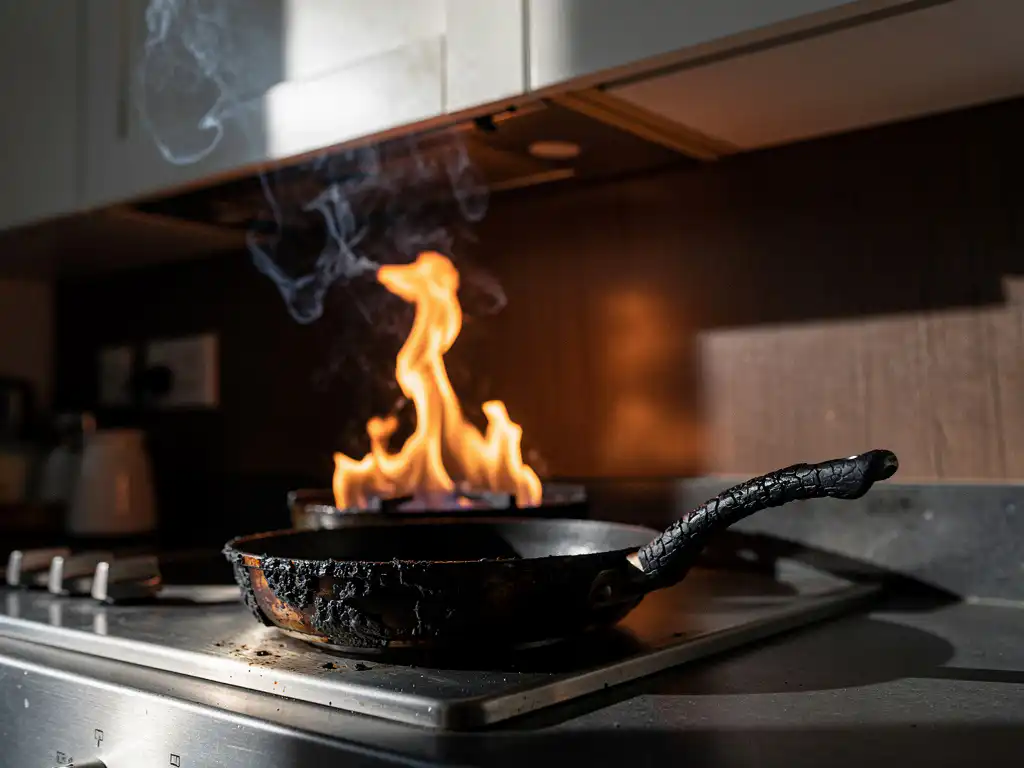
House fires most commonly start from cooking accidents, electrical faults, heating equipment, smoking materials, and open flames such as candles. These causes account for the vast majority of residential fires each year, and most of them are preventable with the right awareness and precautions. The sections below break down each major cause and highlight the fire hazards that homeowners most often overlook.
What room in a house is most likely to catch fire?
The kitchen is by far the most fire-prone room in any home. Cooking-related incidents account for more residential fires than any other single cause, and the combination of open heat sources, flammable cooking oils, and distracted behavior makes the kitchen the highest-risk area in the house.
The living room and bedroom follow as the next most common locations. In living rooms, fires typically start from candles left unattended or electrical faults in entertainment equipment. Bedrooms see a disproportionate share of fatal fires because occupants are often asleep when a fire begins, giving it more time to spread before anyone responds.
Garages and utility rooms also carry significant risk. These spaces frequently contain flammable materials such as petrol, paint, and cleaning solvents stored alongside electrical equipment, power tools, or heating appliances. The combination of fuel and ignition sources in a poorly ventilated space creates conditions where a small spark can escalate quickly.
How do electrical faults cause house fires?
Electrical faults cause house fires by generating heat or sparks that ignite nearby combustible materials. Faulty wiring, overloaded circuits, damaged insulation, and defective appliances are the most common electrical triggers. Because these faults often occur inside walls or within equipment, the fire can develop undetected for some time before it becomes visible.
Overloaded power strips and extension cords are a particularly frequent culprit. When too many high-draw appliances share a single circuit, the wiring heats up beyond its rated capacity. Over time, this degrades insulation and increases the risk of arcing, where electricity jumps across a gap and produces intense, localized heat.
Aging wiring in older homes presents a separate risk. Insulation materials used in wiring from several decades ago can become brittle and crack, exposing live conductors. Rodent damage to wiring inside wall cavities is another underappreciated hazard that can go unnoticed for years.
Appliances with damaged power cords or faulty internal components can also ignite. Washing machines, tumble dryers, and dishwashers are among the household appliances most frequently linked to electrical fires, particularly when left running unattended overnight or while the occupants are away.
What cooking mistakes most often lead to house fires?
The most common cooking mistakes that lead to house fires are leaving food unattended on the hob, overheating cooking oil, and placing flammable items too close to a heat source. Unattended cooking is the single biggest factor in kitchen fires, as it only takes a short time for a pan to overheat and ignite.
Deep frying carries the highest fire risk of any cooking method. When oil is heated past its smoke point, it can auto-ignite without any external flame. Throwing water onto a burning oil fire dramatically worsens the situation by causing a violent steam explosion that spreads burning oil across the room. A fire blanket or a tight-fitting lid is the correct response.
Other frequent mistakes include:
- Leaving tea towels, oven gloves, or paper packaging on or near the hob
- Cooking while fatigued or under the influence of alcohol
- Forgetting food in the oven, particularly fatty meats that can drip and ignite
- Using a grill without cleaning accumulated grease from the tray
- Overloading a microwave or using metal containers inside one
Can heating equipment really cause a house fire?
Yes, heating equipment is one of the leading causes of house fires, particularly during colder months. Space heaters, wood-burning stoves, open fireplaces, and central heating boilers all carry fire risk when improperly installed, poorly maintained, or used carelessly. The most dangerous scenario is placing a portable heater too close to curtains, bedding, or upholstered furniture.
Portable electric heaters need a clear space of at least one meter around them on all sides. Many fires start when a heater is left on overnight or positioned near a bed where loose fabric can shift toward it during sleep. Heaters should never be used to dry clothing.
Solid fuel appliances such as wood burners and open fireplaces require regular chimney sweeping. Creosote, a tar-like byproduct of burning wood, accumulates in flue linings and can ignite at high temperatures, causing a chimney fire that can spread to the roof structure. Carbon monoxide risk from blocked flues adds a further danger.
Central heating boilers and gas appliances should be serviced annually by a qualified engineer. Cracks in heat exchangers or deteriorating seals can allow combustion gases and heat to escape in ways that create both fire and carbon monoxide hazards.
Why are smoking materials still a leading cause of home fires?
Smoking materials remain a leading cause of home fires because a lit cigarette produces a persistent, high-temperature ember that can smolder undetected for up to an hour before igniting surrounding material. Fires caused by smoking are also among the deadliest, as they frequently start when a smoker falls asleep, giving the fire a significant head start before anyone is alerted.
Upholstered furniture is the most common first item ignited in smoking-related fires. Sofas and mattresses can sustain a smoldering ember for a long time, producing toxic smoke well before any visible flame appears. By the time a fire becomes obvious, the room may already be filled with dangerous levels of carbon monoxide and other combustion gases.
Balconies and outdoor areas are increasingly common locations for smoking-related fires, particularly in apartment buildings. Improperly discarded cigarette butts that fall into dry plant containers or accumulate in inadequately sized ashtrays are a frequent starting point. Providing a proper, deep ashtray and fully extinguishing cigarettes before disposal significantly reduces this risk.
What are the most overlooked fire hazards in a home?
The most overlooked fire hazards in a home include lint buildup in tumble dryer vents, overloaded electrical outlets, candles left in unsafe locations, and flammable liquids stored near heat sources. These hazards are dangerous precisely because they are easy to normalize or forget about entirely during routine daily life.
Tumble dryer lint traps and exhaust ducts accumulate highly flammable fiber residue with every cycle. A blocked vent causes the dryer to overheat, and the lint itself can catch fire rapidly. Cleaning the lint trap after every use and inspecting the exhaust duct periodically is one of the simplest and most effective home fire prevention steps available.
Candles are another frequently underestimated hazard. A candle left burning in a draft, placed on an uneven surface, or positioned near curtains can cause a serious fire within minutes. Battery-operated flameless candles eliminate this risk entirely without sacrificing ambiance.
Other commonly overlooked hazards include:
- Aerosol cans stored near radiators or in direct sunlight
- Loose or frayed extension cords run under rugs where heat cannot dissipate
- Accumulated paper, cardboard, or clutter near boilers or electrical panels
- BBQ grills used too close to fencing or garden structures
- Electrical cabinets and switchgear in garages or utility rooms without any form of fire detection
Switchgear cabinets and electrical enclosures in residential garages or home workshops deserve special mention. These spaces often contain the home’s main distribution board and other high-voltage components, yet they rarely have any dedicated fire protection. A fault inside a closed electrical cabinet can smolder undetected, producing smoke and heat that builds to a damaging level long before a standard room-based smoke detector would trigger.
How ExxFire helps protect against electrical fire risks
While general fire safety awareness covers most residential hazards, enclosed electrical equipment presents a specific challenge that standard smoke alarms cannot adequately address. ExxFire’s integrated fire detection and suppression systems are built precisely for this gap, combining aspirating smoke detection with non-pressurized nitrogen gas suppression inside closed enclosures such as electrical cabinets, switchgear, and distribution boards.
ExxFire’s approach to protecting enclosed electrical equipment includes:
- Early smoke detection: Aspirating detection identifies smoke at the earliest possible stage, before heat or flames develop, giving the system time to act before damage occurs
- Clean suppression: Nitrogen gas leaves no chemical residue, meaning sensitive electronics and wiring inside the cabinet are not damaged by the suppression agent itself
- No special installation certification required: Systems are pre-engineered for straightforward self-installation and integrate with existing fire panels via built-in relays
- Tested and certified: ExxFire systems are validated by CNPP in France and DMT, part of TÜV Nord in Germany, providing confidence in performance under real fire conditions
- PFAS-free and environmentally responsible: Unlike many legacy suppression agents, ExxFire’s nitrogen-based technology contains no PFAS compounds, making it a sustainable choice for home and commercial environments alike
If you have electrical cabinets, switchgear, or high-value equipment in your home or facility that currently have no dedicated fire protection, contact ExxFire to find out how its systems can be configured to protect your specific setup.
Related Articles
- How does IEC 62368 relate to fire safety in electronic equipment?
- What is the difference between VdS and EN54 certification?
- How do you choose a compliant fire suppression system in 2026?
- How do children accidentally cause fires and how can parents prevent them?
- What is active fire protection and how is it different from passive?