

How does IEC 62368 relate to fire safety in electronic equipment?
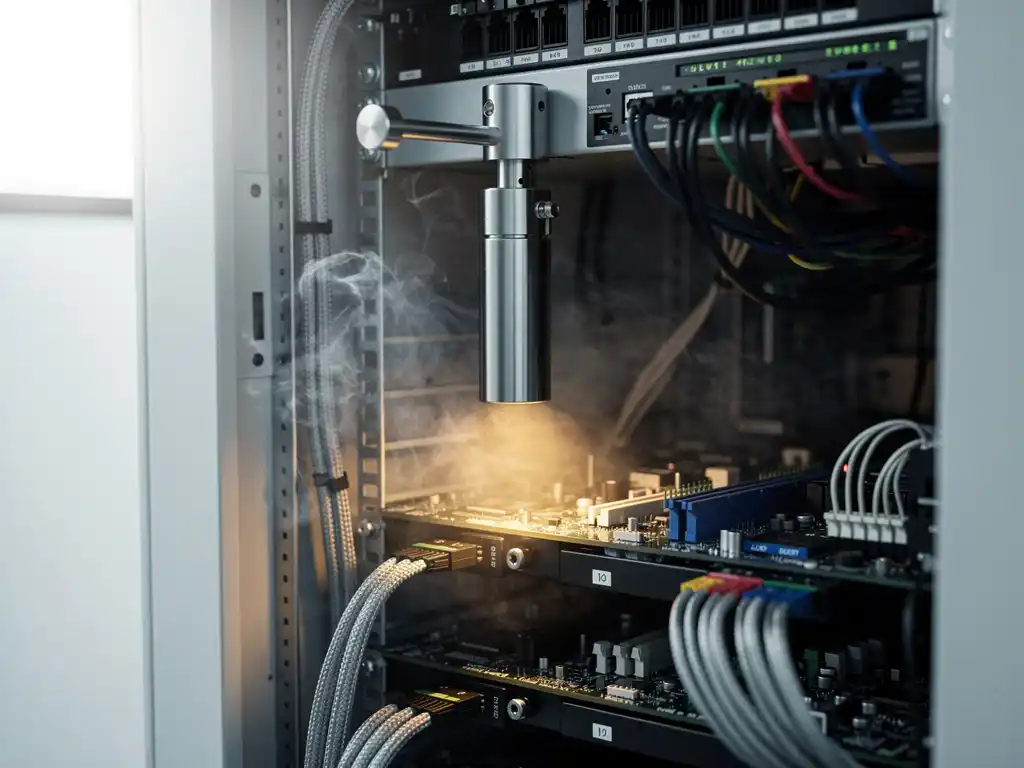
IEC 62368-1 relates to fire safety in electronic equipment by setting engineering requirements that limit how much energy a product can generate, transfer, or release in ways that could ignite a fire. The standard applies to audio, video, and IT equipment, and it uses an energy-based hazard model to ensure that design choices actively reduce thermal and ignition risks. The sections below unpack the specific fire hazards it addresses, how it classifies risk, and where its limits lie.
What fire hazards does IEC 62368-1 actually address?
IEC 62368-1 addresses fire hazards that arise from electrical energy sources within electronic equipment, specifically the risk that uncontrolled energy transfer ignites surrounding materials. The standard targets ignition from overheating components, arcing, short circuits, and the spread of flame across a product’s enclosure or internal materials.
Rather than treating fire as a single risk category, the standard breaks it down into the mechanisms that actually cause ignition in electronic products. These include:
- Resistive heating from excessive current through conductors, resistors, or connections
- Arcing and sparking caused by insulation breakdown or switching under load
- Thermal runaway in battery cells, where exothermic chemical reactions accelerate beyond control
- Surface temperature exceedance on components or enclosures that contact flammable materials
- Flame spread through insufficiently flame-retardant materials inside the product housing
By addressing each of these mechanisms through design requirements rather than after-the-fact testing alone, IEC 62368-1 pushes manufacturers to engineer fire risk out of the product at the source.
How does IEC 62368-1 classify fire risk in electronic equipment?
IEC 62368-1 classifies fire risk using an energy hazard model with three levels: PS1, PS2, and PS3. PS1 represents energy levels too low to cause harm. PS2 covers energy levels that can cause injury or ignition but are manageable with safeguards. PS3 covers energy levels that can cause severe injury or sustained fire and require the strongest protective measures.
This classification system departs from the older prescriptive approach used in predecessor standards like IEC 60950 and IEC 60065. Instead of specifying component-level rules, IEC 62368-1 asks: how much energy is present, and what happens if a safeguard fails? Each energy source in a product is assessed against the three power source (PS) levels, and the required safeguard strength is determined by the classification.
For fire specifically, the standard requires that energy sources classified as PS2 or PS3 be separated from ignitable materials by safeguards rated to contain or interrupt the energy before ignition occurs. This means flame-retardant materials, thermal cutoffs, fusing, and enclosure ratings all play a role in meeting the standard’s fire-related requirements.
What types of electronic equipment fall under IEC 62368-1?
IEC 62368-1 applies to audio and video equipment, information technology equipment, and communication technology equipment intended for use in home, office, and light industrial environments. This covers a broad range of products including servers, network switches, power supplies, displays, broadcast equipment, and consumer electronics.
In practice, the scope is wide enough to include most equipment found in data centers, server rooms, ICT cabinets, and office environments. Products such as uninterruptible power supplies, battery backup systems, and telecommunications hardware all fall within its scope, particularly where they combine audio, video, or IT functions with power conversion or storage.
It is worth noting that IEC 62368-1 does not cover industrial control equipment governed by IEC 61010, nor does it cover equipment designed exclusively for hazardous locations under ATEX or IECEx frameworks. For facilities that house both IEC 62368-1 equipment and industrial control systems, multiple standards may apply simultaneously to different assets in the same enclosure or room.
How does IEC 62368-1 compliance reduce fire risk in practice?
IEC 62368-1 compliance reduces fire risk by requiring manufacturers to demonstrate that their products cannot transfer enough energy to ignite surrounding materials under foreseeable fault conditions. Compliance means the product has been designed and tested so that component failures, overloads, and foreseeable misuse scenarios do not produce uncontrolled ignition.
The practical outcomes of compliance include:
- Enclosures and internal materials rated to limit flame spread if ignition does occur
- Thermal management systems designed to prevent surface temperatures from reaching ignition thresholds
- Overcurrent protection that interrupts fault currents before sustained arcing or resistive heating can ignite materials
- Battery management systems that reduce the likelihood of thermal runaway reaching propagation
- Clearance and creepage distances that prevent arcing across insulation under pollution or humidity
For facility managers specifying or procuring electronic equipment, IEC 62368-1 certification provides a baseline assurance that the product itself has been engineered to minimize its own fire contribution. This is particularly relevant when equipment is installed in high-density configurations such as server racks or switchgear cabinets, where a single ignition event can rapidly escalate.
Does IEC 62368-1 compliance eliminate the need for fire suppression systems?
No. IEC 62368-1 compliance does not eliminate the need for fire suppression systems. The standard governs product design to reduce the probability of ignition, but it cannot account for installation errors, aging components, external heat sources, or the cumulative thermal load of multiple devices operating together in a confined enclosure.
Compliance with IEC 62368-1 establishes that a product meets a defined safety baseline at the time of manufacture and testing. Once that product is deployed in a real facility, new variables are introduced: cable management quality, ambient temperatures, dust accumulation, power quality fluctuations, and proximity to other heat-generating equipment. None of these are within the scope of the product standard.
Thermal runaway in lithium-ion batteries is a particularly relevant example. A battery management system may meet all IEC 62368-1 requirements and still fail under specific charge, discharge, or temperature conditions that fall outside the tested parameters. Industry experience consistently shows that suppression systems remain a necessary layer of protection for any environment where electronic equipment failure could cause significant asset loss or operational disruption.
What fire suppression approach is safest for IEC 62368-1 equipment?
The safest fire suppression approach for IEC 62368-1 equipment is a clean agent or inert gas system that extinguishes fire without leaving residues that damage sensitive electronics. Water-based suppression is generally unsuitable for active electronic equipment due to the risk of short circuits and corrosion. Gaseous suppression that works by displacing oxygen or interrupting combustion chemistry is strongly preferred.
For enclosed equipment such as server racks, ICT cabinets, and battery storage enclosures, the most effective approach combines early smoke detection with localized suppression directly inside the enclosure. This limits fire damage to the affected asset rather than relying on room-level suppression that activates only after a fire has grown large enough to be detected by ceiling-mounted detectors.
PFAS-containing suppression agents, while historically common, are increasingly restricted under environmental regulations in Europe and elsewhere. Inert gas alternatives, particularly nitrogen-based systems, offer an equivalent or superior suppression effect without the environmental and regulatory burden associated with fluorinated compounds.
How ExxFire supports fire safety for IEC 62368-1 equipment
ExxFire’s integrated detection and suppression systems are designed specifically for the type of enclosed electronic equipment governed by IEC 62368-1. Each system combines aspirating smoke detection with non-pressurized nitrogen gas suppression delivered through the patented Cool Gas Generator technology, providing early warning and immediate suppression before a fire can spread beyond the enclosure.
Key features that make ExxFire systems well-suited to protecting IEC 62368-1 equipment include:
- Residue-free nitrogen suppression that leaves no chemical contamination on sensitive electronics or components
- Early aspirating smoke detection that identifies thermal events at the pre-fire stage, well before conventional detectors respond
- Non-pressurized gas storage that eliminates the risks associated with pressurized cylinder systems in equipment rooms
- Pre-engineered design for self-installation in enclosures up to 4.5 m³, with units interconnectable for larger volumes
- CNPP-certified performance and built-in relay outputs for integration with existing fire panels
- PFAS-free formulation that meets current and emerging environmental regulations without compromising suppression effectiveness
For safety and compliance managers responsible for ICT and server room protection, ExxFire systems provide the localized, clean, and certified suppression layer that product-level compliance alone cannot deliver. Contact ExxFire to discuss which system configuration is appropriate for your specific enclosure type and risk profile.